
Mechanism of action of antidepressant
Reading File
Antidepressants primarily work by increasing the availability of monoamine neurotransmitters (serotonin, norepinephrine, dopamine) at brain synapses, either by blocking their reuptake, inhibiting their breakdown, or blocking autoreceptors that suppress their release. Different drug classes target these pathways in different ways.
Searching sources...
Finding Sources
Searching Images
antidepressant mechanism of action serotonin reuptake synapse diagram
Reading File
Finding Sources
Reading File
Finding Sources
Reading File
Reading File
I now have comprehensive information from the textbook. Let me compile the full answer.
Loading Image
Loading Image
Here is a structured overview of the mechanism of action of antidepressants, organized by drug class.
Mechanism of Action of Antidepressants
Underlying Theory: Biogenic Amine Hypothesis
Most antidepressants either directly or indirectly potentiate the actions of norepinephrine (NE) and/or serotonin (5-HT) in the brain. The biogenic amine theory proposes that depression results from a deficiency of monoamines (norepinephrine, serotonin, dopamine) at key brain sites, while mania is caused by overproduction of these neurotransmitters.
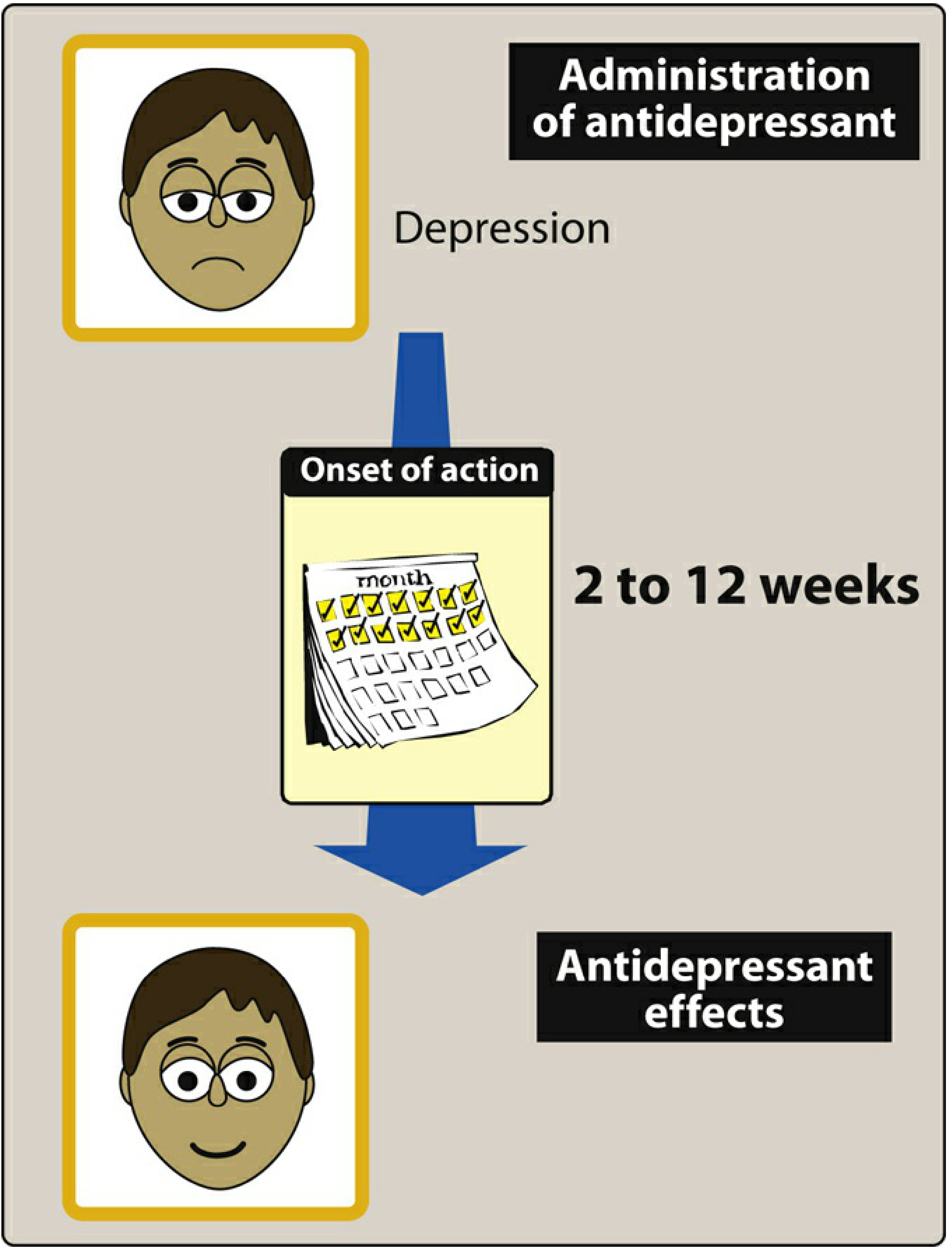
Important caveat: This theory is overly simplistic. It does not explain the delayed therapeutic response - pharmacodynamic effects (reuptake blockade) are immediate, but clinical benefit takes 2-12 weeks. This suggests reuptake inhibition is only the initial effect and is not directly responsible for the antidepressant effect; long-term receptor adaptations likely play a bigger role.
1. Selective Serotonin Reuptake Inhibitors (SSRIs)
Drugs: Fluoxetine, Citalopram, Escitalopram, Paroxetine, Sertraline, Fluvoxamine
Mechanism: Block the serotonin transporter (SERT), preventing reuptake of serotonin back into the presynaptic neuron. This increases serotonin concentration in the synaptic cleft.
- Highly selective for SERT vs. norepinephrine transporter (NET)
- Little blocking activity at muscarinic, α-adrenergic, or histamine H1 receptors (hence fewer side effects than TCAs)
- First-line agents for depression due to better safety profile and tolerability
| Drug | NE Reuptake Inhibition | 5-HT Reuptake Inhibition |
|---|---|---|
| Fluoxetine | 0 | ++++ |
| Venlafaxine (low dose) | + | ++++ |
| Duloxetine | ++++ | ++++ |
| Imipramine (TCA) | +++ | ++++ |
| Nortriptyline (TCA) | ++++ | ++ |
2. Serotonin-Norepinephrine Reuptake Inhibitors (SNRIs)
Drugs: Venlafaxine, Duloxetine, Desvenlafaxine, Levomilnacipran
Mechanism: Block both SERT and NET, increasing both serotonin and norepinephrine in the synapse.
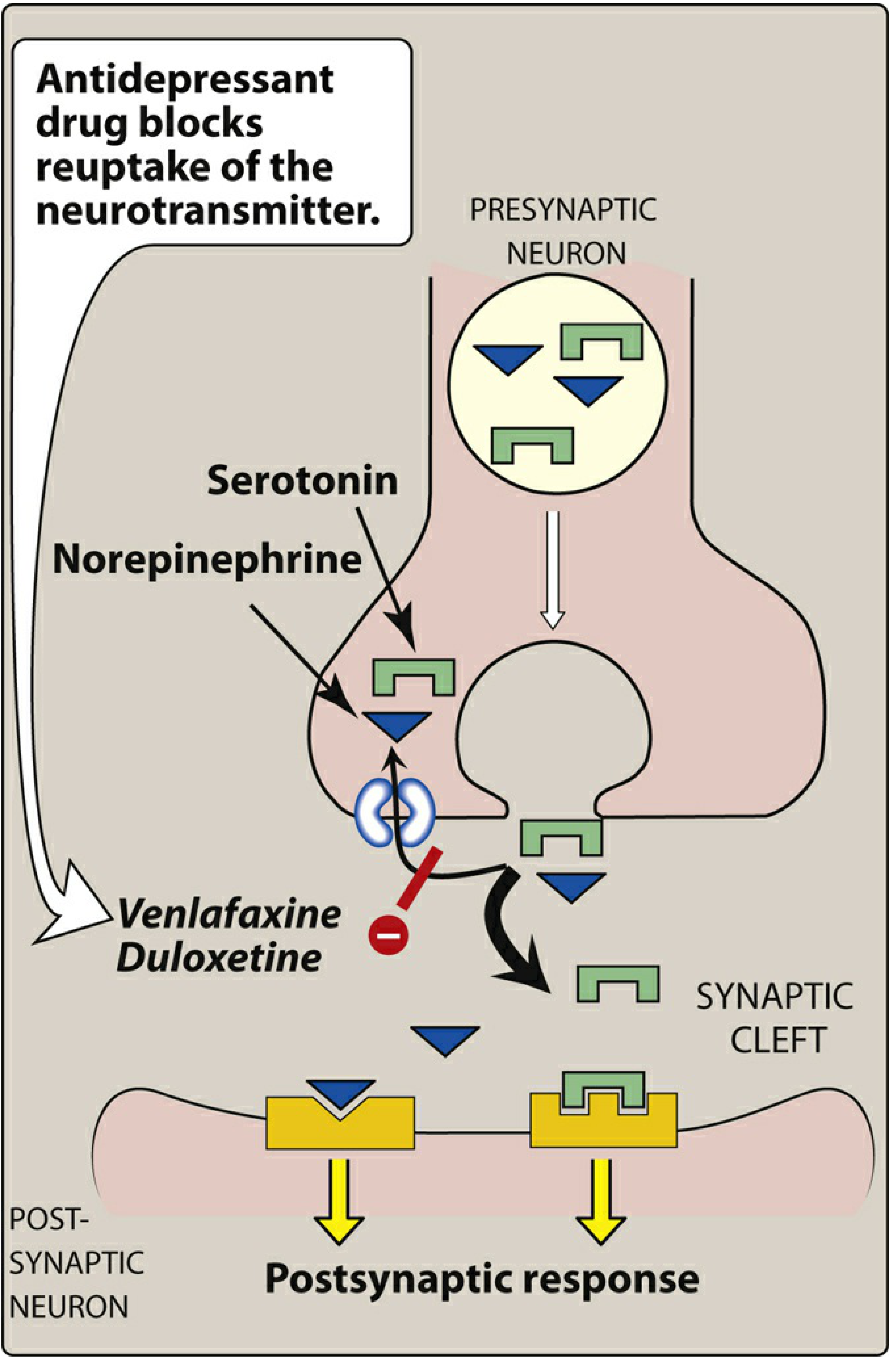
- Venlafaxine inhibits NE reuptake only at higher doses; predominantly serotonergic at low doses
- Duloxetine has strong dual reuptake inhibition (++++ for both)
- The dual mechanism may confer efficacy for painful physical symptoms (e.g., diabetic neuropathy, fibromyalgia)
3. Tricyclic Antidepressants (TCAs)
Drugs: Imipramine, Amitriptyline, Nortriptyline, Clomipramine, Desipramine, Doxepin
Mechanism: Block the presynaptic plasma transporter (amine pump) for both norepinephrine and serotonin, preventing their reuptake. However, TCAs are non-selective and also block:
- Muscarinic receptors - anticholinergic side effects (dry mouth, urinary retention, constipation, blurred vision)
- α1-adrenergic receptors - orthostatic hypotension
- H1 histamine receptors - sedation, weight gain
- Sodium channels (cardiac) - arrhythmias, QRS widening in overdose
TCAs have a narrow therapeutic index (5-6x the max daily dose of imipramine can be lethal). They are now second-line due to side effect burden and toxicity in overdose.
4. Monoamine Oxidase Inhibitors (MAOIs)
Drugs: Phenelzine, Tranylcypromine, Isocarboxazid, Selegiline (transdermal)
Mechanism: Inhibit monoamine oxidase (MAO), a mitochondrial enzyme that normally degrades excess neurotransmitters (NE, 5-HT, dopamine) leaking from synaptic vesicles.
- MAO-A metabolizes serotonin, NE, and dopamine
- MAO-B primarily metabolizes dopamine
- Most MAOIs (e.g., phenelzine) irreversibly inactivate MAO, forming stable enzyme complexes
- This leads to accumulation of NE, serotonin, and dopamine in the neuron and diffusion into the synapse
- Also inhibit MAO in the liver and gut, preventing first-pass metabolism of dietary tyramine (the "cheese effect")
Tyramine reaction: Normally, gut/liver MAO inactivates tyramine from aged cheeses, cured meats, and wine. When MAO is inhibited, absorbed tyramine triggers massive NE release from sympathetic terminals, causing hypertensive crisis (severe headache, hypertension, risk of stroke).
- Selegiline is selective for MAO-B at low doses (also used in Parkinson disease), but non-selective at high antidepressant doses
5. Atypical Antidepressants
Bupropion
- Weak dopamine and norepinephrine reuptake inhibitor (NDRI)
- No serotonergic activity - avoids sexual dysfunction (a key advantage)
- Also approved for smoking cessation
- Dose-dependent seizure risk; avoid in anorexia/bulimia
Mirtazapine
- Blocks presynaptic α2 autoreceptors - these normally inhibit NE/5-HT release; blockade disinhibits release, enhancing both norepinephrine and serotonin neurotransmission
- Also antagonizes 5-HT2 receptors (contributes to antidepressant effect and avoids sexual dysfunction)
- Potent H1 antihistamine - causes sedation and weight gain
Trazodone / Nefazodone
- Block 5-HT2 receptors and inhibit serotonin reuptake (serotonin antagonist-reuptake inhibitors, SARIs)
Vilazodone / Vortioxetine
- Serotonin partial agonist/reuptake inhibitors (SPARIs)
- Block SERT AND partially activate 5-HT1A receptors
Esketamine (S-ketamine)
- NMDA glutamate receptor antagonist (non-selective, non-competitive)
- Represents a completely different mechanism - targets glutamate, not monoamines
- Faster-acting than conventional antidepressants
- Used intranasally for treatment-resistant depression and MDD with suicidal ideation
- Administered in a monitored clinical setting (risk of dissociation, sedation, BP elevation)
Brexanolone
- A GABA-A receptor positive allosteric modulator (neuroactive steroid)
- Used specifically for postpartum depression
Summary Table
| Class | Primary Mechanism | Key Neurotransmitters |
|---|---|---|
| SSRIs | Block SERT | ↑ 5-HT |
| SNRIs | Block SERT + NET | ↑ 5-HT, ↑ NE |
| TCAs | Block SERT + NET (non-selective) | ↑ 5-HT, ↑ NE |
| MAOIs | Inhibit MAO-A/B | ↑ 5-HT, ↑ NE, ↑ DA |
| Bupropion | Block NET + DAT | ↑ NE, ↑ DA |
| Mirtazapine | α2 blockade + 5-HT2 blockade | ↑ NE, ↑ 5-HT |
| Esketamine | NMDA receptor antagonist | ↑ Glutamate modulation |
| Brexanolone | GABA-A potentiation | ↑ GABAergic tone |
Source: Lippincott Illustrated Reviews: Pharmacology, Chapter 17
This is a shared conversation. Sign in to Orris to start your own chat.