
Wilson disease what happens how does it affect the findings palliative care how to treat when to start etc
Reading File
Now let me search the medical library and PubMed in parallel for comprehensive Wilson disease coverage.
Finding Sources
Searching PubMed
"Wilson disease" treatment guidelines
Good. Now let me read the most comprehensive sections in parallel - Robbins (pathology/mechanism), GI/Liver textbook (treatment), and Neurology (findings).
Reading File
Reading File
Reading File
Good content from Robbins and Neurology. Now let me search the GI/Liver textbook more deeply for treatment details, plus fetch the copper metabolism diagram.
Finding Sources
Loading Image
Excellent. Now let me get the detailed treatment section from Sleisenger & Fordtran plus the diagnosis/scoring section, and also search for liver transplant and palliative/end-stage management.
Reading File
Finding Sources
Excellent - I have strong treatment content. Let me now read the penicillamine section and the transplant details from Yamada's, plus get the Wilson disease scoring/diagnosis section from Sleisenger.
Reading File
Reading File
I now have very rich content. Let me read the transplant/palliative section from Yamada's and get diagnosis criteria/scoring from Sleisenger block 19.
Reading File
Reading File
I now have comprehensive data. Let me do a final parallel search for the Leipzig scoring system and presymptomatic/monitoring details.
Finding Sources
Searching the Web
Wilson disease Leipzig score diagnosis treatment 2024 2025 guidelines
I now have comprehensive information from multiple authoritative sources including the updated 2025 EASL-ERN guidelines. Let me compile the full answer.
Wilson Disease - Comprehensive Overview
What Is It?
Wilson disease (WD), also called hepatolenticular degeneration, is an autosomal recessive disorder caused by loss-of-function mutations in the ATP7B gene on chromosome 13. ATP7B encodes a copper-transporting ATPase located primarily in the trans-Golgi network and lysosomes of hepatocytes.
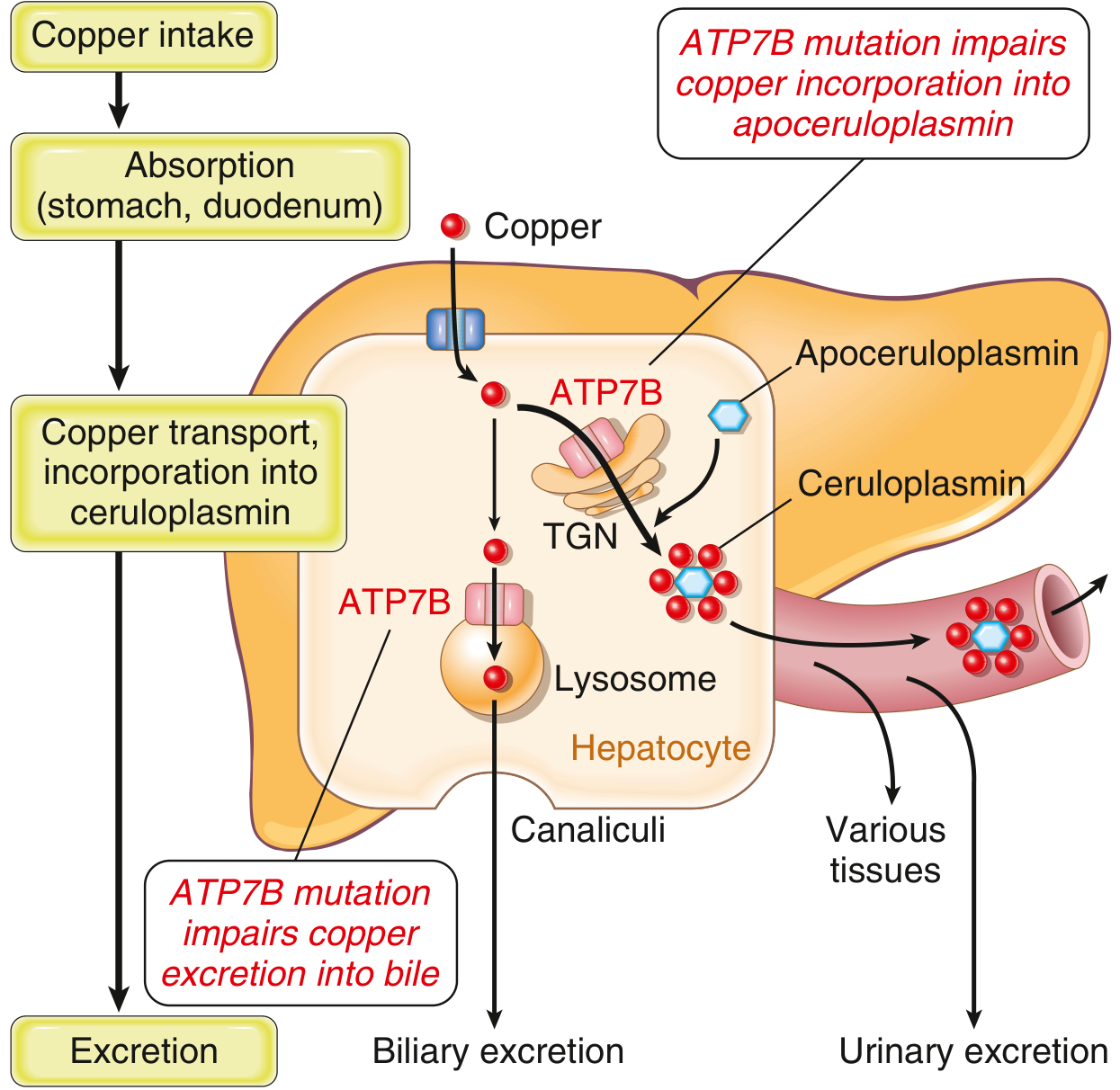
Fig: In Wilson disease, ATP7B mutation impairs both biliary copper excretion (via lysosomes) and ceruloplasmin formation (via trans-Golgi). Copper backs up in hepatocytes, generating ROS, and eventually spills into the bloodstream to deposit in the brain, corneas, kidneys, heart, bones, and joints - Robbins & Kumar Basic Pathology
Pathophysiology - What Goes Wrong
Normally, dietary copper (2-5 mg/day) is absorbed in the duodenum, transported to the liver bound to albumin, then handled by ATP7B in two ways:
- In the trans-Golgi: ATP7B loads copper into apoceruloplasmin → secreted as ceruloplasmin into blood
- In lysosomes: ATP7B transfers excess copper to bile canaliculi → excreted in bile (the major copper excretion route)
In Wilson disease, both routes fail:
- Copper accumulates in hepatocyte cytoplasm and lysosomes → increased ROS → hepatocyte injury
- Low ceruloplasmin is a hallmark, but the low ceruloplasmin itself does not cause the disease - it is a marker
- As the liver is overwhelmed, non-ceruloplasmin-bound copper spills into the bloodstream, causing:
- Hemolysis (copper damages red cell membranes)
- Copper deposition in brain (especially basal ganglia), corneas, kidneys, bones, joints, parathyroid glands
- Markedly increased urinary copper excretion
- Robbins & Kumar Basic Pathology
Clinical Presentation - Who Gets It and When
Symptoms typically appear between ages 6 and 40, though cases into the sixth or seventh decade are described. Presentation falls into three broad groups (each accounting for roughly one-third of patients):
| Presentation Group | Features |
|---|---|
| Hepatic (liver) | ~33% of patients |
| Neurological | ~33% of patients |
| Psychiatric | ~33% of patients |
Liver Manifestations
- Asymptomatic: Incidentally elevated transaminases (ALT/AST) - any patient under 50-60 with unexplained elevated liver enzymes should have WD excluded
- Acute hepatitis: Mimics viral or autoimmune hepatitis; steatohepatitis pattern; may show Mallory hyaline bodies
- Chronic hepatitis: Progresses to cirrhosis in advanced cases
- Acute liver failure (fulminant): Up to 12% of presentations; dramatic - occurs in adolescents/young adults; presents with rapid-onset jaundice, ascites, coagulopathy, hepatic coma, acute renal failure, and Coombs-negative (DAT-negative) hemolytic anemia. Uniformly fatal without liver transplant. Key lab clue: alkaline phosphatase/total bilirubin ratio <4 and AST/ALT ratio >2.2 distinguishes WD from other causes of acute liver failure.
- Cirrhosis: End-stage hepatic WD; may present with features of portal hypertension
Neurological Manifestations
Primarily extrapyramidal:
- Tremor (sometimes "wing-beating" character)
- Chorea
- Dystonia
- Dysarthria and dysphagia
- Ataxia, gait disturbance
- Fixed "sardonic" smile
- Seizures (minority)
MRI findings: Abnormal T2 signal in the putamen, midbrain, pons, thalamus, and cerebellum; brain atrophy is common.
Neuropsychiatric Manifestations
At least 50% of patients manifest psychiatric symptoms early. These frequently cause diagnostic delay:
- Personality/mood changes (most common)
- Depression (~30%)
- Bipolar spectrum symptoms (~20%)
- Suicidal ideation (5-15%)
- Irritability, aggression, psychosis
- Cognitive disturbance with frontosubcortical pattern
- Increased sensitivity to neuroleptics (important clinical note)
- Despite long-term treatment, ~70% of WD patients develop some psychiatric symptoms
Other Organ Involvement
- Eyes: Kayser-Fleischer (KF) rings - green-brown copper deposits in Descemet membrane at corneal limbus; present in 98% of patients with neurological disease and ~80% of all WD cases; requires slit-lamp examination; almost always present in neurological WD
- Kidneys: Renal tubular dysfunction (Fanconi syndrome) - leads to low serum uric acid (important clue), aminoaciduria, phosphaturia
- Bones/joints: Bone demineralization, rickets, spontaneous fractures, osteochondritis dissecans, degenerative arthritis
- Heart: Echocardiographic abnormalities in up to 1/3 of adults; arrhythmias; orthostatic hypotension
- Skin: Increased pigmentation (especially anterior lower legs)
- Endocrine: Various reported abnormalities; parathyroid copper deposition
- Blood: Coombs-negative hemolytic anemia (15% at initial presentation when copper poorly controlled)
- Yamada's Textbook of Gastroenterology; Bradley and Daroff's Neurology in Clinical Practice
Investigations and Diagnosis
Key Lab Tests
| Test | Typical Finding in WD | Notes |
|---|---|---|
| Serum ceruloplasmin | Low (<20 mg/dL; strongly suspicious if <10 mg/dL) | Also low in 10% of heterozygotes; falsely normal in acute inflammation |
| 24-hour urinary copper | Elevated (>100 μg/day symptomatic; >40 μg/day presymptomatic children) | Most specific noninvasive test |
| Serum free (non-ceruloplasmin) copper | Elevated | Calculated: total copper (μg/dL) minus ceruloplasmin (mg/dL) × 3; >25 μg/dL suggests WD |
| Serum total copper | Low or normal (most copper is unbound, not in ceruloplasmin) | Can be confusing |
| Liver biopsy copper | >250 μg/g dry weight (normal <50) | Gold standard for hepatic copper quantification; may be needed when other tests inconclusive |
| Serum uric acid | Low | Renal tubular copper toxicity |
| Alkaline phosphatase | Low or normal (unusual - most liver diseases raise ALP) | Low ALP in acute WD liver failure is a strong diagnostic clue |
| ATP7B genetic testing | Mutation identification | >700 mutations known; useful for family screening |
Relative Exchangeable Copper (REC)
New biomarker now recommended alongside Leipzig score in the updated 2025 EASL-ERN guidelines - measures the percentage of non-ceruloplasmin copper; >18.5% is highly specific for WD.
Leipzig Diagnostic Scoring System
A point-based system used widely (advocated by EASL and ESPGHAN guidelines):
| Parameter | Points |
|---|---|
| KF rings present | +2 |
| Neuropsychiatric symptoms typical of WD | +2 |
| Coombs-negative hemolysis | +1 |
| Urinary copper elevated (>2× ULN) | +2 |
| Ceruloplasmin low | +1 to +4 depending on level |
| Liver copper >4× ULN | +2 |
| Rosette granules (liver biopsy) | +1 |
| Mutation analysis (2 mutations/1 mutation) | +4/+1 |
- Score ≥4: WD highly likely, treat
- Score 3: possible, further tests needed
- Score ≤2: WD unlikely
- Sleisenger and Fordtran's GI and Liver Disease; Yamada's Gastroenterology; 2025 EASL-ERN Clinical Practice Guidelines
Treatment
Three main pharmacological strategies exist. Treatment is lifelong.
"With effective lifelong chelation treatment, most patients live normal, healthy lives. Starting treatment early is critical, and the outcome is best for patients in whom the disease is diagnosed and treatment begun when the patient is asymptomatic."
- Sleisenger and Fordtran's GI and Liver Disease
1. D-Penicillamine (first-line chelator, historically)
- Dose: 1-1.5 g/day in adults (20 mg/kg/day in children), divided 2-3 doses; maintenance 0.75-1 g/day
- Always co-prescribe pyridoxine 25 mg/day (penicillamine is an anti-pyridoxine agent)
- Monitoring efficacy: Target 24-hr urinary copper 200-500 μg/day
- Mechanism: Chelates copper and greatly increases urinary excretion
- Side effects (significant, reason many centers now prefer trientine):
- Skin: rashes, pemphigus, elastosis perforans serpiginosa
- Renal: proteinuria, nephrotic syndrome, Goodpasture syndrome
- Hematologic: leukopenia, thrombocytopenia, aplastic anemia (rare but may not reverse)
- Autoimmune: SLE-like syndrome, myasthenia syndrome
- Neurological worsening in 20-50% of patients with neurological WD - some do not recover to pretreatment baseline. This is a major concern.
- Loss of taste, GI upset, arthralgias
2. Trientine (triethylenetetramine) - now preferred first-line at many centers
- Dose: 1-1.5 g/day (adults), divided 2-3 doses; maintenance 0.75-1.2 g/day
- Children: approximately 20 mg/kg/day (not well established)
- Monitoring: Same urinary copper targets as penicillamine
- Mechanism: Chelates copper via 4 constituent nitrogens in planar ring; increases urinary copper excretion; may also interfere with intestinal copper absorption
- Less potent than penicillamine, but difference is not clinically important
- Side effects: Much better tolerated - occasional gastritis, iron deficiency (chelates dietary iron); bone marrow suppression rare; neurological worsening rarely reported
- Off-label for initial treatment in the US per FDA, but accepted standard of care internationally
- Highly effective even in advanced liver fibrosis and as initial therapy in children
3. Zinc Salts
- Dose: 50 mg elemental zinc 3× daily in adults (25 mg 3× daily in children <50 kg)
- Mechanism: Induces metallothionein in gut enterocytes, which has greater affinity for copper than zinc → copper bound by metallothionein is not absorbed but lost in feces as enterocytes shed; also interferes with lipid peroxidation and enhances glutathione
- Monitoring: Target 24-hr urinary copper <75 μg/day; monitor 24-hr urinary zinc (target >2 mg/24h to confirm compliance/absorption)
- Side effects: Gastritis (common; less with zinc gluconate or acetate vs. sulfate); may cause iron deficiency; rare immediate hepatic deterioration in some patients with hepatic WD
- Preferred role: Maintenance therapy (after initial decoppering with chelator), presymptomatic patients, and patients in whom neurological WD is the primary concern
- Important limitation: Less effective than chelators for advanced hepatic WD; long-term studies show better efficacy in neurological than hepatic disease
4. Tetrathiomolybdate (Ammonium Tetrathiomolybdate / Bis-choline Tetrathiomolybdate)
- Still largely experimental/close to clinical application (WTX101/bis-choline TM under trials)
- Proposed advantage: lower risk of neurological worsening compared to penicillamine
- May be used in combination with zinc
Dietary Advice
- Eliminate copper-rich foods: organ meats, shellfish, nuts, chocolate, mushrooms
- Vegetarians need specific dietary counseling
- If drinking water has high copper (old pipes), install copper-removing filter
- Dietary restriction alone is insufficient - pharmacological treatment always required
Combination Approaches
- Chelator + zinc can be used together
- Trientine or tetrathiomolybdate + zinc for neurological disease (lower worsening risk)
- Sleisenger and Fordtran's GI and Liver Disease; Yamada's Gastroenterology
When to Start Treatment
| Situation | Action |
|---|---|
| Symptomatic patients (any presentation) | Start chelation immediately once diagnosis established (Leipzig score ≥4) - per 2025 EASL-ERN guidelines: "Pharmacological treatment should be started once diagnosis is well supported by the Leipzig score" |
| Presymptomatic patients (sibling screening, incidental diagnosis) | Start treatment - chelation or zinc; outcome best when treated before symptoms develop |
| Children <2 years | Whether to initiate routine chelation/zinc in infancy is not yet established; management individualized |
| Neurological WD | Use trientine or tetrathiomolybdate (+ zinc) preferentially over penicillamine to reduce risk of neurological worsening; if penicillamine used, start at low dose |
| Pregnancy | Continue treatment (stopping is dangerous - copper rebound causes fulminant hepatic failure); penicillamine is potentially teratogenic but has been used safely at chelation doses; trientine is teratogenic in animals but appears safe in humans; zinc is preferred if disease is controlled |
| Acute liver failure | Emergency - see below |
Liver Transplantation and Palliative/End-Stage Care
Indications for Liver Transplant
- Fulminant (acute) liver failure from WD - well-established, life-saving indication; disease is uniformly fatal without transplant in this presentation; plasmapheresis may be used as a bridge to transplant or when transplant not immediately available
- End-stage Wilsonian cirrhosis - when liver disease progresses despite good copper control (same criteria as other causes of cirrhosis)
- NOT currently recommended for isolated neurological WD without significant liver disease - neurological symptoms can improve with pharmacological therapy
Outcomes After Transplant
- Long-term survival is excellent
- The disease does not recur in the transplanted liver (donor liver has normal ATP7B)
- Neurological and psychiatric features often improve after transplant, as the normal donor liver corrects copper metabolism and reduces the whole-body copper burden
- Wilson disease is considered cured by liver transplantation (unlike many other liver diseases which recur)
- Yamada's Gastroenterology
Monitoring and Long-Term Follow-Up
Regular monitoring is required lifelong:
- CBC, renal function (urinalysis, creatinine), liver biochemical tests
- 24-hour urinary copper (main efficacy monitoring - target depends on drug used)
- Serum ceruloplasmin and copper
- Slit-lamp eye exam (to monitor KF ring response to treatment - rings fade with successful treatment)
- Side-effect monitoring as per drug used
- Neuropsychiatric assessment
Palliative Considerations
Formal palliative care in WD is relevant in a limited subset:
- Patients with decompensated cirrhosis not candidates for transplant - standard hepatic palliative care (ascites management, hepatic encephalopathy management, variceal management)
- Patients with severe irreversible neurological damage - multidisciplinary neurological rehabilitation, speech therapy, physiotherapy, occupational therapy, psychiatric support
- Patients declining or not eligible for transplant in fulminant liver failure - plasmapheresis/MARS (liver dialysis) as bridge measures; ultimately comfort-focused care if no curative option available
- Crucially: never stop copper-reduction treatment, as withdrawal causes rapid copper rebound and dramatic deterioration
Summary Table
| Aspect | Key Point |
|---|---|
| Gene | ATP7B (chromosome 13) |
| Inheritance | Autosomal recessive |
| Pathology | Failed biliary copper excretion + failed ceruloplasmin formation → copper accumulates in liver, brain, cornea |
| Age of onset | 6-40 years (rarely up to 6th-7th decade) |
| Key diagnostic test | Leipzig score; 24-hr urine copper; liver biopsy copper quantification; ATP7B mutation analysis; REC |
| Pathognomonic sign | Kayser-Fleischer rings (slit-lamp) |
| Best initial treatment | Trientine (most centers) or D-penicillamine + pyridoxine |
| Neurological WD preferred agent | Trientine or tetrathiomolybdate (lower neurological worsening risk) |
| Maintenance | Zinc salts (after initial decoppering) or low-dose chelator |
| End-stage/fulminant | Liver transplantation (curative) |
| Treatment duration | Lifelong |
2025 Update: The revised EASL-ERN Clinical Practice Guidelines on Wilson's disease (published 2025) now formally recommend relative exchangeable copper (REC) measurement alongside the Leipzig score for diagnosis, reflecting improved diagnostic accuracy.
Can you show me the complication in wilson disease and how will we manage it
Wilson disease complications span multiple organ systems. The main ones are cirrhosis/liver failure, neurological deterioration, hemolytic anemia, renal tubular dysfunction, psychiatric illness, and bone disease. Let me pull detailed management from the textbooks now.
Searching sources...
Finding Sources
Finding Sources
Reading File
Finding Sources
Reading File
Reading File
Reading File
Reading File
Finding Sources
Loading Image
I now have comprehensive data from all major textbooks. Let me compile the full complications and management guide.
Wilson Disease - Complications and Management
Complication 1: Hepatic (Liver) Complications
This is the most common initial presentation, especially in patients under 30.
A. Acute Hepatitis
What happens: Mimics viral or autoimmune hepatitis - fatigue, anorexia, nausea, jaundice, elevated transaminases. Wilson disease can even mimic autoimmune hepatitis so closely that ANA and smooth muscle antibodies may be detectable. Waxing-and-waning course is common, and diagnosis is often delayed.
Management:
- Start chelation therapy (trientine preferred, or D-penicillamine + pyridoxine 25 mg/day) immediately once diagnosis is confirmed
- Doses: trientine 1-1.5 g/day divided 2-3 doses; D-penicillamine 1-1.5 g/day in adults
- Dietary copper restriction (avoid organ meats, shellfish, nuts, chocolate, mushrooms)
- Monitor: 24-hr urinary copper (target 200-500 μg/day on chelators), CBC, LFTs, renal function
B. Acute Liver Failure (Fulminant Wilson Disease)
What happens: Occurs in up to 12% of cases; dramatic, rapidly fatal without transplant. Classic picture:
- Acute icteric hepatitis evolving to liver failure within days
- Extreme jaundice, coagulopathy, hepatic coma, ascites
- Coombs-negative (DAT-negative) hemolytic anemia - copper released from necrotic liver destroys RBCs
- Acute renal failure (requires dialysis in most)
- Disproportionately low transaminases (<1500 U/L) despite severe disease
- Alkaline phosphatase low or normal (highly characteristic - ALP/bilirubin ratio <4 and AST/ALT >2.2 distinguishes Wilsonian ALF from other causes)
- Very high urine copper
Management:
- Liver transplantation is the definitive and life-saving treatment - these patients do NOT respond well to chelation alone
- Plasmapheresis/apheresis (albumin dialysis, MARS) as a bridge until transplant can be organized, or when transplant is not immediately available
- ICU-level supportive care: mechanical ventilation for encephalopathy, renal replacement therapy (dialysis) for acute renal failure, correction of coagulopathy
- Avoid D-penicillamine in this acute setting - it does not help and may worsen the situation
- Accounts for ~3% of all patients transplanted for acute liver failure
C. Chronic Hepatitis and Cirrhosis
What happens: Progressive hepatocyte injury from copper accumulation leads to fibrosis, cirrhosis, and portal hypertension. Complications of cirrhosis - ascites, varices, hepatic encephalopathy, splenomegaly - arise as disease progresses.
Management:
- Chelation therapy (trientine or penicillamine) slows and may reverse fibrosis if started early
- Management of cirrhosis complications:
- Ascites: salt restriction, diuretics (spironolactone ± furosemide), paracentesis for tense ascites
- Variceal bleeding: non-selective beta-blockers for primary prophylaxis (propranolol/carvedilol); endoscopic band ligation for secondary prophylaxis; TIPS if refractory
- Hepatic encephalopathy: lactulose, rifaximin, dietary protein adjustment
- Splenomegaly/hypersplenism: manage cytopenias
- Liver transplantation indicated for end-stage Wilsonian cirrhosis that progresses despite good copper control - same criteria as other cirrhotic patients (MELD/Na-MELD score, life-threatening complications unresponsive to medical therapy)
- Post-transplant: disease does not recur (donor liver has normal ATP7B); neurological features often improve after transplant
D. Gallstones (Cholelithiasis)
What happens: Relatively common in adolescents and young adults with Wilson disease due to ongoing hemolysis (pigmented gallstones) plus cirrhosis. Gallstones are typically pigmented and calcified, often visible on plain abdominal X-ray.
Management:
- Treat underlying Wilson disease (reduces hemolysis)
- Symptomatic cholelithiasis: cholecystectomy (laparoscopic preferred; liver function must be assessed preoperatively if cirrhosis present)
- Yamada's Textbook of Gastroenterology; Sleisenger and Fordtran's GI and Liver Disease
Complication 2: Neurological Complications
Predominantly extrapyramidal, as copper deposits in the basal ganglia (especially putamen).
What happens:
- Tremor (resting and action; sometimes "wing-beating")
- Dystonia (focal or generalized)
- Chorea, choreoathetosis
- Dysarthria (slurred speech)
- Dysphagia
- Rigidity, bradykinesia (Parkinson-like)
- Ataxia, gait disturbance
- Drooling, fixed "sardonic" smile
- Seizures (minority of patients)
- MRI: T2 hyperintensity in putamen, midbrain, pons, thalamus, cerebellum; cortical atrophy
Critical warning - Treatment-induced neurological worsening:
D-penicillamine causes acute worsening of neurological signs in 20-50% of patients with neurological Wilson disease. Some of these patients never recover to their pretreatment baseline. One case progressed fatally from cardiac arrhythmia.
- Adams and Victor's Principles of Neurology
Management:
- Preferred agent: Trientine (much lower risk of neurological worsening than penicillamine)
- Alternative: Tetrathiomolybdate (bis-choline tetrathiomolybdate/WTX101) - experimental but lowest neurological worsening risk
- These can be combined with zinc
- If penicillamine must be used: start at low dose and increase very slowly
- Liver transplantation improves neurological features in many patients by reducing whole-body copper load - but transplant is NOT currently recommended for isolated neurological disease without significant liver involvement (pharmacological therapy is adequate)
- Supportive therapies:
- Physiotherapy for gait and tremor
- Speech and language therapy for dysarthria/dysphagia
- Occupational therapy for fine motor dysfunction
- Antiepileptics for seizures (avoid valproate if significant liver disease)
- With effective copper-reducing therapy, most neurological features stabilize and partially or fully improve
- Bradley and Daroff's Neurology; Adams and Victor's Principles of Neurology
Complication 3: Psychiatric Complications
What happens: Among the most diagnostically challenging aspects of Wilson disease. Frequently misdiagnosed as primary psychiatric illness, especially in teenagers and young adults.
- Personality change: irritability, anger, poor impulse control
- Depression (~30% of WD patients)
- Anxiety disorders
- Bipolar spectrum symptoms (~20%)
- Psychosis (rare but occurs)
- Suicidal ideation (5-15%)
- Cognitive dysfunction (frontosubcortical profile)
- Despite long-term treatment, ~70% of patients develop some psychiatric symptoms
- Patients are abnormally sensitive to neuroleptics (risk of severe side effects - use with caution)
Management:
- Copper-reduction therapy is the primary treatment - many psychiatric symptoms improve with effective decoppering
- Psychiatric symptoms must not be attributed to primary psychiatric illness in a young person without first ruling out Wilson disease
- Standard psychiatric treatment as adjunct: antidepressants for depression (SSRIs generally safe), mood stabilizers for bipolar features (avoid valproate if liver involvement)
- Avoid or use extreme caution with neuroleptics (increased sensitivity) - if needed, use low doses
- Psychological support, counseling, and psychiatric follow-up throughout treatment
- Wilson disease should be formally excluded in all young adults with new-onset psychiatric symptoms, especially if liver enzymes are abnormal or there is a family history
- Goldman-Cecil Medicine; Bradley and Daroff's Neurology
Complication 4: Coombs-Negative Hemolytic Anemia
What happens: Free copper released into the bloodstream from the damaged liver is directly toxic to red blood cell membranes, causing intravascular hemolysis. Present in ~15% of patients at initial presentation when copper is poorly controlled. Can be episodic. Key distinguishing feature: Coombs (DAT) negative - unlike most autoimmune hemolytic anemias.
Clinical findings: Anemia, jaundice (unconjugated hyperbilirubinemia), elevated LDH, low haptoglobin, elevated reticulocyte count.
Management:
- Treat the underlying cause: effective copper chelation reverses hemolysis
- Trientine or D-penicillamine (with pyridoxine)
- In acute massive hemolysis (fulminant presentation): supportive transfusions + urgent liver transplant evaluation
- Plasmapheresis to reduce circulating free copper as a temporizing measure in the fulminant setting
- Cholelithiasis from chronic hemolysis: see above
- Yamada's Gastroenterology; Sleisenger and Fordtran's
Complication 5: Renal Complications (Fanconi Syndrome)
What happens: Copper deposits in proximal renal tubules, disrupting tubular transport function. Can range from mild tubular dysfunction to full Fanconi syndrome.
Findings:
- Aminoaciduria
- Phosphaturia → hypophosphatemia → rickets / osteomalacia (vitamin D-resistant)
- Glycosuria with normal blood glucose
- Uricosuria → low serum uric acid (a key diagnostic clue for Wilson disease)
- Microscopic hematuria
- Hypercalciuria → kidney stones, nephrocalcinosis
- Distal tubular dysfunction → type 1 (distal) RTA
- Decreased concentrating ability
- Renal plasma flow and GFR decrease as disease progresses (though death from extrarenal causes usually occurs before end-stage kidney failure)
Management:
- Copper chelation (trientine or penicillamine) reverses tubular dysfunction, though recovery is slow
- Phosphate replacement for hypophosphatemia/rickets
- Oral citrate or bicarbonate for renal tubular acidosis
- Increased fluid intake + urinary alkalinization for nephrolithiasis
- Monitor serum electrolytes, phosphate, uric acid, urine calcium regularly
- If trientine is used: watch for iron deficiency (trientine chelates iron) - monitor iron studies
- Comprehensive Clinical Nephrology; Sleisenger and Fordtran's
Complication 6: Musculoskeletal Complications
What happens:
- Osteoporosis and osteopenia: from chronic liver disease (reduced vitamin D activation) + renal phosphate wasting + direct copper toxicity to bone
- Rickets/osteomalacia: vitamin D-resistant, secondary to renal tubular phosphate wasting
- Spontaneous fractures
- Osteochondritis dissecans
- Chondromalacia patellae
- Degenerative arthritis: mainly large joints (knees, hips, spine) from synovial copper deposition
- Rhabdomyolysis: copper deposition in skeletal muscle (rare)
- "Osseomuscular presentation" (reported mainly from India)
Management:
- Copper chelation addresses the root cause
- Calcium and vitamin D supplementation for osteoporosis/osteomalacia
- Phosphate supplementation if renal phosphate wasting is present
- Bisphosphonates for established osteoporosis (use with caution if liver disease severe)
- Orthopedic management for osteochondritis dissecans, fractures, and degenerative joint disease
- Physiotherapy and joint protection strategies
- Bone mineral density (DEXA scan) monitoring
- Sleisenger and Fordtran's; Yamada's Gastroenterology
Complication 7: Cardiac Complications
What happens: Copper deposits in myocardium and conduction system.
- Echocardiographic abnormalities in up to one-third of adults
- Cardiomyopathy
- Cardiac arrhythmias (can include life-threatening ones - sudden death from cardiac involvement is rare but documented)
- Orthostatic hypotension
Management:
- Copper chelation is the primary treatment (cardiomyopathy and arrhythmias can improve or stabilize)
- ECG and echocardiogram at baseline and periodically during treatment
- Standard cardiology management for arrhythmias (anti-arrhythmics, pacemaker if indicated)
- Caution: penicillamine-induced neurological worsening has been linked to fatal cardiac arrhythmia in at least one reported case
- Yamada's Gastroenterology; Adams and Victor's Principles of Neurology
Complication 8: Endocrine Complications
What happens:
- Hypoparathyroidism: copper deposition in parathyroid glands → hypocalcemia, hyperphosphatemia
- Amenorrhea and menstrual irregularities in females (from Wilson disease itself, not just from cirrhosis)
- Testicular problems and infertility in males
- Repeated spontaneous abortions: may be the presenting sign of Wilson disease in young women
- Delayed puberty
- Pancreatitis (possible copper deposition in pancreas)
Management:
- Copper chelation addresses endocrine dysfunction at the root
- Calcium/active vitamin D (calcitriol) supplementation for hypoparathyroidism
- Hormonal assessment and replacement as needed for amenorrhea
- Fertility: Wilson disease patients can conceive successfully with treatment - never stop treatment during pregnancy (abrupt discontinuation causes sudden copper release, massive hemolysis, acute liver failure, and death)
- Pregnancy management: zinc is preferred if disease is stable; chelation with trientine or low-dose penicillamine is continued if needed; doses sometimes slightly reduced in first trimester only
- Sleisenger and Fordtran's; Yamada's Gastroenterology
Complication 9: Ocular Complications
What happens:
- Kayser-Fleischer (KF) rings: green-brown copper deposits in Descemet membrane at corneal limbus; present in 98% of neurological WD and ~80% overall; first appears as a superior golden crescent, then circumferential; diagnosed by slit-lamp examination
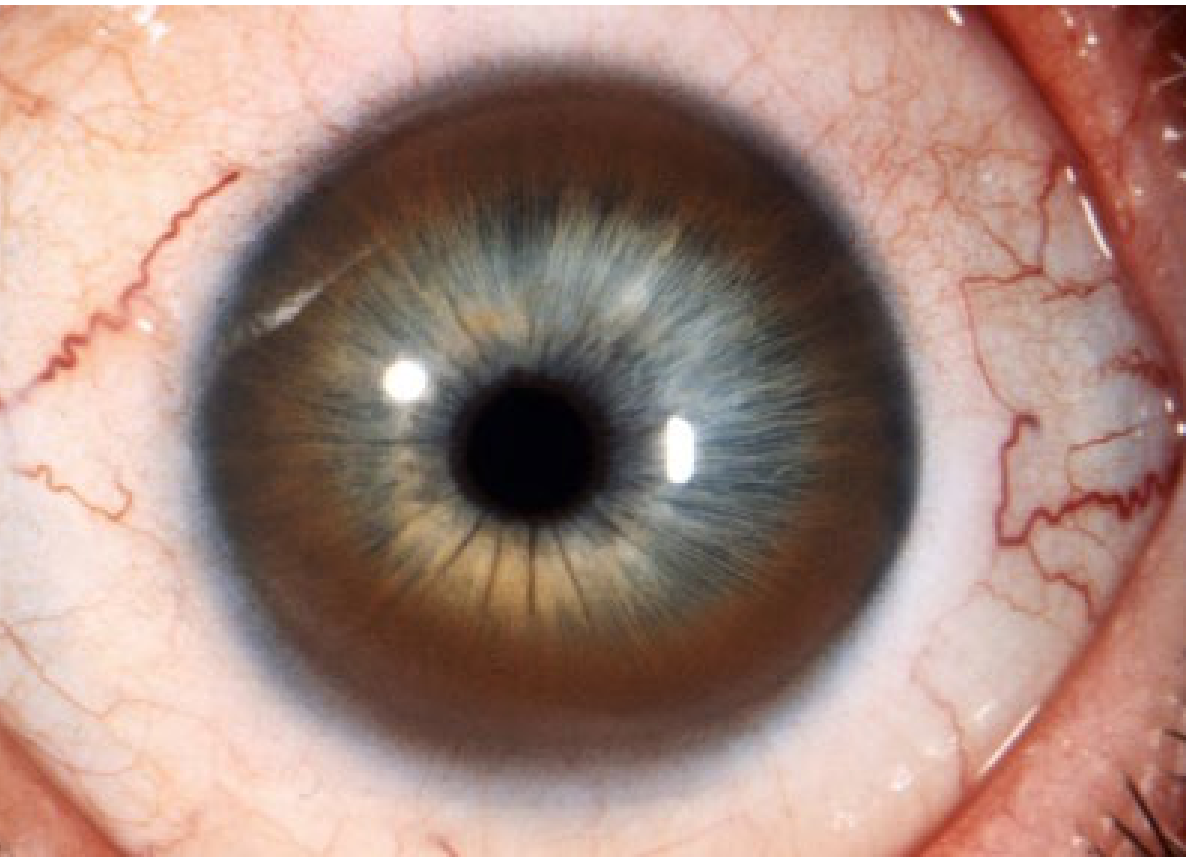
KF ring - characteristic finding in Wilson disease, best seen on slit-lamp examination - Yamada's Gastroenterology
- "Sunflower" cataracts: copper deposits in the lens producing a sunflower petal pattern (benign, do not affect vision significantly)
Management:
- KF rings and sunflower cataracts fade and disappear with successful copper-reducing treatment - their resolution is used as a marker of treatment response
- Slit-lamp examination should be performed at baseline and at follow-up visits to monitor treatment efficacy
- No specific ophthalmic treatment needed beyond copper reduction
- Goldman-Cecil Medicine; Yamada's Gastroenterology
Critical Complication: Treatment Withdrawal / Non-Compliance
This deserves special mention because it is life-threatening:
"Pregnant patients must remain on medication to treat Wilson disease because discontinuation of therapy can cause sudden copper release, hemolysis, acute liver failure, and death."
- Sleisenger and Fordtran's GI and Liver Disease
- Patients who stop chelation for even a few months can develop fulminant liver failure (this is how some patients who had previously been well-controlled re-present with acute liver failure)
- Treatment is lifelong with no exceptions - this must be stressed strongly to patients and families
- If a patient cannot tolerate one agent (e.g., penicillamine side effects), switch to trientine rather than stopping treatment
Summary: Complications at a Glance
| Complication | Key Features | Primary Management |
|---|---|---|
| Acute hepatitis | Elevated transaminases, steatohepatitis pattern | Chelation (trientine/penicillamine) |
| Fulminant liver failure | Low ALP, hemolysis, coagulopathy, renal failure | Urgent liver transplant + plasmapheresis bridge |
| Cirrhosis/portal hypertension | Ascites, varices, encephalopathy | Chelation + standard cirrhosis management + OLT if end-stage |
| Gallstones | Pigmented, calcified, due to hemolysis + cirrhosis | Treat WD; cholecystectomy if symptomatic |
| Neurological deterioration | Tremor, dystonia, dysarthria, MRI basal ganglia changes | Trientine (not penicillamine) ± zinc; physio/speech therapy |
| Penicillamine-induced neuro worsening | Acute worsening in 20-50% on penicillamine | Switch to trientine or tetrathiomolybdate immediately |
| Psychiatric illness | Depression, psychosis, bipolar, personality change | Copper chelation + standard psychiatry (avoid neuroleptics or use low dose) |
| Hemolytic anemia | Coombs-negative, episodic | Chelation; transfusion support; plasmapheresis in acute crisis |
| Fanconi syndrome / renal tubular disease | Aminoaciduria, phosphaturia, low uric acid, RTA | Chelation + electrolyte replacement + phosphate supplementation |
| Osteoporosis / rickets | From renal phosphate wasting + liver disease | Calcium, vitamin D, phosphate; bisphosphonates; physio |
| Arthritis / joint disease | Large joints, synovial copper | Chelation + orthopedic management |
| Cardiac complications | Arrhythmia, cardiomyopathy, sudden death (rare) | Chelation + standard cardiology management |
| Endocrine | Hypoparathyroidism, amenorrhea, infertility | Chelation + calcium/calcitriol; hormonal support |
| KF rings / sunflower cataracts | Copper deposits in cornea/lens | Fade with successful chelation; slit-lamp monitoring |
| Treatment withdrawal | Sudden hemolysis and acute liver failure | Never stop treatment - switch agents if intolerant |
This is a shared conversation. Sign in to Orris to start your own chat.