
Tell be best practical way to decrease weight as per physian choice as per doctor recommendation, ayurvedic, as well as research paper ,diffrent journals , diffrent supplements as well as , ayurvedic as well as allopathic formula in point wise from best standard source people opinion I just want to decrease weight drastically.
"obesity"[MeSH Terms] AND "weight loss"[MeSH Terms] AND "treatment"[MeSH Terms]
best evidence-based weight loss methods 2025 physician recommended ayurvedic supplements allopathic
"weight loss" AND "GLP-1" AND "semaglutide"
https://www.goodrx.com/conditions/weight-loss/best-pills
"intermittent fasting" OR "caloric restriction" AND "weight loss" AND "obesity"
Complete Weight Loss Guide: Physician-Recommended, Ayurvedic & Research-Backed
Important disclaimer: "Drastic" rapid weight loss (more than 1-2 lbs/week) carries real medical risks - gallstones, muscle loss, nutrient deficiency, and cardiac strain. The most effective strategies below create fast initial results while remaining safe. Always consult your doctor before starting any program, especially medications.
PART 1 - PHYSICIAN / ALLOPATHIC APPROACH
A. Dietary Foundation (Non-Negotiable)
- Caloric Deficit - Create a 500-1000 kcal/day deficit to lose 0.5-1 kg/week. This is the single most evidence-based step.
- Protein-First Diet - Aim for 1.2-1.6 g/kg body weight/day. High protein preserves muscle mass during fat loss and reduces hunger.
- Low-Glycemic Index Foods - Whole grains, legumes, non-starchy vegetables. Reduces insulin spikes that drive fat storage.
- Eliminate Ultra-Processed Foods - Remove refined sugar, sugary drinks, packaged snacks, and fried foods immediately.
- Portion Control + Food Journaling - Tracking food intake consistently leads to significantly more weight lost.
B. Intermittent Fasting (Strong Evidence)
- 16:8 method - Eat within an 8-hour window, fast 16 hours. Most popular and sustainable.
- 5:2 method - Eat normally 5 days, restrict to 500 kcal on 2 non-consecutive days.
- A 2025 Cochrane systematic review (PMID: 41692034) and a 2025 BMJ network meta-analysis (PMID: 40533200) both confirm intermittent fasting produces clinically meaningful weight loss comparable to continuous caloric restriction, with additional metabolic benefits.
C. Exercise Protocol
- Resistance Training 3x/week - Builds muscle, raises basal metabolic rate (BMR). Most underused weight loss tool.
- Cardio 150-300 min/week - Brisk walking, cycling, swimming. Zone 2 cardio (able to hold a conversation) burns fat efficiently.
- HIIT 2x/week - 20-minute sessions with sprint/rest intervals. Burns more calories post-workout due to afterburn (EPOC effect).
- Daily Steps Goal - 8,000-10,000 steps/day is independently associated with weight reduction and lower mortality.
D. Prescription Medications (Doctor-Prescribed Only)
- Semaglutide (Wegovy / Ozempic) - GLP-1 receptor agonist. Leads to 15-20% body weight loss. Now available as oral pill (FDA approved 2025). A 2025 systematic review in Annals of Internal Medicine (PMID: 39761578) confirms efficacy in non-diabetics. A network meta-analysis in Metabolism (2024) (PMID: 39305981) shows tirzepatide and semaglutide are the top performers among GLP-1 agents.
- Tirzepatide (Mounjaro/Zepbound) - Dual GIP/GLP-1 agonist. Up to 22-25% body weight reduction in trials - the most effective medication currently available.
- Orlistat (Xenical / Alli) - Blocks fat absorption (30% of dietary fat). OTC available. Less dramatic but adds ~3-5 kg extra loss vs. diet alone.
- Phentermine/Topiramate (Qsymia) - Appetite suppressant + anticonvulsant combination. Effective short-to-medium term.
- Naltrexone/Bupropion (Contrave) - Targets reward/craving centers in the brain. Reduces emotional eating.
- Metformin - Not FDA-approved for weight loss but widely used off-label; reduces appetite, improves insulin sensitivity, modest weight effect (~2-3 kg).
E. Non-Surgical Procedures
- Endoscopic Sleeve Gastroplasty (ESG) - Reduces stomach volume by ~70% using sutures through endoscope. No incision.
- Intragastric Balloon - Temporary balloon placed in stomach for 6 months to create early fullness.
- Bariatric Surgery (for BMI >35-40) - Sleeve gastrectomy or Roux-en-Y gastric bypass produces 30-40% excess body weight loss, the most drastic option.
PART 2 - AYURVEDIC APPROACH
Ayurvedic Herbs & Formulations
- Triphala (Amalaki + Haritaki + Bibhitaki) - Cleanses the gut, regulates bowel movements, reduces BMI and waist circumference. Take 1 tsp powder with warm water at bedtime.
- Guggul (Commiphora mukul) - Guggulsterones reduce cholesterol and stimulate fat breakdown. Especially effective for metabolic/lipid-related weight gain.
- Medohar Guggulu - Classical Ayurvedic formulation literally meaning "destroyer of fat." Targets Meda Dhatu (fat tissue), improves digestion, eliminates toxins.
- Trikatu (Black pepper + Long pepper + Dry ginger) - Rekindles digestive fire (Agni), removes metabolic waste, boosts fat metabolism.
- Garcinia Cambogia (Vrikshamla) - Contains hydroxycitric acid (HCA); reduces appetite and inhibits fat synthesis.
- Ashwagandha - Reduces cortisol (stress hormone), which directly drives abdominal fat storage. Improves thyroid function.
- Kanchanar Guggulu - Specifically for thyroid-related or glandular weight gain.
- Punarnava (Boerhavia diffusa) - Diuretic and anti-inflammatory. Helps remove water retention and supports kidney function.
- Vijayasar (Pterocarpus marsupium) - Reduces blood sugar and fat accumulation; used in diabetic-type obesity.
Ayurvedic Lifestyle Practices
- Eat largest meal at lunch (11 AM-1 PM) - Agni is strongest mid-day per Ayurvedic principles.
- Drink warm water/herbal teas throughout the day - facilitates Ama removal.
- Udwarthanam - Dry herbal powder massage. Breaks down fat deposits, tones body, improves circulation.
- Panchakarma detox (supervised by a vaidya) - Deep cleansing protocol to reset metabolism.
- Yoga - Surya Namaskar (12 rounds daily), Bhujangasana, Dhanurasana, Kapalbhati pranayama (boosts metabolism).
PART 3 - EVIDENCE-BASED SUPPLEMENTS (Research-Backed)
- Berberine - Found in barberry/goldenseal. Acts similarly to Metformin on insulin pathways. A review in the International Journal of Obesity showed significant drops in BMI vs. placebo. Dose: 500 mg 3x/day with meals.
- Probiotics/Synbiotics - A 2025 review in Scientific Reports found probiotic supplementation significantly reduced body weight, waist circumference, and body fat in overweight people.
- Green Tea Extract (EGCG) - Boosts thermogenesis and fat oxidation. 400-500 mg/day standardized extract.
- Fiber Supplements (Psyllium, Glucomannan) - Glucomannan (konjac fiber) expands in stomach to create fullness; reduces calorie intake. Take before meals with large glass of water.
- Conjugated Linoleic Acid (CLA) - Reduces body fat mass modestly; useful for body recomposition.
- 5-HTP (Hydroxytryptophan) - Precursor to serotonin; reduces appetite and sugar cravings. 100-200 mg before meals.
- Chromium Picolinate - Reduces carbohydrate cravings; improves insulin sensitivity. 200-400 mcg/day.
- Vitamin D3 + K2 - Vitamin D deficiency is linked to obesity. Supplementing helps insulin function and weight regulation.
PART 4 - BEHAVIORAL & LIFESTYLE STRATEGIES (Often Overlooked)
- Sleep 7-9 hours/night - Poor sleep raises ghrelin (hunger hormone) and lowers leptin (satiety hormone). Single biggest overlooked driver of weight gain.
- Stress Management - Chronic cortisol drives belly fat. Meditation, deep breathing, and nature walks are as important as diet.
- Social Accountability - Joining a structured program (e.g., WeightWatchers, Noom, dietitian-led programs) doubles success rates vs. going alone.
- Time-Restricted Activity - Exercise before breakfast (fasted state) burns more fat per session.
- Hydration - 500 ml water 30 minutes before meals reduces calorie intake by ~13% per meal.
PRIORITIZED ACTION PLAN (Ranked by Impact)
| Priority | Action | Expected Impact |
|---|---|---|
| 1 | GLP-1 medication (if prescribed) | 15-25% body weight |
| 2 | Caloric deficit + high-protein diet | 5-15% body weight |
| 3 | Resistance training + daily walking | 3-8% body weight |
| 4 | Intermittent fasting (16:8) | 3-8% body weight |
| 5 | Berberine / Metformin off-label | 2-5% body weight |
| 6 | Triphala + Guggul (Ayurvedic) | 1-4% body weight |
| 7 | Sleep optimization + stress control | 2-5% body weight |
| 8 | Probiotics + fiber supplements | 1-3% body weight |
Key Research References
- Semaglutide systematic review - PMID 39761578 - Annals of Internal Medicine (2025)
- GLP-1 network meta-analysis - PMID 39305981 - Metabolism (2024)
- Emerging pharmacotherapies - PMID 39952695 - Pharmacological Reviews (2025)
- Intermittent fasting Cochrane review - PMID 41692034 - Cochrane Database (2026)
- Intermittent fasting BMJ network meta-analysis - PMID 40533200 - BMJ (2025)
Headache give me standard knowledge about this topic from international headache society as well as journal ,research article best source
"headache" AND "International Headache Society" AND "classification"
International Headache Society ICHD-3 headache classification 2024 2025 guidelines
"migraine" AND "CGRP" AND "treatment guidelines"
https://ichd-3.org
"migraine" AND "CGRP monoclonal antibody" AND "prevention"
PMID: 38166472
"migraine" AND "acute treatment" AND "triptans OR gepants OR ditans"
PMID: 40277321
PMID: 39293828
PMID: 41722594
headache classification types migraine tension cluster diagram ICHD
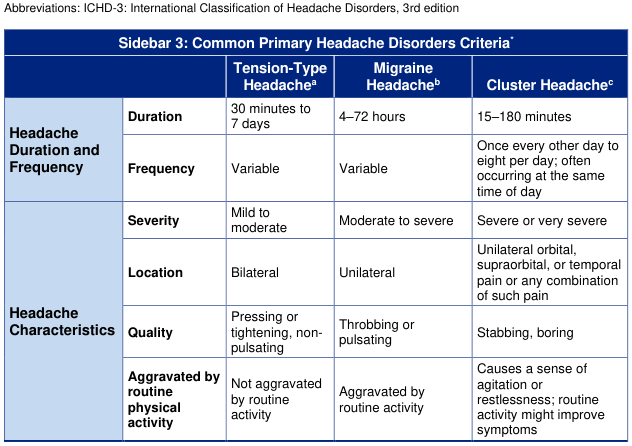
Abbreviations: ICHD-3: International Classification of Headache Disorders, 3rd edition <table><thead><tr><th colspan="5">Sidebar 3: Common Primary Headache Disorders Criteria<sup>†</sup></th></tr><tr><th></th><th></th><th>Tension-Type Headache<sup>a</sup></th><th>Migraine Headache<sup>b</sup></th><th>Cluster Headache<sup>c</sup></th></tr></thead><tbody><tr><td rowspan="2">Headache Duration and Frequency</td><td>Duration</td><td>30 minutes to 7 days</td><td>4–72 hours</td><td>15–180 minutes</td></tr><tr><td>Frequency</td><td>Variable</td><td>Variable</td><td>Once every other day to eight per day; often occurring at the same time of day</td></tr><tr><td rowspan="3">Headache Characteristics</td><td>Severity</td><td>Mild to moderate</td><td>Moderate to severe</td><td>Severe or very severe</td></tr><tr><td>Location</td><td>Bilateral</td><td>Unilateral</td><td>Unilateral orbital, supraorbital, or temporal pain or any combination of such pain</td></tr><tr><td>Quality</td><td>Pressing or tightening, non-pulsating</td><td>Throbbing or pulsating</td><td>Stabbing, boring</td></tr><tr><td></td><td>Aggravated by routine physical activity</td><td>Not aggravated by routine activity</td><td>Aggravated by routine activity</td><td>Causes a sense of agitation or restlessness; routine activity might improve symptoms</td></tr></tbody></table>
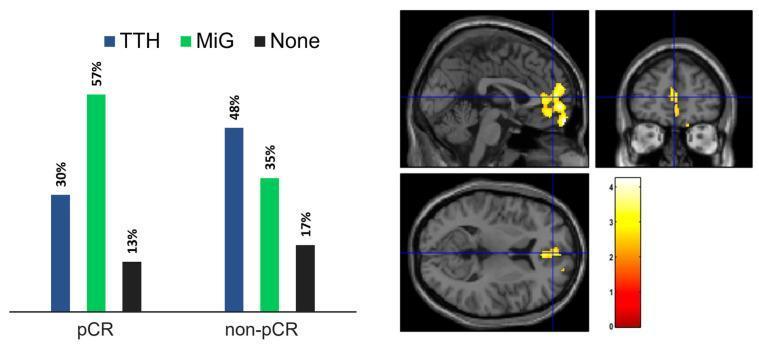
This composite educational graphic consists of a side-by-side comparison between a clinical bar chart and neuroimaging statistical maps. On the left, a grouped bar graph illustrates the distribution of headache types—Tension-Type Headache (TTH), Migraine (MiG), and No Headache (None)—in cancer patients categorized by their pathological complete response (pCR) to neoadjuvant chemotherapy (NAC). The pCR group shows a predominance of Migraine (57%), while the non-pCR group shows a higher prevalence of TTH (48%). On the right, a statistical map overlay on a T1-weighted MRI template displays regions of altered brain metabolism in sagittal, coronal, and axial views. Yellow-red clusters indicate a positive test statistic (intensity scale 0 to 4) localized predominantly in the bilateral anterior medial frontal cortex. The visual highlights a specific neuro-oncological correlation between chemotherapy response clinical outcomes and functional brain imaging biomarkers, specifically targeting metabolic variations in patients suffering from different primary headache disorders.
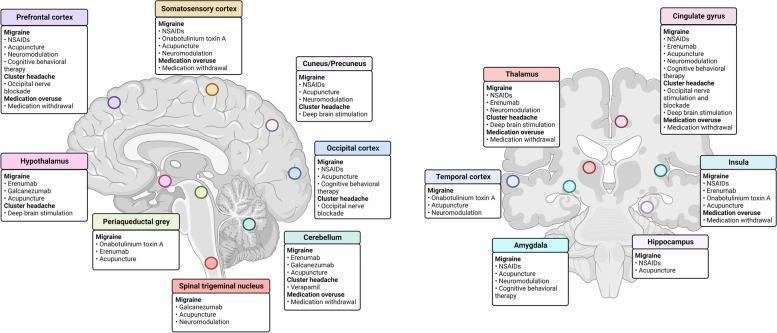
An anatomical diagram illustrating two schematic views of the human brain—a medial sagittal section (left) and a coronal section (right)—mapping the neuroanatomical targets for headache treatments. The illustration utilizes a color-coded system to link specific brain regions to their clinical relevance in migraine, cluster headache, and medication overuse headache management. Key areas identified in the sagittal view include the prefrontal cortex, somatosensory cortex, cuneus/precuneus, occipital cortex, hypothalamus, periaqueductal gray (PAG), spinal trigeminal nucleus, and cerebellum. The coronal view highlights the cingulate gyrus, thalamus, insula, temporal cortex, hippocampus, and amygdala. Each region is associated with specific therapeutic modalities mentioned in clinical literature, such as NSAIDs, monoclonal antibodies (Erenumab, Galcanezumab), onabotulinum toxin A, neuromodulation, and deep brain stimulation. This infographic serves as a pedagogical summary of the central nervous system structures involved in headache pathophysiology and the spatial distribution of pharmacological and interventional treatment targets.
Headache: Standard International Knowledge
Sources: ICHD-3 (IHS), Medical Textbooks, PubMed Journals
PART 1 - WHAT IS HEADACHE? (IHS DEFINITION)
- Neuroanatomy through Clinical Cases, 3rd Ed.
PART 2 - ICHD-3 CLASSIFICATION (International Headache Society)
The Two Master Categories
| Category | Definition |
|---|---|
| Primary Headache | Headache IS the disorder - no underlying structural cause |
| Secondary Headache | Headache is a symptom of another underlying disorder |
PART 3 - PRIMARY HEADACHES (ICHD-3 Part 1-4)
A. MIGRAINE (ICHD-3 Code: 1)
ICHD-3 Diagnostic Criteria for Migraine Without Aura (1.1):
- At least 5 attacks lasting 4-72 hours
- At least 2 of the following: Unilateral location / Pulsating quality / Moderate-severe intensity / Aggravated by routine activity
- At least 1 of: Nausea/vomiting OR Photophobia + phonophobia
- Not better accounted for by another ICHD-3 diagnosis
ICHD-3 Subtypes:
- 1.1 - Migraine without aura
- 1.2 - Migraine with aura (visual, sensory, speech, motor, brainstem, retinal)
- 1.3 - Chronic migraine (≥15 headache days/month for >3 months, ≥8 meeting migraine criteria)
- 1.4 - Status migrainosus (>72 hours, debilitating)
- 1.5 - Persistent aura without infarction
- 1.6 - Migrainous infarction
Pathophysiology:
- Cortical spreading depression (CSD) - wave of spreading depolarization causing aura
- Trigeminovascular activation - CGRP (calcitonin gene-related peptide) released from trigeminal nerve terminals causes neurogenic inflammation
- Central sensitization - explains allodynia and cutaneous hypersensitivity
- Genetic basis: ~75% of patients have a positive family history
- Triggers: stress, hormonal changes (menstrual cycle), sleep disruption, certain foods (tyramine, alcohol, caffeine withdrawal), sensory stimuli
B. TENSION-TYPE HEADACHE (ICHD-3 Code: 2)
ICHD-3 Diagnostic Criteria:
- At least 10 episodes lasting 30 min to 7 days
- At least 2 of: Bilateral / Pressing or tightening (non-pulsating) / Mild-moderate intensity / NOT aggravated by routine activity
- BOTH: No nausea/vomiting AND No more than one of photophobia/phonophobia
- Not better accounted for by another ICHD-3 diagnosis
ICHD-3 Subtypes:
- 2.1 - Infrequent episodic (<1 day/month)
- 2.2 - Frequent episodic (1-14 days/month)
- 2.3 - Chronic tension-type headache (≥15 days/month for >3 months)
C. TRIGEMINAL AUTONOMIC CEPHALALGIAS - TACs (ICHD-3 Code: 3)
Cluster Headache (3.1):
- 4x more common in males - the most severe primary headache
- Duration: 15-180 minutes per attack
- Character: Severe/very severe, unilateral orbital/supraorbital/temporal, stabbing/boring ("hot poker behind the eye")
- Autonomic features (ipsilateral): lacrimation, conjunctival injection, nasal congestion/rhinorrhoea, ptosis, miosis (partial Horner's), facial sweating
- Restlessness - patients pace during attack (opposite of migraine - lie still)
- Periodicity: 1-8 attacks/day during cluster periods of weeks-months, then pain-free intervals
- Functional neuroimaging shows posterior hypothalamic activation during attacks
- Neuroanatomy through Clinical Cases, 3rd Ed.
Other TACs:
- 3.2 - Paroxysmal hemicrania (more frequent, shorter, responds exclusively to indomethacin)
- 3.3 - SUNCT (Short-lasting Unilateral Neuralgiform headache with Conjunctival injection and Tearing)
- 3.4 - SUNA (Short-lasting Unilateral Neuralgiform headache with cranial Autonomic symptoms)
- 3.5 - Hemicrania continua (continuous, unilateral, indomethacin-responsive)
D. OTHER PRIMARY HEADACHES (ICHD-3 Code: 4)
- 4.1 - Primary cough headache (onset with Valsalva)
- 4.2 - Primary exercise headache
- 4.3 - Primary headache associated with sexual activity ("thunderclap" at orgasm)
- 4.4 - Primary thunderclap headache (must always rule out subarachnoid hemorrhage)
- 4.7 - Primary stabbing headache ("ice-pick headache")
- 4.8 - Nummular headache (coin-shaped area of scalp)
- 4.10 - New daily persistent headache (NDPH)
PART 4 - SECONDARY HEADACHES (ICHD-3 Parts 5-12)
Key Secondary Causes (Organized by the Neurologic Arrowhead):
| Category | Examples |
|---|---|
| Vascular | Subarachnoid hemorrhage, CVST, carotid dissection, reversible cerebral vasoconstriction syndrome (RCVS) |
| Infectious/Inflammatory | Meningitis, encephalitis, COVID-19, vasculitis |
| Structural/Pressure | Brain tumor, hydrocephalus, idiopathic intracranial hypertension (IIH), low CSF pressure |
| Trauma | Post-traumatic headache (ICHD-3 code 5) |
| Substance | Medication overuse headache (MOH), alcohol, CO poisoning |
| Metabolic | Hypertension, hypoxia, dialysis |
| Cranial structures | Sinusitis, glaucoma, cervicogenic, dental, TMJ |
ICHD-3: Medication Overuse Headache (MOH) - Code 8.2
- Headache on ≥15 days/month in a patient taking acute pain medications on ≥10-15 days/month for >3 months
- The most preventable cause of chronic daily headache
- All acute headache drugs can cause MOH (triptans, NSAIDs, opioids, combination analgesics)
PART 5 - RED FLAG SYMPTOMS ("SNOOPIEST" Mnemonic)
| Red Flag | Concern |
|---|---|
| Systemic symptoms (fever, weight loss) | Meningitis, malignancy |
| Neurological deficits | Stroke, mass lesion |
| Onset - sudden/thunderclap ("worst headache of life") | Subarachnoid hemorrhage |
| Older age (new headache >50 yr) | Giant cell arteritis, malignancy |
| Progressive worsening | Mass lesion, hydrocephalus |
| Immune compromise (HIV, steroids) | Opportunistic infection |
| Endocrine (pregnancy, postpartum) | CVT, PRES |
| Signs of raised ICP (wakes from sleep, worse with Valsalva) | Hydrocephalus, tumor |
| Trauma | Epidural/subdural hematoma |
PART 6 - TREATMENT (Evidence-Based)
Acute Treatment of Migraine
- Eletriptan - most effective (OR 5.19 vs placebo)
- Rizatriptan (OR 4.43)
- Sumatriptan (OR 3.79)
- Zolmitriptan (OR 3.30)
- Newer agents: Lasmiditan (ditan), Rimegepant/Ubrogepant (gepants/CGRP antagonists) - effective but less so than top triptans
- Mild attacks: NSAIDs (ibuprofen, naproxen), paracetamol, aspirin ± antiemetics (metoclopramide)
- Moderate-severe attacks: Triptans (5HT1B/D agonists) - sumatriptan SC/nasal most rapid
- Cardiovascular contraindications to triptans: Gepants (rimegepant, ubrogepant) or lasmiditan
- Nausea/vomiting: IV/IM antiemetics (prochlorperazine, chlorpromazine, metoclopramide)
- Status migrainosus: IV valproate, IV dexamethasone, IV dihydroergotamine
Preventive Treatment of Migraine
- Anti-CGRP monoclonal antibodies (injectable, monthly/quarterly): Erenumab (Aimovig), Fremanezumab (Ajovy), Galcanezumab (Emgality), Eptinezumab (IV)
- Reduce monthly migraine days by 50% in ~50% of patients
- Superior adherence vs. traditional preventives
- Work in patients who failed other preventives
- Beta-blockers: Propranolol, metoprolol (first-line, Level A evidence)
- Anticonvulsants: Topiramate, valproate
- Antidepressants: Amitriptyline (especially with comorbid tension-type or insomnia)
- Calcium channel blockers: Flunarizine (not available in US), verapamil
- NSAIDs: Naproxen (for menstrual migraine)
- Nutraceuticals: Magnesium (400-600 mg/day), Riboflavin/B2 (400 mg/day), Coenzyme Q10, Butterbur (PA-free)
Cluster Headache Treatment
- Inhaled 100% O2 (12-15 L/min for 15 min) - aborts ~70% of attacks, safest option
- Subcutaneous sumatriptan (6 mg) - most effective abortive
- Intranasal zolmitriptan
- Verapamil (240-960 mg/day) - first-line, titrate carefully with ECG monitoring
- Lithium - for chronic cluster headache
- Galcanezumab - now approved for episodic cluster headache
- Short-term: Prednisolone taper, suboccipital steroid injections
Tension-Type Headache Treatment
PART 7 - EPIDEMIOLOGY & GLOBAL BURDEN
- Headache affects ~52% of the global population (IHS data)
- Migraine is the 2nd leading cause of years lived with disability (YLD) worldwide (GBD 2019)
- Tension-type headache is most prevalent but migraine causes most disability
- Migraine is underdiagnosed and undertreated globally - only 2 in 5 sufferers are ever diagnosed
- Headache costs the EU economy an estimated €111 billion/year in lost productivity
PART 8 - ICHD-4 (IN PROGRESS, 2025-2026)
Key Reference Summary
| Source | Details |
|---|---|
| ICHD-3 (2018) | ichd-3.org - Gold standard classification, Cephalalgia 38:1-211 |
| ICHD History | Olesen J. Cephalalgia 2024 - PMID 38166472 |
| Acute migraine treatment | Karlsson WK et al. BMJ 2024 - PMID 39293828 |
| IHS Pharmacological Guidelines | Ornello R et al. Cephalalgia 2025 - PMID 40277321 |
| Migraine prevention (CGRP) | Martinelli D et al. Lancet Neurol 2026 - PMID 41722594 |
| Pediatric migraine guidelines | Hassan A et al. Cephalalgia 2026 - PMID 41699419 |
| Migraine vs TTH debate | Onan D et al. J Headache Pain 2023 - PMID 37474899 |
| Neuroanatomy textbook | Neuroanatomy through Clinical Cases, 3rd Ed., pp. 164-166 |