
Neisseria
Neisseria is a genus of Gram-negative diplococci. The two major pathogens are N. gonorrhoeae (gonorrhea, pelvic inflammatory disease) and N. meningitidis (bacterial meningitis, septicemia). Both are oxidase-positive, non-motile, and require enriched media (chocolate agar) for culture. N. meningitidis is encapsulated and spread by respiratory droplets; N. gonorrhoeae lacks a capsule and is sexually transmitted.
Searching sources...
Reading File
Finding Sources
Finding Sources
The best source is Medical Microbiology 9e - block3. Let me read the dedicated Neisseria sections.
Reading File
Reading File
Reading File
Reading File
Reading File
Reading File
Reading File
Loading Image
Now I have comprehensive information. Let me compile the full answer.
Neisseria - Complete Overview
Source: Medical Microbiology 9e, Chapter 23
Taxonomy & General Features
Neisseria belongs to the family Neisseriaceae, which also includes Eikenella and Kingella. The genus contains 35 species and subspecies. Only two are strictly human pathogens:
- Neisseria gonorrhoeae (the gonococcus)
- Neisseria meningitidis (the meningococcus)
All other Neisseria species normally colonize mucosal surfaces (oropharynx, nasopharynx) and occasionally cause opportunistic infections.
Physiology & Structure
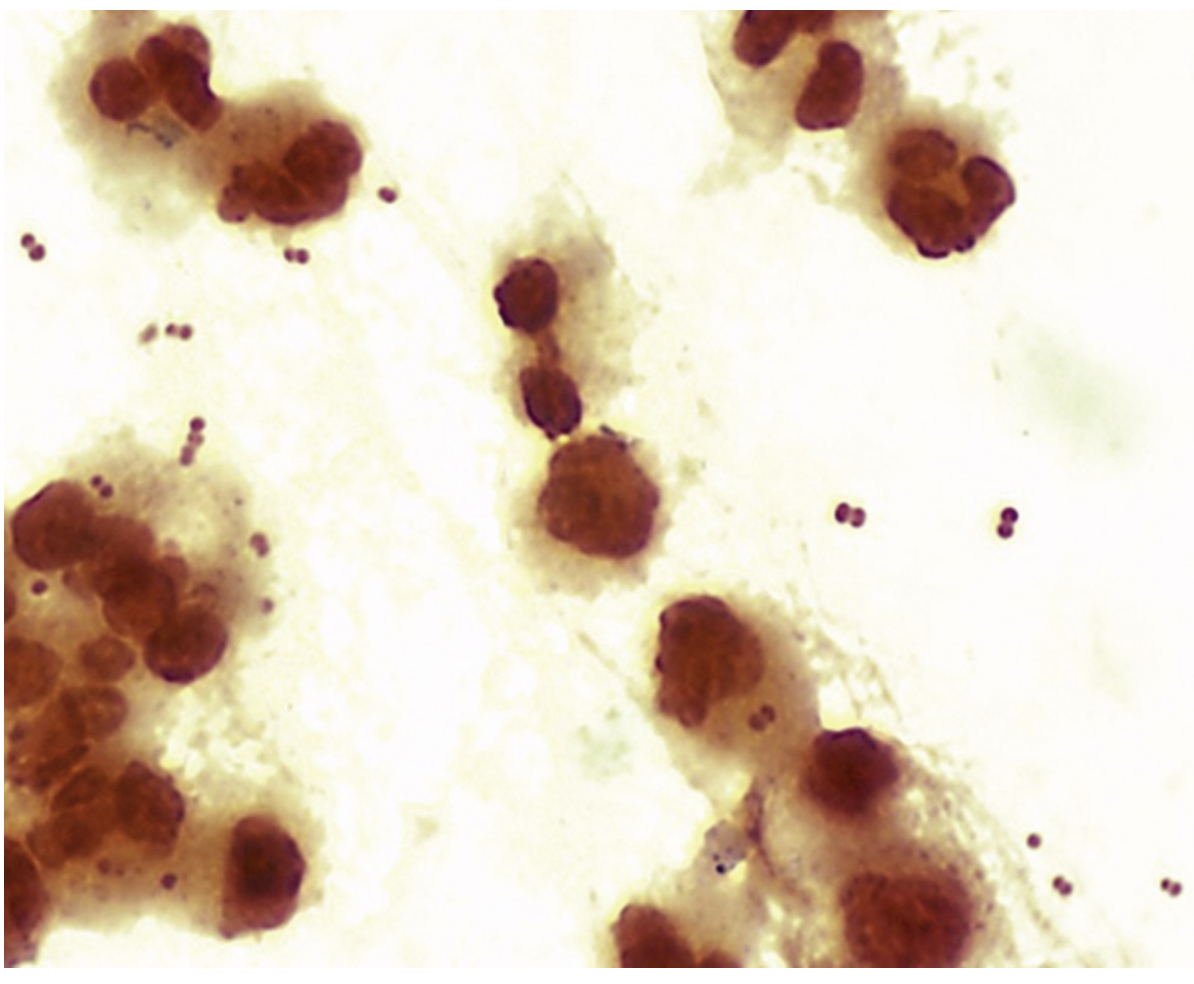
- Morphology: Aerobic, Gram-negative diplococci (0.6-1.0 µm diameter) with adjacent sides flattened, giving a coffee-bean appearance
- Oxidase positive, most are catalase positive
- Acid produced by oxidation of carbohydrates (not fermentation)
- Modern identification uses mass spectrometry (replaced carbohydrate oxidation tests)
Growth Requirements
| Feature | N. gonorrhoeae | N. meningitidis |
|---|---|---|
| Blood agar | Does NOT grow | Grows |
| Nutrient agar | Does NOT grow | Variable |
| Enriched chocolate agar | Required | Grows |
| CO2 requirement | Required/enhances | Enhances |
| Optimal temp | 35-37°C | 35-37°C |
| Capsule | No true capsule (but capsule-like negative surface charge) | Yes (polysaccharide) |
N. gonorrhoeae requires cysteine, an energy source, and often supplementation with amino acids, purines, pyrimidines, and vitamins. Soluble starch is added to media to neutralize toxic fatty acids.
Virulence Factors
N. gonorrhoeae
The outer surface expresses multiple antigens:
- Pili - attachment to mucosal epithelium; undergoes antigenic variation
- Por proteins (PorA, PorB) - porin proteins in outer membrane; PorB helps avoid phagosomal killing
- Opa proteins - mediate attachment to epithelial and phagocytic cells; highly variable
- Rmp protein - antibodies to Rmp block bactericidal activity (immune evasion)
- Transferrin, lactoferrin, and hemoglobin receptors - iron acquisition
- Lipooligosaccharide (LOS) - endotoxin activity; stimulates cytokine release
- IgA protease - cleaves secretory IgA1, aiding mucosal colonization
- β-lactamase - resistance mechanism
IgG3 is the predominant IgG antibody in gonococcal infection. Antibodies to LOS activate complement (releasing C5a), but IgG and secretory IgA1 antibodies to Rmp block this bactericidal response - explaining immune evasion.
N. meningitidis
- Polysaccharide capsule - the major virulence factor; 13 serogroups defined by capsular antigen differences; protects against phagocytic destruction
- Capsule is downregulated before epithelial attachment (capsule interferes with attachment), then re-expressed after invasion
- LOS endotoxin - causes diffuse vascular damage: endothelial damage, vessel wall inflammation, thrombosis, and DIC
Epidemiology
N. gonorrhoeae
- Humans are the only natural host; no animal reservoir
- Second most commonly reported STI in the US (after Chlamydia)
- ~555,608 cases reported in the US in 2017 (true incidence likely 2x this); WHO estimates ~78 million new cases worldwide annually
- Peak incidence: age 15-24 years; higher rates in Black populations and southeastern US
- Women have a 50% risk of acquiring infection from a single sexual contact; men have a lower risk (~20%)
- Asymptomatic carriage is common in women
- Disseminated disease risk is higher in patients with late complement component deficiencies (C5-C8)
N. meningitidis
- Carried asymptomatically in the nasopharynx of ~5-10% of healthy people
- Spreads via respiratory droplets
- Disease peaks in children < 2 years (maternal antibody protection wanes at ~6 months)
- Second peak in adolescents/young adults (college students, military recruits - close-contact settings)
- C5-C8 complement deficiencies confer ~6,000-fold greater risk
- Serogroups A, B, C, W, Y cause most disease; distribution varies by region and outbreak type
Pathogenesis
Gonococcal infection
- N. gonorrhoeae attaches to non-ciliated columnar epithelial cells via pili and Opa proteins
- Organisms are engulfed, avoid intracellular killing, replicate, and pass through the cell to subepithelial tissues
- Antigenic variation of pili and Opa proteins helps evade immune recognition
- LOS stimulates cytokine release, causing the characteristic purulent inflammation
Meningococcal infection
- Meningococci attach selectively to nonciliated columnar cells of the nasopharynx
- Capsule is downregulated for attachment, then organisms form large aggregates
- Pili undergo post-translational modification, destabilizing aggregates - enhancing both invasion and airway spread
- After entering the bloodstream, the polysaccharide capsule resists phagocytosis
- LOS endotoxin drives the vascular damage of meningococcemia
Clinical Diseases
N. gonorrhoeae - Clinical Summary
| Disease | Features |
|---|---|
| Urethritis (men) | Purulent urethral discharge, dysuria; 2-5 day incubation; symptomatic in ~95% |
| Cervicitis (women) | Often asymptomatic; mucopurulent discharge when symptomatic |
| Pelvic inflammatory disease (PID) | Ascending infection; salpingitis, oophoritis; risk of ectopic pregnancy, infertility |
| Epididymitis/Prostatitis | In men |
| Pharyngitis/Proctitis | From oral/anal sexual contact |
| Disseminated gonococcal infection (DGI) | Bacteremia spreading to skin/joints; pustular rash with erythematous base + suppurative arthritis |
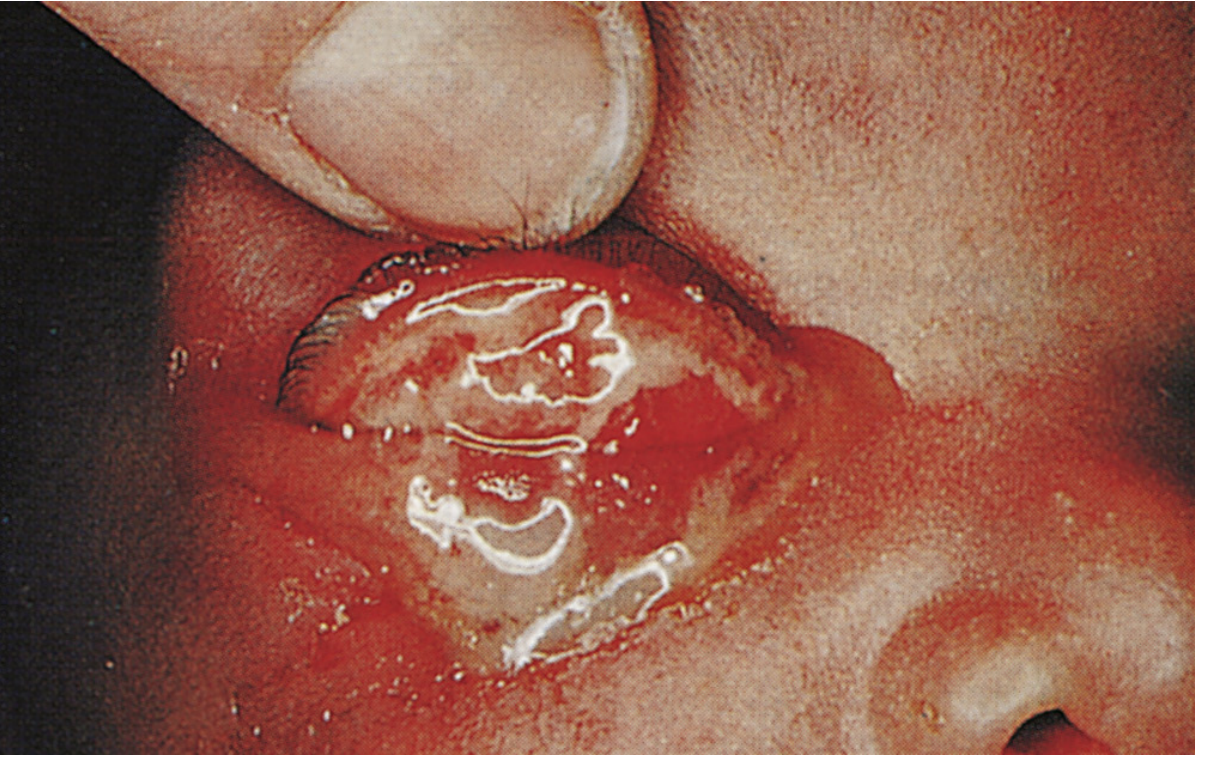
| Ophthalmia neonatorum | Purulent ocular infection in newborn acquired during vaginal delivery; can cause blindness |
N. meningitidis - Clinical Summary
| Disease | Features |
|---|---|
| Meningitis | Abrupt onset of headache, fever, meningeal signs (neck stiffness, Kernig/Brudzinski); mortality ~100% if untreated, <10% with prompt antibiotics |
| Meningococcemia | Septicemia ± meningitis; thrombosis of small vessels; petechial rash on trunk/lower extremities coalescing into hemorrhagic bullae; DIC, shock |
| Waterhouse-Friderichsen syndrome | Overwhelming DIC + bilateral adrenal destruction |
| Chronic meningococcemia | Low-grade fever, arthritis, petechiae for days-weeks; responds well to antibiotics |
| Pneumonia | Preceded by upper respiratory infection; cough, chest pain, fever, rales; good prognosis |
| Arthritis / Urethritis | Less common manifestations |
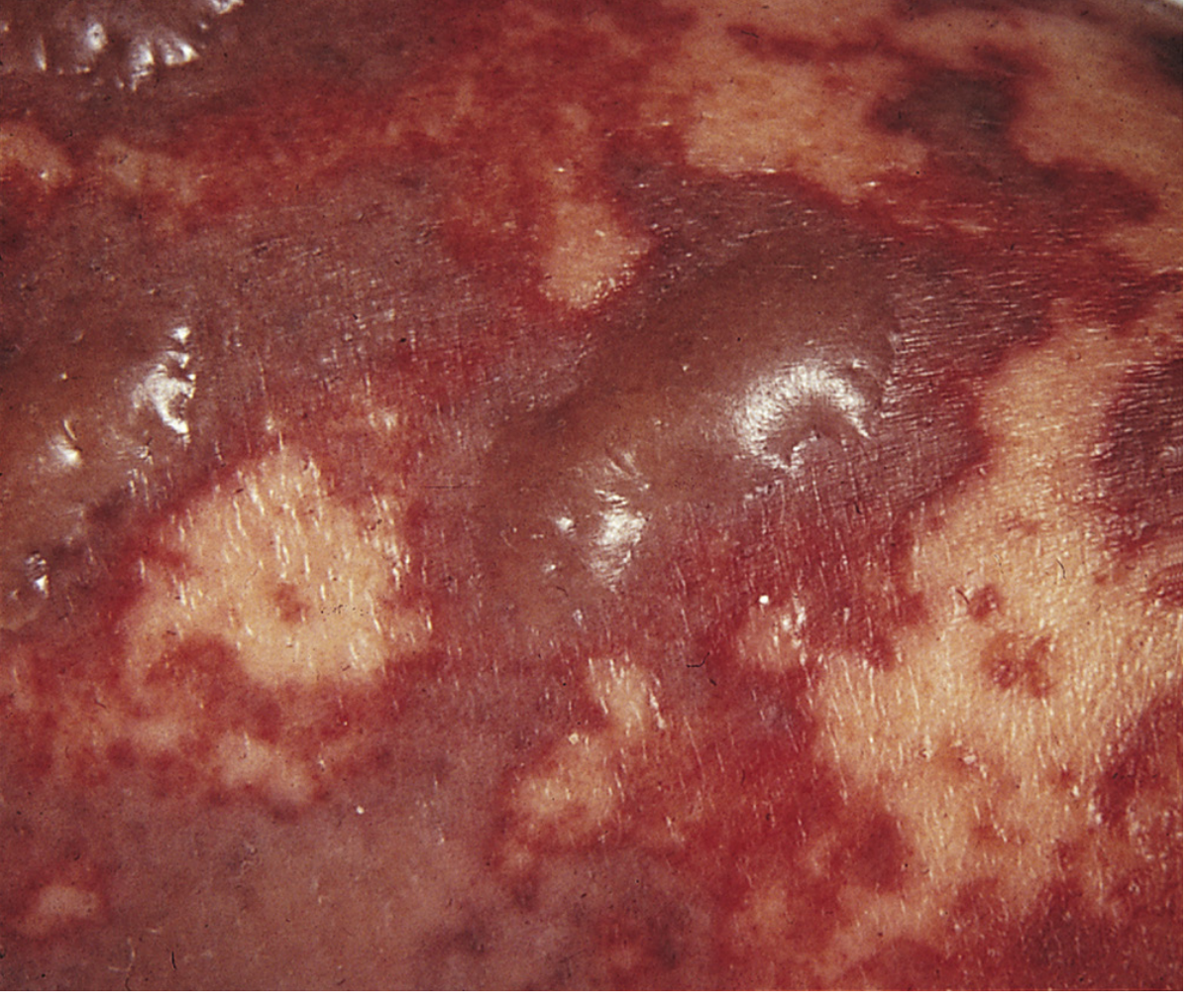
Clinical case (Gardner, NEJM 2006): An 18-year-old previously healthy male presented with fever (40°C), tachycardia (140/min), hypotension (70/40 mmHg), and petechiae over the chest. N. meningitidis grew in blood cultures. Despite prompt antibiotics, he died within 12 hours - illustrating the rapid progression characteristic of meningococcal disease.
Laboratory Diagnosis
Gram Stain
- Symptomatic men with urethritis: Sensitivity >90%, specificity 98% - adequate for presumptive diagnosis
- Asymptomatic men: Sensitivity drops to ≤60%
- Women (cervicitis): Relatively insensitive - all negative results must be confirmed
- Commensal Neisseria spp. in the oropharynx can be confused with N. gonorrhoeae - Gram stain unreliable for pharyngitis/anorectal specimens
- CSF in meningitis: N. meningitidis readily visible unless prior antibiotics given
- Peripheral blood smear in overwhelming meningococcemia can reveal organisms in leukocytes (rare for other bacteremias)
Nucleic Acid Amplification Tests (NAATs)
- Diagnostic gold standard for N. gonorrhoeae
- Combination NAATs for N. gonorrhoeae + Chlamydia widely available; results in 1-2 hours
- Cannot be used to monitor antibiotic resistance
Culture
- Required for antibiotic susceptibility testing
- N. gonorrhoeae: enriched chocolate agar (Thayer-Martin selective medium); incubation at 35-37°C in 5% CO2
- Sensitive and specific but largely replaced by NAATs in most labs
Antigen Detection
- Capsular antigen tests for N. meningitidis in CSF/blood/urine: largely fallen out of favor (less sensitive than Gram stain, false-positives with urine)
Treatment
N. gonorrhoeae
- First-line: Ceftriaxone + azithromycin (dual therapy to address resistance and coinfecting Chlamydia)
- High-level resistance to cephalosporins and azithromycin has been observed - emerging concern
- Ophthalmia neonatorum prophylaxis: 1% silver nitrate eye drops at birth
- Treatment of ophthalmia neonatorum: Ceftriaxone
- No effective vaccine available
N. meningitidis
- Empiric treatment: High-dose IV penicillin G or ceftriaxone
- Chemoprophylaxis for close contacts: Rifampin (2 days), ciprofloxacin (single dose), or ceftriaxone (IM, single dose)
- Vaccines available: Polysaccharide-protein conjugate vaccines covering serogroups A, C, W, Y; serogroup B vaccines (factor H binding protein-based) also now available (not polysaccharide-based, because group B capsule is poorly immunogenic)
Differential: Neisseriaceae Family Comparison
| Feature | N. gonorrhoeae | N. meningitidis | Eikenella corrodens | Kingella kingae |
|---|---|---|---|---|
| Morphology | GN diplococcus | GN diplococcus | GN rod | GN coccobacillus |
| Capsule | No | Yes | No | No |
| Oxidase | + | + | + | + |
| Key niche | Genitourinary | Nasopharynx | Oropharynx | Oropharynx |
| Key disease | Gonorrhea, DGI | Meningitis, meningococcemia | Bite wounds, endocarditis | Septic arthritis (children), endocarditis |
| Penicillin | Resistant (often) | Sensitive | Sensitive (unusual for GN rod) | Sensitive |
Source: Medical Microbiology 9e, Chapter 23 (Neisseria)
This is a shared conversation. Sign in to Orris to start your own chat.