
give me real pituitary gland
The Pituitary Gland - Real Textbook Images
1. Anatomy - Sagittal & Coronal Views
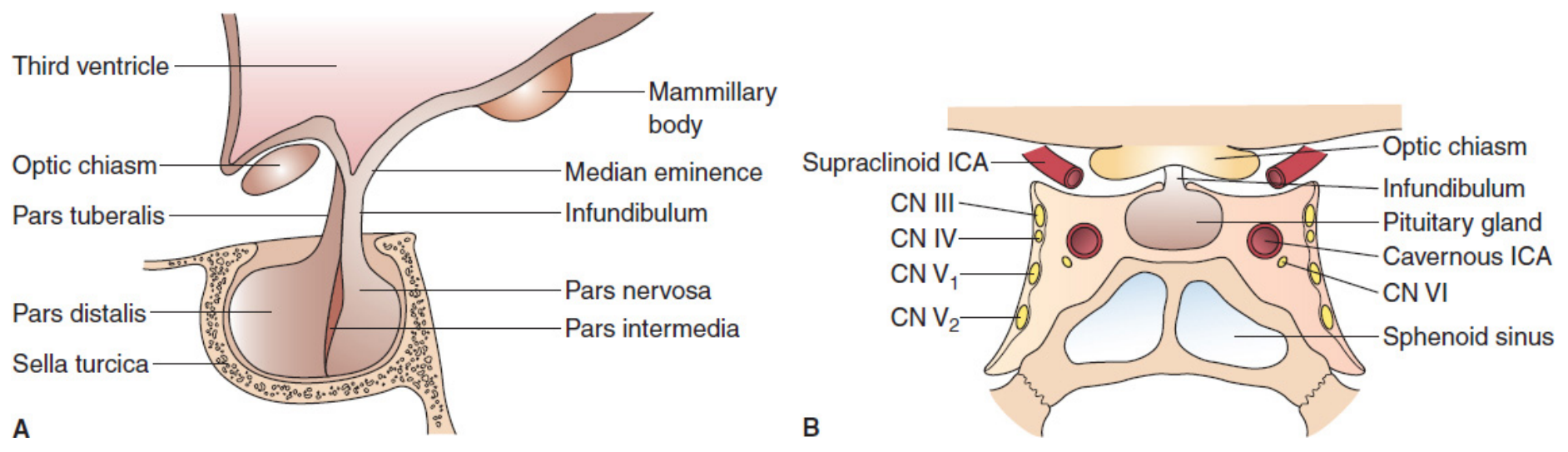
- Mulholland and Greenfield's Surgery, 7e
2. Histology - Normal Anterior Pituitary (H&E)
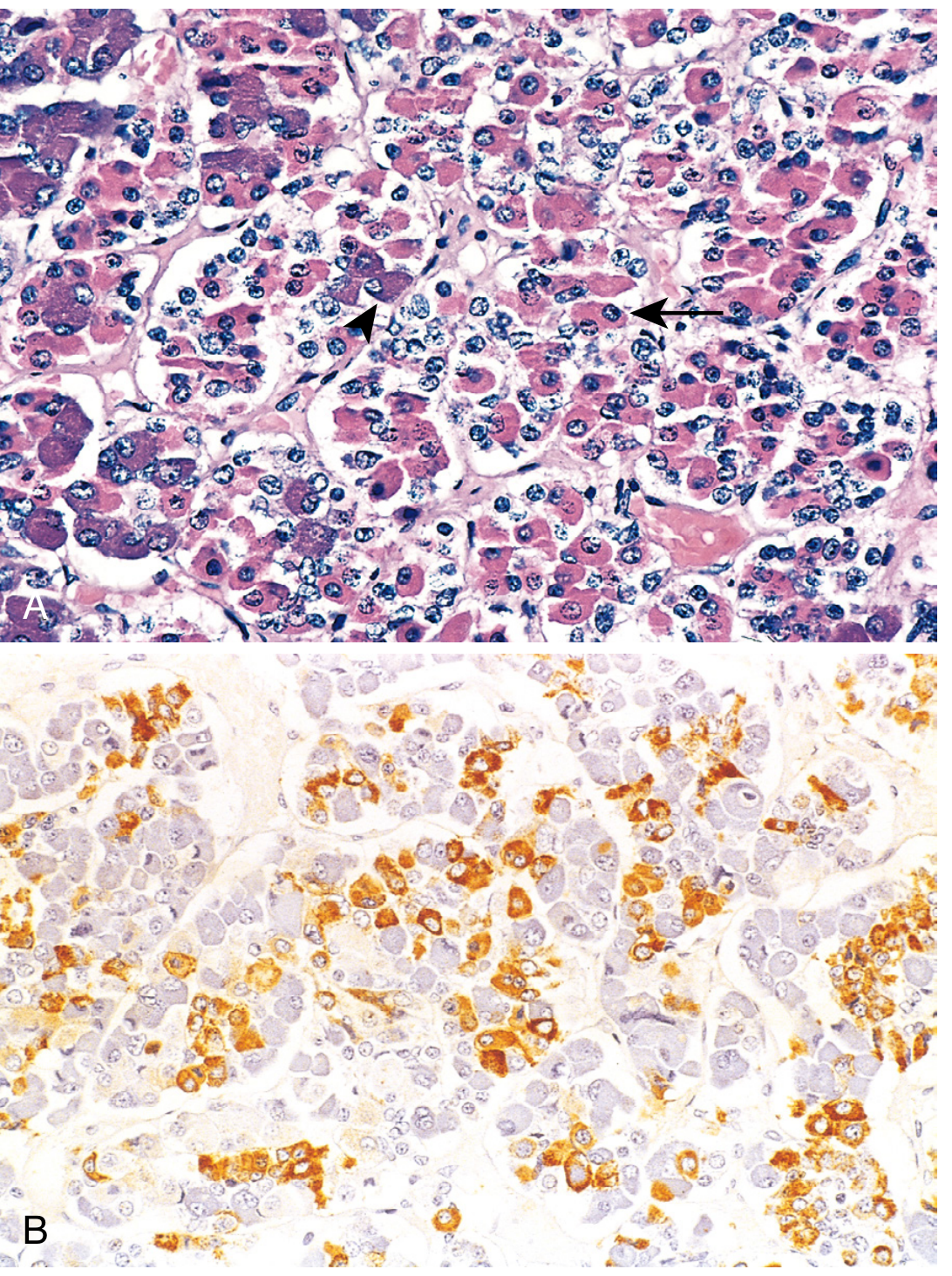
- Robbins, Cotran & Kumar Pathologic Basis of Disease
3. Histology - Whole Sagittal Section (H&E x50)
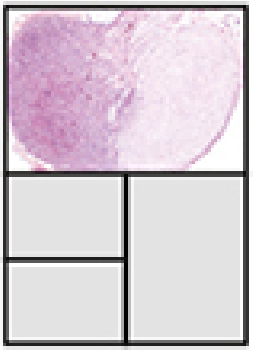
- Histology: A Text and Atlas, with Correlated Cell and Molecular Biology
Key Facts
| Feature | Detail |
|---|---|
| Size | ~1 cm, ~0.5 g |
| Location | Sella turcica of the sphenoid bone |
| Anterior lobe (80%) | Adenohypophysis - secretes GH, PRL, ACTH, TSH, FSH, LH |
| Posterior lobe (20%) | Neurohypophysis - stores/releases ADH (vasopressin) and oxytocin |
| Blood supply | Superior & inferior hypophyseal arteries |
| Clinical concern | Tumors compressing the optic chiasm cause bitemporal hemianopsia |
Create an anatomy poster of pituitary anatomy and hormone pathways
A detailed medical anatomy education poster titled "The Pituitary Gland: Anatomy & Hormone Pathways". Top section: A large, accurate sagittal cross-section illustration of the human brain showing the hypothalamus and pituitary gland (hypophysis) sitting in the sella turcica of the sphenoid bone. Label clearly: Hypothalamus, Infundibulum (pituitary stalk), Anterior Pituitary (Adenohypophysis), Posterior Pituitary (Neurohypophysis), Optic Chiasm, Third Ventricle, Sella Turcica, Sphenoid Sinus, Cavernous Sinus, Optic Nerve, Mammillary Body. Middle section: Two side-by-side hormone pathway diagrams: LEFT - "Anterior Pituitary Hormones" showing arrows from the anterior lobe to target organs: - GH (Growth Hormone) → Liver/Muscles/Bones (Growth, IGF-1) - TSH (Thyroid Stimulating Hormone) → Thyroid Gland (T3, T4) - ACTH (Adrenocorticotropic Hormone) → Adrenal Cortex (Cortisol) - FSH & LH (Gonadotropins) → Gonads (Estrogen, Testosterone) - PRL (Prolactin) → Mammary Glands (Milk Production) RIGHT - "Posterior Pituitary Hormones" showing: - ADH (Vasopressin) → Kidneys (Water Reabsorption) and Blood Vessels (Vasoconstriction) - Oxytocin → Uterus (Contractions) and Mammary Glands (Milk Ejection) Note: "Produced in Hypothalamus, Stored & Released from Posterior Pituitary" Bottom section: A small diagram showing the Hypothalamic-Pituitary Axis feedback loop with labels for releasing hormones (CRH, TRH, GnRH, GHRH, Dopamine) and negative feedback arrows. Clean white background, professional medical illustration style, full color with blue and red tones, clearly labeled with arrows, suitable for medical students.
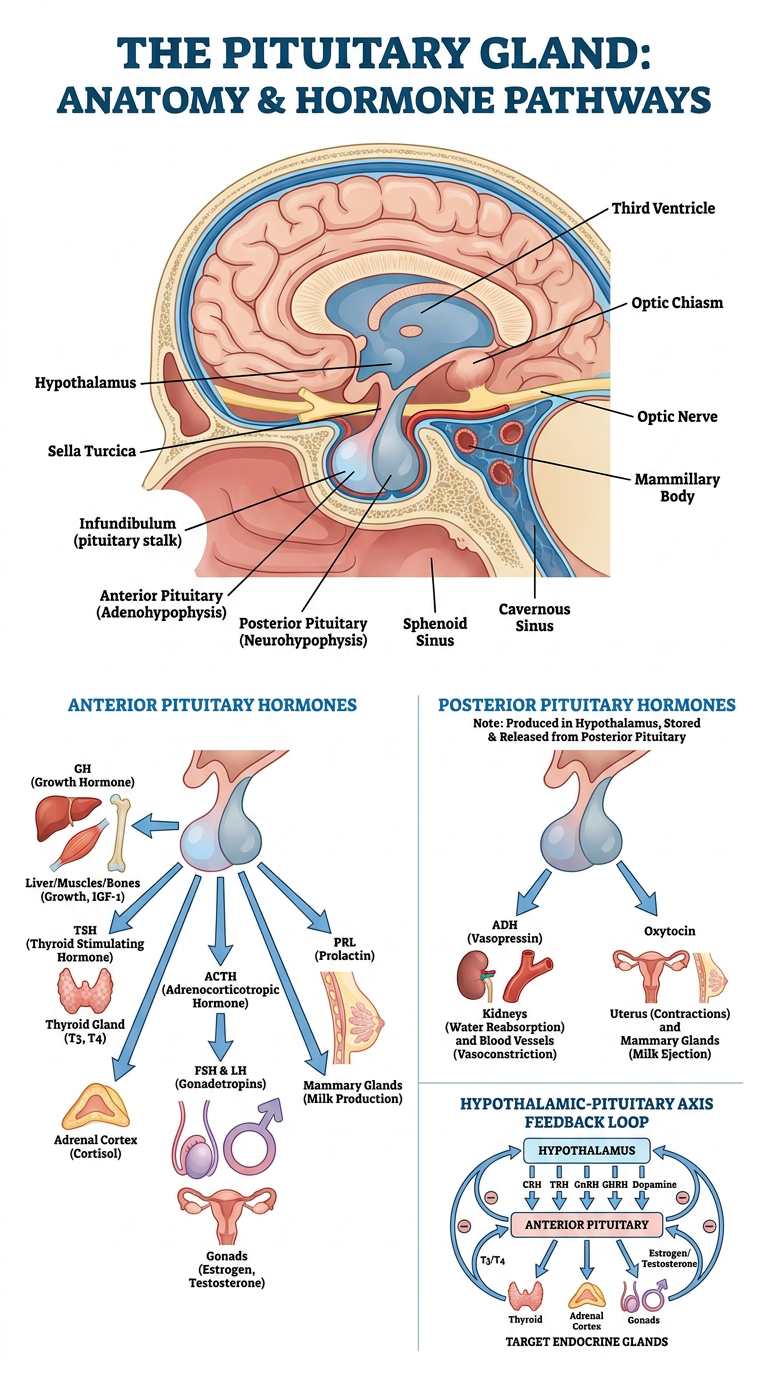
- GH → liver/bones (growth, IGF-1)
- TSH → thyroid (T3/T4)
- ACTH → adrenal cortex (cortisol)
- FSH/LH → gonads (sex steroids)
- PRL → mammary glands (lactation)
- ADH/Vasopressin → kidneys + blood vessels
- Oxytocin → uterus + mammary glands