
Pus at tip of penis in a 3 year old
Reading File
This is a Special Population (pediatric) + Clinical Case scenario. Following the three-layer search protocol. Running parallel searches now.
Finding Sources
Finding Sources
Searching the Web
balanitis child 3 year old pus penis treatment management pediatric
Finding Sources
Reading Web Page
https://pedemmorsels.com/pediatric-balanitis-and-balanoposth…
Finding Sources
Reading Web Page
https://emedicine.medscape.com/article/777026-treatment
Good results found. Now let me read the key textbook sections in parallel.
Reading File
Reading File
Reading File
I now have excellent clinical information. Let me also check for the important child abuse consideration which is mandatory in pediatric genital presentations, and get the Rosen's section on key concepts.
Finding Sources
Reading File
I now have comprehensive information to give a thorough clinical answer. Let me fetch the balanoposthitis image from Bailey & Love to include visually.
Loading Image
I have everything needed for a thorough answer.
Pus at the Tip of the Penis in a 3-Year-Old - Clinical Overview
Most likely diagnosis: Balanoposthitis (inflammation of the glans + foreskin), with purulent discharge indicating a bacterial infection.
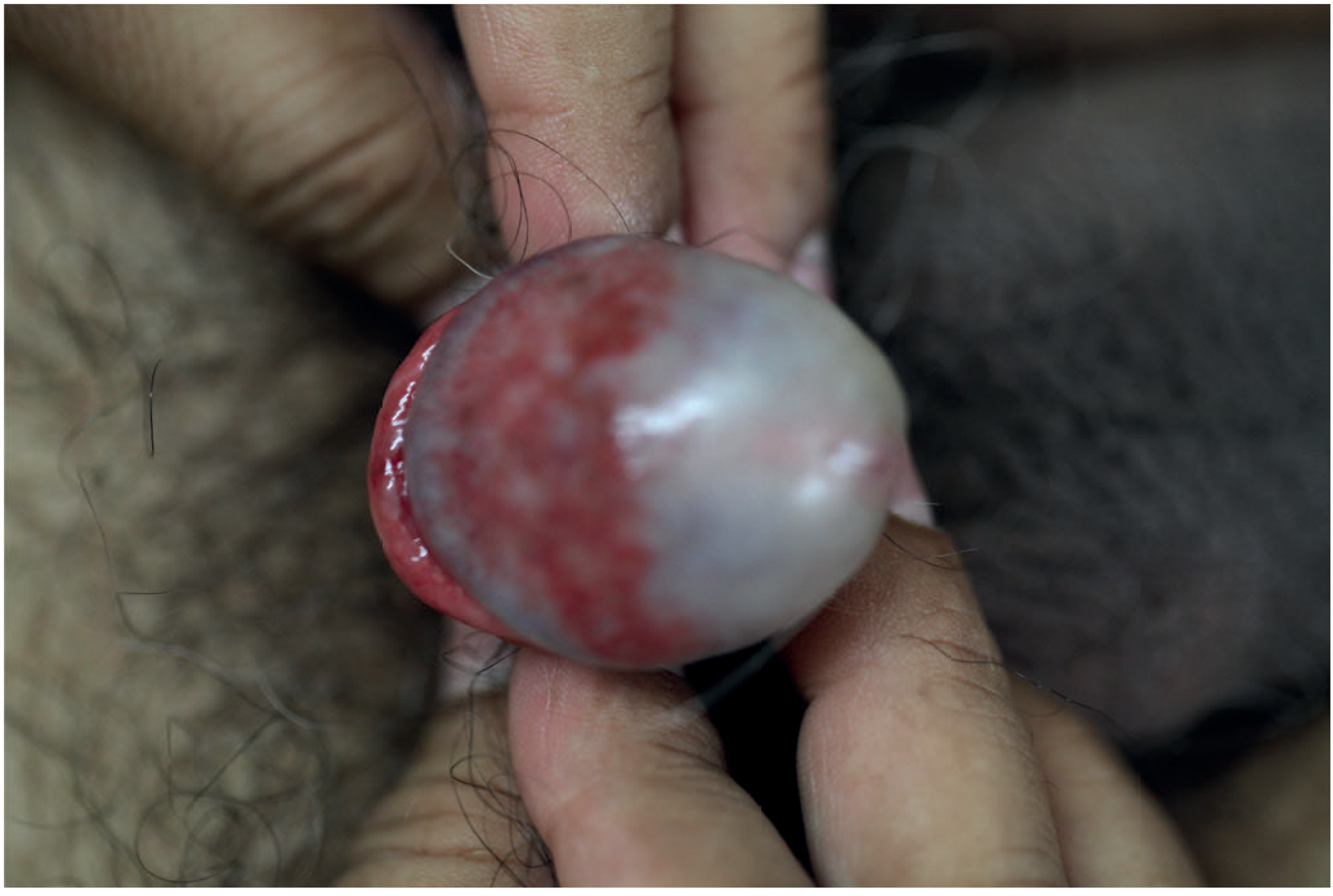
Definition
Balanitis = inflammation of the glans penis.
Balanoposthitis = inflammation of both the glans AND the overlying prepuce (foreskin). The term balanoposthitis is used when both surfaces are involved - which is the typical picture when pus is seen at the tip.
Why Does It Happen in a 3-Year-Old?
At age 3, physiologic phimosis (non-retractile foreskin) is still very common - approximately 50% of boys still have it at age 1, and 89% resolve by age 3, meaning a proportion still have it beyond 3. The non-retractile foreskin traps smegma and moisture, creating a warm, moist environment for bacterial overgrowth.
Key causes in this age group:
| Category | Examples |
|---|---|
| Most common | Poor hygiene, accumulated sebaceous secretions |
| Bacterial | Staph. aureus, Strep. pyogenes, anaerobes, gram-negatives |
| Fungal | Candida albicans (less common in this age, more if on antibiotics or in diapers) |
| Chemical/Contact | Soap, detergent, bubble bath irritants |
| Associated condition | Physiologic phimosis (traps secretions) |
- Campbell-Walsh-Wein Urology: "In children, bacterial infections are the predominant cause."
- Rosen's Emergency Medicine: "The majority of cases are due to poor hygiene, with accumulated sebaceous material leading to bacterial or fungal overgrowth."
Clinical Presentation
- Redness and swelling of the glans and foreskin
- Purulent (pus) discharge from the preputial opening - the primary complaint here
- Pain and tenderness
- Dysuria (crying on urination, holding urine)
- Occasionally fever if secondary cellulitis develops
- "Ballooning" of foreskin on urination if phimosis is present
Diagnosis
The diagnosis is clinical - based on history and physical exam. No routine investigations needed unless:
- Dysuria present → urinalysis and urine culture (to rule out UTI)
- Recurrent episodes → glucose level (rule out diabetes, rare in this age)
- Discharge is profuse or there are extragenital findings → consider STI screen (important - see red flag below)
⚠️ IMPORTANT RED FLAG: Child Sexual Abuse
Pus/discharge from the penis of a 3-year-old must prompt consideration of sexual abuse. While the vast majority of cases are due to poor hygiene and physiologic phimosis, STI pathogens (Neisseria gonorrhoeae, Chlamydia trachomatis) in a prepubertal child are strong indicators of abuse. A thorough, sensitive history must be taken. If STI is identified or abuse is suspected, mandatory reporting and child protection services referral is required.
Management
Step 1 - Hygiene education (first-line for all cases)
- Gentle warm water soaks (sitz baths) 2-3x daily
- Do NOT forcibly retract the foreskin - causes trauma
- Keep area clean and dry; loose-fitting clothing
Step 2 - Topical treatment (for mild-moderate cases)
- Topical bacitracin - for bacterial coverage
- Topical nystatin or clotrimazole - for fungal coverage
- Hydrocortisone 0.5% cream twice daily - to reduce inflammation
Per Rosen's Emergency Medicine: "Treatment should include coverage for both bacterial and fungal overgrowth, with topical bacitracin and topical nystatin (or clotrimazole), respectively. Inflammation can be managed with 0.5% hydrocortisone cream twice daily."
Step 3 - Oral antibiotics (if cellulitis present)
- Cephalexin 25-50 mg/kg/day in divided doses for 7 days - for overlying mild cellulitis
- If cellulitis is moderate-to-severe or systemic signs → admit for IV antibiotics
Step 4 - Topical steroid for phimosis (age >3 years)
- Betamethasone 0.05% cream, gentle application twice daily for 4-8 weeks
- Helps resolve physiologic phimosis and allows better hygiene
- Note: Medscape states this applies to children older than 3 years specifically
When to Admit / Refer
| Indication | Action |
|---|---|
| Unable to urinate | Admit + urgent urology consult |
| Fever / systemic illness | Admit for IV antibiotics + urology |
| Moderate-severe cellulitis | Admit |
| Concern for sexual abuse | Immediate safeguarding referral |
| Recurrent episodes (3+ times) | Elective urology referral for circumcision consideration |
Prognosis and Follow-Up
Most cases resolve within 3-7 days with adequate treatment. The parents should be counseled that:
- Circumcision is NOT indicated as a preventive measure at age 3 (per Medscape/AAP guidance)
- If episodes recur, a urology referral is warranted - circumcision may be curative in recurrent balanoposthitis with phimosis
- Forced foreskin retraction should be strictly avoided as it causes scarring
Sources:
- Rosen's Emergency Medicine, 10th ed. (Balanoposthitis chapter)
- Bailey & Love's Short Practice of Surgery, 28th ed., p. 9988
- Campbell-Walsh-Wein Urology, 3-Volume Set, p. 1691
- Medscape Balanitis Treatment & Management - 2025 update
This is a shared conversation. Sign in to Orris to start your own chat.