
Explain Epithelial tissue it's types, Classification and it's function
Reading File
Now let me search the medical library for epithelial tissue content.
Finding Sources
Finding Sources
Reading File
Reading File
Reading File
Reading File
Reading File
Reading File
Reading File
Reading File
I now have enough content from two authoritative histology textbooks to provide a comprehensive answer. Let me fetch a key diagram image to include.
Loading Image
Loading Image
Here is a thorough, textbook-based explanation of epithelial tissue.
Epithelial Tissue
What Is Epithelium?
Epithelial tissues are composed of closely aggregated polyhedral cells that adhere strongly to one another and to a thin layer of extracellular matrix (ECM), forming cellular sheets that line body cavities, cover body surfaces, and form glands. The word "epithelia" derives from the Greek epi (upon) + thele (nipple).
All substances that enter or leave an organ must cross epithelial tissue. Epithelial cells show polarity - a basal pole facing the basement membrane and connective tissue, and an apical pole facing a free space or lumen.
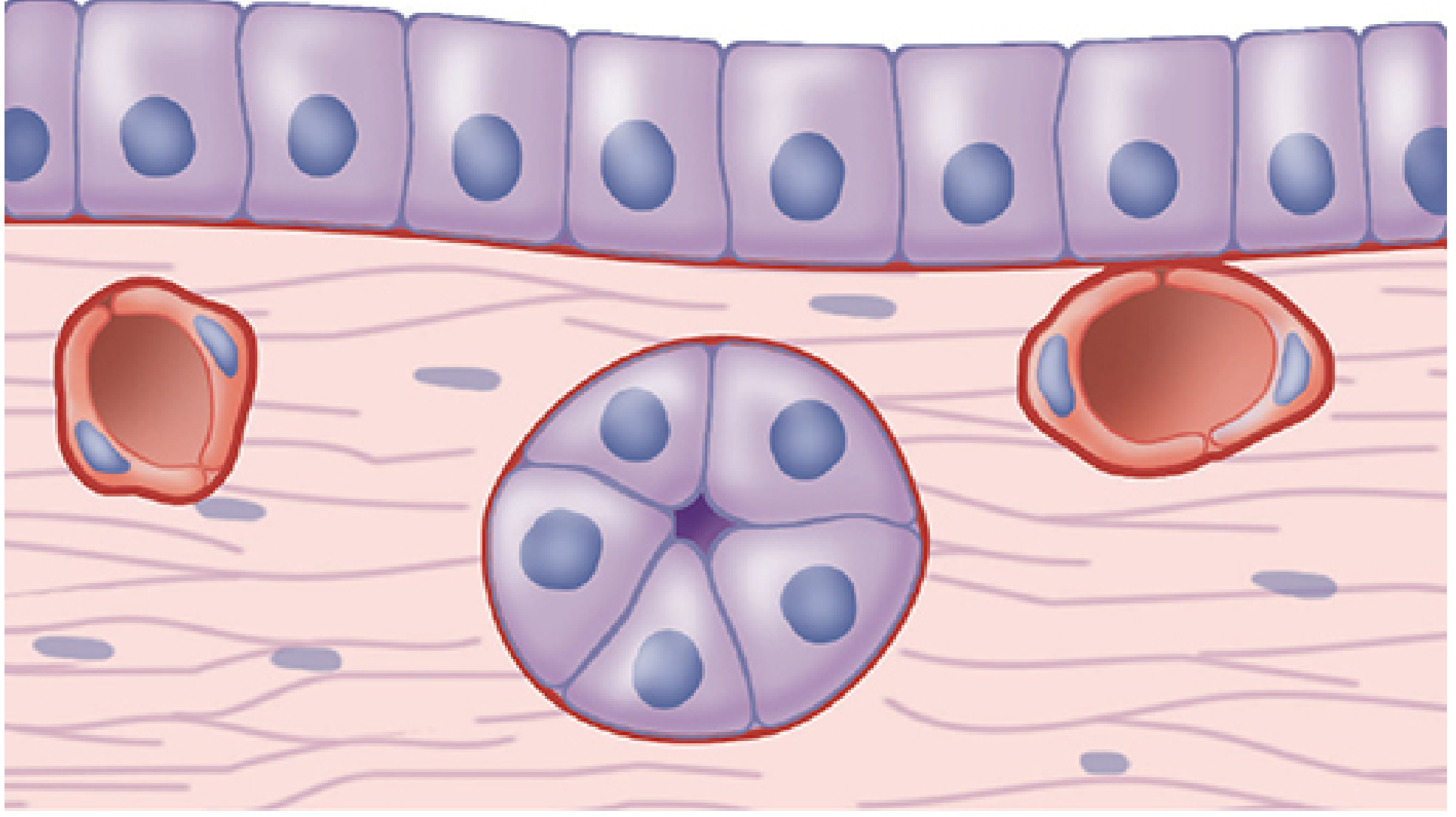
Fig. 4-1 from Junqueira's Basic Histology: Cuboidal epithelial cells (top row) rest on the basement membrane (red line), above connective tissue cells. Nuclear shape reflects cell shape - oval in cuboidal cells, flattened in squamous cells.
General Characteristics
| Feature | Detail |
|---|---|
| Cell arrangement | Closely packed; minimal ECM between cells |
| Vascularity | Avascular - receives nutrients by diffusion from underlying connective tissue |
| Basement membrane | Always present at the basal surface; serves as a semipermeable filter |
| Polarity | Distinct apical, lateral, and basal surfaces |
| Cell junctions | Tight junctions, desmosomes, gap junctions at lateral surfaces |
| Renewal | High mitotic activity; constantly replaced |
| Innervation | Nerve fibers penetrate the basement membrane (unlike blood vessels) |
Functions of Epithelial Tissue
- Covering, lining, and protecting surfaces - e.g., the epidermis protects against dehydration and microbial invasion
- Absorption - e.g., intestinal lining absorbs digested nutrients; gallbladder epithelium concentrates bile
- Secretion - e.g., parenchymal cells of exocrine and endocrine glands
- Transport - ion and water transport across kidney tubule epithelia maintains osmotic balance
- Sensation - specialized sensory cells in taste buds and olfactory epithelium
- Contraction - myoepithelial cells in salivary and mammary glands assist secretion
- Gas exchange - thin simple squamous epithelium of alveoli facilitates O2/CO2 diffusion
Classification of Epithelium
The traditional classification is based on two criteria:
- Number of cell layers - simple (one layer) or stratified (two or more layers)
- Shape of surface cells - squamous, cuboidal, or columnar
A third optional criterion is apical surface specialization (e.g., ciliated, keratinized).
A. Simple Epithelia
All cells contact the basement membrane; single layer only.
1. Simple Squamous Epithelium
- Shape: Flat cells; width greater than height; flattened nuclei
- Locations:
- Blood and lymphatic vessels (called endothelium)
- Body cavities - pleura, peritoneum, pericardium (called mesothelium)
- Bowman capsule of the kidney
- Pulmonary alveoli (gas exchange)
- Functions: Exchange (gases, fluids), barrier, lubrication
2. Simple Cuboidal Epithelium
- Shape: Width, depth, and height approximately equal; spherical nuclei
- Locations:
- Kidney tubules (proximal and distal convoluted tubules)
- Thyroid follicles
- Small collecting ducts of various glands
- Surface of the ovary
- Functions: Absorption, secretion, excretion
3. Simple Columnar Epithelium
- Shape: Height appreciably exceeds width; oval nuclei near the base
- Subtypes:
- Non-ciliated: Lines most of the GI tract (stomach to rectum); absorptive and secretory functions; goblet cells present
- Ciliated: Lines parts of the uterine tube (fallopian tube) and the uterus; cilia move mucus or eggs
- Functions: Absorption (microvilli/brush border), secretion of mucus and enzymes
B. Pseudostratified Epithelium
- Appearance: Looks stratified because nuclei are at different heights, but all cells actually contact the basement membrane - it is truly a simple epithelium
- Distribution: Respiratory tract (trachea, bronchi) - typically ciliated with goblet cells; male reproductive tract (epididymis) - with stereocilia
- Functions: Mucus secretion and mucociliary clearance in the airways; absorption in the reproductive tract
C. Stratified Epithelia
Two or more layers; only the surface layer determines the classification name.
1. Stratified Squamous Epithelium
The most common stratified type. Basal cells are cuboidal/columnar (mitotically active); surface cells are flat.
Two subtypes:
| Keratinized | Non-keratinized | |
|---|---|---|
| Surface cells | Dead; no nuclei; packed with keratin | Living; retain nuclei |
| Locations | Epidermis (skin) | Mouth, esophagus, vagina, cornea |
| Function | Protection + waterproofing | Protection against abrasion |
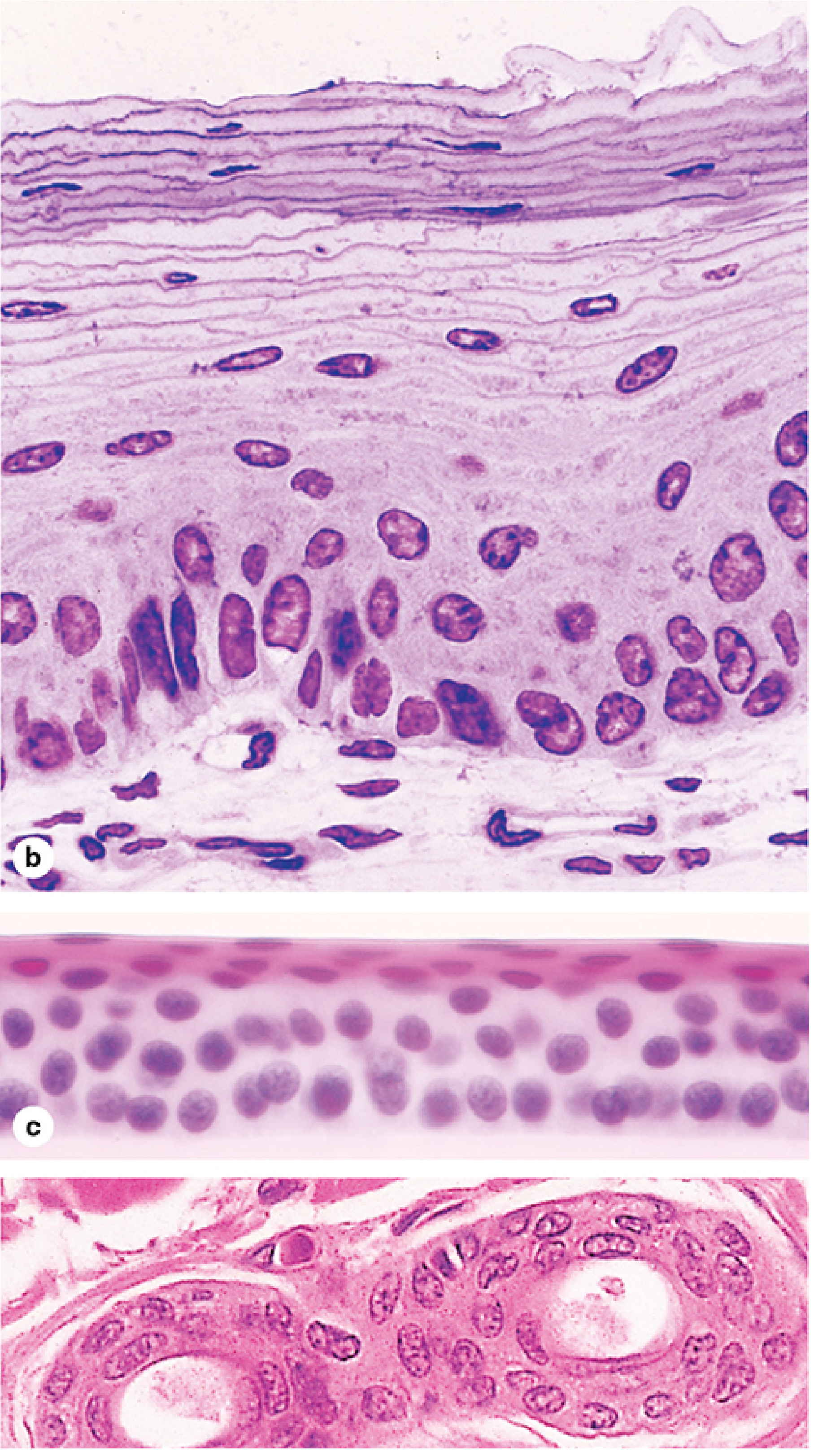
Fig. 4-15 from Junqueira's Basic Histology: (b) Non-keratinized stratified squamous - esophageal lining; (c) cornea outer covering; (d) stratified cuboidal epithelium in sweat gland excretory ducts.
2. Stratified Cuboidal Epithelium
- Locations: Excretory ducts of sweat glands and salivary glands (typically 2 layers)
- Function: Additional secretory/absorptive capacity in ducts
3. Stratified Columnar Epithelium
- Locations: Conjunctiva of the eyelids; parts of the male urethra; large excretory ducts
- Function: Protection and mucus secretion
D. Transitional Epithelium (Urothelium)
- A special category with unique characteristics
- Lines the lower urinary tract: from the renal minor calyces down to the proximal urethra (urinary bladder, ureters)
- Surface layer contains large dome-shaped "umbrella cells" that flatten when the bladder fills and round up when empty - this allows the epithelium to distend
- Protects underlying tissues from the hypertonic and cytotoxic effects of urine
Summary Classification Table
| Type | Layers | Cell Shape | Location | Function |
|---|---|---|---|---|
| Simple squamous | 1 | Flat | Endothelium, mesothelium, alveoli | Exchange, lubrication |
| Simple cuboidal | 1 | Cube-shaped | Kidney tubules, thyroid, ovary | Absorption, secretion |
| Simple columnar (non-ciliated) | 1 | Tall, upright | GI tract | Absorption, secretion |
| Simple columnar (ciliated) | 1 | Tall + cilia | Uterine tube, uterus | Move secretions/eggs |
| Pseudostratified | 1 (appears multi) | Varies; all touch basement membrane | Trachea, bronchi, epididymis | Mucociliary clearance, absorption |
| Stratified squamous (keratinized) | Multiple | Flat at surface; dead | Skin epidermis | Protection, waterproofing |
| Stratified squamous (non-keratinized) | Multiple | Flat at surface; living | Mouth, esophagus, vagina, cornea | Protection against abrasion |
| Stratified cuboidal | Multiple | Cuboidal at surface | Sweat/salivary gland ducts | Duct transport |
| Stratified columnar | Multiple | Columnar at surface | Conjunctiva, urethra | Protection, secretion |
| Transitional (urothelium) | Multiple; distensible | Dome-shaped (umbrella cells) | Urinary bladder, ureters | Distension; protection from urine |
Apical Surface Specializations
Epithelial cells frequently modify their apical surface for specific functions:
| Specialization | Structure | Function | Where |
|---|---|---|---|
| Microvilli | Short finger-like projections; actin core; form brush border | Increase absorptive surface area | Small intestine, proximal kidney tubule |
| Stereocilia | Very long, non-motile projections; actin core | Absorption; mechanosensation in ear | Epididymis, inner ear hair cells |
| Cilia | Motile; 9+2 microtubule arrangement | Move mucus, fluids, or eggs | Trachea, uterine tube |
Glandular Epithelium
Epithelium also forms glands, classified as:
- Exocrine glands - secrete into ducts or directly onto a surface (e.g., sweat glands, salivary glands, pancreatic acini)
- Endocrine glands - secrete hormones directly into the bloodstream (e.g., thyroid, adrenal cortex, pituitary)
Exocrine glands are further classified by:
- Secretory mechanism: Merocrine (exocytosis), apocrine (loss of apical cytoplasm), holocrine (whole cell disintegrates)
- Duct structure: Simple (unbranched duct) vs. compound (branched duct)
- Secretory unit shape: Tubular, acinar/alveolar, or tubuloalveolar
Sources:
- Junqueira's Basic Histology: Text and Atlas, 17th ed., Chapter 4 (Epithelial Tissue), pp. 194-250
- Histology: A Text and Atlas with Correlated Cell and Molecular Biology, Chapter 5 (Epithelial Tissue), pp. 314-325
Add diagram of each tissue in this content
I'll search the medical library for histology images of each epithelial tissue type.
Finding Sources
Finding Sources
Finding Sources
Finding Sources
Reading File
Reading File
I found image URLs for all types. Let me read a bit further to get the remaining type images, then fetch them all in parallel.
Reading File
Reading File
I have all the image URLs. Now let me fetch all of them in parallel.
Loading Image
Loading Image
Loading Image
Loading Image
Loading Image
Loading Image
Loading Image
Loading Image
Loading Image
Loading Image
Loading Image
All diagrams retrieved. Here is the full illustrated guide with a textbook diagram and/or histology micrograph for every epithelial tissue type.
Epithelial Tissue - Illustrated Guide
What Is Epithelial Tissue?
Epithelial tissues form cellular sheets that cover body surfaces, line cavities, and form glands. All cells rest on a basement membrane and the tissue is avascular (nutrients diffuse from underlying connective tissue).
Classification Overview
Two main criteria determine classification:
- Number of layers: Simple (1 layer) or Stratified (2+ layers)
- Cell shape at the surface: Squamous, Cuboidal, or Columnar
A. SIMPLE EPITHELIA
1. Simple Squamous Epithelium
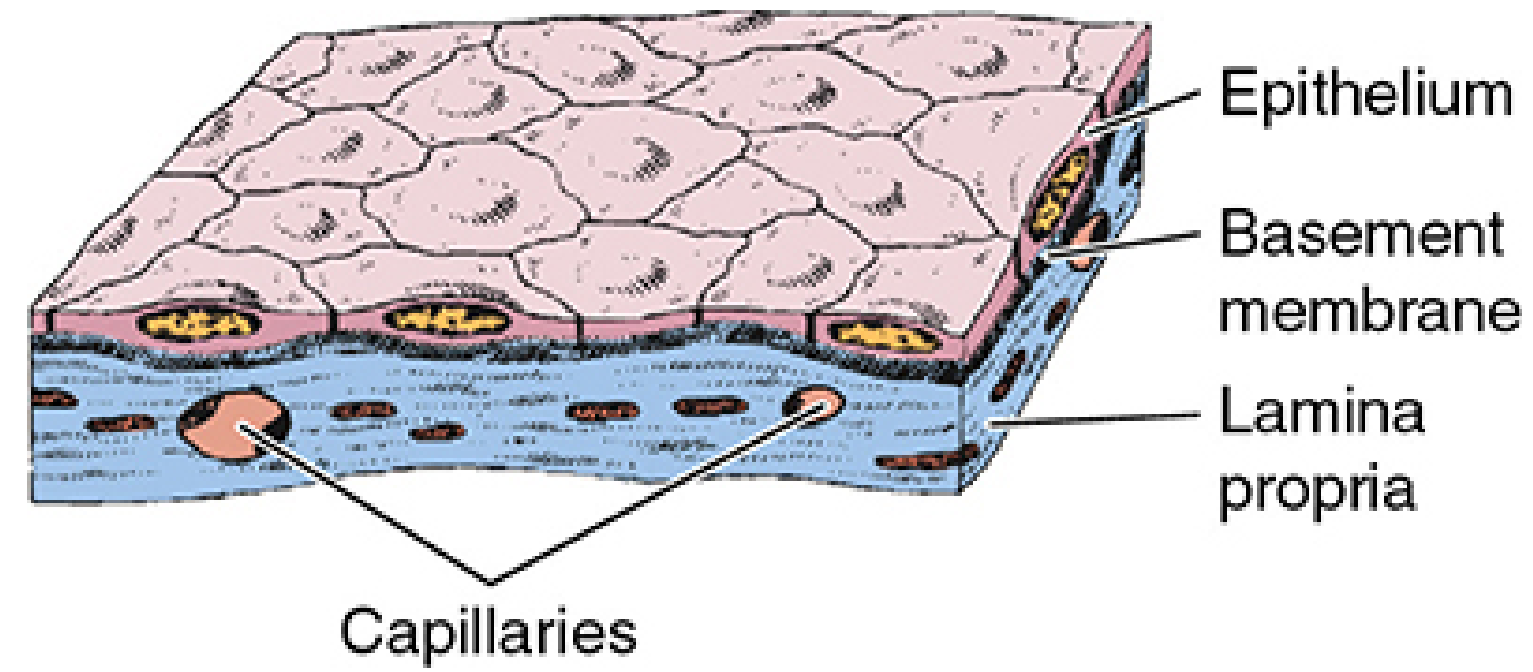
3D Diagram - showing thin flat cells, basement membrane, lamina propria, and capillaries below:
Histology micrograph - (a) renal loop of Henle - arrows point to flattened nuclei; (b) outer intestinal wall mesothelium; (c) inner corneal endothelium:
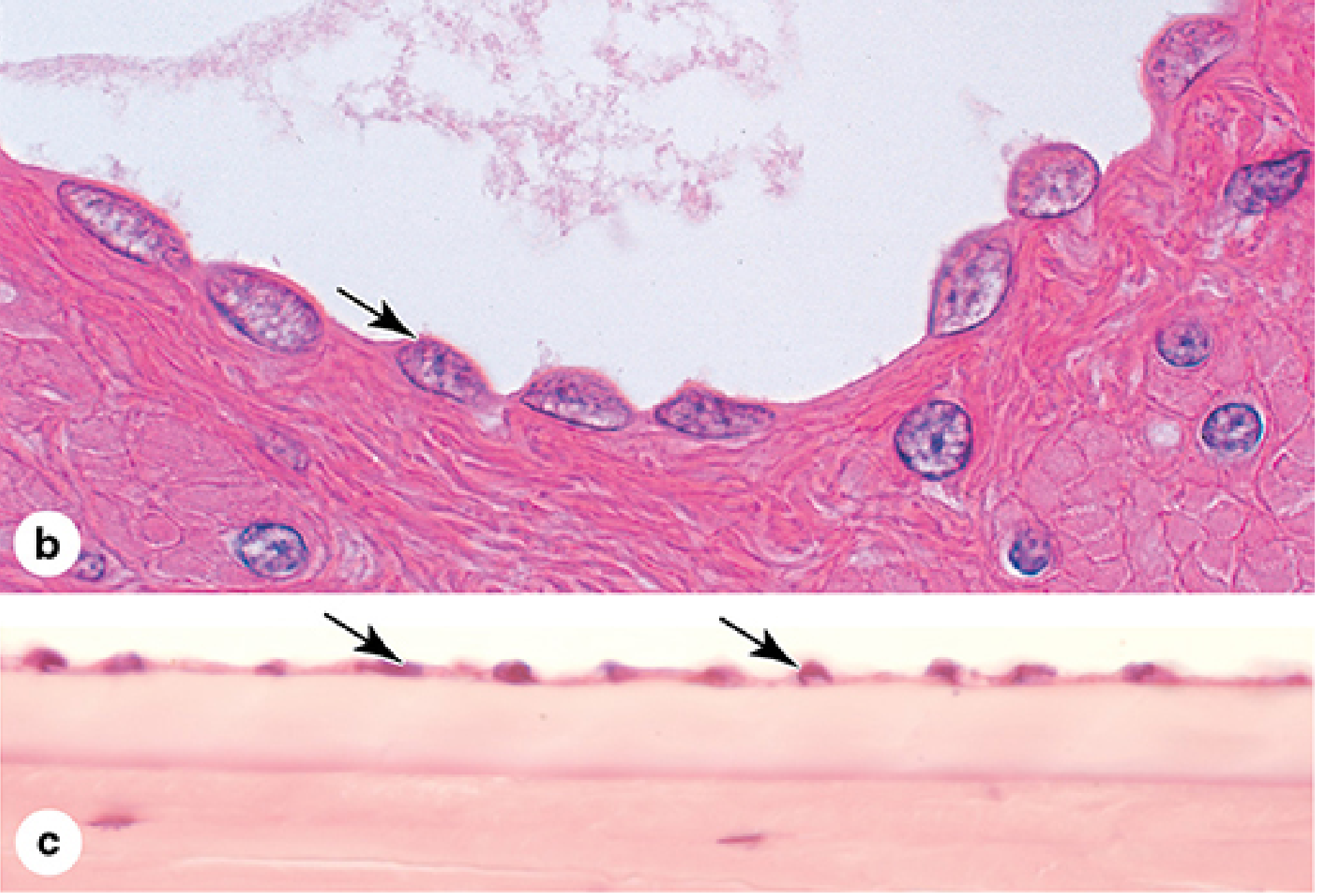
Key features: Cells are flat (width >> height), nuclei are flattened and bulge slightly into the lumen. Found in endothelium (blood vessels), mesothelium (body cavities), alveoli, and Bowman's capsule. Function: exchange, filtration, lubrication.
2. Simple Cuboidal Epithelium
3D Diagram + Histology - diagram (top) shows box-like cells of equal dimensions; micrographs show (a) renal collecting tubule, (b) thyroid follicle, (c) ovarian surface:
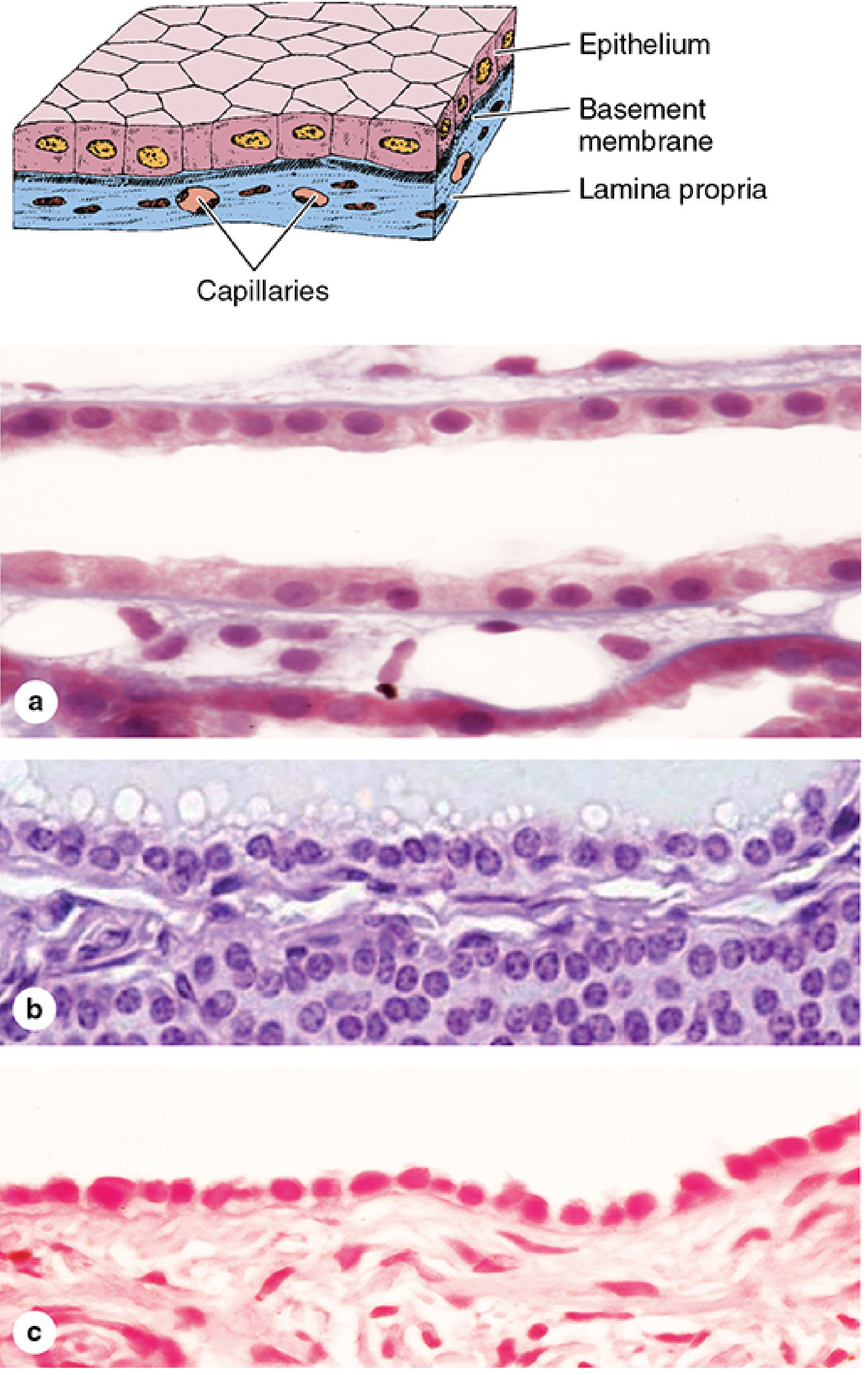
Key features: Width ≈ Height ≈ Depth; spherical nuclei centrally located. Found in kidney tubules, thyroid follicles, ovarian surface. Function: absorption, secretion, excretion.
3. Simple Columnar Epithelium
3D Diagram - showing tall cells with oval basal nuclei, cilia on apical surface (left half), and terminal bars; goblet cells shown in yellow:
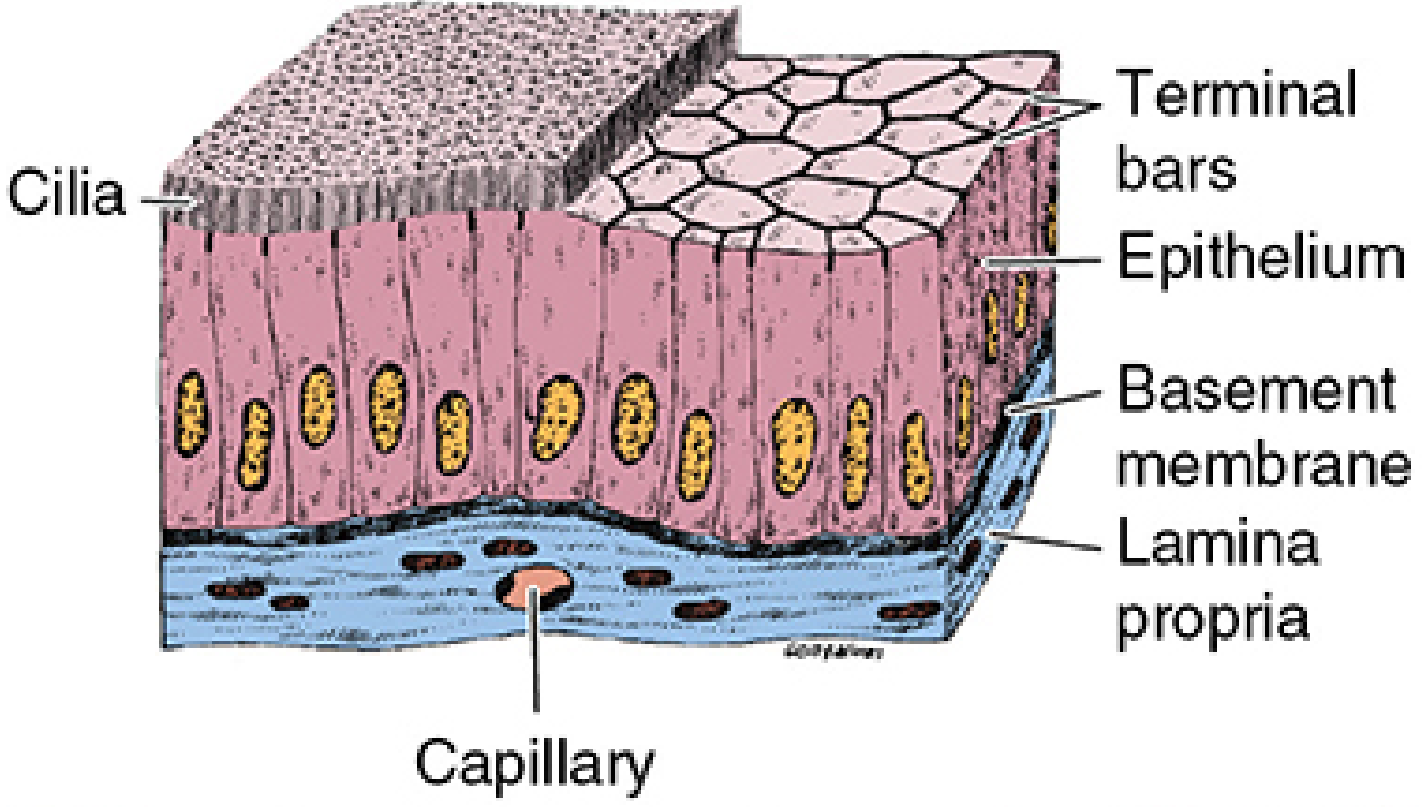
Histology micrographs - (a) renal collecting duct, (b) oviduct/fallopian tube with ciliated and secretory cells, (c) gallbladder lining:
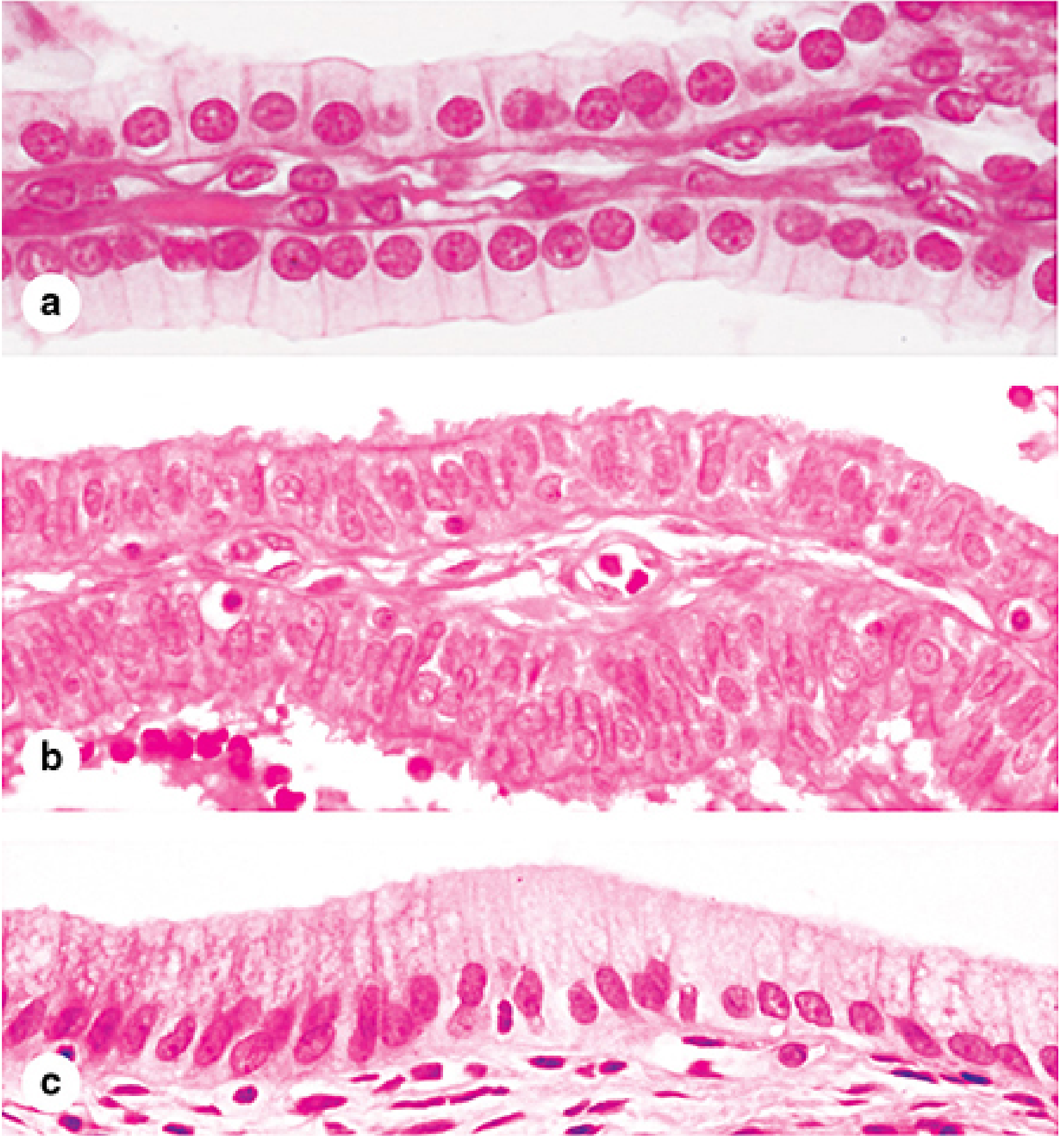
Key features: Height > Width; oval nuclei near the base; apical microvilli (brush border) or cilia. Goblet cells (mucus-secreting) interspersed in GI tract. Function: absorption (intestine), secretion, movement of substances (ciliated type).
B. PSEUDOSTRATIFIED COLUMNAR EPITHELIUM
3D Diagram - showing cells of different heights with nuclei at varying levels; all basal ends touch the basement membrane; goblet cells and cilia visible:
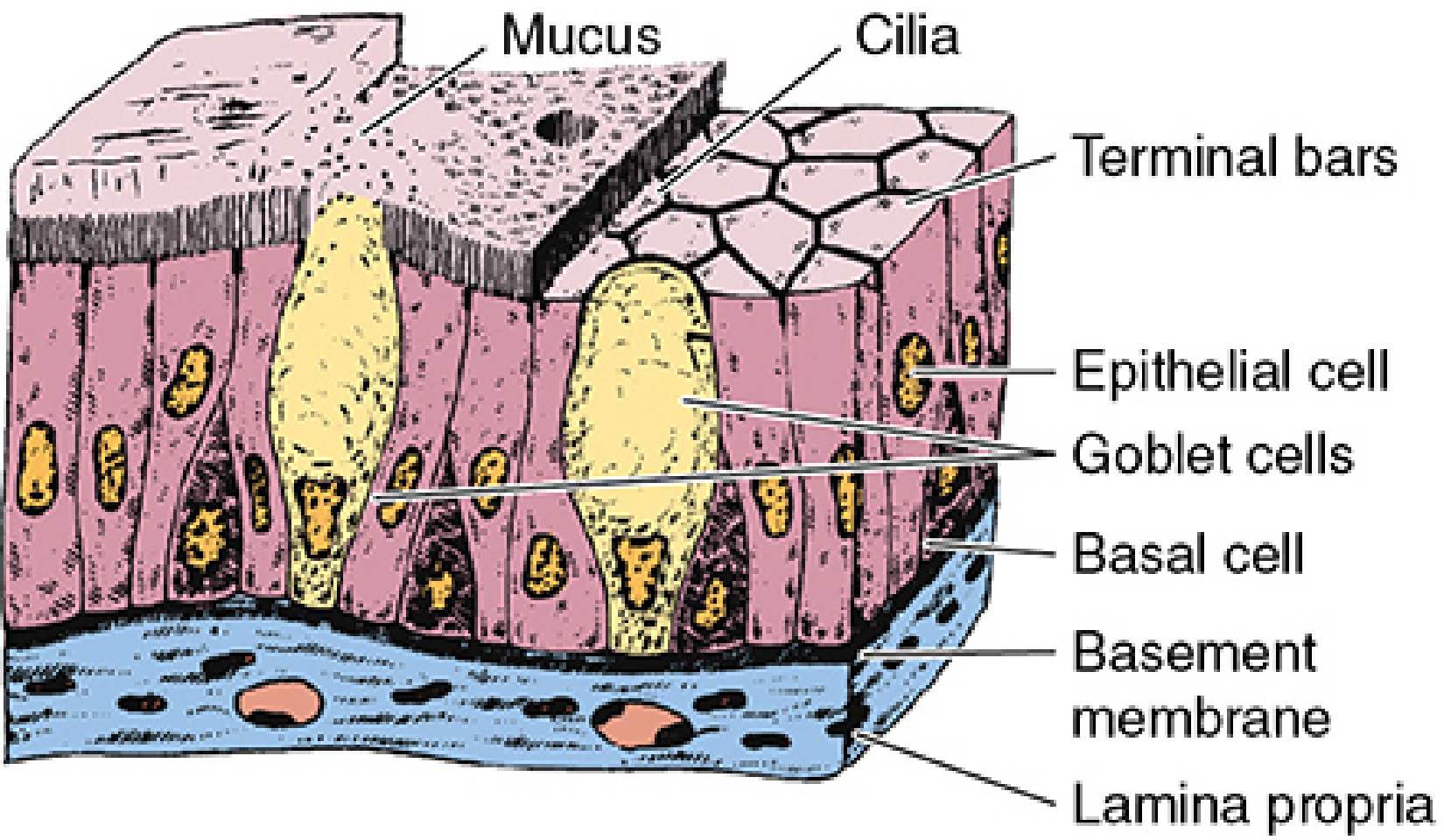
Histology micrograph - tracheal lining showing nuclei at multiple levels, cilia at top, and goblet cells:
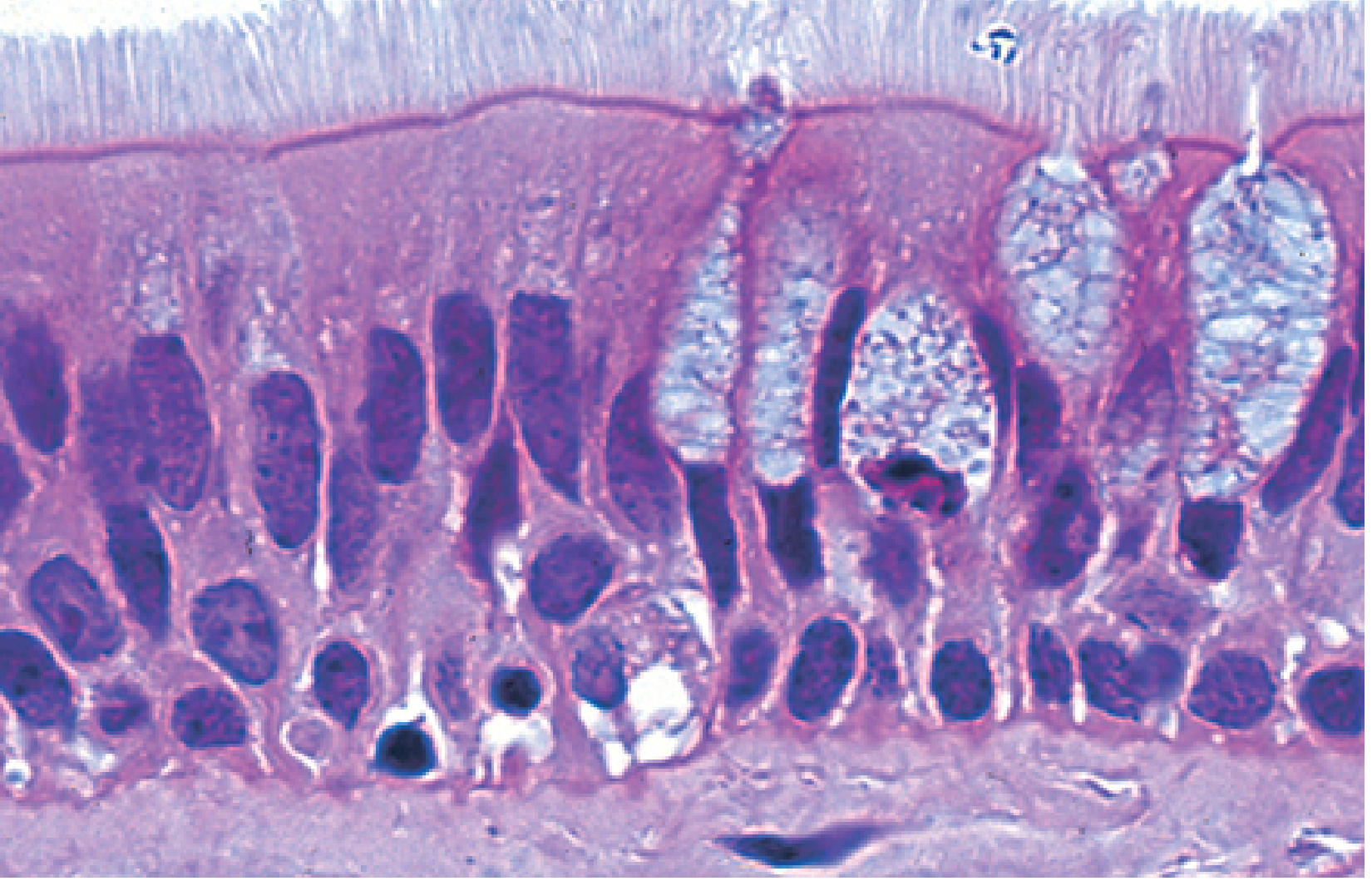
Key features: Appears stratified but is actually ONE layer - all cells contact the basement membrane. Nuclei at different levels create the "pseudo" appearance. Found in trachea, bronchi, epididymis. Function: mucociliary clearance (traps and moves particles), absorption.
C. STRATIFIED EPITHELIA
4. Stratified Squamous Epithelium (Keratinized)
Histology micrograph - skin epidermis showing multiple layers; top layers are flat, anucleate, keratin-filled squames:
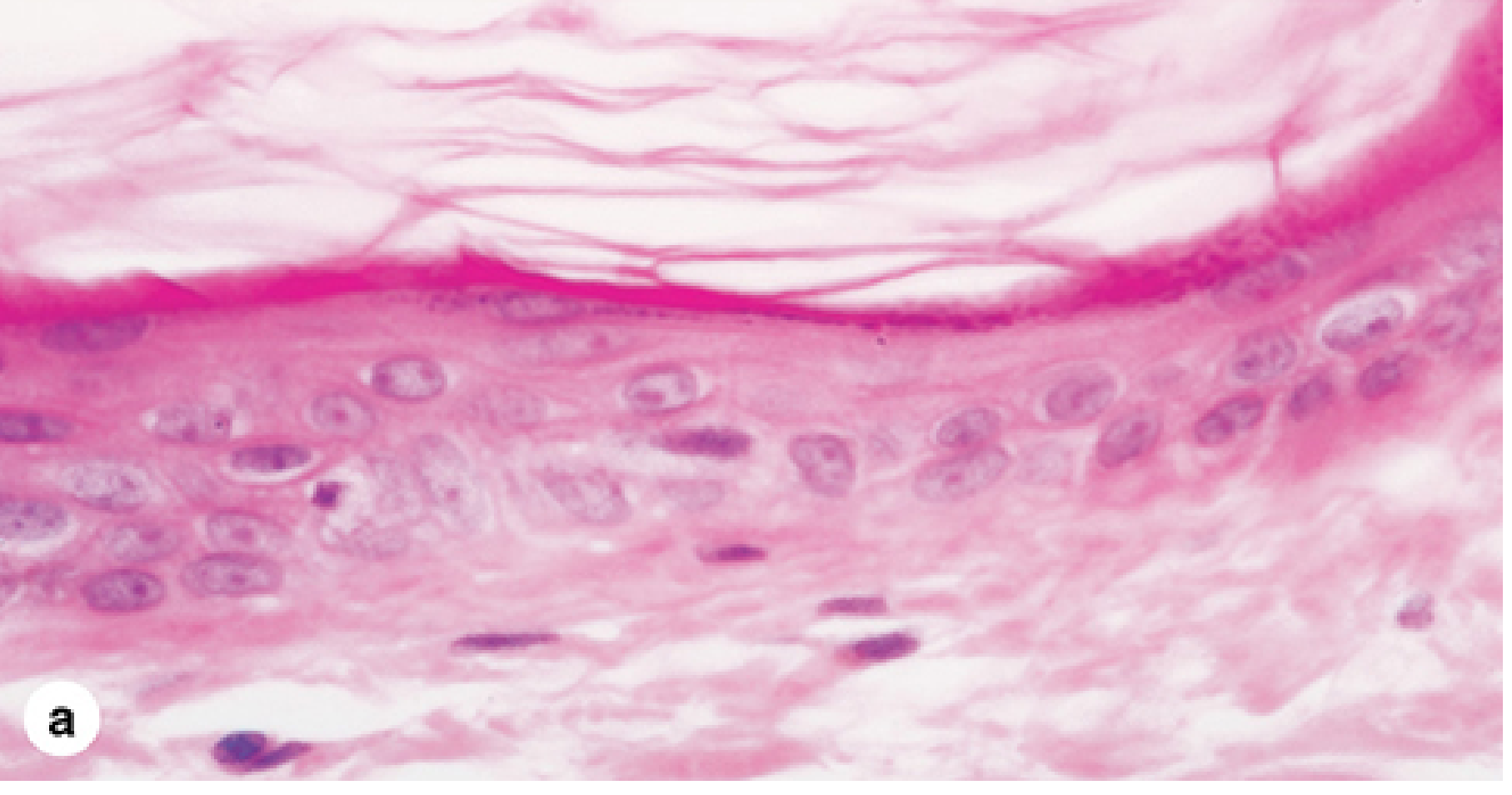
Key features: Many cell layers; surface cells are dead, anucleate, packed with keratin. Basal cells are mitotically active cuboidal/columnar cells. Found in skin epidermis. Function: protection against abrasion, dehydration, and microbial invasion.
5. Stratified Squamous Epithelium (Non-Keratinized) + Stratified Cuboidal
Histology micrographs - (b) esophagus non-keratinized; (c) cornea outer surface; (d) sweat gland duct - stratified cuboidal:
Non-keratinized: Surface cells retain nuclei and remain metabolically active. Found in mouth, esophagus, vagina, cornea. Function: protection against abrasion in moist locations.Stratified cuboidal (panel d): Two or more layers of cube-shaped cells. Found in sweat gland and salivary gland excretory ducts. Function: duct transport.
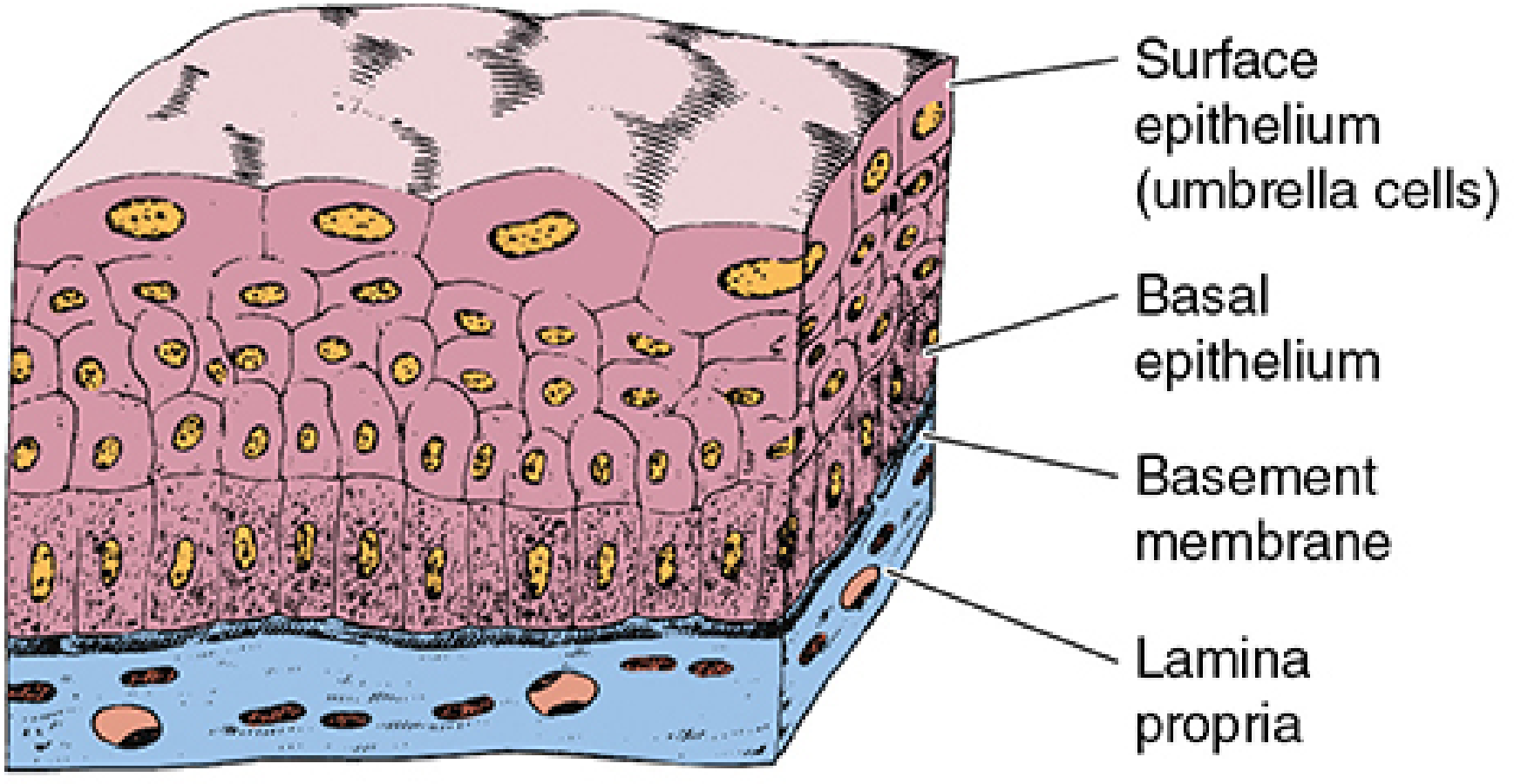
D. TRANSITIONAL EPITHELIUM (Urothelium)
3D Diagram - showing dome-shaped "umbrella cells" at the surface, multiple layers below, basement membrane, and lamina propria:
Histology micrograph - urinary bladder in relaxed (contracted) state showing multiple rounded layers with large dome cells at surface:
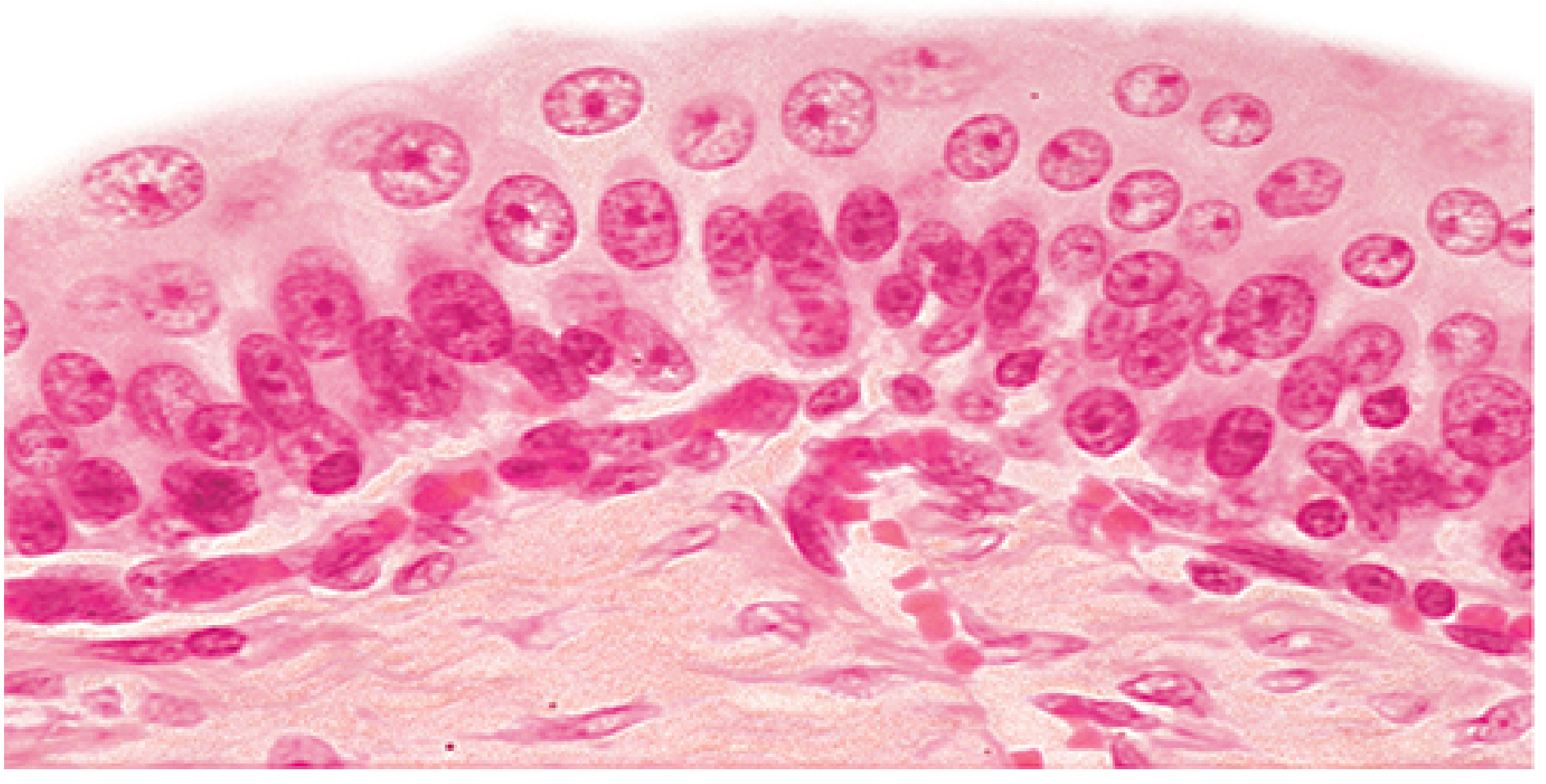
Key features: Unique distensible epithelium. Surface "umbrella cells" are large, dome-shaped and can flatten when the bladder fills and return to dome shape when empty. Lines entire lower urinary tract (ureters, urinary bladder, proximal urethra). Function: protection from hypertonic/cytotoxic urine; allows distension.
Quick Visual Reference
| Type | Layers | Diagram Key Feature |
|---|---|---|
| Simple squamous | 1 | Flat cells, flattened nuclei, very thin |
| Simple cuboidal | 1 | Box-shaped cells, round central nuclei |
| Simple columnar | 1 | Tall cells, oval basal nuclei, brush border or cilia |
| Pseudostratified columnar | 1 (looks multi) | Nuclei at different levels; all on basement membrane |
| Stratified squamous (keratinized) | Multiple | Dead surface squames, no nuclei at surface |
| Stratified squamous (non-keratinized) | Multiple | Living surface cells, retain nuclei |
| Stratified cuboidal | Multiple | 2-layered cube cells in ducts |
| Transitional (urothelium) | Multiple | Large dome "umbrella cells" at surface |
All diagrams and micrographs from: Junqueira's Basic Histology: Text and Atlas, 17th ed., Chapter 4, pp. 217-229
Create a study guide comparing all epithelial tissue types
Reading File
Reading File
Let me clarify the preferred format before building.
Asking for Preferences
What format would you like the study guide in?
Here is your complete on-screen study guide.
📚 Epithelial Tissue — Complete Study Guide
SECTION 1: The Big Picture
Epithelial tissue is one of the four basic tissue types (epithelial, connective, muscle, nerve). It forms sheets that:
- Cover all body surfaces
- Line all internal cavities and tubes
- Form all glands
Key rule to remember: Everything that enters or leaves an organ MUST cross epithelial tissue.
SECTION 2: Universal Features (Apply to ALL Epithelium)
| Feature | What It Means |
|---|---|
| Polarity | Each cell has a distinct apical (top), lateral (sides), and basal (bottom) surface |
| Avascular | No blood vessels inside - nutrients diffuse from connective tissue below |
| Basement membrane | Thin ECM sheet always present at the base; anchors epithelium to connective tissue |
| Cell junctions | Tight junctions (seal), desmosomes (strength), gap junctions (communication) |
| High mitotic rate | Constant cell renewal; lost surface cells replaced from below |
| Innervation | Nerve fibers penetrate the basement membrane; blood vessels do NOT |
SECTION 3: Classification System
STEP 1 — How many layers?
├── ONE layer → SIMPLE
└── TWO or more → STRATIFIED
└── Looks multi but all touch basement membrane → PSEUDOSTRATIFIED (actually simple)
STEP 2 — Shape of SURFACE cells?
├── Flat (width > height) → SQUAMOUS
├── Equal (width ≈ height) → CUBOIDAL
└── Tall (height > width) → COLUMNAR
STEP 3 (optional) — Apical modifications?
├── Keratinized / Non-keratinized (stratified squamous)
├── Ciliated / Non-ciliated (columnar)
└── Special: TRANSITIONAL (urothelium)
SECTION 4: Master Comparison Table
| Type | Layers | Cell Shape | Nuclei Position | Apical Surface | Location | Primary Function |
|---|---|---|---|---|---|---|
| Simple Squamous | 1 | Flat, tile-like | Flattened, central | Smooth (transcytosis) | Endothelium, mesothelium, alveoli, Bowman's capsule, corneal endothelium | Exchange, filtration, lubrication |
| Simple Cuboidal | 1 | Equal dimensions | Spherical, central | Often microvilli | Kidney tubules, thyroid follicles, ovarian surface, small gland ducts | Absorption, secretion |
| Simple Columnar (non-ciliated) | 1 | Tall, upright | Oval, basal | Microvilli (brush border) + goblet cells | GI tract (stomach to rectum), gallbladder | Absorption, mucus secretion |
| Simple Columnar (ciliated) | 1 | Tall, upright | Oval, basal | Cilia | Uterine tubes (oviducts), uterus | Move eggs/secretions |
| Pseudostratified Columnar | 1 (appears multi) | Varies; all on basement membrane | Multiple levels, looks stratified | Cilia + goblet cells (respiratory); stereocilia (reproductive) | Trachea, bronchi, nasal cavity (ciliated); epididymis (stereocilia) | Mucociliary clearance; absorption |
| Stratified Squamous (keratinized) | Multiple | Flat at surface (dead, anucleate) | Absent at surface | Keratin squames | Skin epidermis | Waterproofing, protection against dehydration + microbes |
| Stratified Squamous (non-keratinized) | Multiple | Flat at surface (living, nucleated) | Present at surface | Smooth | Mouth, esophagus, vagina, cornea (outer) | Protection against abrasion in moist areas |
| Stratified Cuboidal | 2 (usually) | Cuboidal at surface | Spherical | Smooth | Sweat gland ducts, salivary gland ducts | Duct transport |
| Stratified Columnar | Multiple | Columnar at surface | Oval | Smooth / ciliated | Conjunctiva of eyelids, parts of male urethra, large excretory ducts | Protection, mucus secretion |
| Transitional (Urothelium) | Multiple; distensible | Dome-shaped "umbrella cells" at surface | Large, sometimes binucleate | Specialized plaques (uroplakins) | Urinary bladder, ureters, renal calyces, proximal urethra | Distension; protect against hypertonic/cytotoxic urine |
SECTION 5: Side-by-Side Comparison — Simple vs. Stratified
| Feature | Simple | Stratified |
|---|---|---|
| Cell layers | Exactly 1 | 2 or more |
| All cells touch basement membrane? | YES | Only basal layer |
| Primary purpose | Exchange / absorption / secretion | Protection |
| Thickness | Thin | Thick |
| Typical locations | Internal linings, glands | External surfaces, moist cavities |
| Vulnerability to mechanical stress | Low tolerance | High tolerance |
SECTION 6: Apical Surface Specializations
| Structure | Type | Key Features | Where |
|---|---|---|---|
| Microvilli | Non-motile | Short (1-2 µm); actin core; form "brush border"; increase surface area 20x | Intestinal absorptive cells, proximal kidney tubule |
| Stereocilia | Non-motile | Very long; actin core; absorptive or mechanosensory | Epididymis (absorption), inner ear hair cells (hearing) |
| Cilia | Motile | Long (5-10 µm); 9+2 microtubule axoneme; beat rhythmically | Trachea/bronchi (mucociliary clearance), uterine tubes (move eggs) |
Clinical Link - Cilia:
Kartagener Syndrome (Primary Ciliary Dyskinesia): Mutations in dynein arms of cilia → immotile cilia → chronic bronchitis (no mucociliary clearance), male infertility (immotile sperm), and situs inversus in ~50% of patients.
SECTION 7: Glandular Epithelium
Epithelium also invaginates to form glands.
Exocrine vs. Endocrine
| Feature | Exocrine Glands | Endocrine Glands |
|---|---|---|
| Retain ducts? | YES | NO (ductless) |
| Secretion route | Into ducts → surface or lumen | Directly into bloodstream |
| Examples | Sweat, salivary, pancreatic acini, mammary | Thyroid, adrenal cortex, anterior pituitary |
Secretory Mechanisms
| Mechanism | How It Works | Examples |
|---|---|---|
| Merocrine (eccrine) | Exocytosis; cell remains intact | Most glands - salivary, pancreatic, eccrine sweat |
| Apocrine | Apical cytoplasm buds off with secretion | Mammary glands (milk lipids), apocrine sweat glands |
| Holocrine | Entire cell disintegrates; cell IS the secretion | Sebaceous glands (sebum) |
SECTION 8: Embryological Origins
| Germ Layer | Epithelial Derivatives |
|---|---|
| Ectoderm (surface) | Epidermis, oral mucosa, lower anal canal, cornea, lens, enamel, mammary glands |
| Ectoderm (neuro) | Neural tube, neural crest derivatives |
| Mesoderm | Mesothelium (body cavities), endothelium, kidney tubules, gonads |
| Endoderm | GI tract lining, respiratory epithelium, thyroid, parathyroid, liver, pancreas, bladder |
SECTION 9: Rapid-Fire Memory Tricks
| Mnemonic | What to Remember |
|---|---|
| "Endo, Meso = Simple Squamous" | Endothelium + Mesothelium are both simple squamous |
| "Pseudo = Plays dress-up" | Pseudostratified LOOKS stratified but every cell touches the basement membrane |
| "Umbrella = Urothelium" | Umbrella cells = transitional epithelium = urinary tract |
| "GALL = Columnar" | GI tract, Alveoli (squamous), Liver ducts, Large body cavities all have distinct epithelia |
| "Skin = Dead on top, Live below" | Keratinized stratified squamous - surface cells are dead squames |
| "Wet surfaces = Non-keratinized" | Moist cavities (mouth, vagina, esophagus) need non-keratinized protection |
SECTION 10: Key Clinical Correlations
| Condition | Epithelium Involved | What Happens |
|---|---|---|
| Celiac disease | Simple columnar (intestine) | Immune reaction to gluten destroys microvilli brush border → malabsorption |
| Cervical cancer | Simple columnar / stratified squamous junction | Transformation zone at squamocolumnar junction - most common site for neoplastic change |
| Bladder cancer (transitional cell carcinoma) | Transitional (urothelium) | Malignant change in umbrella cells - most common urological malignancy |
| Vitamin A deficiency | Columnar → metaplasia | Epithelium of bronchi and bladder replaced by stratified squamous (protective squamous metaplasia) |
| Kartagener syndrome | Pseudostratified ciliated columnar | Dynein arm defect → immotile cilia → recurrent respiratory infections + male infertility |
| Asthma / chronic bronchitis | Pseudostratified ciliated columnar (trachea/bronchi) | Goblet cell hyperplasia → excess mucus; loss of ciliary function impairs clearance |
| Barrett's esophagus | Stratified squamous → metaplasia | Acid reflux causes replacement by simple columnar (intestinal metaplasia) - premalignant |
SECTION 11: High-Yield Exam Summary
"Simple" types — 1 layer, specialized functions:
- Squamous: exchange (thinnest possible barrier)
- Cuboidal: secretion/absorption (equal dimensions = middle ground)
- Columnar: absorption/secretion (tallest = most organelles = hardest working)
"Stratified" types — multiple layers, protection:
- Squamous keratinized: DRY surfaces (skin)
- Squamous non-keratinized: WET surfaces (mouth, esophagus, vagina)
- Cuboidal: rare, ducts
- Columnar: rare, conjunctiva
Special types:
- Pseudostratified: Airways + epididymis (LOOKS stratified, IS NOT)
- Transitional: Urinary tract ONLY (stretchable + protective)
SECTION 12: Self-Test Questions
Q1. A biopsy shows a single layer of flat cells lining a blood vessel. What type of epithelium is this, and what is the specific name for epithelium in this location?
A: Simple squamous epithelium; specifically called endothelium.
Q2. Which epithelial type appears to have multiple layers but only has one?
A: Pseudostratified columnar epithelium - all cells touch the basement membrane, but nuclei at different levels give a false stratified appearance.
Q3. A patient is found to have chronic respiratory infections, male infertility, and situs inversus. What epithelial defect is responsible?
A: Defective cilia (Kartagener syndrome/Primary Ciliary Dyskinesia) in the pseudostratified ciliated columnar epithelium of the respiratory tract.
Q4. What makes transitional epithelium unique compared to all other stratified epithelia?
A: Its surface umbrella cells can flatten and return to dome shape, allowing the epithelium to distend as the bladder fills. The cells also have specialized uroplakin membrane plaques to resist urine toxicity.
Q5. Why is stratified squamous epithelium in the esophagus non-keratinized, while skin is keratinized?
A: The esophagus is a moist internal surface where water loss is not a problem, so cells retain their nuclei and remain metabolically active. Skin is exposed to air and needs the keratin layer to prevent dehydration.
Q6. Name the three types of secretory mechanisms in exocrine glands, with one example each.
A: Merocrine (exocytosis) - salivary glands; Apocrine (apical cytoplasm lost) - mammary glands; Holocrine (entire cell disintegrates) - sebaceous glands.
Sources: Junqueira's Basic Histology, 17th ed. | Histology: A Text and Atlas (Ross & Pawlina)
Explain connective tissue it's classification, types and function
Connective tissue is the most abundant and widely distributed tissue in the body. It supports, binds, and protects other tissues, and unlike epithelium, it contains abundant extracellular matrix (ECM) with relatively few cells. It is classified into embryonic (mesenchyme) and adult types, which include connective tissue proper (loose and dense), and specialized types such as bone, cartilage, adipose, and blood.
Searching sources...
Finding Sources
Finding Sources
Your credits are exhausted. Your daily credits reset tomorrow, or you can purchase a top-up for more.
This is a shared conversation. Sign in to Orris to start your own chat.