
Locking and unlocking of knee joint
Reading File
The locking and unlocking mechanism of the knee involves the "screw-home" movement - terminal rotation of the tibia on the femur as the knee reaches full extension. Let me pull the authoritative textbook content now.
Searching sources...
Finding Sources
Finding Sources
Finding Sources
Finding Sources
Reading File
Reading File
Reading File
Finding Sources
Reading File
Reading File
I found the locking mechanism diagram. Let me fetch it and also get more detailed content on the screw-home mechanism.
Loading Image
Reading File
Reading File
I now have all the key content needed for a thorough answer. Let me compile the full response.
Locking and Unlocking of the Knee Joint
Overview
The knee joint has an efficient "locking" mechanism to reduce the muscle energy required to maintain the joint in full extension during standing. This is made possible by the unique anatomy of the femoral condyles and a terminal rotatory movement called the "screw-home" mechanism. - Gray's Anatomy for Students
The "Screw-Home" (Locking) Mechanism
During the final 15 degrees of extension, the knee does not simply hinge - it undergoes a coupled rotation:
- In an open kinetic chain (foot off the ground, e.g., kicking): the tibia externally rotates on the fixed femur.
- In a closed kinetic chain (foot on the ground, standing): the femur internally (medially) rotates on the fixed tibia.
The net result is the same: the tibia ends up in external rotation relative to the femur when the knee reaches full extension. This is the "screw-home" position. - Miller's Review of Orthopaedics 9th Ed.
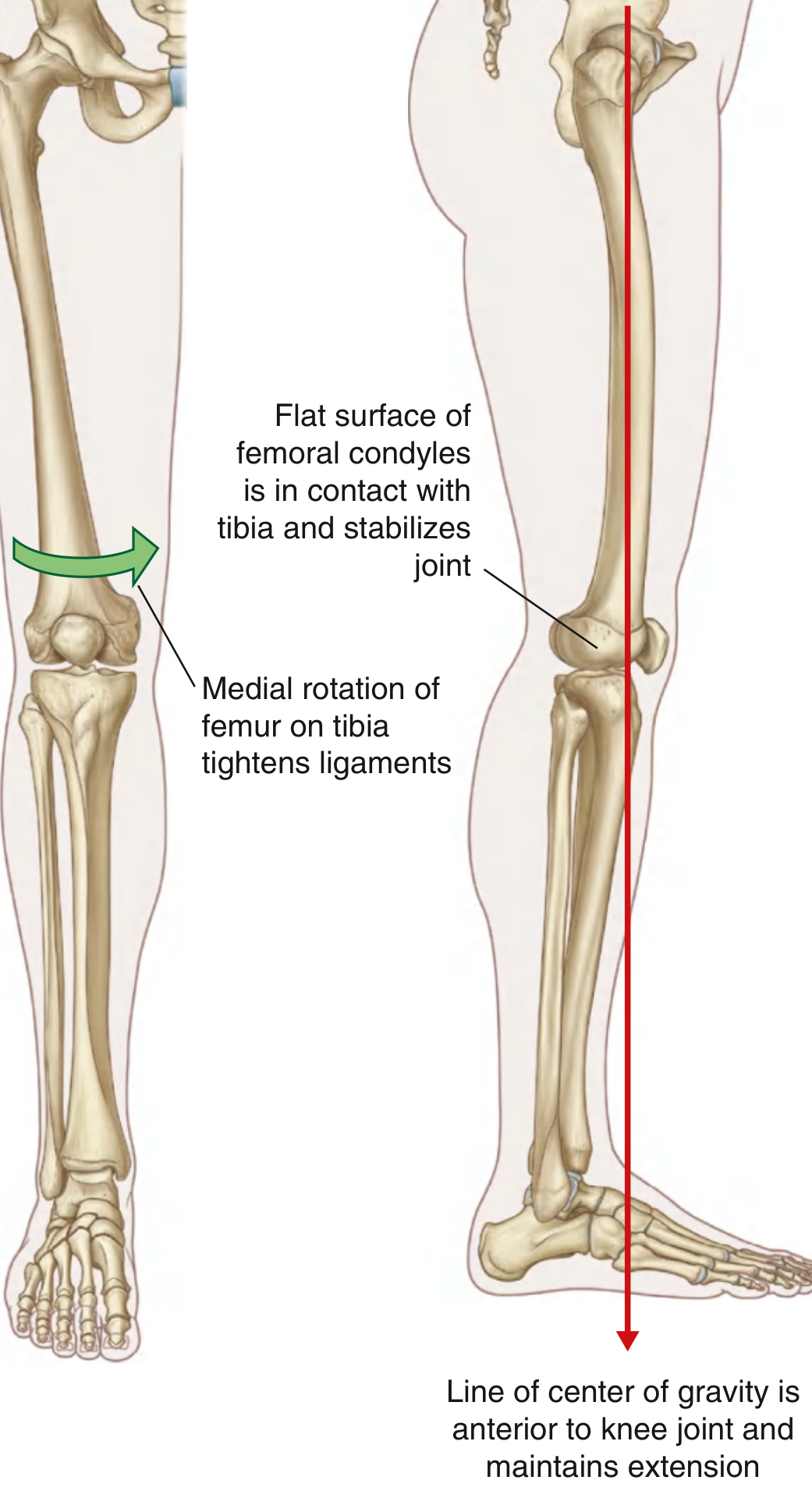
Fig. 6.81 - Knee "Locking" Mechanism (Gray's Anatomy for Students)
Why Does This Rotation Happen?
Two anatomical reasons explain the screw-home movement:
-
Asymmetry of femoral condyles: The medial femoral condyle has a longer articular surface (and larger radius of curvature) than the lateral condyle. As the knee extends, the lateral compartment completes its rollback first. The medial side continues to roll/glide, producing automatic terminal rotation.
-
Surrounding musculature and ligament tension: Medial rotation of the femur (or external rotation of the tibia) progressively tightens the cruciate and collateral ligaments, which "wind up" and produce a firm, stable, close-packed position. - Miller's Review of Orthopaedics
The PCL is the axis around which this rotation occurs - it guides the screw-home mechanism during internal rotation of the femur in terminal extension. - Campbell's Operative Orthopaedics 15th Ed.
The ACL also contributes - it provides primary resistance to anterior tibial translation and guides tibial rotation during the screw-home mechanism. - Rockwood and Green's Fractures in Adults 10th Ed.
What Happens at Full Lock?
At full extension, three things stabilize the locked knee:
| Factor | Mechanism |
|---|---|
| Articular surface change | Curved femoral condyle surfaces (used in flexion) give way to their flat inferior surfaces, increasing contact area and stability |
| Ligament tightening | Medial rotation of the femur winds up and tightens all associated ligaments (collaterals + cruciates) |
| Center of gravity | The body's line of gravity passes anterior to the knee joint, creating a passive extension moment that keeps the joint locked without muscle effort |
- Gray's Anatomy for Students, p. 716
Unlocking the Knee - Role of Popliteus
To initiate flexion from full extension, the locked knee must first be "unlocked." This is the exclusive role of the popliteus muscle.
Popliteus anatomy:
- Origin: Lateral femoral condyle (tendon passes inside the joint capsule, between the lateral meniscus and fibrous membrane)
- Insertion: Posterior surface of proximal tibia
- Innervation: Tibial nerve (L4-S1)
Unlocking action:
"When initiating gait from a standing position, contraction of the popliteus laterally rotates the femur on the fixed tibia, unlocking the knee joint."
- Gray's Anatomy for Students
In open chain: popliteus internally rotates the tibia on the femur.
In closed chain (weight-bearing): it laterally rotates the femur on the fixed tibia.
Both actions reverse the screw-home rotation, releasing ligament tension and allowing flexion to begin.
Summary Table
| Locking | Unlocking | |
|---|---|---|
| Movement | Terminal external rotation of tibia / medial rotation of femur | Reversal: internal rotation of tibia / lateral rotation of femur |
| Occurs during | Last 15° of extension | Initiation of flexion from full extension |
| Muscle responsible | Quadriceps femoris (drives extension) + passive anatomy | Popliteus |
| Ligament effect | All ligaments wind up and tighten | Ligaments unwind and relax |
| Articular surface | Flat femoral condyle surfaces engage tibia | Curved surfaces re-engage |
| ACL role | Guides tibial rotation | - |
| PCL role | Axis of rotation for screw-home | - |
Clinical Relevance
- "Locking" in clinical practice (e.g., torn meniscus, loose body) is a mechanical block to full extension - this is different from the physiological locking mechanism and occurs at any angle of flexion.
- In a patient with a locked knee (clinical), the joint is held in flexion and the patient cannot extend fully beyond a certain angle. - S Das: A Manual on Clinical Surgery
- Loss of the screw-home mechanism is seen after PCL sacrifice in total knee arthroplasty (cruciate-sacrificing TKA), compromising normal rollback and rotation. - Campbell's Operative Orthopaedics
- The popliteus is sometimes called the "key to the knee" because without it unlocking, no flexion can begin from full extension.
This is a shared conversation. Sign in to Orris to start your own chat.