
Therapeutics 2 : synopsis 1. Basic principles of cancer chemotherapeutic agents 2. General introduction of cancer chemotherapeutic agents ( classification, basic moa , indications and common adrs ) 3. Chemo induced nausea and vomiting 4. Management of breast cancer and leukaemia
Reading File
Finding Sources
Finding Sources
Finding Sources
Finding Sources
Reading File
Reading File
Finding Sources
Finding Sources
Reading File
Reading File
Reading File
Finding Sources
Reading File
Finding Sources
Finding Sources
Reading File
Reading File
Reading File
I now have extensive material from the Lippincott Pharmacology textbook. Let me read the sections on specific drug classes (alkylating agents, topoisomerase inhibitors, hormonal agents, targeted therapy) and the breast cancer/leukemia management sections.
Reading File
Reading File
Reading File
I now have comprehensive data. Let me also quickly get the CINV classification (emetogenic risk) and leukemia management sections.
Reading File
Reading File
Now I have all the material needed. Let me compile the comprehensive synopsis.
Therapeutics 2 — Cancer Chemotherapy Synopsis
SECTION 1: Basic Principles of Cancer Chemotherapy
What is Cancer Chemotherapy?
Cancer chemotherapy aims to cause apoptosis or a lethal cytotoxic event in cancer cells to arrest tumor progression. Most agents target DNA or metabolic pathways essential to cell replication (e.g., purine/pyrimidine synthesis required for DNA/RNA synthesis).
Most traditional anticancer drugs do not discriminate between neoplastic and normal proliferating cells — hence the toxicity profile. — Lippincott Illustrated Reviews: Pharmacology
Goals of Treatment
| Goal | Description |
|---|---|
| Cure | Long-term, disease-free survival; requires eradication of every neoplastic cell |
| Control | Prevent cancer from enlarging/spreading; treat as chronic disease |
| Palliation | Relieve symptoms, improve quality of life in advanced/metastatic disease |
Goals are dynamic — they may shift from curative to palliative as disease progresses.
Types of Chemotherapy by Timing
| Type | Definition |
|---|---|
| Adjuvant | After surgery/radiation to eliminate micrometastases |
| Neoadjuvant | Before surgery to shrink the tumour |
| Maintenance | Low-dose after remission to prolong disease-free period |
| Palliative | To relieve symptoms when cure is not possible |
Cell Cycle and Drug Specificity
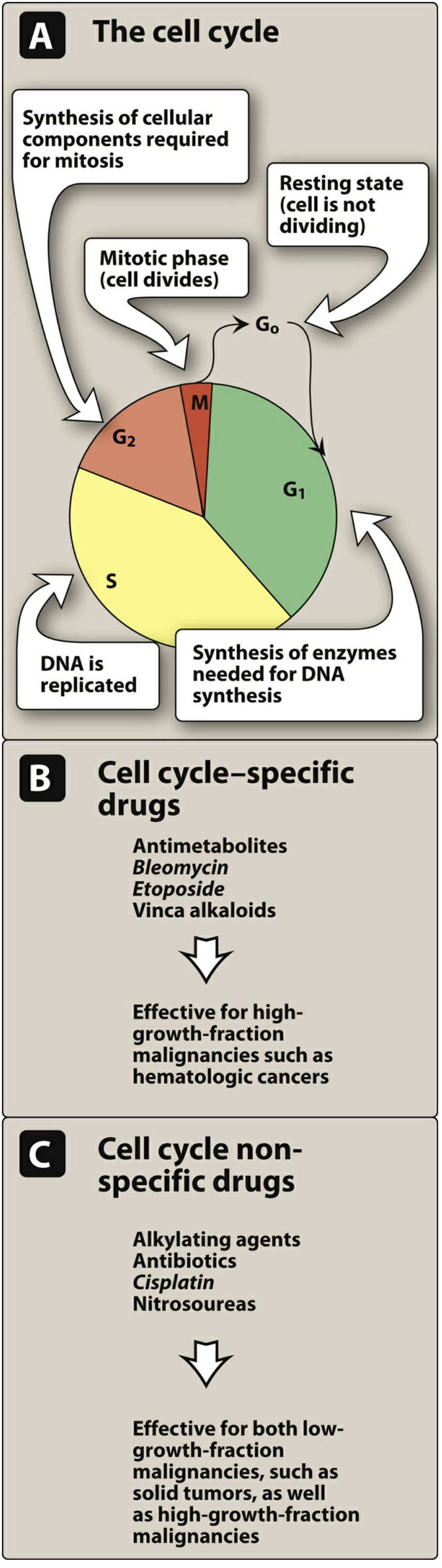
Cell Cycle–Specific (CCS) Drugs — only effective against actively dividing cells:
- Antimetabolites → S phase (DNA synthesis)
- Vinca alkaloids → M phase (mitosis)
- Taxanes → M phase
Cell Cycle–Non-Specific (CCNS) Drugs — effective against both dividing and resting cells:
- Alkylating agents
- Platinum compounds
- Anthracyclines
Nondividing cells (G₀ phase) usually survive the toxic effects of many chemotherapeutic agents, which explains tumour regrowth between cycles.
Combination Chemotherapy Principles
Combination chemotherapy is more effective than single-agent therapy. Rationale:
- Maximal cell killing within tolerated toxicity range
- Broader range of activity against heterogeneous tumour populations
- Prevents/delays the development of resistant cell lines
Agents are combined with:
- Different mechanisms of action
- Non-overlapping toxicities (to allow full dosing)
Example: R-CHOP (Rituximab + Cyclophosphamide + Hydroxydaunorubicin + Oncovin + Prednisone) — non-Hodgkin lymphoma
Drug Resistance
Primary resistance — tumour never responds (e.g., KRAS mutant tumours to upstream EGFR inhibitors)
Acquired resistance — loss of response after initial efficacy (e.g., ATP-binding site mutation preventing kinase inhibitor binding)
Multidrug resistance (MDR): Mediated by P-glycoprotein (encoded by amplified MDR1 gene) — an ATP-dependent efflux pump that expels drugs from the cell. Affects vinca alkaloids, anthracyclines, dactinomycin, taxanes (all structurally share hydrophobic aromatic ring + positive charge at neutral pH).
CNS sanctuary sites: some drugs cannot cross the blood-brain barrier; intrathecal administration or cranial irradiation may be required (e.g., meningeal leukaemia).
General Adverse Effects of Chemotherapy
Most anticancer agents have a narrow therapeutic index. Common toxicities reflect damage to rapidly dividing normal tissues:
| Tissue | Manifestation |
|---|---|
| Bone marrow | Myelosuppression → anaemia, neutropenia, thrombocytopenia |
| GI mucosa | Nausea, vomiting, diarrhoea, stomatitis, mucositis |
| Hair follicles | Alopecia |
| Gonads | Infertility, teratogenicity |
| Secondary malignancies | Treatment-induced AML (especially alkylating agents, topoisomerase inhibitors) |
Cytoprotectants:
- Leucovorin (folinic acid): rescues normal cells from methotrexate toxicity
- Mesna: binds toxic acrolein metabolite of cyclophosphamide/ifosfamide → prevents haemorrhagic cystitis
- G-CSF (filgrastim): stimulates neutrophil production → reduces risk of febrile neutropenia
SECTION 2: Classification of Chemotherapeutic Agents
Overview Diagram
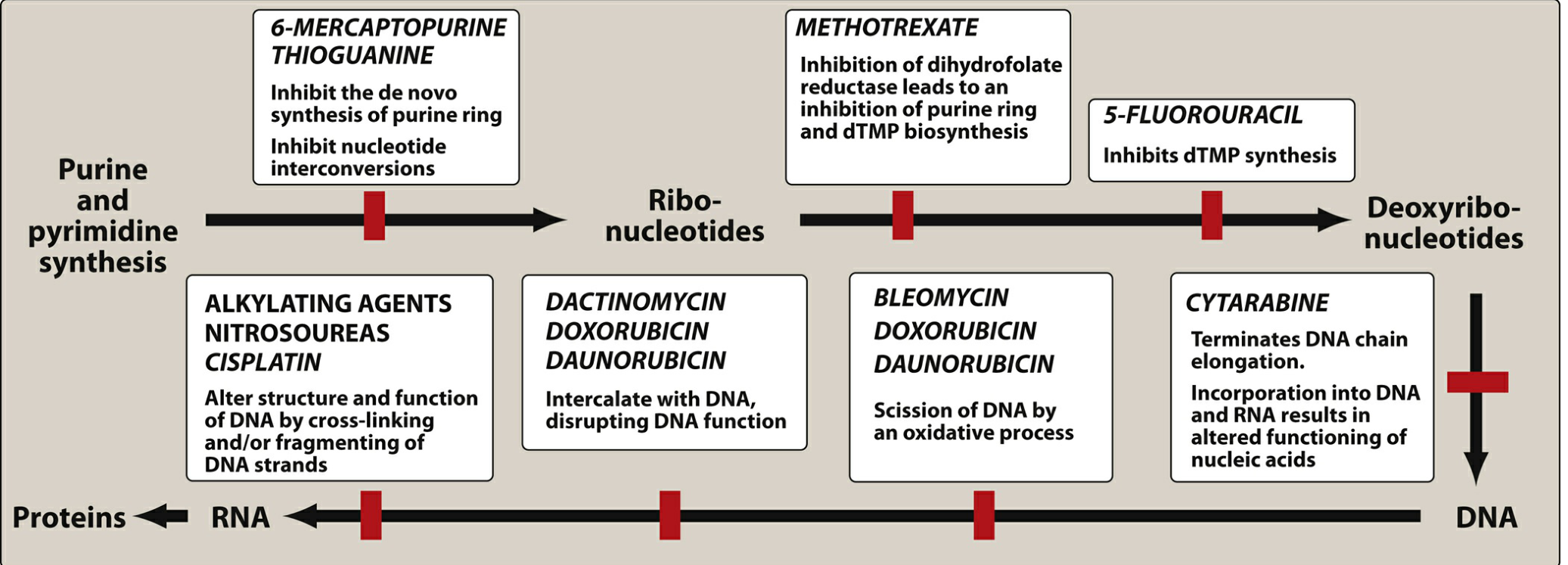
CLASS 1: Antimetabolites
MOA: Structurally resemble normal purines/pyrimidines → inhibit their synthesis or compete in DNA/RNA synthesis → S-phase specific (CCS)
| Drug | Type | Key Indications | Notable ADRs |
|---|---|---|---|
| Methotrexate | Folate antagonist (inhibits DHFR) | ALL, osteosarcoma, breast cancer, RA, psoriasis | Myelosuppression, mucositis, nephrotoxicity (high dose), hepatotoxicity. Rescue with leucovorin |
| 5-Fluorouracil (5-FU) | Pyrimidine antagonist (inhibits thymidylate synthase) | Colorectal, breast, gastric cancer | Myelosuppression, diarrhoea, hand-foot syndrome |
| Capecitabine | Oral prodrug of 5-FU (activated in tumour by thymidine phosphorylase) | Metastatic breast cancer, colorectal cancer | Hand-foot syndrome (more than 5-FU), less myelosuppression |
| Cytarabine (Ara-C) | Pyrimidine antagonist (inhibits DNA polymerase) | AML, meningeal leukaemia (intrathecal) | Myelosuppression, cerebellar toxicity (high dose) |
| 6-Mercaptopurine (6-MP) | Purine antagonist | ALL | Myelosuppression, hepatotoxicity. Reduce dose 50–75% with allopurinol (XO inhibition) |
| Fludarabine | Purine analogue | CLL, low-grade lymphoma | Myelosuppression, severe immunosuppression |
| Pemetrexed | Multi-targeted antifolate | NSCLC, mesothelioma | Myelosuppression — supplement folate + B12 to reduce toxicity |
CLASS 2: Alkylating Agents
MOA: Form covalent crosslinks with DNA (primarily at N-7 of guanine) → strand breaks → cell death. CCNS (but more toxic to dividing cells).
| Drug | Key Indications | Notable ADRs |
|---|---|---|
| Cyclophosphamide | Breast cancer, NHL, CLL, SLE | Haemorrhagic cystitis (acrolein metabolite — prevent with mesna + hydration), myelosuppression, alopecia |
| Ifosfamide | Sarcomas, testicular cancer | Haemorrhagic cystitis, neurotoxicity, nephrotoxicity |
| Chlorambucil | CLL, lymphomas | Myelosuppression |
| Melphalan | Multiple myeloma, ovarian cancer | Myelosuppression |
| Busulfan | CML (conditioning for BMT) | Pulmonary fibrosis ("busulfan lung"), myelosuppression |
| Mechlorethamine | Cutaneous T-cell lymphoma (topical) | Vesicant |
| Cisplatin | Testicular, ovarian, lung, bladder cancers | Nephrotoxicity (hydrate aggressively), ototoxicity, peripheral neuropathy, severe N/V |
| Carboplatin | Similar to cisplatin | Myelosuppression (dose-limiting), less nephrotoxicity/neuropathy than cisplatin |
| Oxaliplatin | Colorectal cancer | Cold-induced peripheral neuropathy, hepatotoxicity |
| Dacarbazine | Melanoma, Hodgkin lymphoma | N/V, myelosuppression |
| Temozolomide | Glioblastoma, melanoma | Myelosuppression |
CLASS 3: Topoisomerase Inhibitors
MOA: Inhibit enzymes that relieve torsional strain during DNA replication
| Drug | Mechanism | Key Indications | Notable ADRs |
|---|---|---|---|
| Doxorubicin (Adriamycin) | Topo II inhibitor + intercalation | Breast cancer, sarcomas, lymphomas, leukaemia | Cardiotoxicity (dose-dependent, irreversible cardiomyopathy — cumulative dose limit 550 mg/m²), alopecia, myelosuppression. Vesicant |
| Daunorubicin | Topo II inhibitor | AML, ALL | Cardiotoxicity, myelosuppression |
| Epirubicin | Topo II inhibitor | Breast cancer | Less cardiotoxic than doxorubicin |
| Etoposide (VP-16) | Topo II inhibitor | Testicular, small-cell lung, lymphoma | Myelosuppression, secondary leukaemia |
| Irinotecan | Topo I inhibitor | Colorectal cancer | Severe diarrhoea (acute cholinergic + delayed), myelosuppression |
| Topotecan | Topo I inhibitor | Ovarian cancer, small-cell lung | Myelosuppression |
CLASS 4: Microtubule Inhibitors (Mitotic Inhibitors)
MOA: Disrupt microtubule dynamics → arrest cells in M phase (CCS)
Vinca Alkaloids (inhibit tubulin polymerisation)
| Drug | Key Indications | Notable ADRs |
|---|---|---|
| Vincristine | ALL, lymphomas, Wilms tumour | Neurotoxicity (peripheral neuropathy, autonomic neuropathy, constipation) — dose-limiting. NEVER give intrathecally (fatal) |
| Vinblastine | Hodgkin lymphoma, testicular cancer | Myelosuppression, neurotoxicity |
| Vinorelbine | Breast cancer, NSCLC | Granulocytopenia |
Taxanes (stabilise microtubules → prevent depolymerisation)
| Drug | Key Indications | Notable ADRs |
|---|---|---|
| Paclitaxel | Breast, ovarian, NSCLC | Neutropenia, peripheral neuropathy, alopecia, hypersensitivity reactions (premedicate with dexamethasone + diphenhydramine) |
| Docetaxel | Breast, prostate, NSCLC | Neutropenia, fluid retention, neuropathy, alopecia |
CLASS 5: Antibiotics (Antitumour)
| Drug | MOA | Key Indications | Notable ADRs |
|---|---|---|---|
| Bleomycin | DNA strand breaks (free radical generation) | Testicular cancer, Hodgkin lymphoma | Pulmonary fibrosis (dose-limiting), minimal myelosuppression, hypersensitivity |
| Dactinomycin | DNA intercalation + Topo II inhibition | Wilms tumour, Ewing sarcoma, rhabdomyosarcoma | Myelosuppression, GI toxicity, vesicant |
| Mitomycin C | Alkylation | Gastric, cervical cancers | Myelosuppression, haemolytic uraemic syndrome |
CLASS 6: Hormonal/Endocrine Agents
Selective Oestrogen Receptor Modulators (SERMs)
| Drug | MOA | Indications | ADRs |
|---|---|---|---|
| Tamoxifen | ER antagonist in breast, ER agonist in bone/endometrium | ER+ breast cancer (pre + postmenopausal) | Hot flashes, endometrial cancer risk, thromboembolism |
| Raloxifene | ER antagonist in breast/uterus, agonist in bone | Breast cancer risk reduction, osteoporosis | Hot flashes, thromboembolism (no endometrial cancer risk) |
Aromatase Inhibitors (AIs) — postmenopausal women
| Drug | Type | Indications | ADRs |
|---|---|---|---|
| Anastrozole, Letrozole | Non-steroidal (reversible) | First-line ER+ breast cancer (postmenopausal) | Hot flashes, osteoporosis, joint pain. No endometrial cancer risk |
| Exemestane | Steroidal (irreversible) | Breast cancer after tamoxifen failure | Hot flashes, fatigue, nausea |
Oestrogen Receptor Downregulator
- Fulvestrant: IM injection → ER downregulation. For hormone receptor-positive metastatic breast cancer. ADRs: hot flashes, injection site reactions, elevated LFTs.
GnRH Agonists (chemical castration)
- Leuprolide, Goserelin, Triptorelin: Desensitise GnRH receptor → ↓FSH/LH → ↓oestrogen/testosterone. Used in premenopausal breast cancer and prostate cancer.
- Important: Initial tumour flare in first weeks of therapy (receptor activation before desensitisation).
Androgen Receptor Antagonists
- Flutamide, Bicalutamide: Block androgen receptor → used in prostate cancer
CLASS 7: Targeted/Biological Agents
Monoclonal Antibodies
| Drug | Target | Indications | Notable ADRs |
|---|---|---|---|
| Trastuzumab (Herceptin) | HER2/ErbB2 | HER2+ breast cancer, gastric cancer | Cardiotoxicity (reversible), infusion reactions |
| Rituximab | CD20 | B-cell NHL, CLL | Infusion reactions, immunosuppression (PML risk) |
| Bevacizumab | VEGF | Colorectal, NSCLC, ovarian cancer | Hypertension, thrombosis, wound healing impairment, GI perforation |
| Cetuximab | EGFR | Colorectal, head & neck cancer | Acneiform rash (correlates with response), hypomagnesaemia |
Tyrosine Kinase Inhibitors (TKIs) — oral agents
| Drug | Target | Key Indications | Notes |
|---|---|---|---|
| Imatinib | BCR-ABL | CML (Philadelphia chromosome+), GIST | First TKI; monitor for cardiac failure |
| Dasatinib | BCR-ABL, SRC | CML (imatinib-resistant) | Avoid with PPIs |
| Erlotinib/Afatinib | EGFR | NSCLC (EGFR mutant) | Rash correlates with response; KRAS mutant = primary resistance |
| Lapatinib | EGFR/HER2 | HER2+ breast cancer | Severe hepatotoxicity, diarrhoea |
| Ibrutinib | BTK | CLL, mantle cell lymphoma | Monitor for cardiac failure; secondary malignancies |
| Idelalisib | PI3K | CLL, follicular lymphoma | Monitor for infections |
| Vemurafenib/Trametinib | BRAF/MEK | Melanoma (BRAF V600E mutant) | Monitor cardiac function |
| Ruxolitinib | JAK1/2 | Myelofibrosis, polycythaemia vera | Increased VTE risk |
| Midostaurin | FLT3 | AML with FLT3 mutation | Administer with antiemetics |
Immune Checkpoint Inhibitors
- Mechanism: Block PD-1/PD-L1 or CTLA-4 checkpoints → activate patient's own immune system to attack cancer cells
- Agents: Nivolumab/Pembrolizumab (anti-PD-1), Atezolizumab (anti-PD-L1), Ipilimumab (anti-CTLA-4)
- ADRs: Autoimmune toxicity (pneumonitis, colitis, hepatitis, endocrinopathies) — distinct from myelosuppression of traditional chemo
SECTION 3: Chemotherapy-Induced Nausea and Vomiting (CINV)
Classification of CINV
| Type | Timing | Mechanism |
|---|---|---|
| Acute | Within 24 h of chemo | 5-HT3 receptor activation (serotonin release from enterochromaffin cells) |
| Delayed | 24 h – 5 days post-chemo | Substance P/NK1 receptor activation |
| Anticipatory | Before next cycle | Conditioned reflex (psychological); triggered by sight/smell/anxiety |
| Refractory | Inadequately controlled despite prophylaxis | Requires additional agents |
Emetogenic Risk Classification
| Risk Level | Incidence of Vomiting | Examples |
|---|---|---|
| High (HEC) | >90% | Cisplatin, cyclophosphamide (>1.5g/m²), doxorubicin + cyclophosphamide combo, dacarbazine |
| Moderate (MEC) | 30–90% | Carboplatin, irinotecan, oxaliplatin, doxorubicin, epirubicin |
| Low | 10–30% | Docetaxel, paclitaxel, etoposide, fluorouracil, gemcitabine |
| Minimal | <10% | Bleomycin, vincristine, bevacizumab |
Antiemetic Agents for CINV
1. 5-HT₃ Receptor Antagonists ("Setrons")
- Agents: Ondansetron, Granisetron, Dolasetron, Palonosetron (2nd gen)
- MOA: Block serotonin at 5-HT₃ receptors in gut and CTZ
- Indications: Primary agents for acute CINV; palonosetron also effective for delayed CINV
- Doses (IV, 30 min before chemo): Ondansetron 8 mg; Granisetron 1 mg; Palonosetron 0.25 mg
- ADRs: Headache, dizziness, constipation; QT prolongation (esp. dolasetron — FDA warning); Serotonin syndrome risk with SSRIs/SNRIs
- Note: Palonosetron does NOT prolong QT
2. NK1 Receptor Antagonists
- Agents: Aprepitant (PO), Fosaprepitant (IV), Netupitant, Rolapitant
- MOA: Central blockade of substance P at NK1 receptors in area postrema
- Indications: Prevention of delayed CINV with highly emetogenic regimens; used in addition to (not instead of) 5-HT₃ antagonists
- Doses: Aprepitant 125 mg day 1, then 80 mg days 2 & 3; Fosaprepitant 150 mg IV single dose
- ADRs: Fatigue, neutropenia, abdominal pain, bradycardia, hypotension, insomnia
3. Corticosteroids
- Agent: Dexamethasone 8–20 mg IV/PO before chemo, then 8 mg/day for 2–4 days
- MOA: Unknown antiemetic mechanism; enhances efficacy of 5-HT₃ antagonists
- Role: Used for both acute and delayed CINV in moderate-to-high emetogenic regimens
4. Olanzapine (atypical antipsychotic)
- MOA: Blocks multiple neurotransmitter receptors (D1–4, 5-HT2, muscarinic, histamine)
- Role: Added to the three-drug cocktail for breakthrough/refractory CINV and highly emetogenic regimens; growing evidence as most effective single antiemetic agent
- Dose: 10 mg PO/IM
- ADRs: Sedation, metabolic effects (hyperglycaemia, weight gain)
5. Dopamine Receptor Antagonists
- Metoclopramide 10 mg IV/IM — dose-related extrapyramidal side effects (tardive dyskinesia)
- Prochlorperazine 5–10 mg IV/IM — extrapyramidal effects
6. Benzodiazepines
- Lorazepam 1–2 mg IV; Midazolam 1 mg IV
- Role: Anticipatory CINV, adjunct for refractory CINV; sedating
CINV Management Algorithm
Highly Emetogenic Chemo (HEC):
4-drug regimen: NK1 antagonist + 5-HT₃ antagonist (palonosetron preferred) + Dexamethasone + Olanzapine
Moderately Emetogenic Chemo (MEC):
3-drug regimen: 5-HT₃ antagonist + Dexamethasone ± NK1 antagonist
Low Emetogenic:
Dexamethasone alone (day of treatment)
Refractory/Breakthrough:
Add benzodiazepine, dopamine antagonist, or olanzapine
SECTION 4: Management of Breast Cancer and Leukaemia
BREAST CANCER MANAGEMENT
Key Biological Subtypes & Implications for Treatment
| Subtype | Receptor Status | Treatment Implication |
|---|---|---|
| Luminal A | ER+/PR+, HER2–, low Ki67 | Endocrine therapy ± chemo |
| Luminal B | ER+/PR+, HER2– or HER2+, high Ki67 | Endocrine + chemo ± trastuzumab |
| HER2-enriched | ER–/PR–, HER2+ | Anti-HER2 therapy + chemo |
| Triple Negative (TNBC) | ER–/PR–, HER2– | Chemotherapy (± immunotherapy) |
A. Hormone Receptor–Positive (ER+/PR+) Breast Cancer
Premenopausal women:
- Tamoxifen × 5–10 years (SERM; blocks ER in breast tissue)
-
- Ovarian suppression (GnRH agonists: leuprolide, goserelin) if high risk
- If switched to OFS + AI: consider exemestane or letrozole
Postmenopausal women:
- Aromatase inhibitors (AIs) are first-line: anastrozole or letrozole × 5 years
- Exemestane if AI failure
- Tamoxifen if AI not tolerated
- Fulvestrant (ER downregulator) — for HR+ metastatic disease
CDK4/6 Inhibitors (for HR+ HER2– advanced/metastatic):
- Palbociclib, Ribociclib, Abemaciclib — combined with letrozole or fulvestrant
- MOA: inhibit cyclin-dependent kinases 4 and 6 → G1 phase arrest
- ADRs: neutropenia, diarrhoea, fatigue
B. HER2-Positive Breast Cancer
Anti-HER2 targeted therapy:
- Trastuzumab (Herceptin): Monoclonal antibody against HER2; cornerstone of HER2+ BC treatment
- Pertuzumab: Binds different HER2 epitope; combined with trastuzumab + docetaxel (Pertuzumab + Trastuzumab + Docetaxel = Perjeta regimen)
- Lapatinib: Oral TKI (EGFR + HER2); used in CNS metastases (better CNS penetration)
- T-DM1 (Ado-trastuzumab emtansine): Antibody-drug conjugate; trastuzumab + cytotoxic emtansine; used in HER2+ after prior therapy
Chemotherapy backbone: Taxane-based (paclitaxel or docetaxel) combined with trastuzumab ± pertuzumab
ADR: Trastuzumab causes reversible cardiotoxicity — monitor LVEF. Avoid combining with anthracyclines (additive cardiotoxicity).
C. Triple-Negative Breast Cancer (TNBC)
No hormonal targets — chemotherapy is mainstay:
- Neoadjuvant: Anthracycline + taxane ± carboplatin (e.g., AC → Paclitaxel)
- Immunotherapy: Pembrolizumab (anti-PD-1) + chemotherapy for PD-L1+ advanced TNBC
- Olaparib/Talazoparib (PARP inhibitors): For BRCA1/2-mutated HER2– metastatic BC
- Capecitabine: Residual disease post-neoadjuvant
D. Common Breast Cancer Chemotherapy Regimens
| Regimen | Components | Use |
|---|---|---|
| AC | Doxorubicin + Cyclophosphamide | Adjuvant/neoadjuvant |
| TAC | Docetaxel + Doxorubicin + Cyclophosphamide | Adjuvant |
| TCH | Docetaxel + Carboplatin + Trastuzumab | HER2+ adjuvant |
| CMF | Cyclophosphamide + Methotrexate + 5-FU | Older regimen |
| Paclitaxel → AC | Sequential taxane then anthracycline | Neoadjuvant/adjuvant |
LEUKAEMIA MANAGEMENT
Overview of Leukaemia Types
| Type | Origin | Key Features |
|---|---|---|
| ALL | Lymphoid progenitor | Most common childhood cancer; Ph chromosome in ~25% adult ALL |
| AML | Myeloid progenitor | Most common acute leukaemia in adults |
| CLL | Mature B-lymphocytes | Most common adult leukaemia in Western countries; indolent |
| CML | Myeloid progenitor | Philadelphia chromosome (BCR-ABL) in >95% cases |
A. Acute Lymphoblastic Leukaemia (ALL)
Key drugs:
- Induction: Vincristine + Prednisone + Daunorubicin + L-Asparaginase (± cyclophosphamide)
- CNS prophylaxis: Intrathecal methotrexate (± cytarabine) or cranial irradiation (CNS sanctuary)
- Maintenance: Daily oral 6-MP + weekly methotrexate × 2–3 years
- Ph+ ALL (BCR-ABL+): Add imatinib or dasatinib (TKI) to chemo regimen
- Consolidation: High-dose cytarabine; allogeneic stem cell transplant (SCT) in high-risk/relapsed
Special drug — L-Asparaginase:
- MOA: Depletes asparagine (which leukaemia cells cannot synthesise) → protein synthesis arrest
- ADRs: Pancreatitis, coagulopathy (↓clotting factors), hypersensitivity, hepatotoxicity
B. Acute Myeloid Leukaemia (AML)
Standard induction ("7+3" regimen):
- Cytarabine × 7 days (continuous infusion) + Daunorubicin × 3 days (or idarubicin)
- Goal: achieve complete remission (CR)
Consolidation: High-dose cytarabine (HiDAC) × 3–4 cycles, or allogeneic SCT
Targeted therapy based on mutations:
- FLT3 mutant AML: Add Midostaurin (FLT3 inhibitor) to induction/consolidation
- IDH1/IDH2 mutant: Enasidenib (IDH2), Ivosidenib (IDH1)
- APL (Acute Promyelocytic Leukaemia — AML-M3, t(15;17)):
- All-Trans Retinoic Acid (ATRA) + Arsenic Trioxide (ATO) — causes differentiation of leukaemic promyelocytes
- Highly effective, potentially curative even without traditional chemo
- Risk of differentiation syndrome (fever, respiratory distress, pulmonary infiltrates — treat with dexamethasone)
C. Chronic Lymphocytic Leukaemia (CLL)
Indications for treatment: Symptomatic disease, cytopaenias, bulky lymphadenopathy, rapid lymphocyte doubling time
Targeted oral agents (now preferred over chemo):
- Ibrutinib (BTK inhibitor): First-line; especially for 17p deletion
- Venetoclax (BCL-2 inhibitor): + Obinutuzumab (anti-CD20); effective in relapsed/refractory CLL
- Idelalisib (PI3K inhibitor): Monitor for infections; pneumonitis
Chemoimmunotherapy (older standard):
- FCR: Fludarabine + Cyclophosphamide + Rituximab (anti-CD20) — for fit patients with mutated IGHV
Special consideration: Chlorambucil + anti-CD20 (obinutuzumab or rituximab) for elderly/unfit patients
D. Chronic Myeloid Leukaemia (CML)
Hallmark: Philadelphia chromosome — t(9;22) → BCR-ABL fusion oncogene (constitutively active tyrosine kinase)
Treatment — TKI therapy (oral):
| Drug | Generation | Notes |
|---|---|---|
| Imatinib | 1st | First TKI; monitor for cardiac failure, oedema, GI symptoms |
| Dasatinib | 2nd | Also inhibits SRC; avoid PPIs (pH-dependent absorption) |
| Nilotinib | 2nd | Avoid food (reduces absorption); QT prolongation |
| Ponatinib | 3rd | For T315I "gatekeeper" mutation (resistant to all others) |
- Response monitoring: PCR for BCR-ABL transcript levels (molecular response)
- Allogeneic SCT: Reserved for blast crisis or TKI-resistant/intolerant disease
- Busulfan: Historically used (now replaced by TKIs); still used in conditioning for SCT
Summary Table: Drug–Toxicity Pairs to Remember
| Drug | Unique/Memorable Toxicity |
|---|---|
| Cisplatin | Nephrotoxicity, ototoxicity, severe N/V |
| Oxaliplatin | Cold-induced peripheral neuropathy |
| Cyclophosphamide | Haemorrhagic cystitis (prevent: mesna + hydration) |
| Busulfan | Pulmonary fibrosis |
| Bleomycin | Pulmonary fibrosis |
| Doxorubicin | Irreversible dose-dependent cardiomyopathy |
| Vincristine | Peripheral neuropathy, NEVER intrathecal |
| Methotrexate | Mucositis, nephrotoxicity → rescue with leucovorin |
| Tamoxifen | Endometrial cancer, thromboembolism |
| Imatinib | Cardiac oedema/failure (monitor LVEF) |
| ATRA (APL) | Differentiation syndrome |
| L-Asparaginase | Pancreatitis, coagulopathy |
Sources: Lippincott Illustrated Reviews: Pharmacology; Katzung's Basic and Clinical Pharmacology 16e; Harrison's Principles of Internal Medicine 22e; Tintinalli's Emergency Medicine; Goldman-Cecil MedicineHere's your complete Therapeutics 2 Synopsis covering all four requested topics. Here's a quick orientation guide:
What's Covered
Section 1 — Basic Principles
- Goals of treatment (cure → control → palliation)
- Types of chemo by timing (adjuvant, neoadjuvant, maintenance, palliative)
- Cell cycle specificity (CCS vs CCNS) with diagram
- Combination chemotherapy rationale
- Drug resistance mechanisms (P-glycoprotein, MDR)
- General ADRs and cytoprotectants (leucovorin, mesna, G-CSF)
Section 2 — Drug Classification (7 Classes)
Each class includes: MOA, key drugs, indications, and notable ADRs
- Antimetabolites (methotrexate, 5-FU, cytarabine, 6-MP…) — S-phase specific
- Alkylating agents (cyclophosphamide, cisplatin, busulfan…) — CCNS
- Topoisomerase inhibitors (doxorubicin, etoposide, irinotecan…)
- Microtubule inhibitors — vincas (vincristine) + taxanes (paclitaxel)
- Antitumour antibiotics (bleomycin, dactinomycin)
- Hormonal agents (tamoxifen, AIs, GnRH agonists, fulvestrant)
- Targeted/biological (TKIs, monoclonal antibodies, checkpoint inhibitors)
Section 3 — CINV
- 4 types (acute, delayed, anticipatory, refractory)
- Emetogenic risk levels with drug examples
- 6 antiemetic drug classes with doses, MOA, ADRs
- Management algorithm for HEC, MEC, and refractory CINV
Section 4 — Breast Cancer & Leukaemia
- Breast cancer by subtype: ER+, HER2+, TNBC — with specific regimens
- ALL: Induction (VPDL), CNS prophylaxis, maintenance, Ph+ considerations
- AML: 7+3 regimen, FLT3/IDH targeted therapy, APL (ATRA + ATO)
- CLL: Ibrutinib, venetoclax, FCR
- CML: TKI generations (imatinib → ponatinib), BCR-ABL monitoring
This is a shared conversation. Sign in to Orris to start your own chat.