
Itching in skin during summer which medicine give
summer skin itching treatment medicines antihistamine topical 2025
Medicines for Skin Itching in Summer
1. Oral Antihistamines (First-Line for Most Cases)
| Medicine | Type | Notes |
|---|---|---|
| Cetirizine (Zyrtec) 10 mg once daily | 2nd generation H1 blocker | Low sedation, preferred first choice |
| Loratadine (Claritin) 10 mg once daily | 2nd generation H1 blocker | Non-sedating, safe for daytime use |
| Fexofenadine (Allegra) 120-180 mg once daily | 2nd generation H1 blocker | Non-sedating, very well tolerated |
| Diphenhydramine (Benadryl) 25-50 mg every 6-8 hrs | 1st generation H1 blocker | Sedating - causes drowsiness; use at night if needed |
| Hydroxyzine 25 mg | 1st generation H1 blocker | Sedating, useful for severe itch at night |
| Chlorpheniramine 4 mg every 4-6 hrs | 1st generation H1 blocker | Common, inexpensive, but causes drowsiness |
According to Harrison's Principles of Internal Medicine (2025): "H1 antihistamines effectively attenuate both urtication and pruritus; long-acting, nonsedating agents such as loratadine and fexofenadine, or low-sedating agents such as cetirizine, are generally used first."
2. Topical (Skin) Medicines
| Medicine | Use |
|---|---|
| Calamine lotion | Best for heat rash, insect bites, mild sunburn - soothes and cools |
| Hydrocortisone cream 1% (OTC) | For mild redness and itch from insect bites, contact reactions |
| Betamethasone/Mometasone cream (Rx) | Stronger steroid cream for more severe itching - short-term use only |
| Diphenhydramine (Benadryl) cream/gel | Topical antihistamine for insect bites, localized itch |
| Pramoxine lotion | Local anesthetic effect, relieves surface itch |
| Menthol or camphor lotion (e.g., Lacticare, Gold Bond) | Cooling sensation, good for heat-related itch |
3. For Specific Summer Causes
- Move to a cool, air-conditioned environment
- Wear light, loose, breathable clothing
- Cool water baths/showers
- Calamine lotion
- Mild topical steroid cream if inflamed
- Oral cetirizine or loratadine if itching is significant
- Hydrocortisone 1% cream topically
- Oral antihistamine (cetirizine or loratadine)
- Cold compress
- Aloe vera gel
- Calamine lotion
- Oral antihistamine for itching
- Oral H1 antihistamine (cetirizine, loratadine, fexofenadine) - can increase to up to 4x the standard dose if needed
- If urticaria is severe or persistent: add an H2 blocker (famotidine) + montelukast may help
- Short course of oral prednisolone only in severe or debilitating cases
4. Key Precautions
- Prefer 2nd generation antihistamines (cetirizine, loratadine, fexofenadine) during the day - they do not cause drowsiness
- Avoid scratching - it worsens inflammation
- Drink plenty of water - dehydration worsens skin sensitivity in summer
- If itching is severe, widespread, accompanied by swelling of lips/throat, or not responding to OTC medicines - see a doctor promptly
- Do not use strong steroid creams for more than 1-2 weeks without medical advice
Sources: Harrison's Principles of Internal Medicine 22E, 2025; Fitzpatrick's Dermatology; Rosen's Emergency Medicine; Goldman-Cecil Medicine
Create a quick reference guide for summer skin care products
What format would you like the quick reference guide in? · Who is this guide for?
summer skin care products guide sunscreen moisturizer SPF 2025 dermatologist recommendations
ls -la /home/daytona/workspace/ 2>/dev/null || echo "workspace empty or missing"
mkdir -p /home/daytona/workspace/summer-skincare-guide
~/summer-skincare-guide/create_guide.py
from reportlab.lib.pagesizes import A4
from reportlab.lib import colors
from reportlab.lib.styles import getSampleStyleSheet, ParagraphStyle
from reportlab.lib.units import mm, cm
from reportlab.platypus import (
    SimpleDocTemplate, Paragraph, Spacer, Table, TableStyle,
    HRFlowable, KeepTogether
)
from reportlab.lib.enums import TA_CENTER, TA_LEFT, TA_JUSTIFY
from reportlab.platypus import Flowable

OUTPUT = "/home/daytona/workspace/summer-skincare-guide/Summer_Skincare_Quick_Reference.pdf"

# ── Colour palette ──────────────────────────────────────────────────────────
SUN_ORANGE   = colors.HexColor("#FF6B35")
SKY_BLUE     = colors.HexColor("#0077B6")
LIGHT_BLUE   = colors.HexColor("#ADE8F4")
SOFT_YELLOW  = colors.HexColor("#FFF3B0")
MINT_GREEN   = colors.HexColor("#D8F3DC")
CORAL        = colors.HexColor("#FFB4A2")
LAVENDER     = colors.HexColor("#E2D9F3")
DARK_GREY    = colors.HexColor("#2D2D2D")
MID_GREY     = colors.HexColor("#555555")
WHITE        = colors.white
HEADER_BG    = colors.HexColor("#023E8A")
SUBHEAD_BG   = colors.HexColor("#0096C7")
TABLE_HDR    = colors.HexColor("#0077B6")
TABLE_ALT    = colors.HexColor("#E0F4FF")

# ── Styles ───────────────────────────────────────────────────────────────────
styles = getSampleStyleSheet()

def make_style(name, **kw):
    return ParagraphStyle(name, **kw)

TITLE_STYLE = make_style("Title",
    fontName="Helvetica-Bold", fontSize=26, textColor=WHITE,
    alignment=TA_CENTER, spaceAfter=4, leading=30)

SUBTITLE_STYLE = make_style("Subtitle",
    fontName="Helvetica", fontSize=12, textColor=LIGHT_BLUE,
    alignment=TA_CENTER, spaceAfter=2)

DATE_STYLE = make_style("Date",
    fontName="Helvetica-Oblique", fontSize=9, textColor=LIGHT_BLUE,
    alignment=TA_CENTER, spaceAfter=0)

SECTION_STYLE = make_style("Section",
    fontName="Helvetica-Bold", fontSize=13, textColor=WHITE,
    alignment=TA_LEFT, spaceAfter=4, spaceBefore=6, leading=16)

BODY_STYLE = make_style("Body",
    fontName="Helvetica", fontSize=9.5, textColor=DARK_GREY,
    alignment=TA_LEFT, leading=13, spaceAfter=2)

BODY_BOLD = make_style("BodyBold",
    fontName="Helvetica-Bold", fontSize=9.5, textColor=DARK_GREY,
    leading=13, spaceAfter=2)

SMALL_STYLE = make_style("Small",
    fontName="Helvetica", fontSize=8.5, textColor=MID_GREY,
    leading=11, spaceAfter=2, alignment=TA_JUSTIFY)

NOTE_STYLE = make_style("Note",
    fontName="Helvetica-Oblique", fontSize=8, textColor=MID_GREY,
    leading=11, spaceAfter=2)

TH_STYLE = make_style("TH",
    fontName="Helvetica-Bold", fontSize=9, textColor=WHITE,
    alignment=TA_CENTER, leading=12)

TD_STYLE = make_style("TD",
    fontName="Helvetica", fontSize=8.5, textColor=DARK_GREY,
    alignment=TA_LEFT, leading=11)

TD_C_STYLE = make_style("TDC",
    fontName="Helvetica", fontSize=8.5, textColor=DARK_GREY,
    alignment=TA_CENTER, leading=11)

TD_BOLD = make_style("TDB",
    fontName="Helvetica-Bold", fontSize=8.5, textColor=DARK_GREY,
    alignment=TA_LEFT, leading=11)


# ── Helper: coloured section header bar ─────────────────────────────────────
class ColorBar(Flowable):
    def __init__(self, text, bg=SUBHEAD_BG, width=None, height=20):
        super().__init__()
        self.text   = text
        self.bg     = bg
        self.bwidth = width or (A4[0] - 2*cm)
        self.height = height

    def draw(self):
        c = self.canv
        c.setFillColor(self.bg)
        c.roundRect(0, 0, self.bwidth, self.height, 5, fill=1, stroke=0)
        c.setFillColor(WHITE)
        c.setFont("Helvetica-Bold", 11)
        c.drawString(8, 5, self.text)

    def wrap(self, *args):
        return self.bwidth, self.height


def section_header(text, icon="", bg=SUBHEAD_BG):
    return ColorBar(f"  {icon}  {text}" if icon else f"  {text}", bg=bg, height=22)


def tip_box(text, bg=SOFT_YELLOW):
    data = [[Paragraph(text, SMALL_STYLE)]]
    t = Table(data, colWidths=[A4[0] - 2*cm])
    t.setStyle(TableStyle([
        ("BACKGROUND", (0,0), (-1,-1), bg),
        ("BOX",        (0,0), (-1,-1), 0.5, colors.HexColor("#CCCCCC")),
        ("TOPPADDING",    (0,0), (-1,-1), 6),
        ("BOTTOMPADDING", (0,0), (-1,-1), 6),
        ("LEFTPADDING",   (0,0), (-1,-1), 8),
        ("RIGHTPADDING",  (0,0), (-1,-1), 8),
        ("ROUNDEDCORNERS",(0,0), (-1,-1), [4,4,4,4]),
    ]))
    return t


def build_table(headers, rows, col_widths, alt_color=TABLE_ALT):
    header_cells = [Paragraph(h, TH_STYLE) for h in headers]
    table_data = [header_cells]
    for i, row in enumerate(rows):
        cells = []
        for j, cell in enumerate(row):
            if isinstance(cell, str):
                style = TD_BOLD if cell.startswith("**") else TD_STYLE
                cell  = cell.replace("**", "")
                cells.append(Paragraph(cell, style))
            else:
                cells.append(cell)
        table_data.append(cells)

    t = Table(table_data, colWidths=col_widths)
    style = [
        ("BACKGROUND",    (0,0),  (-1,0),  TABLE_HDR),
        ("TEXTCOLOR",     (0,0),  (-1,0),  WHITE),
        ("FONTNAME",      (0,0),  (-1,0),  "Helvetica-Bold"),
        ("FONTSIZE",      (0,0),  (-1,0),  9),
        ("ALIGN",         (0,0),  (-1,0),  "CENTER"),
        ("TOPPADDING",    (0,0),  (-1,-1), 4),
        ("BOTTOMPADDING", (0,0),  (-1,-1), 4),
        ("LEFTPADDING",   (0,0),  (-1,-1), 6),
        ("RIGHTPADDING",  (0,0),  (-1,-1), 6),
        ("GRID",          (0,0),  (-1,-1), 0.3, colors.HexColor("#BBBBBB")),
        ("VALIGN",        (0,0),  (-1,-1), "MIDDLE"),
    ]
    for i in range(1, len(table_data)):
        if i % 2 == 0:
            style.append(("BACKGROUND", (0,i), (-1,i), alt_color))
        else:
            style.append(("BACKGROUND", (0,i), (-1,i), WHITE))
    t.setStyle(TableStyle(style))
    return t


# ── Document setup ───────────────────────────────────────────────────────────
doc = SimpleDocTemplate(
    OUTPUT,
    pagesize=A4,
    leftMargin=1*cm, rightMargin=1*cm,
    topMargin=1.2*cm, bottomMargin=1.2*cm,
    title="Summer Skincare Quick Reference Guide",
    author="Orris Health",
)

W = A4[0] - 2*cm   # usable width
story = []

# ════════════════════════════════════════════════════════════════
#  HEADER BANNER
# ════════════════════════════════════════════════════════════════
banner_data = [[
    Paragraph("☀️  SUMMER SKIN CARE", TITLE_STYLE),
]]
banner_inner = [[
    Paragraph("Quick Reference Guide", SUBTITLE_STYLE),
]]
banner_date = [[
    Paragraph("June 2026  |  For General Use  |  Dermatology-Based Recommendations", DATE_STYLE),
]]

for dat, bg in [(banner_data, HEADER_BG), (banner_inner, HEADER_BG), (banner_date, HEADER_BG)]:
    t = Table(dat, colWidths=[W])
    t.setStyle(TableStyle([
        ("BACKGROUND",    (0,0),(-1,-1), bg),
        ("TOPPADDING",    (0,0),(-1,-1), 8 if dat is banner_data else 2),
        ("BOTTOMPADDING", (0,0),(-1,-1), 6 if dat is banner_date else 2),
        ("LEFTPADDING",   (0,0),(-1,-1), 10),
        ("RIGHTPADDING",  (0,0),(-1,-1), 10),
    ]))
    story.append(t)

story.append(Spacer(1, 6))

# ════════════════════════════════════════════════════════════════
#  SECTION 1 - SUNSCREEN
# ════════════════════════════════════════════════════════════════
story.append(section_header("1. SUNSCREEN - Your #1 Summer Essential", "🛡️", bg=SUN_ORANGE))
story.append(Spacer(1, 5))

sun_headers = ["Product Type", "SPF / Protection", "Best For", "Key Ingredients", "Frequency"]
sun_rows = [
    ["**Mineral / Physical\nSunscreen", "SPF 30-50+\nBroad-spectrum UVA+UVB", "Sensitive skin, children,\nrosacea, acne-prone", "Zinc oxide, Titanium dioxide", "Every 2 hrs outdoors"],
    ["**Chemical Sunscreen", "SPF 30-50+\nBroad-spectrum", "Daily use, under makeup,\nwaterproof versions", "Avobenzone, Octinoxate,\nOxybenzone, Octisalate", "Every 2 hrs outdoors"],
    ["**Tinted Sunscreen", "SPF 30-50+", "All skin types, hides\nblemishes, everyday", "Iron oxides +\nmineral filters", "Morning + reapply"],
    ["**SPF Moisturizer", "SPF 15-30", "Minimal sun exposure,\nindoor/office days", "Combination filters\n+ humectants", "Once daily morning"],
    ["**Lip Balm with SPF", "SPF 30+", "Lips (often forgotten)", "Zinc oxide or\nchemical filters", "Reapply every 2 hrs"],
]
story.append(build_table(sun_headers, sun_rows,
    [3.2*cm, 3.5*cm, 4.0*cm, 4.2*cm, 2.8*cm]))
story.append(Spacer(1, 4))
story.append(tip_box(
    "<b>Key Rule:</b> Use SPF 30 or higher with 'Broad-Spectrum' label. Apply 15-30 minutes before sun exposure. "
    "Use at least 1/4 teaspoon (about 1.5 ml) for the face alone. Reapply every 2 hours when outdoors or after swimming/sweating.",
    bg=SOFT_YELLOW))
story.append(Spacer(1, 8))

# ════════════════════════════════════════════════════════════════
#  SECTION 2 - CLEANSERS
# ════════════════════════════════════════════════════════════════
story.append(section_header("2. CLEANSERS - Keep Pores Clear", "🧴", bg=SKY_BLUE))
story.append(Spacer(1, 5))

cl_headers = ["Cleanser Type", "Best For", "Key Ingredients", "Avoid If", "Usage"]
cl_rows = [
    ["**Gentle Foaming\nCleanser", "Oily / combination\nskin", "Salicylic acid 0.5-2%,\nNiacinamide", "Very dry or\nsensitive skin", "Twice daily"],
    ["**Micellar Water", "Sensitive / dry skin,\nremoving sunscreen", "Micelles, glycerin,\nno-rinse formula", "Heavy makeup\nalone", "Morning or PM"],
    ["**Gel Cleanser", "Oily, acne-prone skin", "Benzoyl peroxide 2.5-5%,\nglycerol", "Dry or\ndehydrated skin", "Once-twice daily"],
    ["**Cream / Milk\nCleanser", "Dry, mature skin", "Ceramides, hyaluronic\nacid, aloe vera", "Acne-prone or\nvery oily skin", "Twice daily"],
    ["**Salicylic Acid\nCleanser", "Acne, blackheads,\nclogged pores", "BHA 0.5-2%", "Active eczema\nor wounds", "Once daily, start"],
]
story.append(build_table(cl_headers, cl_rows,
    [3.5*cm, 3.5*cm, 4.0*cm, 3.0*cm, 3.7*cm], alt_color=colors.HexColor("#E8F7FF")))
story.append(Spacer(1, 8))

# ════════════════════════════════════════════════════════════════
#  SECTION 3 - MOISTURIZERS
# ════════════════════════════════════════════════════════════════
story.append(section_header("3. MOISTURIZERS - Hydration Without Grease", "💧", bg=colors.HexColor("#00897B")))
story.append(Spacer(1, 5))

mo_headers = ["Moisturizer Type", "Texture", "Best For", "Key Actives", "When to Apply"]
mo_rows = [
    ["**Oil-Free Gel\nMoisturizer", "Lightweight gel", "Oily, acne-prone,\ncombination skin", "Hyaluronic acid,\nNiacinamide, Aloe", "Morning + night"],
    ["**Gel-Cream\nHybrid", "Light cream", "Normal / combination\nskin", "Glycerin, HA,\nCeramides", "Morning + night"],
    ["**Water-Based\nLotion", "Thin lotion", "All skin types;\nminimal feel", "HA, Panthenol,\nAloe vera", "After shower,\nmorning"],
    ["**After-Sun\nMoisturizer", "Cooling lotion/gel", "Sunburn, heat\nirritation, redness", "Aloe vera, Panthenol,\nChamomile", "After sun exposure"],
    ["**Body Butter\n(light version)", "Medium cream", "Dry patches, elbows,\nknees in summer", "Shea butter, Vitamin E,\nJojoba", "Nightly on\ndry areas"],
]
story.append(build_table(mo_headers, mo_rows,
    [3.5*cm, 2.8*cm, 3.5*cm, 3.8*cm, 3.1*cm], alt_color=MINT_GREEN))
story.append(Spacer(1, 4))
story.append(tip_box(
    "<b>Summer Tip:</b> Store your gel moisturizer or aloe vera gel in the refrigerator for an instant cooling effect on hot days or after sun exposure.",
    bg=MINT_GREEN))
story.append(Spacer(1, 8))

# ════════════════════════════════════════════════════════════════
#  SECTION 4 - ANTI-ITCH & SOOTHING PRODUCTS
# ════════════════════════════════════════════════════════════════
story.append(section_header("4. ANTI-ITCH & SOOTHING PRODUCTS - Summer Itch Relief", "❄️", bg=colors.HexColor("#7B2D8B")))
story.append(Spacer(1, 5))

itch_headers = ["Product", "Active Ingredient", "Use For", "How to Use", "OTC / Rx"]
itch_rows = [
    ["**Calamine Lotion", "Zinc oxide +\nIron oxide", "Heat rash, insect bites,\nchickenpox, mild sunburn", "Apply thin layer\n3-4x daily", "OTC"],
    ["**Hydrocortisone\nCream 1%", "Hydrocortisone\n10 mg/g", "Insect bites, contact\ndermatitis, mild eczema", "Thin layer 2x daily\n(max 7 days)", "OTC"],
    ["**Clobetasone /\nBetamethasone Cream", "Moderate-potent\nsteroid", "Severe itching, allergic\nrash, dermatitis", "Thin layer 1-2x\ndaily - short course", "Rx only"],
    ["**Aloe Vera Gel", "Pure aloe vera\n(Aloe barbadensis)", "Sunburn, heat rash,\ncooling irritated skin", "Apply generously,\nrepeat as needed", "OTC"],
    ["**Menthol Lotion\n(e.g., Gold Bond)", "Menthol 0.1-1%", "Generalised itch,\nheat-related itching", "Apply to affected\nareas 2-3x daily", "OTC"],
    ["**Pramoxine Lotion", "Pramoxine HCl 1%", "Post-sunburn itch,\ndry skin itch", "Apply 3-4x daily\nto affected skin", "OTC"],
]
story.append(build_table(itch_headers, itch_rows,
    [3.5*cm, 3.2*cm, 4.0*cm, 3.3*cm, 1.7*cm], alt_color=LAVENDER))
story.append(Spacer(1, 8))

# ════════════════════════════════════════════════════════════════
#  SECTION 5 - ORAL MEDICINES FOR SKIN ITCH
# ════════════════════════════════════════════════════════════════
story.append(section_header("5. ORAL ANTIHISTAMINES - For Moderate to Severe Itching", "💊", bg=colors.HexColor("#B5451B")))
story.append(Spacer(1, 5))

ah_headers = ["Medicine", "Class", "Dose (Adult)", "Sedation", "Best Use"]
ah_rows = [
    ["**Cetirizine\n(Zyrtec)", "2nd gen H1", "10 mg once daily", "Low", "Daytime; heat urticaria,\ninsect bite rash"],
    ["**Loratadine\n(Claritin)", "2nd gen H1", "10 mg once daily", "None", "Daytime; allergic skin\nrash, hives"],
    ["**Fexofenadine\n(Allegra)", "2nd gen H1", "120-180 mg once daily", "None", "Non-sedating; urticaria,\nallergic reactions"],
    ["**Diphenhydramine\n(Benadryl)", "1st gen H1", "25-50 mg every 6-8 hrs", "High", "Nighttime use only;\ninsect bites, hives"],
    ["**Chlorpheniramine", "1st gen H1", "4 mg every 4-6 hrs", "Moderate", "Low-cost option;\nnight-time itch"],
    ["**Hydroxyzine", "1st gen H1", "25 mg once-twice daily", "High", "Severe itch, anxiety-\nrelated skin flares"],
]
story.append(build_table(ah_headers, ah_rows,
    [3.5*cm, 2.5*cm, 3.5*cm, 2.3*cm, 4.9*cm], alt_color=CORAL))
story.append(Spacer(1, 4))
story.append(tip_box(
    "<b>First choice:</b> Cetirizine, Loratadine, or Fexofenadine (2nd generation) - non-drowsy, safe for daytime. "
    "For severe urticaria, dose can be increased to 2-4x standard under medical supervision. "
    "<b>Avoid 1st generation antihistamines</b> when driving or operating machinery.",
    bg=CORAL))
story.append(Spacer(1, 8))

# ════════════════════════════════════════════════════════════════
#  SECTION 6 - SKIN CONDITION QUICK GUIDE
# ════════════════════════════════════════════════════════════════
story.append(section_header("6. CONDITION-BASED QUICK GUIDE", "📋", bg=colors.HexColor("#1A6B3C")))
story.append(Spacer(1, 5))

cond_headers = ["Condition", "1st Line Product", "2nd Line", "When to See Doctor"]
cond_rows = [
    ["**Heat Rash\n(Prickly Heat)", "Calamine lotion + cool bath\nlight clothing", "Hydrocortisone 1% cream +\noral cetirizine", "Rash spreads, fever,\nor infected"],
    ["**Sunburn", "Aloe vera gel + cool water\nIbuprofen for pain", "After-sun moisturizer +\nPramoxine lotion", "Blistering, large area,\nfever"],
    ["**Insect Bites", "Ice pack + hydrocortisone\n1% cream", "Oral cetirizine +\ncalamine lotion", "Anaphylaxis signs:\nswelling throat/face"],
    ["**Sweat-induced\nHives (Urticaria)", "Oral cetirizine or\nloratadine", "Add famotidine (H2 blocker)\n+ montelukast", "Throat/lip swelling,\nwheezing, >6 weeks"],
    ["**Dry / Dehydrated\nSkin", "Oil-free gel moisturizer\nwith hyaluronic acid", "Ceramide-based cream\ntwice daily", "Cracking, bleeding,\nor infection"],
    ["**Fungal Rash\n(Tinea versicolor)", "Antifungal shampoo\n(Selenium sulfide 2.5%)", "Clotrimazole 1% cream\n2x daily x 4 weeks", "No improvement in\n4 weeks"],
]
story.append(build_table(cond_headers, cond_rows,
    [3.5*cm, 4.5*cm, 4.5*cm, 3.2*cm], alt_color=MINT_GREEN))
story.append(Spacer(1, 8))

# ════════════════════════════════════════════════════════════════
#  SECTION 7 - DAILY SUMMER ROUTINE
# ════════════════════════════════════════════════════════════════
story.append(section_header("7. RECOMMENDED DAILY SUMMER SKINCARE ROUTINE", "🌅", bg=SKY_BLUE))
story.append(Spacer(1, 5))

routine_data = [
    [Paragraph("<b>Step</b>", TH_STYLE), Paragraph("<b>Morning</b>", TH_STYLE), Paragraph("<b>Evening</b>", TH_STYLE)],
    [Paragraph("1", TD_C_STYLE), Paragraph("Gentle cleanser (lukewarm water)", TD_STYLE), Paragraph("Double cleanse: micellar water then gentle cleanser", TD_STYLE)],
    [Paragraph("2", TD_C_STYLE), Paragraph("Light toner / hydrating mist (optional)", TD_STYLE), Paragraph("Toner / hydrating mist (optional)", TD_STYLE)],
    [Paragraph("3", TD_C_STYLE), Paragraph("Oil-free gel moisturizer", TD_STYLE), Paragraph("Serum: Niacinamide or Vitamin C (not both)", TD_STYLE)],
    [Paragraph("4", TD_C_STYLE), Paragraph("<b>Broad-spectrum SPF 30+ sunscreen</b>  (last step)", TD_STYLE), Paragraph("Ceramide or HA-based night moisturizer", TD_STYLE)],
    [Paragraph("5", TD_C_STYLE), Paragraph("Tinted sunscreen or mineral makeup over SPF", TD_STYLE), Paragraph("Spot treatment for active breakouts if needed", TD_STYLE)],
    [Paragraph("Reapply", TD_C_STYLE), Paragraph("Sunscreen every 2 hours outdoors", TD_STYLE), Paragraph("Aloe gel / after-sun lotion if sun-exposed that day", TD_STYLE)],
]
rt = Table(routine_data, colWidths=[2*cm, 8.2*cm, 7.5*cm])
rt.setStyle(TableStyle([
    ("BACKGROUND",    (0,0),(-1,0),  TABLE_HDR),
    ("TEXTCOLOR",     (0,0),(-1,0),  WHITE),
    ("BACKGROUND",    (0,6),(-1,6),  SOFT_YELLOW),
    ("FONTNAME",      (0,6),(0,6),   "Helvetica-Bold"),
    ("GRID",          (0,0),(-1,-1), 0.3, colors.HexColor("#BBBBBB")),
    ("TOPPADDING",    (0,0),(-1,-1), 5),
    ("BOTTOMPADDING", (0,0),(-1,-1), 5),
    ("LEFTPADDING",   (0,0),(-1,-1), 7),
    ("VALIGN",        (0,0),(-1,-1), "MIDDLE"),
    ("ALIGN",         (0,0),(0,-1),  "CENTER"),
    *[("BACKGROUND",  (0,i),(-1,i), TABLE_ALT) for i in range(2, 6, 2)],
]))
story.append(rt)
story.append(Spacer(1, 8))

# ════════════════════════════════════════════════════════════════
#  SECTION 8 - DO'S AND DON'TS
# ════════════════════════════════════════════════════════════════
story.append(section_header("8. SUMMER SKIN DO'S & DON'TS", "✅", bg=colors.HexColor("#7B2D8B")))
story.append(Spacer(1, 5))

dos = [
    "✅  Apply SPF 30+ sunscreen every morning, even on cloudy days",
    "✅  Reapply sunscreen every 2 hours when outdoors",
    "✅  Wear loose, light, breathable cotton clothing",
    "✅  Drink 8-10 glasses of water daily - hydration shows on skin",
    "✅  Shower after sweating to prevent sweat-related rashes",
    "✅  Use gel-based, oil-free products in humid weather",
    "✅  Keep aloe vera gel in the fridge for instant cool relief",
    "✅  Wear a wide-brimmed hat and UV-protection sunglasses",
]

donts = [
    "❌  Don't use thick, greasy creams in peak summer heat",
    "❌  Don't skip sunscreen on overcast / indoor days",
    "❌  Don't pop or scratch heat rash or insect bite blisters",
    "❌  Don't use hot water for face washing - use lukewarm",
    "❌  Don't overuse exfoliants (max 1-2x/week in summer)",
    "❌  Don't layer multiple active ingredients without guidance",
    "❌  Don't apply steroid creams for more than 7 days OTC",
    "❌  Don't ignore signs of anaphylaxis (throat swelling, hives)",
]

dos_paras   = [[Paragraph(d, SMALL_STYLE)] for d in dos]
donts_paras = [[Paragraph(d, SMALL_STYLE)] for d in donts]

left_t  = Table(dos_paras,   colWidths=[8.8*cm])
right_t = Table(donts_paras, colWidths=[8.8*cm])

for t, bg in [(left_t, MINT_GREEN), (right_t, CORAL)]:
    t.setStyle(TableStyle([
        ("BACKGROUND",    (0,0),(-1,-1), bg),
        ("BOX",           (0,0),(-1,-1), 0.5, colors.HexColor("#CCCCCC")),
        ("TOPPADDING",    (0,0),(-1,-1), 3),
        ("BOTTOMPADDING", (0,0),(-1,-1), 3),
        ("LEFTPADDING",   (0,0),(-1,-1), 7),
        ("RIGHTPADDING",  (0,0),(-1,-1), 7),
    ]))

combined = Table([[left_t, Spacer(0.2*cm,1), right_t]], colWidths=[8.8*cm, 0.2*cm, 8.8*cm])
combined.setStyle(TableStyle([
    ("VALIGN", (0,0), (-1,-1), "TOP"),
    ("LEFTPADDING",   (0,0),(-1,-1), 0),
    ("RIGHTPADDING",  (0,0),(-1,-1), 0),
    ("TOPPADDING",    (0,0),(-1,-1), 0),
    ("BOTTOMPADDING", (0,0),(-1,-1), 0),
]))
story.append(combined)
story.append(Spacer(1, 8))

# ════════════════════════════════════════════════════════════════
#  FOOTER / DISCLAIMER
# ════════════════════════════════════════════════════════════════
story.append(HRFlowable(width=W, thickness=0.5, color=MID_GREY))
story.append(Spacer(1, 4))
story.append(Paragraph(
    "<b>Disclaimer:</b> This quick reference guide is for general educational purposes only. "
    "Product recommendations are not endorsements of specific brands. Always consult a licensed pharmacist or "
    "dermatologist for personalised medical advice, especially for children, pregnant women, or those with chronic skin conditions. "
    "Prescription (Rx) products require a valid prescription from a healthcare provider.",
    NOTE_STYLE))
story.append(Spacer(1, 2))
story.append(Paragraph(
    "Sources: Harrison's Principles of Internal Medicine 22E (2025) | Fitzpatrick's Dermatology | "
    "Rosen's Emergency Medicine | Goldman-Cecil Medicine | Dermatologist-reviewed recommendations 2025-2026",
    NOTE_STYLE))
story.append(Spacer(1, 2))
story.append(Paragraph(
    "Prepared by: Orris Health AI  |  June 2026  |  For educational use only",
    NOTE_STYLE))

# ── Build ────────────────────────────────────────────────────────────────────
doc.build(story)
print(f"PDF created: {OUTPUT}")
cd /home/daytona/workspace/summer-skincare-guide && python create_guide.py 2>&1
ls -lh /home/daytona/workspace/summer-skincare-guide/
Summer Skincare Quick Reference
PDF Document · PDF
| Section | Content |
|---|---|
| 1. Sunscreen | 5 types (mineral, chemical, tinted, SPF moisturizer, lip SPF) with SPF levels, ingredients, frequency |
| 2. Cleansers | Foaming, micellar, gel, cream, salicylic acid - matched to skin type |
| 3. Moisturizers | Oil-free gel, gel-cream, water lotion, after-sun, and body options |
| 4. Anti-Itch & Soothing Products | Calamine, hydrocortisone, aloe vera, menthol, pramoxine - topical relief |
| 5. Oral Antihistamines | Cetirizine, Loratadine, Fexofenadine, Diphenhydramine with doses and sedation levels |
| 6. Condition-Based Guide | Heat rash, sunburn, insect bites, hives, dry skin, fungal rash - what to use |
| 7. Daily Routine | Step-by-step morning and evening routine table |
| 8. Do's & Don'ts | Side-by-side green (do) and red (don't) quick tips |
Search for clinical images of summer skin conditions to add visuals
Clinical Image Gallery: Summer Skin Conditions
1. Polymorphic Light Eruption (PMLE) - Sun-Induced Rash
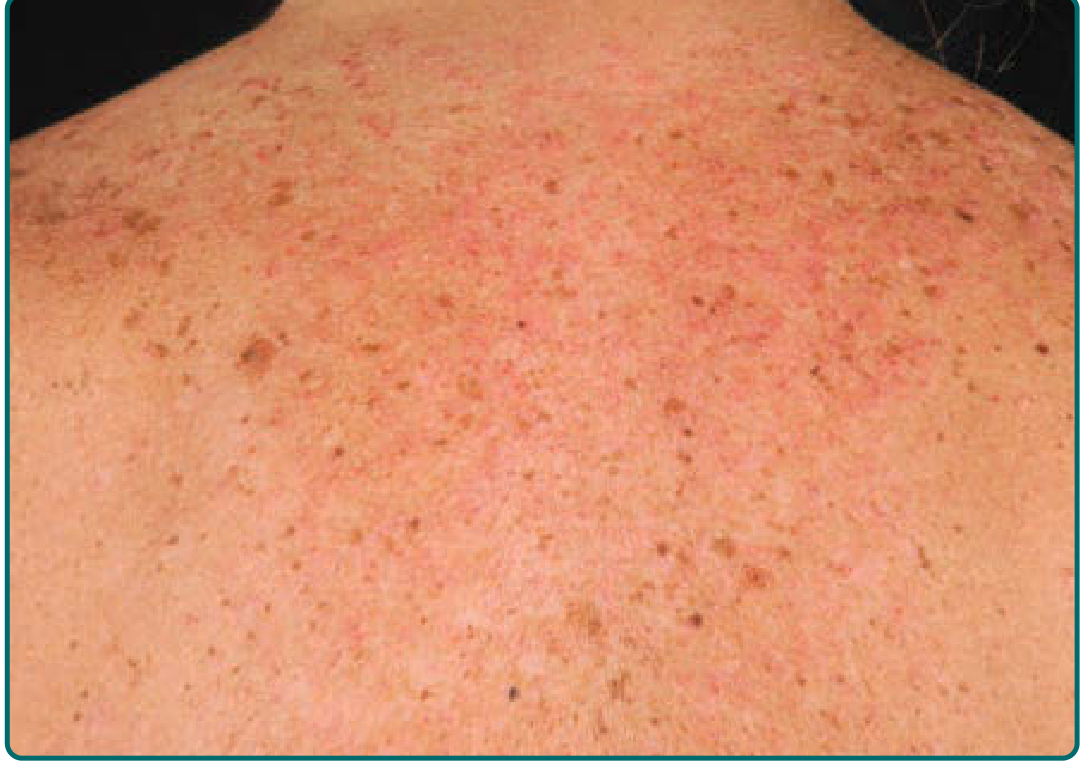
- Trigger: Sun/UV exposure
- Treatment: Sun avoidance, SPF 50+, oral cetirizine for itch
2. Insect Bite Polymorphic Light Eruption (Papular Type)
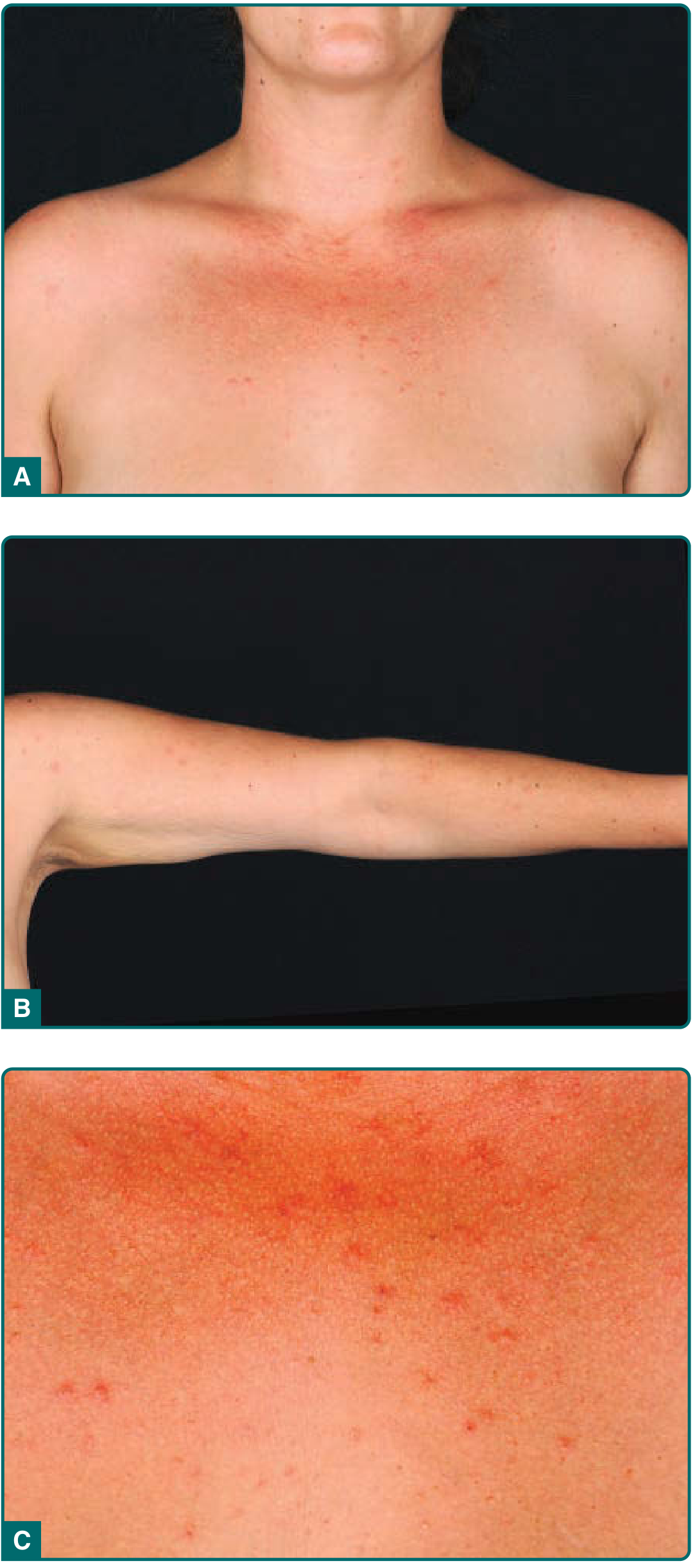
- Trigger: First significant sun exposure in spring/summer
- Treatment: SPF 50+ broad-spectrum sunscreen, topical hydrocortisone, oral antihistamine
3. Urticaria (Hives) - Wheals and Flare
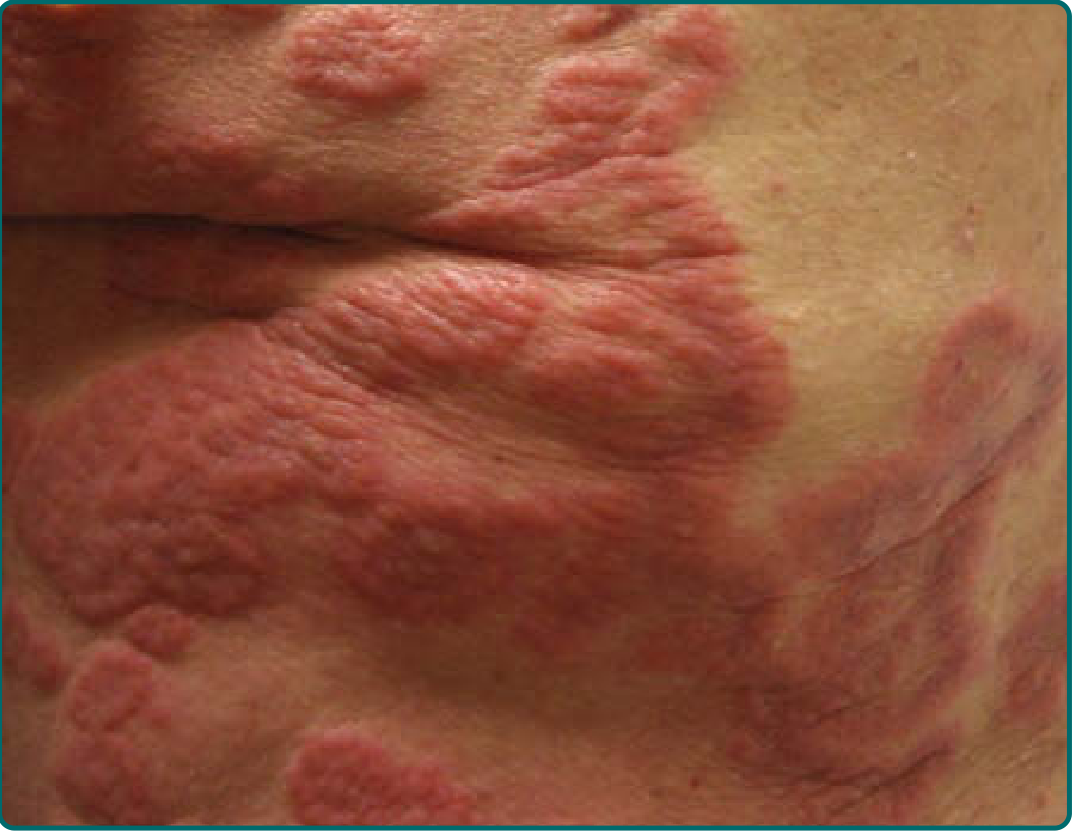
- Trigger: Heat, sweat, insect bites, allergens
- Treatment: Cetirizine/Loratadine, cool compress; severe cases add famotidine + montelukast
4. Contact Dermatitis (Hand Dermatitis)
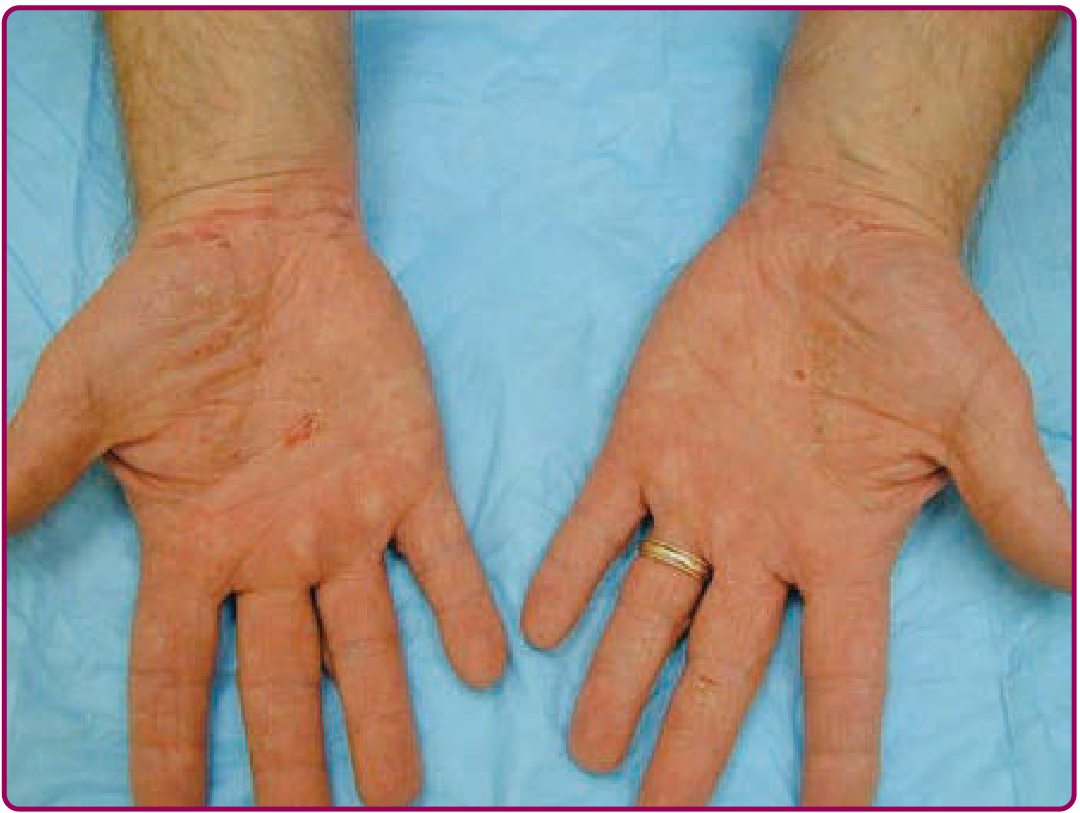
- Trigger: Allergens, plants (poison ivy), rubber gloves, metal jewellery
- Treatment: Identify and avoid trigger; hydrocortisone cream; oral antihistamine if itching
5. Widespread Urticarial / Allergic Rash (Child)
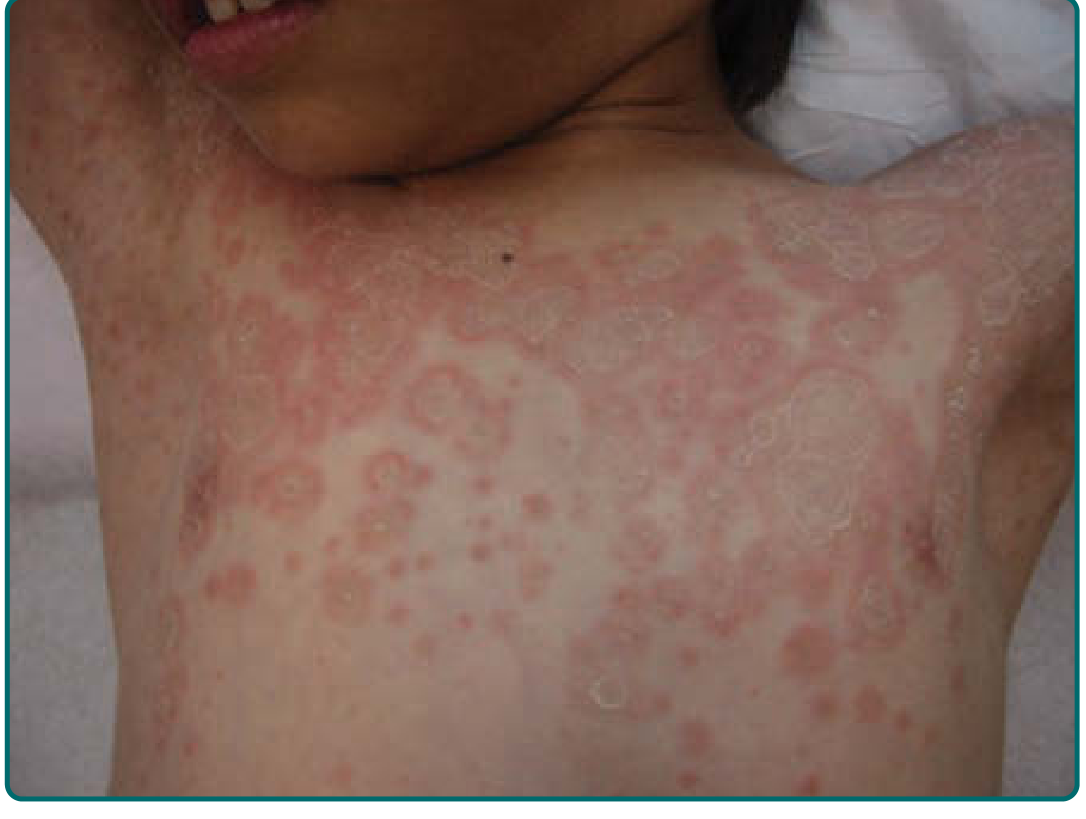
- Trigger: Viral infections, insect bites, heat, food allergens
- Treatment: Oral cetirizine or loratadine; short-course topical hydrocortisone for localised areas
6. Miliaria (Heat Rash) in Neonates / Infants
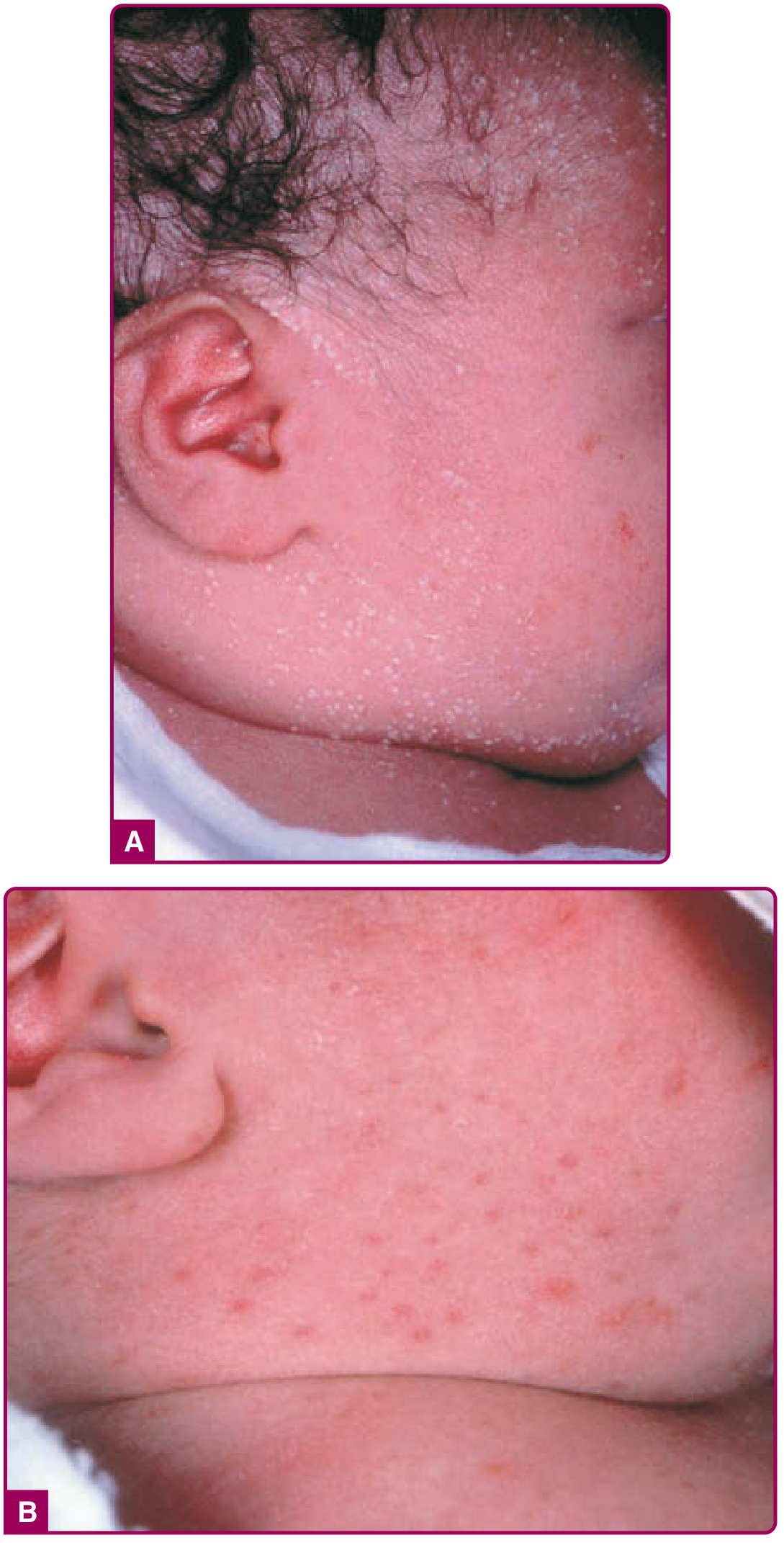
- Trigger: Overheating, swaddling, hot/humid weather
- Treatment: Cool environment, loose light clothing, cool baths; calamine lotion; no specific medicine needed (self-limiting)
Summary: Identifying Summer Skin Conditions at a Glance
| Image | Condition | Key Feature | First Treatment |
|---|---|---|---|
| 1 | Polymorphic Light Eruption | Scattered red macules on sun-exposed skin | SPF 50+, antihistamine |
| 2 | Papular PMLE | Fine red papules on chest/arms after sun | SPF 50+, hydrocortisone |
| 3 | Urticaria (Hives) | Large raised wheals, polycyclic pattern | Cetirizine/Loratadine |
| 4 | Contact Dermatitis | Red, dry, scaling palms/hands | Avoid trigger, hydrocortisone |
| 5 | Allergic Rash (child) | Widespread coalescing patches | Oral antihistamine |
| 6 | Miliaria / Heat Rash | Tiny vesicles or red papules | Cool env., calamine lotion |
Source: Fitzpatrick's Dermatology (Volumes 1 & 2) - clinical photographs from the textbook library