
Give me clinical related to brest
Reading File
The query is broad - "breast" covers a huge range of clinical topics. Let me clarify before diving in.
Asking for Preferences
Which breast topic are you looking for?
Good - breast cancer it is. Let me search the medical library now.
Finding Sources
Finding Sources
Searching PubMed
"breast cancer"[MeSH Terms] AND "treatment"[MeSH Terms]
Good sources found. Let me now read the most comprehensive sections in parallel.
Reading File
Reading File
Finding Sources
Excellent material found. Let me read the breast cancer subtypes section and pathology section in parallel.
Reading File
Reading File
Finding Sources
Great content gathered. Let me now read the TNM staging section and also fetch the breast cancer classification image from Robbins.
Reading File
Reading File
Loading Image
Excellent - I now have comprehensive content. Let me read a bit more on treatment and pathology to round out the answer.
Reading File
Reading File
I now have comprehensive clinical information on breast cancer. Let me compile a thorough, well-organized answer.
Breast Cancer - Clinical Overview
1. Epidemiology & Screening
Breast cancer is the most common cancer in females worldwide. Key screening points:
- Mammography reduces breast cancer mortality by 15-30% in large trials
- The USPSTF recommends biennial mammography for women aged 50-74 years; the decision to screen women aged 40-49 should be individualized
- The average size of invasive carcinoma detected by mammography is ~1 cm (smaller than those detected by palpation)
- Approximately 10% of invasive carcinomas are not visible on standard 2D mammography - digital breast tomosynthesis, ultrasound, and MRI serve as adjuncts
- Breast self-examination does not improve outcomes
- BRCA1/BRCA2 screening: Recommended only for women with family history of breast, ovarian, tubal, or peritoneal cancer (by risk-assessment tool first, then genetic counseling if positive)
(Goldman-Cecil Medicine, 9780323930345)
2. Risk Factors
| Risk Factor | Relative Risk |
|---|---|
| Female sex | >4.0 |
| Germline mutations (high penetrance e.g., BRCA1/2) | >4.0 |
| Strong family history (>1 first-degree relative) | >4.0 |
| Personal history of breast cancer | >4.0 |
| High breast density | >4.0 |
| Germline mutations (moderate penetrance) | 2.1-4.0 |
| High-dose chest radiation at young age | 2.1-4.0 |
| Early menarche (<12 yrs), late menopause (>55 yrs) | 1.1-2.0 |
| Late first pregnancy (>35 yrs), nulliparity | 1.1-2.0 |
| Exogenous hormone therapy | 1.1-2.0 |
| Postmenopausal obesity, alcohol consumption | 1.1-2.0 |
~20% of breast cancers are attributable to modifiable risk factors.
(Robbins & Cotran Pathologic Basis of Disease, 9780443264528)
3. Classification
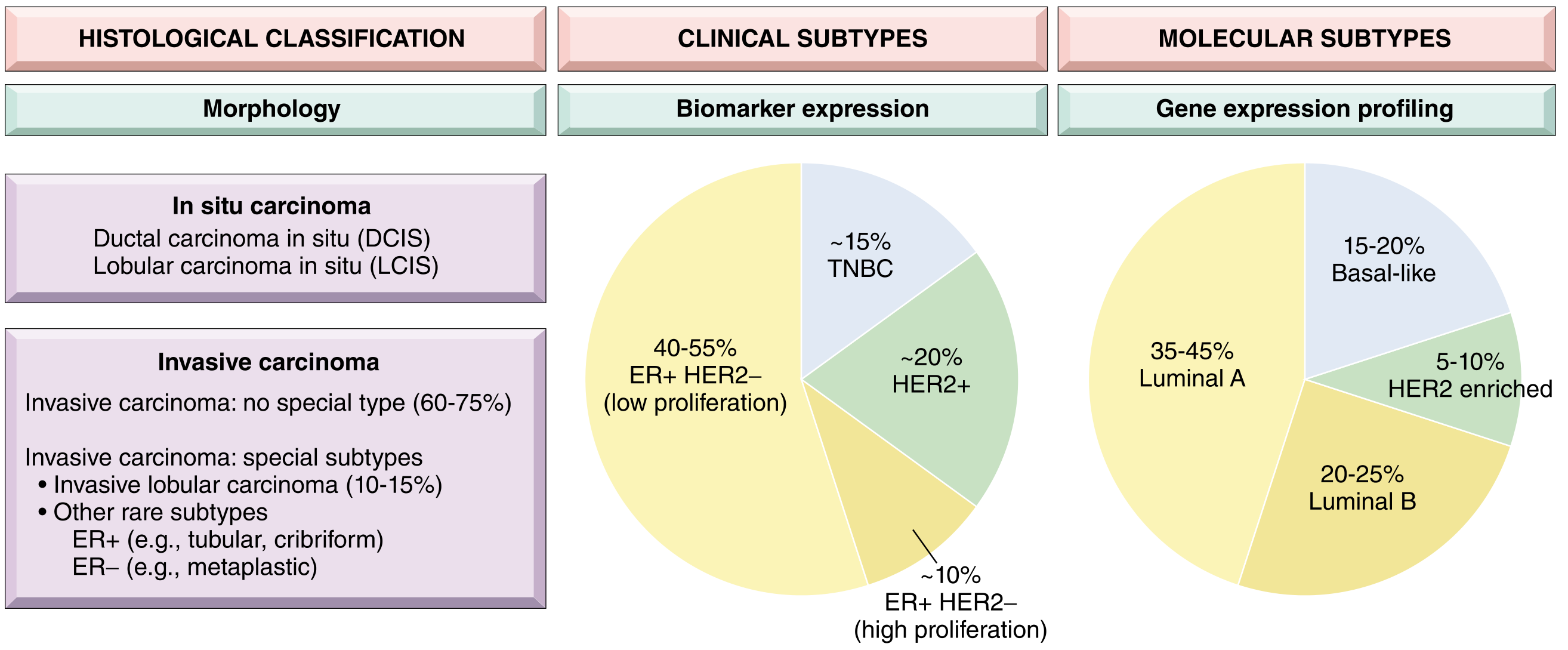
Fig. 23.15 - Robbins & Cotran Pathologic Basis of Disease
Histological Classification
In situ carcinoma:
- DCIS (Ductal Carcinoma In Situ)
- LCIS (Lobular Carcinoma In Situ)
Invasive carcinoma:
- Invasive carcinoma of no special type (NST) - 60-75%
- Invasive lobular carcinoma - 10-15%
- Special subtypes: tubular, cribriform, metaplastic, mucinous
Molecular/Intrinsic Subtypes (by IHC)
| Intrinsic Subtype | IHC Profile | Clinical Classification | Prevalence |
|---|---|---|---|
| Luminal A | ER+, PR+, HER2-, Ki-67 low | HR-positive | 35-45% |
| Luminal B | ER+, PR+/-, HER2+/-, Ki-67 high | HR-positive (±HER2+) | 20-25% |
| HER2-enriched | ER-, PR-, HER2+ | HER2-positive | 5-10% |
| Basal-like | ER-, PR-, HER2- | Triple-negative (TNBC) | 15-20% |
| Normal-like | ER+, PR+, HER2- | HR-positive | ~5% |
HR-positive tumors (ER and/or PR ≥1%) comprise ~70% of all breast cancers.
(Current Surgical Therapy 14e, 9780323796835)
4. TNM Staging (AJCC/UICC 8th Edition)
T - Primary Tumor
| Stage | Size |
|---|---|
| Tis | Carcinoma in situ |
| T1 | ≤20 mm (T1mi <1mm, T1a 1-5mm, T1b 5-10mm, T1c 10-20mm) |
| T2 | >20-50 mm |
| T3 | >50 mm |
| T4 | Any size with extension to chest wall/skin; T4d = inflammatory carcinoma |
N - Regional Nodes
| Stage | Nodes |
|---|---|
| N0 | No regional nodes positive |
| N1 | 1-3 axillary or internal mammary nodes (N1mi >0.2-2mm) |
| N2 | 4-9 axillary nodes OR internal mammary nodes without axillary |
| N3 | ≥10 axillary nodes, or infra/supraclavicular, or combined axillary + internal mammary |
M - Distant Metastasis
| Stage | Status |
|---|---|
| M0 | No distant metastasis |
| M1 | Distant metastasis present |
(Fischer's Mastery of Surgery 8th ed., 9781975176433)
5. Pathogenesis
- 25-35% of breast cancers occur due to inherited susceptibility genes
- BRCA1 and BRCA2 mutations account for 80-90% of single-gene familial breast cancers and 3-6% of all breast cancers
- Most female BRCA carriers develop breast cancer by age 70
- BRCA1/2 mutations also increase risk for ovarian, prostate, and pancreatic cancer
- Two major pathways of breast cancer evolution:
- Low-grade pathway: ER+/HER2- tumors, via flat epithelial atypia → atypical hyperplasia → low-grade DCIS → invasive cancer
- High-grade pathway: More complex, includes TNBC and HER2+ tumors
(Robbins & Cotran Pathologic Basis of Disease, 9780443264528)
6. Treatment by Subtype
HR-Positive (ER/PR+) - ~70% of cases
Endocrine therapy is the backbone:
- Tamoxifen (SERM) - competitive ER antagonist; used in pre- and post-menopausal women; 5 years of adjuvant therapy reduces 15-year recurrence and mortality; watch for endometrial cancer and thromboembolic events
- Aromatase inhibitors (AIs) - anastrozole, letrozole, exemestane; preferred for postmenopausal women; risk of osteoporosis/arthralgias; no endometrial cancer risk
- CDK 4/6 inhibitors (e.g., palbociclib, ribociclib, abemaciclib) - combined with AIs in metastatic/advanced disease
- PI3K inhibitors (in PIK3CA-mutated tumors)
- mTOR inhibitors (e.g., everolimus)
- PARP inhibitors - in patients with germline BRCA1/2 mutations
HER2-Positive - ~20% of cases
- HER2 monoclonal antibodies - trastuzumab, pertuzumab
- Antibody-drug conjugates - trastuzumab emtansine (T-DM1), trastuzumab deruxtecan (T-DXd)
- Tyrosine kinase inhibitors - lapatinib, tucatinib, neratinib
Triple-Negative Breast Cancer (TNBC) - ~15%
- Most aggressive subtype; no hormone or HER2 targets
- Immune checkpoint inhibitors (pembrolizumab + chemotherapy for PD-L1+)
- PARP inhibitors (olaparib, talazoparib) in BRCA1/2 mutation carriers
- Trop2 antibody-drug conjugate (sacituzumab govitecan)
| Subtype | Targeted Therapies |
|---|---|
| HR-positive | SERMs, AIs, SERDs, CDK 4/6 inhibitors, PI3K inhibitors, mTOR inhibitors, PARP inhibitors |
| HER2-positive | HER2 antibodies, ADCs, TKIs |
| TNBC | Immune checkpoint inhibitors, PARP inhibitors, Trop2 ADC |
(Current Surgical Therapy 14e, 9780323796835)
7. Surgical Principles
- Breast conservation (lumpectomy + radiation) is preferred over mastectomy when feasible - shown in landmark 1970s trials to be equivalent or superior to radical mastectomy
- Axillary staging is essential: sentinel lymph node biopsy (SLNB) is the standard for clinically node-negative patients
- Mastectomy options: total/simple, modified radical, skin/nipple-sparing (with reconstruction)
- Post-neoadjuvant therapy: residual disease is staged as ypT/ypN
8. Key Clinical Points to Remember
- Molecular subtype drives treatment - always assess ER, PR, HER2, Ki-67
- BRCA testing is indicated for early-onset, bilateral, or family-history cancers
- Inflammatory breast cancer (T4d) - clinical diagnosis: peau d'orange, erythema, warmth; no discrete lump; treated with neoadjuvant chemotherapy first
- Staging work-up includes CT chest/abdomen/pelvis and bone scan (or PET) for stage II-III disease
- Ovarian function suppression (OFS) combined with AIs may be used in high-risk premenopausal patients
- Extended endocrine therapy (beyond 5 years) reduces late recurrence in high-risk HR+ patients
- HER2-low (IHC 1+ or 2+/FISH-negative) is now a distinct targetable category with T-DXd
This is a shared conversation. Sign in to Orris to start your own chat.