
from Guyton and Hall textbook of medical physiology, 4th South Asia edition write a 5 mark short note on Tetany, Signs of Tetany, Treatment
Reading File
Finding Sources
Finding Sources
Finding Sources
Reading File
Reading File
Loading Image
Reading File
I now have all the content needed from Guyton and Hall to write a comprehensive 5-mark short note. Let me compile the answer.
Short Note: Tetany, Signs of Tetany, and Treatment
(Guyton and Hall Textbook of Medical Physiology)
Tetany
Tetany is a condition of sustained, involuntary muscle spasm caused by hypocalcemia - a fall in the extracellular fluid concentration of ionized calcium below normal levels.
Mechanism: When extracellular calcium ion concentration falls below normal, neuronal membrane permeability to sodium ions increases. Ca²⁺ ions normally bind to the exterior surfaces of voltage-gated sodium channel proteins, and their positive charges attenuate sodium channel activity, raising the voltage threshold needed to open the sodium gate. With hypocalcemia, this inhibition is lost. As a result, peripheral nerve fibers become progressively more excitable and begin to discharge spontaneously, initiating trains of nerve impulses that pass to skeletal muscles and elicit tetanic muscle contraction. Hypocalcemia can also cause seizures due to increased excitability in the brain.
Tetany ordinarily occurs when blood calcium falls from its normal level of 9.4 mg/dL to about 6 mg/dL (approximately 35% below normal). It is usually lethal at about 4 mg/dL.
Signs of Tetany
1. Carpopedal Spasm (earliest sign)
The hand is typically the first site affected. Spasm of the hand muscles produces a characteristic flexed posture - this is called carpopedal spasm (shown below):
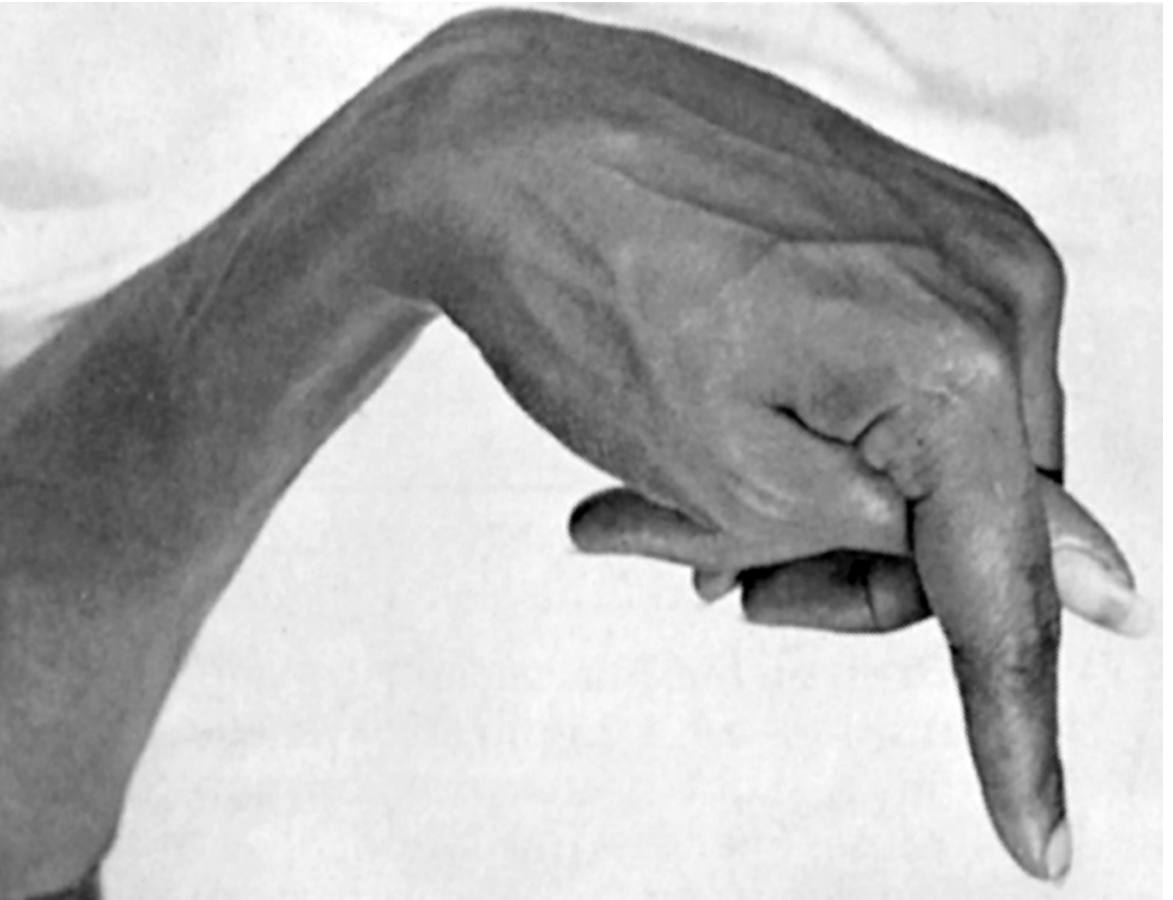
Figure 80.2 from Guyton & Hall - Hypocalcemic tetany in the hand (carpopedal spasm)
2. Laryngeal Spasm
Among the muscles most sensitive to tetanic spasm are the laryngeal muscles. Spasm of these muscles obstructs respiration and is the most common cause of death in untreated tetany.
3. Generalized Skeletal Muscle Spasms
Spontaneous, repetitive discharge of peripheral nerves causes widespread skeletal muscle contractions.
4. Tetanic Contraction of Respiratory Muscles
When Ca²⁺ concentration falls 50% below normal, spontaneous nerve discharge can cause tetanic contraction of respiratory muscles, which is sometimes lethal.
5. Seizures
Hypocalcemia can occasionally cause seizures due to increased excitability of brain neurons.
6. Other features (in laboratory settings)
Extreme hypocalcemia may cause marked dilation of the heart, increased membrane permeability in non-nervous cells, and impaired blood clotting - though these are seldom clinically evident.
Role of pH: Patients with alkalosis are more susceptible to hypocalcemic tetany because alkalosis reduces the ionized fraction of calcium, lowering the effective Ca²⁺ concentration available to stabilize sodium channels.
Treatment of Tetany
Treatment is directed at restoring the serum calcium to normal:
1. Intravenous Calcium (acute)
When the blood calcium level falls critically low (as in rickets with calcium below 7 mg/dL), intravenous calcium administration relieves tetany immediately.
2. Treatment of Hypoparathyroidism (underlying cause)
- PTH replacement is occasionally used, but is expensive, short-acting (a few hours at most), and the body tends to develop antibodies against it, making it progressively less effective.
- The preferred approach is administration of large quantities of Vitamin D along with oral calcium intake of 1-2 grams/day, which keeps calcium ion concentration in the normal range.
- When a more rapid or potent effect is required, 1,25-dihydroxycholecalciferol (calcitriol) - the active form of Vitamin D - is used instead. However, it requires careful dosing to avoid hypercalcemia from over-activity.
Key values to remember:
| Parameter | Value |
|---|---|
| Normal serum calcium | 9.4 mg/dL |
| Level at which tetany appears | ~6 mg/dL |
| Level usually lethal | ~4 mg/dL |
(Guyton and Hall Textbook of Medical Physiology, Chapter 80)
This is a shared conversation. Sign in to Orris to start your own chat.