
What will happen if a person start to use steroid cream on face timeline wise
topical steroid cream face timeline side effects what happens week month
What Happens When You Use Steroid Cream on Your Face - A Timeline
Days 1-7: The "Honeymoon" Phase
- Immediate improvement - redness, itching, and inflammation reduce noticeably. This is the intended effect.
- Some people feel a mild stinging sensation on the first application, especially on inflamed or broken skin - this is normal.
- The skin may look clearer and feel smoother.
- At this stage, there is no visible damage.
This is the phase that makes people trust the cream and keep using it beyond what is safe.
Weeks 2-4: Early Skin Changes Begin
- Skin thinning (epidermal atrophy) starts to develop - the epidermis becomes thinner as steroids suppress keratinocyte proliferation and collagen/glycosaminoglycan synthesis.
- Hyaluronan levels drop rapidly even after short-term use (within days to a few weeks), reducing the structural support of the dermis.
- The skin may start to appear slightly shiny or translucent.
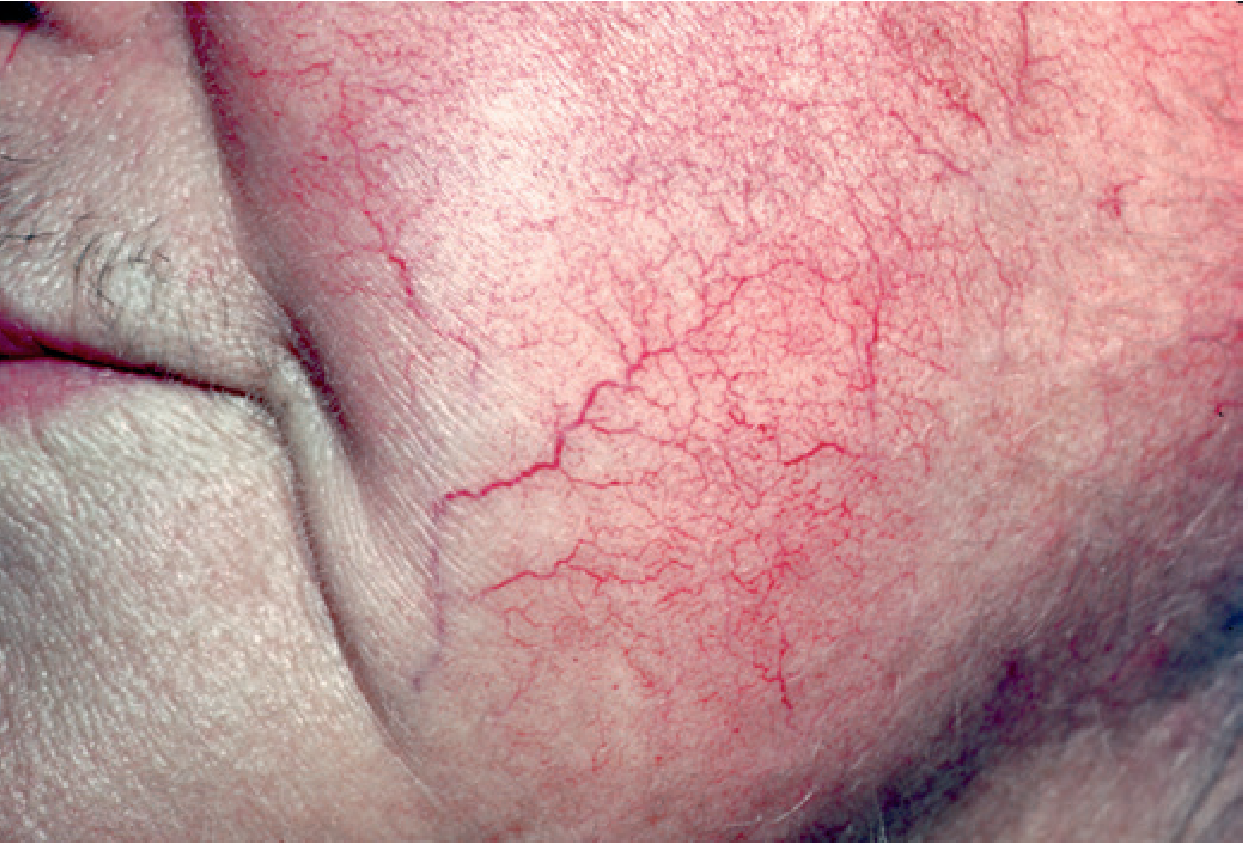
- Fine blood vessels (telangiectasias) may begin to dilate and become faintly visible, especially in fair-skinned individuals using fluorinated steroids.
- Acne-like breakouts can appear - steroids trigger comedone formation by making follicular epithelium more responsive and increasing free fatty acids in skin surface lipids.
- If you are using the cream on a pre-existing rosacea or perioral rash, it may temporarily suppress symptoms - but this is setting up a rebound later.
1-3 Months: Visible Damage Accumulates
- Telangiectasias become prominent - visible networks of red/purple blood vessels on the cheeks, nose, and chin. This is particularly severe with fluorinated corticosteroids (e.g., betamethasone, triamcinolone).
- Steroid rosacea develops - papules and pustules on an erythematous (red) base, resembling rosacea but caused by the steroid itself. Reported even from long-term use of 1% hydrocortisone cream.
- Perioral dermatitis appears around the mouth as follicular papules and pustules on a red base, with characteristic sparing of the skin right next to the lip border. More common in women.
- Skin fragility increases - the skin bruises easily, tears with minor trauma.
- The skin may show hypopigmentation (lighter patches) from steroid-induced suppression of melanocytes.
- Fine hair (hypertrichosis) - vellus hair growth is promoted by an unknown mechanism.
- If you try to stop at this point, a rebound flare occurs (see below), which drives many people back to the cream.
3-6 Months: Steroid Addiction / Dependence
- Initial use - papules, pustules, redness, and scaling improve. The cream "works."
- Continued use - local immunosuppression allows microbial overgrowth (bacteria, Demodex mites, fungi like Malassezia). The underlying condition may actually worsen silently.
- Withdrawal - rebound flares of intense itching, burning, redness, and scaling occur when the cream is stopped. This is called Topical Steroid Withdrawal (TSW) or "Red Burning Skin Syndrome."
6+ Months to Years: Irreversible Changes
- Striae (stretch marks) on the face if dermal atrophy progresses - these are irreversible. Unlike epidermal atrophy which may reverse over months, striae do not resolve.
- Persistent telangiectasias - most disappear a few months after stopping, but some may persist.
- Skin infections are masked or worsened - tinea infections may appear atypically ("tinea incognita"), herpes simplex and molluscum contagiosum can spread unnoticed under immune suppression.
- Eye complications if used near eyelids: excessive use over weeks to months can lead to glaucoma and cataracts.
- Systemic absorption: the face is a high-absorption site. Prolonged heavy use can suppress the hypothalamic-pituitary-adrenal (HPA) axis, especially in children. Rare cases of Cushing syndrome have been reported with high-potency steroids used over large areas.
What Happens When You Stop (Withdrawal Timeline)
| Time after stopping | What happens |
|---|---|
| Days 1-3 | Intense rebound redness, burning, stinging |
| Days 3-14 | Peak withdrawal - severe erythema, oozing, peeling, swelling |
| Weeks 2-8 | Gradual settling; telangiectasias may begin fading |
| Months 2-6 | Epidermal atrophy slowly reverses; some pigmentation returns |
| Months 6-12+ | Most changes resolve except striae and severe telangiectasias |
Key Risk Factors That Accelerate Damage
| Factor | Why It Matters |
|---|---|
| Higher potency (fluorinated steroids) | Greater atrophy, telangiectasia, rosacea risk |
| Longer duration | More suppression of fibroblasts, collagen, and immune defenses |
| Occlusion (tight clothing/bandages) | Increases absorption 10x |
| Younger age / thinner skin | Faster systemic absorption, HPA suppression risk |
| Already inflamed/broken skin | Higher absorption into bloodstream |
The Bottom Line
- Textbook of Family Medicine 9e, p. 921
- Andrews' Diseases of the Skin, p. 159
- Fitzpatrick's Dermatology, Vol 1-2
- DermNet NZ - Topical Steroids provides a clinically accurate patient-facing overview
- PMC review on topical steroid side effects covers steroid addiction phases in detail
What is the treatment protocol for this situation
topical steroid addiction withdrawal face treatment protocol 2024
topical steroid face damage recovery treatment skin atrophy telangiectasia rosacea protocol dermatology
Treatment Protocol for Topical Steroid-Damaged Face (TSDF)
Step 1: Discontinuation Strategy - Do NOT Stop Abruptly
| Approach | How | Best For |
|---|---|---|
| Gradual potency tapering | Switch to a lower-potency steroid, then reduce frequency (daily → every other day → twice weekly → stop) | Longer-term users, severe dependence |
| Abrupt cessation | Stop entirely and manage the rebound | Short-term users (<2-3 months), mild dependence |
- Reduce application frequency before reducing potency
- If using a potent fluorinated steroid (betamethasone, triamcinolone) on the face, step down to hydrocortisone 1% first, then wean off
- Warn the patient that a flare cycle will occur - flares happen with increasing intervals and decreasing intensity until they stop
"Reducing the strength of the topical corticosteroid as well as the frequency of application - rather than an abrupt discontinuation - is advisable to reduce a rebound flare." - Dermatology 2-Volume Set 5e
Step 2: Replace the Steroid - Steroid-Sparing Agents
Topical Calcineurin Inhibitors (TCIs) - First Choice
- Tacrolimus 0.03% or 0.1% ointment - more effective, preferred for moderate-to-severe disease
- Pimecrolimus 1% cream - milder, better tolerated initially
- These calm inflammation without causing skin atrophy, and are specifically recommended for the face and eyelids where steroids are too risky
- Warning: They may cause a burning sensation for the first 1-2 weeks - this usually resolves. Patients must be warned so they do not give up.
- Note: Rare reports of calcineurin inhibitors themselves causing a rosaceiform eruption; if this happens, try azelaic acid instead
Alternative: Azelaic Acid 15-20%
- Anti-inflammatory, antikeratinizing, antimicrobial
- Works well as maintenance for rosacea-pattern disease
- Has good evidence for steroid-induced rosacea
Step 3: Treat the Specific Damage Present
A. Steroid Rosacea / Perioral Dermatitis (Papules & Pustules)
| Severity | Treatment |
|---|---|
| Mild | Topical metronidazole 0.75-1% gel twice daily OR azelaic acid 15-20% gel twice daily |
| Moderate-Severe | Oral antibiotics for 4-8 weeks |
- Doxycycline 40-100 mg/day - first choice (subantimicrobial dose 40 mg preferred to minimize resistance)
- Tetracycline 500 mg twice daily
- Minocycline 100 mg/day (non-inferior to doxycycline in trials)
- Azithromycin 500 mg three times per week for 4-8 weeks - useful alternative
- Erythromycin - if above contraindicated (e.g., pregnancy, children)
"A 4- to 8-week course of oral antibiotics (e.g. doxycycline, erythromycin, tetracycline, minocycline, often at subantimicrobial doses) is usually effective in clearing the skin." - Dermatology 2-Volume Set 5e
B. Telangiectasias (Visible Blood Vessels)
- Most disappear a few months after stopping the steroid - reassure the patient
- Persistent telangiectasias (not resolving after 3-6 months off steroids): refer for laser therapy
- Pulsed Dye Laser (PDL) - gold standard
- Intense Pulsed Light (IPL)
- Both are effective for steroid-induced telangiectasia
- Platelet-Rich Plasma (PRP) mesotherapy has emerging evidence for restoring skin barrier function before laser treatment
C. Skin Atrophy (Thinning, Transparency, Fragility)
- Epidermal atrophy is reversible over months once steroids are stopped
- Striae (stretch marks) are irreversible - no treatment fully corrects them
- Support recovery with:
- Fragrance-free, barrier-repair moisturizers (ceramide-based) applied regularly
- Avoid all irritants, harsh cleansers, alcohol-based products
- Broad-spectrum SPF 30+ sunscreen daily - fragile skin is highly susceptible to UV damage and pigmentation
D. Hyperpigmentation / Hypopigmentation
- Usually resolves gradually after steroid cessation (months)
- Persistent hyperpigmentation: azelaic acid 20% cream has mild depigmenting effects
- Avoid skin bleaching creams - many contain steroids themselves (common trap in South Asia, Southeast Asia, Africa)
E. Steroid Acne (Monomorphic Pustules, No Comedones)
- Resolves with oral antibiotic course (same as rosacea protocol above)
- Benzoyl peroxide 2.5-5% can help reduce bacterial load
- Do not use retinoids initially - fragile, atrophied skin cannot tolerate them at first
F. Hypertrichosis (Increased Facial Hair)
- Resolves gradually after stopping steroids
- Darker hairs may persist for months even after withdrawal
- No specific treatment needed; reassure and wait
G. Masked Infections (Tinea Incognita, Demodex Overgrowth)
- Examine any pustule for Demodex mites if rosaceiform eruption is severe
- Treat tinea with topical antifungals (clotrimazole, ketoconazole) if fungal infection is confirmed
- Demodex: ivermectin 1% cream (Soolantra) OR oral ivermectin in severe cases
Step 4: Barrier Support and Skin Care Protocol
| Product | Role |
|---|---|
| Ceramide-containing moisturizer (e.g. CeraVe, Vanicream) | Restore barrier, reduce TEWL |
| Broad-spectrum SPF 30+ mineral sunscreen (zinc oxide) | Protect fragile, photosensitive skin |
| Gentle, pH-balanced cleanser | Avoid stripping skin further |
| Avoid: Fragrances, alcohol, harsh exfoliants, retinoids (initially) | These worsen fragile skin |
Step 5: Monitor for Systemic Effects (If Heavy Use)
- Morning serum cortisol or ACTH stimulation test to assess HPA axis suppression
- Ophthalmology referral if steroid was used near eyelids (glaucoma, cataracts)
- Pediatric cases: check height/growth charts for growth suppression
Recovery Timeline with Treatment
| Timeframe | What to Expect |
|---|---|
| Week 1-2 | Rebound flare (even with tapering) - redness, burning, pustules at peak |
| Week 2-4 | Flare begins to subside; oral antibiotics start working on pustular component |
| Month 1-2 | Redness and papules reduce; skin less fragile; telangiectasias start fading |
| Month 2-4 | Epidermal atrophy reverses; pigmentation normalizes; most telangiectasias fade |
| Month 4-6+ | Significant recovery; residual issues (persistent telangiectasias, striae) addressed with laser |
| Ongoing | Striae are permanent; some telangiectasias may require laser |
Key Points to Tell the Patient
- Recovery is real but slow - weeks to months, not days
- The rebound flare is not a sign of a new disease - it is the skin readjusting
- Never use a steroid on the face again without dermatologist supervision
- Many "fairness creams" and OTC creams in some countries contain hidden steroids - always read ingredients
- Relapse is near-certain if steroids are restarted - this must be made clear
Can we go with ayurveda like using kumkumadi oil and satdhot ghrit
kumkumadi oil skin wound healing anti-inflammatory
shatdhaut ghrita ghee skin healing ayurveda
kumkumadi tailam ayurveda ingredients skin benefits evidence saffron manjistha
saffron crocin skin anti-inflammatory healing
ghee clarified butter wound healing skin barrier
shatdhaut ghrita satdhot ghrit skin healing evidence ingredients ayurveda
ayurvedic herbal formulation skin inflammation clinical trial
kumkumadi tailam sesame oil saffron clinical study rosacea skin repair evidence
Kumkumadi Oil and Shatdhaut Ghrita for Steroid-Damaged Face - Can They Help?
Shatdhaut Ghrita (Shata Dhauta Ghrita) - The Better of the Two for This Condition
Why it makes sense for steroid-damaged skin:
| Property | What it does for TSDF |
|---|---|
| Emollient / occlusive | Seals the skin barrier, reduces transepidermal water loss (TEWL) - exactly what atrophied, fragile skin needs |
| Cooling (sheeta virya) | Reduces burning and inflammation during withdrawal flares |
| Anti-inflammatory | Cow ghee contains butyrate, conjugated linoleic acid (CLA), and fat-soluble vitamins (A, D, E, K) with documented anti-inflammatory activity |
| Non-comedogenic (when washed) | The repeated washing removes impurities and heavy fats that would clog pores |
| Deeply moisturizing | Penetrates the stratum corneum and restores lipid balance |
Kumkumadi Tailam (Kumkumadi Oil) - Use With Caution and Timing
What the ingredients do:
| Ingredient | Evidence-Based Activity |
|---|---|
| Saffron (Crocin/Safranal) | Inhibits tyrosinase - reduces melanin, fades pigmentation. Animal study (Planta Med, 2018) showed wound healing promotion |
| Manjistha (Rubia cordifolia) | Anti-inflammatory, antioxidant, reduces post-inflammatory pigmentation |
| Licorice (Glabridin) | Proven tyrosinase inhibitor, anti-inflammatory - fades dark spots |
| Sandalwood | Cooling, anti-inflammatory, mild antimicrobial |
| Sesame oil base | Anti-inflammatory (reduces NF-kB), UV protective, rich in linoleic/oleic acid for barrier repair (PMC5796020) |
| Turmeric | Anti-inflammatory via COX-2 inhibition, but evidence for rosacea specifically is weak |
The caution for steroid-damaged skin:
- The face during withdrawal is highly sensitized, inflamed, and barrier-broken - multiple herbal actives on compromised skin can trigger contact sensitization or irritation reactions
- Saffron and some aromatic components can be irritating on inflamed/oozing skin
- Sesame oil itself has a low risk of allergy but is not zero
- It does NOT address the bacterial/Demodex component of steroid rosacea
- Fading hyperpigmentation left behind
- Improving skin tone and texture
- Antioxidant protection during recovery
- Reducing residual erythema
Practical Combined Protocol Using Ayurveda + Evidence-Based Medicine
| Phase | What to Use |
|---|---|
| Acute withdrawal (Weeks 1-6) | Steroid taper + oral doxycycline + Shatdhaut Ghrita as moisturizer (gentle, cooling, barrier repair) + SPF 30+ mineral sunscreen |
| Sub-acute (Months 2-3) | Tacrolimus/pimecrolimus OR azelaic acid + Shatdhaut Ghrita + introduce Kumkumadi oil at night (patch test first) |
| Recovery/maintenance (Months 3+) | Kumkumadi oil nightly for pigmentation/texture + Shatdhaut Ghrita as needed for dryness + sunscreen daily |
What Ayurveda Cannot Replace in This Protocol
| Requirement | Ayurveda Substitute? |
|---|---|
| Stopping bacterial/Demodex overgrowth | No - needs oral doxycycline or ivermectin |
| Suppressing severe rebound inflammation | No - calcineurin inhibitors or steroid taper needed |
| Laser for persistent telangiectasias | No - PDL/IPL laser required |
| HPA axis monitoring | No - requires serum cortisol testing |