
what is the disorder where the baby's head grows according to the age but the other parts stops growing
achondroplasia baby head normal size limbs short growth disorder
Achondroplasia
What is it?
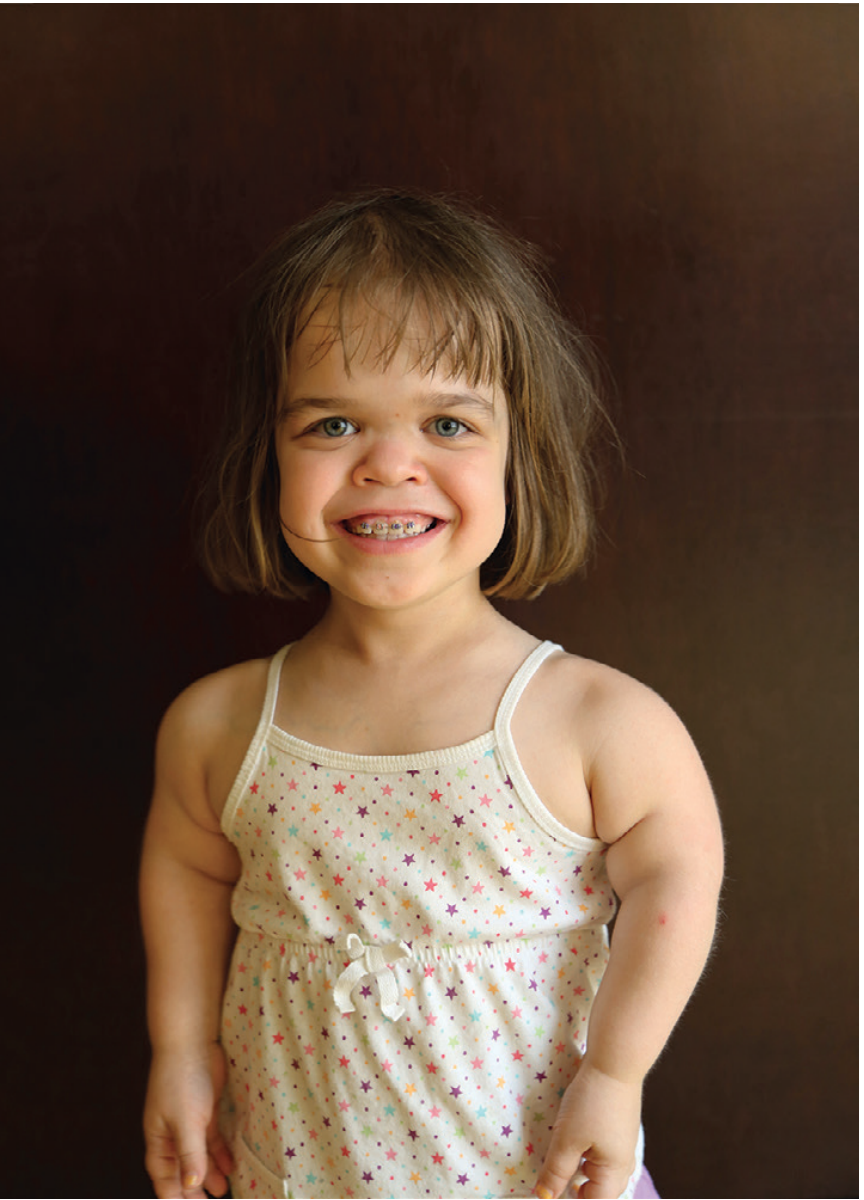
Cause
- Caused by a mutation in the FGFR3 gene (Fibroblast Growth Factor Receptor 3)
- Over 99% of cases are caused by a single change at position c.1138 in the gene (p.Gly380Arg substitution)
- This mutation is a gain-of-function change - it keeps FGFR3 permanently "switched on," which abnormally inhibits cartilage cell (chondrocyte) growth in the long bones
- About 80% of cases are new (de novo) mutations - meaning neither parent has the condition
- The remaining 20% inherit it from an affected parent (autosomal dominant inheritance)
- Incidence: 1 in 15,000 to 1 in 40,000 live births
What happens to the head and body?
- At birth, body length, weight, and head size may look nearly normal
- Within the first few months, the body length falls below normal growth curves...
- ...while head circumference shoots up above the 95th percentile
- The arms and legs (especially the upper portions - rhizomelic shortening) remain disproportionately short
- The trunk is relatively long compared to the limbs
- Intelligence is completely normal in most cases
Key features
| Feature | Description |
|---|---|
| Limb shortening | Short arms and legs (especially upper segments) |
| Large head | Prominent forehead, flat midface |
| Trident hands | Fingers spread in a trident pattern |
| Normal intelligence | Brain development is not affected |
| Motor delays | Due to large head size and low muscle tone, not brain problems |
Complications to watch for
- Foramen magnum stenosis - the opening at the base of the skull is too narrow, which can compress the brainstem and cause breathing problems or even sudden death in up to 5% in the first year of life
- Sleep apnea (both obstructive and central types)
- Recurrent ear infections and hearing loss
- Spinal stenosis in adulthood
- Bowed legs (genu varum)
- Obesity
Treatment
- MRI scans to check for brainstem compression in infancy
- Surgical decompression if needed
- Monitoring for hearing, sleep apnea, and spine problems
- Vosoritide (a newer FDA-approved medication) can increase growth in children with achondroplasia
- Growth hormone therapy and surgical limb lengthening are options but remain debated
- Avoiding high-risk activities (contact sports, trampolines, diving) that could injure the neck
Give me image of 21 age patient of this disorder
A 21-year-old adult patient with achondroplasia standing in a clinical or neutral setting. The person has the characteristic features of achondroplasia: disproportionately short arms and legs with a relatively normal-length trunk, large head with prominent forehead and midface hypoplasia, normal facial expression. The person is a young adult, fully clothed in casual wear, standing upright. Medical illustration style, respectful and educational depiction.
400, message: Got more than 4194304 bytes when reading: b'data: {"candidates": [{"content": {"role": "model","parts": [{"inlineData": {"mimeType": "image/png"...'.
We encountered an error while processing your request. Please try again or reach out to us for help.