
Tgfbeta receptors
I'll look up TGF-beta receptors from the medical library for you.
Searching sources...
Reading File
Finding Sources
Finding Sources
Finding Sources
Finding Sources
Good finds. Let me read the dedicated TGF-β signaling section from Cellular and Molecular Immunology, and also the Robbins section on growth factors/receptors, plus a broader search for TGF-beta receptor structure.
Reading File
Reading File
Finding Sources
Excellent - rich content found. Let me read the dedicated sections from Schwartz's Surgery (which has a "Transforming Growth Factor-β Family of Receptors" heading), Medical Physiology, and the Embryology book (which has an image).
Reading File
Reading File
Reading File
I have a diagram in the embryology textbook. Let me fetch it, and also read the Medical Physiology additional notes on SMAD classes plus the Rheumatology section.
Loading Image
Reading File
Reading File
I now have comprehensive information from multiple authoritative textbooks. Let me compile the full answer.
TGF-beta Receptors
The TGF-beta Superfamily
TGF-beta belongs to a large superfamily of structurally related growth factors that includes TGF-beta (5 isoforms in mammals, 3 in humans: TGF-beta1, -beta2, -beta3), bone morphogenetic proteins (BMPs), activins, inhibins, anti-Mullerian hormone, and nodal. These molecules control cell growth, differentiation, embryogenesis, wound repair, immune function, and endocrine signaling. Unchecked TGF-beta signaling drives progressive fibrotic disorders such as liver cirrhosis and idiopathic pulmonary fibrosis. - Medical Physiology, p. 105
Receptor Structure
TGF-beta receptors are type I transmembrane glycoproteins with:
- A single membrane-spanning segment
- An extracellular ligand-binding domain
- An intracellular serine/threonine kinase domain (this distinguishes them from receptor tyrosine kinases)
Mammals possess 7 different type I receptors and 5 different type II receptors within the TGF-beta superfamily. - Cellular and Molecular Immunology, p. 538
Key structural distinction: Type I receptors contain a glycine/serine-rich (GS) domain near the transmembrane region that is absent in type II receptors. The type II receptor's kinase is constitutively active, while the type I receptor's kinase is initially inactive (requires phosphorylation to become active). - Schwartz's Principles of Surgery; The Developing Human, p. 1314
Receptor Activation - Step-by-Step
The canonical pathway proceeds as follows (illustrated below):
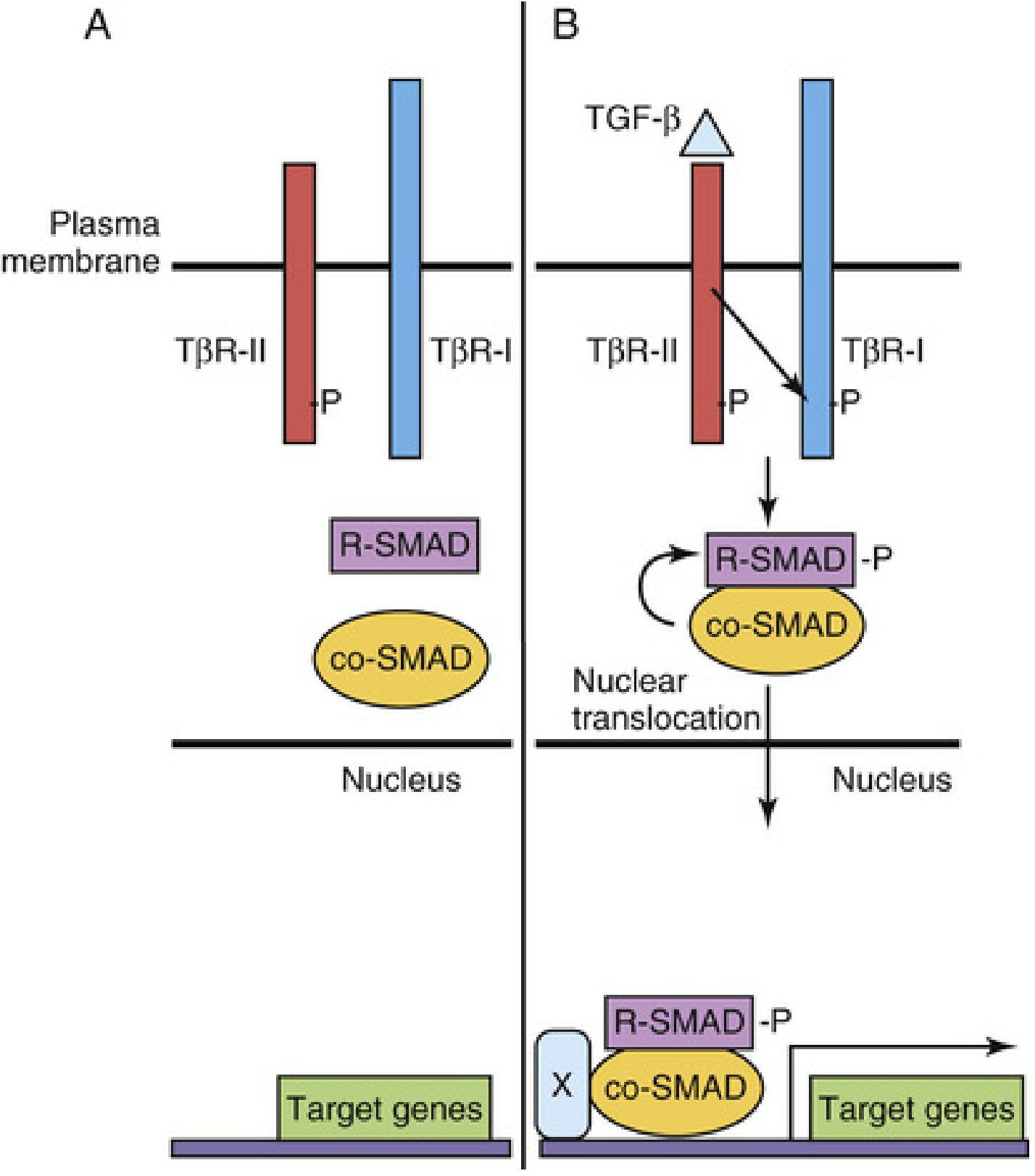
Fig. 21.4 - TGF-β/SMAD signaling pathway (The Developing Human)
-
Ligand activation: Newly synthesized TGF-beta is secreted as an inactive dimer bound to a latency-associated peptide (LAP) in the extracellular matrix. Integrins (particularly αv integrins) physically disrupt this latent complex to release active TGF-beta dimers. - Cellular and Molecular Immunology, p. 538
-
Type II receptor binding: Active TGF-beta dimers bind the constitutively active TβR-II (type II receptor).
-
Heterotetrameric complex formation: TβR-II recruits and binds a type I receptor (TβR-I), forming a heterotetrameric complex (two type I + two type II subunits). Whether type I or type II receptor binds first is ligand-dependent. - The Developing Human, p. 1314; Schwartz's Principles of Surgery
-
Transphosphorylation: TβR-II phosphorylates the GS domain of TβR-I, activating its serine/threonine kinase domain.
-
SMAD phosphorylation: Activated TβR-I phosphorylates receptor-activated SMADs (R-SMADs). - Medical Physiology, p. 105
The SMAD Pathway (Canonical Signaling)
SMADs are divided into three functional classes:
| Class | Members | Function |
|---|---|---|
| R-SMADs (receptor-activated) | SMAD1, 2, 3, 5, 8 | Phosphorylated by active type I receptor; dissociate from receptor and bind co-SMAD |
| Co-SMAD | SMAD4 (only member) | Associates with phosphorylated R-SMADs; required for nuclear translocation |
| I-SMADs (inhibitory) | SMAD6, SMAD7 | Bind type I receptors, block R-SMAD phosphorylation; provide negative feedback |
Signaling specificity:
- SMAD2 and SMAD3 specifically associate with the TGF-beta type I receptor ALK-5
- SMAD1 associates with BMP type I receptors such as ALK-2 and ALK-3
The R-SMAD/SMAD4 heterodimer translocates to the nucleus and regulates target gene transcription in conjunction with transcriptional coactivators and corepressors. Cell type determines which target genes are activated (e.g., FOXP3 in regulatory T cell differentiation). - Medical Physiology, p. 106; Cellular and Molecular Immunology, p. 538
Non-Canonical (Non-SMAD) Signaling
TGF-beta also activates SMAD-independent pathways: - Rheumatology, 2-Volume Set; Schwartz's Principles of Surgery
- TAK1 pathway: TGF-beta-associated kinase-1 (TAK1) associates with TAB1 and activates MAP kinase family members
- MAPK pathways: Includes RAS-ERK, JNK, and p38 MAPK signaling
- These non-canonical routes are particularly relevant in cancer biology and fibrosis
Coreceptors and Regulatory Molecules
- Membrane-anchored coreceptors (e.g., endoglin, betaglycan) modulate ligand binding and signaling strength
- Ligand traps sequester TGF-beta and prevent receptor binding
- Dominant-negative TβR-II (inactive kinase domain) - used experimentally to block all downstream signaling
- The diversity of ligand, type I receptor, type II receptor, coreceptor, and R-SMAD combinations generates cell- and context-specific signaling outputs - The Developing Human, p. 1315
Physiological and Pathological Roles
| Role | Details |
|---|---|
| Immunosuppression | Suppresses IL-2 production; inhibits T cell proliferation; induces M2 (anti-inflammatory) macrophage polarization |
| Treg induction | Drives FOXP3 expression essential for regulatory T cell development |
| Th17 differentiation | Participates alongside IL-6 |
| IgA class switching | Required for B cell class switching to IgA |
| Wound repair | Promotes ECM synthesis, fibroblast activity |
| Embryogenesis | Dorsoventral patterning, organ formation (kidney, nervous system, skeleton) |
| Fibrosis | Unchecked signaling drives liver cirrhosis, IPF, SSc (systemic sclerosis) |
| Cancer | Tumor suppressor early; pro-metastatic late in cancer progression |
- Schwartz's Principles of Surgery; Cellular and Molecular Immunology; Medical Physiology; The Developing Human
Key Named Type I Receptors (ALK family)
| Receptor | Also Known As | Primary Ligand |
|---|---|---|
| ALK-5 (TβR-I) | TGFBR1 | TGF-beta1/2/3 |
| ALK-1 | ACVRL1 | BMP9, BMP10 |
| ALK-2 | ACVR1 | BMP ligands |
| ALK-3 | BMPR1A | BMP ligands |
| ALK-4 | ACVR1B | Activin, Nodal |
| ALK-6 | BMPR1B | BMP ligands |
| ALK-7 | ACVR1C | Nodal |
In summary: TGF-beta receptors are serine/threonine kinase receptors that function as heterotetramers. The constitutively active type II receptor transphosphorylates the type I receptor upon ligand binding, triggering canonical SMAD signaling (R-SMAD phosphorylation → SMAD4 binding → nuclear translocation → gene transcription) or non-canonical MAPK/TAK1 pathways. The system's complexity and context-dependence arise from the many combinations of ligands, receptor subtypes, SMADs, and coreceptors.
This is a shared conversation. Sign in to Orris to start your own chat.