
Explain each and everything about the histology of eye
Reading File
Now let me search the library for histology of eye content in parallel:
Finding Sources
Finding Sources
Finding Sources
Finding Sources
Finding Sources
Finding Sources
I found the histology textbooks. Let me search for eye-specific content in both histology books:
Finding Sources
Finding Sources
Excellent! I have the exact file paths and line ranges. Let me read the comprehensive eye histology content from both textbooks in parallel:
Reading File
Reading File
Reading File
Reading File
Excellent content! Let me continue reading the deeper histology sections from both textbooks:
Reading File
Reading File
Reading File
Reading File
Reading File
Reading File
I now have comprehensive material. Let me fetch a few key diagrams and continue reading the retina layers section:
Loading Image
Loading Image
Reading File
Now let me fetch the cornea and retina layer diagrams to include visuals:
Loading Image
Loading Image
Reading File
I now have extensive material from both histology textbooks. Let me compile the complete, comprehensive answer:
Histology of the Eye - Complete Guide
The eye is a complex sensory organ approximately 25 mm in diameter, suspended within the bony orbit by six extrinsic muscles and cushioned by adipose tissue. Its wall consists of three concentric layers (tunics), enclosing transparent optical media and specialized photoreceptors that convert light into neural signals.
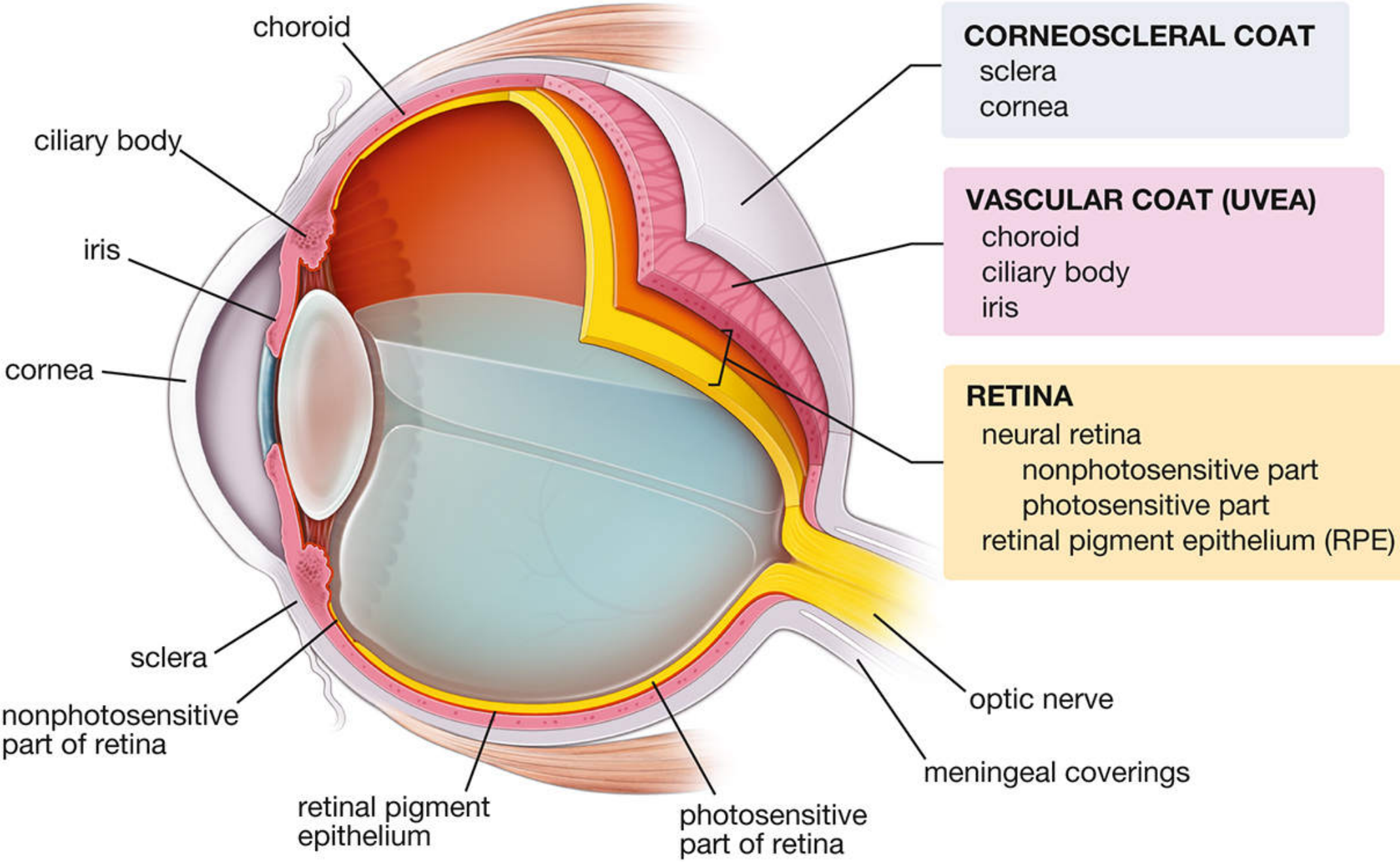
Overview: Three Layers of the Eye
| Layer | Components | Function |
|---|---|---|
| Corneoscleral coat (outer, fibrous) | Cornea + Sclera | Mechanical protection, light transmission |
| Vascular coat / Uvea (middle) | Choroid + Ciliary body + Iris | Nutrition, accommodation, light control |
| Retina (inner) | RPE + Neural retina | Phototransduction, signal processing |
I. CORNEOSCLERAL COAT (Outer Fibrous Layer)
A. Sclera
The sclera forms the posterior five-sixths of the outer coat and is the "white of the eye." Key features:
- Composition: Dense connective tissue; flat bundles of type I collagen parallel to the organ surface but intersecting in various directions
- Thickness: Averages ~0.5 mm; thickens to ~1 mm posteriorly where it blends with the optic nerve epineurium
- Vascularity: Sparse; microvasculature mainly in the episclera (outer surface)
- Suprachoroid lamina: Inner surface adjacent to choroid; contains less collagen, more fibroblasts, elastic fibers, and melanocytes
- Color variations: Slightly bluish in children (thin); yellowish in the elderly (lipofuscin); yellow in jaundice (scleral icterus from bilirubin)
B. Cornea
The cornea covers the anterior one-sixth of the eye. It is transparent, avascular, and only 0.5 mm thick at center (~1 mm at periphery). It has five distinct layers:
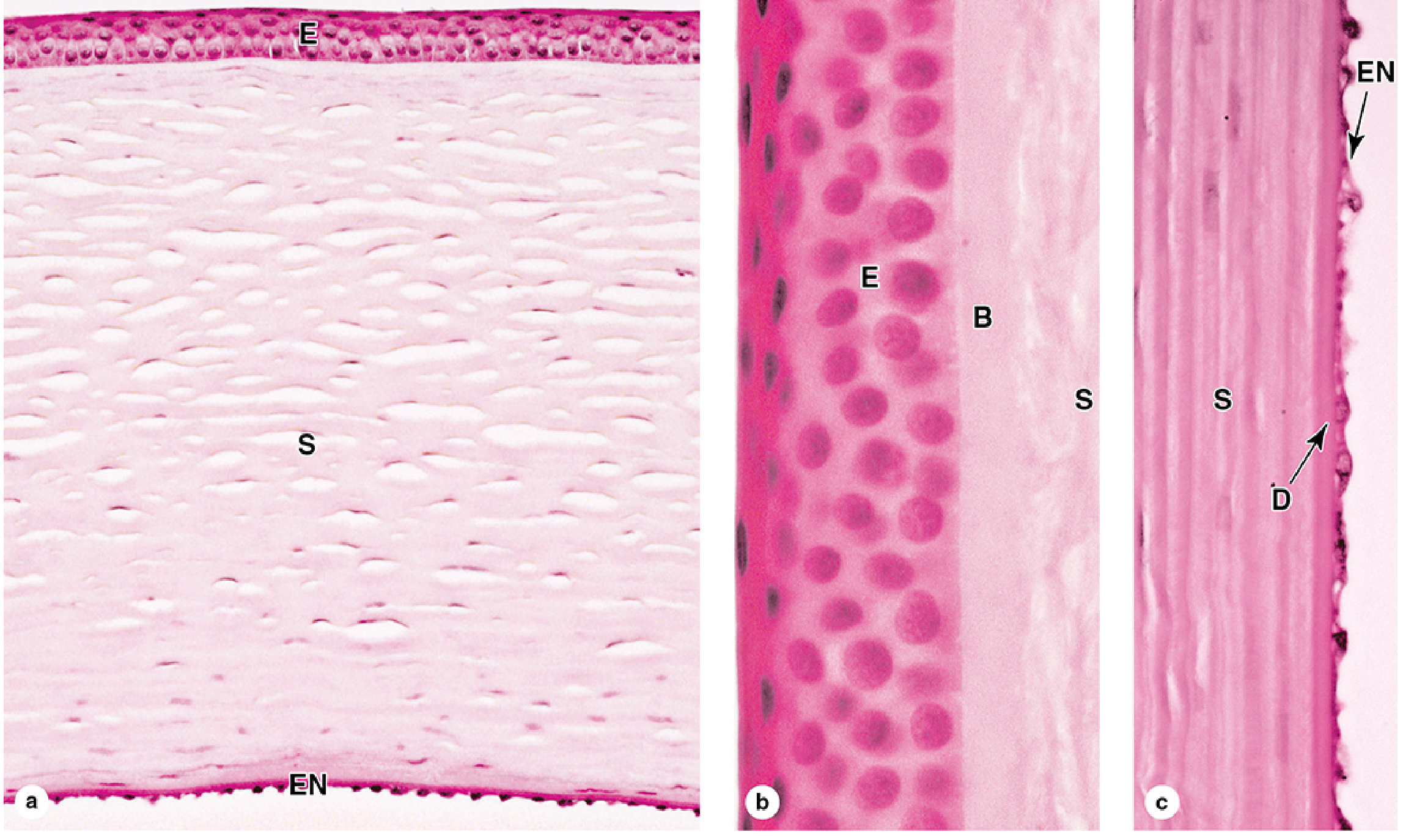
1. Corneal Epithelium
- Type: Nonkeratinized stratified squamous epithelium, ~5-6 cell layers, ~50 µm thick
- Basal cells: Low columnar with round ovoid nuclei; high proliferative capacity; turnover time ~7 days; stem cells reside in the corneoscleral limbus
- Surface cells: Squamous, with flat pyknotic nuclei and microvilli projecting into the tear film (lipid + glycoprotein + water)
- Special features: One of the richest sensory nerve supplies of any tissue; cells connected by desmosomes
2. Bowman Membrane (Anterior Limiting Membrane)
- Nature: Noncellular; the basement membrane of the corneal epithelium - a condensed layer of corneal stroma
- Composition: Randomly arranged type I collagen fibrils (~25 nm diameter)
- Significance: Does not regenerate after injury (scarring occurs instead)
- Approximately 8-14 µm thick
3. Corneal Stroma (Substantia Propria)
- Constitutes ~90% of corneal thickness
- Composition: ~200 lamellae of precisely organized type I collagen fibrils running parallel within each lamella but orthogonally between lamellae
- Cells: Keratocytes (fibroblasts) - flat, stellate cells between lamellae; comprise only ~3-5% of stromal volume
- Ground substance: Rich in proteoglycans (keratan sulfate, dermatan sulfate) that maintain collagen fibril spacing and corneal transparency
- Transparency mechanism: Uniform collagen fibril diameter (~30 nm) and precise spacing prevent light scattering
4. Descemet Membrane (Posterior Limiting Membrane)
- Nature: Basement membrane of the corneal endothelium
- Composition: Type IV and VIII collagen, laminin, fibronectin
- Thickness: Increases with age (from ~3 µm at birth to ~10-12 µm in adults)
- Unlike Bowman membrane, it can regenerate after injury
5. Corneal Endothelium
- Type: Single layer (simple squamous) of flat hexagonal cells
- Function: Actively pumps fluid out of the stroma using Na+/K+-ATPase, maintaining corneal transparency (cornea would swell and become opaque if this fails)
- Limitation: In adults, these cells cannot divide - number decreases throughout life; when density falls below ~500 cells/mm² (from normal ~2,500-3,000), corneal edema results
- Clinical relevance: Fuchs endothelial dystrophy; endothelial damage in glaucoma
C. Limbus (Corneoscleral Junction)
- Zone of transition between cornea and sclera
- Houses corneal epithelial stem cells
- Location of the trabecular meshwork (iridocorneal angle) and Canal of Schlemm (scleral venous sinus) for aqueous humor drainage
II. VASCULAR COAT (Middle Layer / Uvea)
The uvea consists of three components from posterior to anterior: choroid, ciliary body, and iris.
A. Choroid
The choroid lines the inner surface of the sclera, occupying the posterior two-thirds of the vascular coat.
- Function: Primary blood supply to the outer retina (RPE and photoreceptors have no direct blood supply)
- Layers (from outside in):
- Suprachoroidal lamina (Haller layer): Interface with sclera; contains collagen, elastic fibers, fibroblasts, melanocytes, smooth muscle
- Outer large vessel layer (Haller layer): Large arteries and veins
- Middle vessel layer (Sattler layer): Medium-sized vessels
- Choriocapillaris: Dense capillary plexus immediately external to Bruch membrane; fenestrated capillaries with high permeability for nutrient/waste exchange with RPE
- Bruch membrane: Inner layer of choroid; 5-layered structure consisting of RPE basement membrane, inner collagenous layer, central elastic layer, outer collagenous layer, and Bruch endothelial basement membrane
B. Ciliary Body
The ciliary body is the thickened anterior expansion of the uvea, extending ~6 mm from the iris root to the ora serrata.
Layers of the ciliary body:
-
Ciliary muscle (outer layer): Smooth muscle organized in three orientations:
- Longitudinal (meridional) fibers - outermost
- Radial (oblique) fibers - middle
- Circular (sphincteric) fibers - innermost
- Collectively controls lens shape for accommodation (contraction relaxes the zonular fibers, allowing lens to round up for near vision)
-
Ciliary processes: ~75 radial ridges projecting inward from the ciliary body; provide large surface area for aqueous humor secretion
-
Bilaminar ciliary epithelium: Covers the internal surface of the ciliary body:
- Outer pigmented layer: Continuous with RPE; heavily pigmented cuboidal cells on a basement membrane adjacent to stroma
- Inner nonpigmented layer: Continuous with neural retina; lacks melanin; has extensive basolateral folds with Na+/K+-ATPase activity
- The two layers are apposed apex-to-apex (due to folding of optic cup in development)
- Together they secrete aqueous humor by active transport of ions
Aqueous humor circulation: Produced by ciliary processes → flows into posterior chamber → through pupil → anterior chamber → drains via trabecular meshwork into Canal of Schlemm → episcleral veins
Zonular fibers (Zonule of Zinn): Arise from grooves between ciliary processes; attach to lens capsule and suspend the lens. When ciliary muscle contracts, zonules relax → lens rounds up (accommodation). When ciliary muscle relaxes, zonules tighten → lens flattens (distant vision).
C. Iris
The iris is the most anterior part of the uvea, forming a contractile diaphragm in front of the lens. The central aperture is the pupil.
Histological layers (anterior to posterior):
- Anterior border layer: Discontinuous layer of fibroblasts and melanocytes (no epithelium - this is why IOP can equilibrate across it)
- Iris stroma: Highly vascularized, loosely arranged collagen with fibroblasts, melanocytes, mast cells, macrophages, and clump cells
- Eye color is determined by the density of melanocytes in the stroma:
- Few melanocytes → blue iris (light reflects from posterior pigment layer)
- Increasing pigment → blue→green→gray→brown
- Eye color is determined by the density of melanocytes in the stroma:
- Pupillary sphincter (sphincter pupillae): Circular band of smooth muscle near the pupillary margin; innervated by parasympathetic fibers (CN III); contracts in bright light (miosis)
- Anterior pigment epithelium (myoepithelial layer): Consists of cells whose basal processes extend radially as the dilator pupillae muscle; innervated by sympathetic fibers (from superior cervical ganglion); dilates pupil in dim light (mydriasis)
- Posterior pigment epithelium: Single layer of densely pigmented cuboidal cells; so heavily loaded with melanin that nuclei are indistinct; prevents light from entering the eye except through the pupil
III. RETINA (Inner Layer)
The retina is divided into two functionally distinct parts:
- Photosensitive (pars optica): Posterior region; contains photoreceptors; extends from optic disc to ora serrata
- Nonphotosensitive (pars caeca/blind): Anterior region, covering inner ciliary body and posterior iris surface
A. Retinal Pigment Epithelium (RPE)
- Type: Single layer of cuboidal/low columnar cells resting on Bruch membrane
- Ultrastructure:
- Basal membrane: Extensively infolded with abundant mitochondria (for active transport)
- Apical surface: Long villous processes that surround the outer segments of rods and cones
- Cytoplasm: Rich in melanin granules (apical), phagolysosomes, smooth ER, peroxisomes
- Tight junctions between cells form the outer blood-retina barrier
Functions of RPE:
- Absorbs scattered light → prevents reflection/glare
- Forms blood-retina barrier (tight junctions isolate neural retina from choroidal vasculature)
- Visual cycle: Contains enzyme systems that isomerize all-trans-retinal back to 11-cis-retinal, which is returned to photoreceptors
- Phagocytosis: Continuously phagocytoses shed membranous discs from rod and cone outer segments (~2,000-4,000 discs per day per rod)
- Removes free radicals (antioxidant activity)
- Secretes trophic factors (VEGF, PEDF, growth factors) supporting photoreceptors
B. Neural Retina - Ten Layers (outer to inner)
The neural retina is organized into 10 layers visible in H&E sections:
| Layer | Contents |
|---|---|
| 1. Retinal pigment epithelium | (see above) |
| 2. Photoreceptor layer (rods and cones) | Outer segments of photoreceptors |
| 3. External (outer) limiting membrane | Belt desmosomes between Müller cells and photoreceptors |
| 4. Outer nuclear layer (ONL) | Nuclei of rods and cones |
| 5. Outer plexiform layer (OPL) | Synapses between photoreceptors and bipolar/horizontal cells |
| 6. Inner nuclear layer (INL) | Nuclei of bipolar, horizontal, amacrine, and Müller cells |
| 7. Inner plexiform layer (IPL) | Synapses between bipolar cells and ganglion cells |
| 8. Ganglion cell layer (GCL) | Cell bodies of retinal ganglion cells |
| 9. Nerve fiber layer (NFL) | Axons of ganglion cells → form optic nerve |
| 10. Inner limiting membrane (ILM) | Basement membrane of Müller cell end-feet; boundary with vitreous |
C. Photoreceptor Cells
Rods
- Number: ~120 million per retina
- Size: ~2 µm thick, ~50 µm long (60 µm at fovea, 40 µm peripherally)
- Outer segment: Cylindrical stack of ~1,000 membranous discs containing rhodopsin (visual pigment); discs are completely internalized (not continuous with plasma membrane)
- Visual pigment: Rhodopsin (opsin + 11-cis-retinal); activated by any wavelength of visible light; responsible for dim-light (scotopic) vision
- Distribution: Absent from fovea and optic disc; maximum density in a ring ~20° from fovea; density decreases toward periphery
Cones
- Number: ~7 million per retina
- Size: 85 µm at fovea, 25 µm at periphery; flask-shaped outer segment
- Outer segment: Stacked discs continuous with plasma membrane
- Three types (determined by opsin isoform):
- S cones: Short wavelength (~420 nm) - blue
- M cones: Medium wavelength (~530 nm) - green
- L cones: Long wavelength (~560 nm) - red
- Function: Bright-light (photopic) vision and color discrimination
- Distribution: Peak density in fovea (~150,000 cones/mm²); absent from optic disc
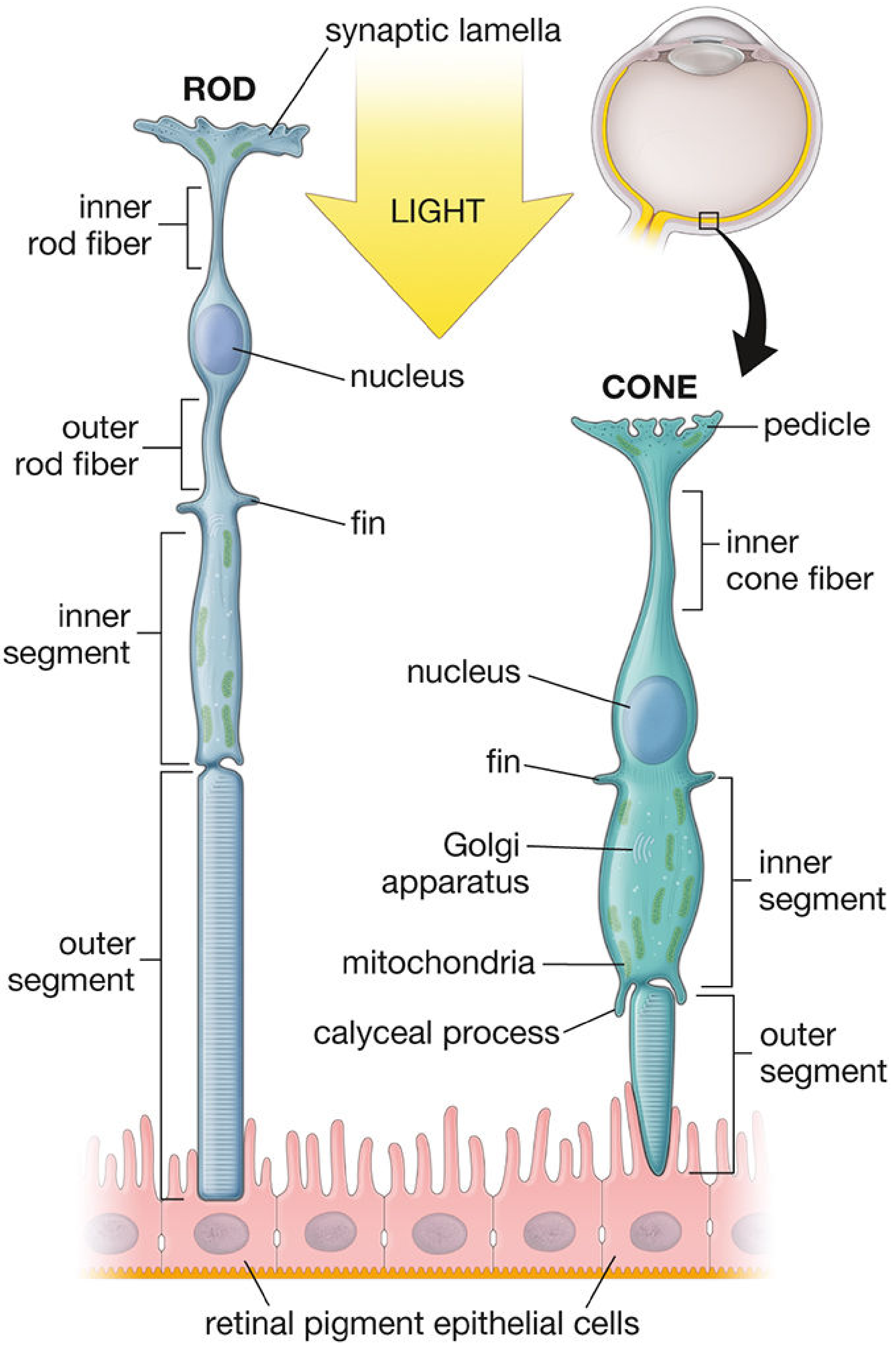
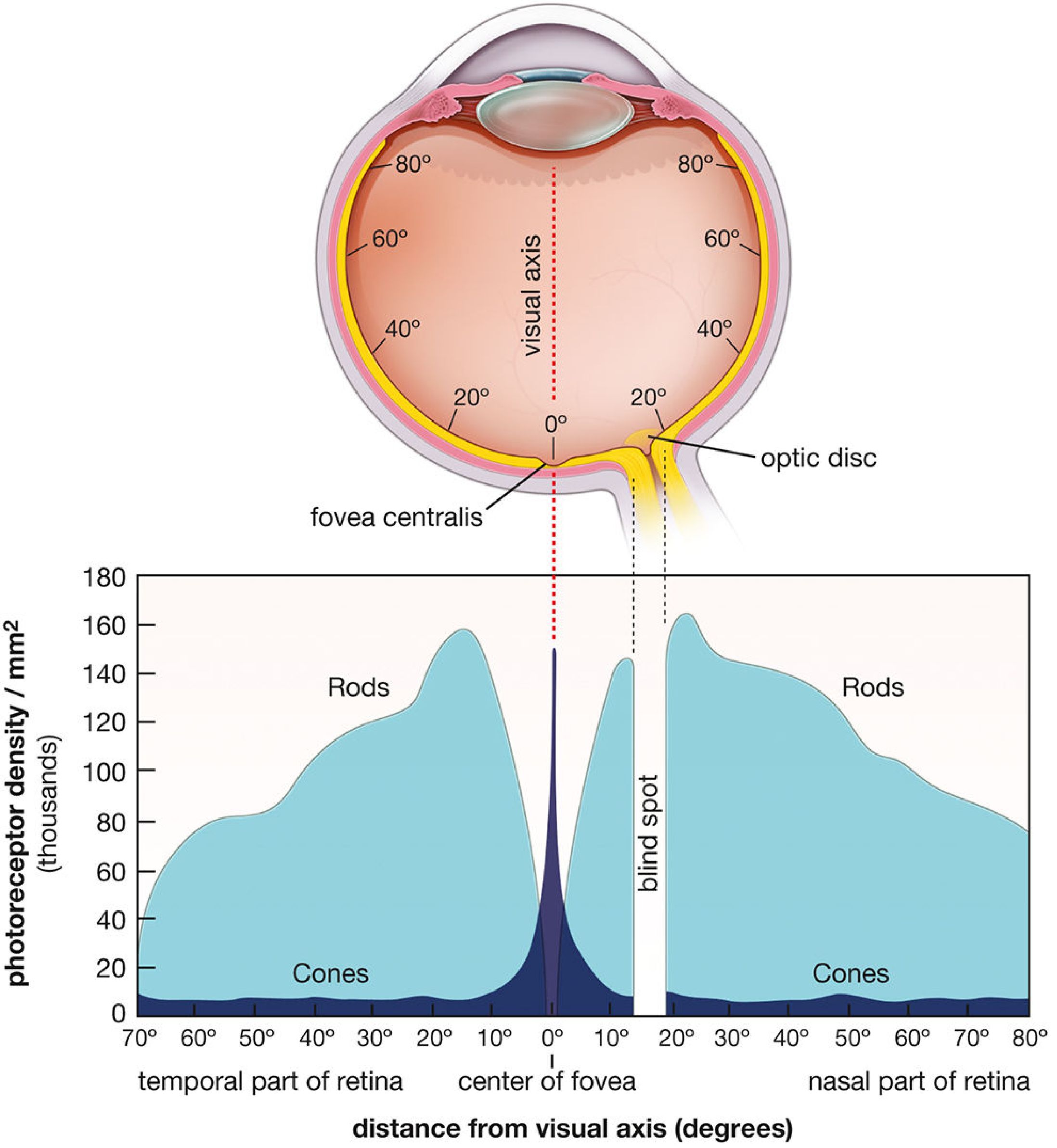
Photoreceptor segments:
- Inner segment (IS): Metabolically active; contains Golgi, mitochondria, ribosomes; synthesizes visual pigment proteins
- Outer segment (OS): Light-detection zone; stacked photosensitive membrane discs
- Connected by a thin connecting cilium (modified non-motile cilium, 9+0 axoneme pattern)
D. Retinal Interneurons
Bipolar Cells
- Located in the inner nuclear layer
- Connect photoreceptors to ganglion cells
- Two types: ON-bipolar (depolarize to light) and OFF-bipolar (hyperpolarize to light)
Horizontal Cells
- Also in the inner nuclear layer
- Lateral-projecting neurons that modulate bipolar cell activity in the outer plexiform layer
- Provide lateral inhibition (contrast enhancement)
Amacrine Cells
- Located in the inner nuclear layer and displaced to ganglion cell layer
- Modulate ganglion cell activity at the inner plexiform layer
- ~30 subtypes; involved in motion detection, direction selectivity
Müller Cells
- Supporting (glial) cells of the retina; span the entire thickness
- Nuclei in the inner nuclear layer
- Provide structural support, metabolic support to neurons, potassium buffering, neurotransmitter recycling
- End-feet form the inner limiting membrane; attachments with photoreceptors form the outer limiting membrane
E. Ganglion Cells and Optic Nerve
- Cell bodies in the ganglion cell layer; the only retinal cells whose axons leave the eye
- Axons travel in the nerve fiber layer and converge at the optic disc (papilla) to form the optic nerve
- The optic nerve is surrounded by meningeal sheaths (dura, arachnoid, pia) continuous with the brain meninges
F. Special Regions
Fovea Centralis and Macula
- Macula lutea: Oval region ~5.5 mm temporal to the optic disc; contains yellow pigment (lutein and zeaxanthin)
- Fovea centralis: Central depression in the macula; ~1.5 mm in diameter
- Foveola (center): Contains only cones (~150,000/mm²); all inner retinal layers are displaced laterally
- Site of maximum visual acuity and color vision; cone-to-ganglion cell ratio is 1:1 here
- Avascular zone at its center (supplied by diffusion from choriocapillaris)
Optic Disc (Blind Spot)
- Where optic nerve exits the eye (nasal side of retina)
- No photoreceptors → physiological blind spot
- Contains no neural retinal layers; only ganglion cell axons, glial cells, and central retinal artery/vein
Ora Serrata
- Anterior termination of the photosensitive retina
- Junction between photosensitive retina and nonphotosensitive retina of ciliary body
- Scalloped/serrated margin
IV. OPTICAL MEDIA
A. Crystalline Lens
- Shape: Biconvex, transparent; ~9 mm diameter, ~4 mm thick at rest
- No vascularity, no nerves (completely avascular and aneural)
- Suspended by the zonule of Zinn from the ciliary body
Layers of the lens:
-
Lens capsule:
- Thickest basement membrane in the body
- Composed of type IV collagen and laminin
- Surrounds the entire lens
- Serves as attachment for zonular fibers
-
Lens epithelium:
- Single layer of cuboidal cells present only on the anterior surface (absent posteriorly)
- Cells at the equatorial zone are the germinative zone - they differentiate into lens fibers throughout life
- Mitotic activity continues lifelong at the equatorial bow region
-
Lens fibers (cortex and nucleus):
- Lens epithelial cells at the equator elongate into extremely long (up to 10 mm), thin lens fiber cells
- Newly formed fibers add to the outer cortex; older fibers are pushed inward to form the lens nucleus
- Mature lens fibers lose their nuclei and organelles (to maintain transparency)
- Fibers are packed tightly with crystallin proteins (α, β, γ crystallins) - highly organized, prevent light scattering
- Connected by gap junctions allowing nutrient diffusion (no blood supply)
Accommodation: Ciliary muscle contraction → zonular tension decreases → lens capsule recoils → lens rounds up → increases refractive power for near vision
Clinical notes: Cataracts result from protein aggregation/denaturation in lens fibers, causing opacity.
B. Vitreous Body
- Fills the posterior chamber behind the lens
- Composition: 99% water; gel-like due to type II collagen fibrils and hyaluronic acid
- Sparsely populated by hyalocytes (modified macrophages) near the periphery
- Attached to the retina at the vitreous base (ora serrata region) and at the optic disc
- Functions: Maintains shape of the eye; transmits light; provides cushioning
C. Aqueous Humor
- Clear fluid filling the anterior and posterior chambers
- Composition: Like plasma but with virtually no protein; rich in ascorbic acid, glucose
- Produced by active secretion from nonpigmented ciliary epithelium
- Drainage: Flows through pupil → anterior chamber → trabecular meshwork → Canal of Schlemm → episcleral veins
- Intraocular pressure (IOP): Normally 10-21 mmHg; maintained by balance of production and drainage
V. ACCESSORY STRUCTURES
A. Eyelids
Layers from anterior to posterior:
- Skin: Thin, loose, elastic; contains fine hairs, sebaceous glands, sweat glands
- Orbicularis oculi muscle: Thin oval sheet of circularly oriented skeletal muscle (facial expression muscle; CN VII)
- Tarsal plate: Dense fibrous and elastic connective tissue; provides structural rigidity
- Upper eyelid: Levator palpebrae superioris tendon attaches to tarsal plate; also the superior tarsal muscle (Müller's muscle) - smooth muscle, sympathetically innervated
- Tarsal (Meibomian) glands: Modified sebaceous glands within the tarsal plate (25-30 per eyelid); open at lid margin; secrete the lipid layer of the tear film (prevents evaporation)
- Eyelashes: Short, stiff, curved hairs; associated glands:
- Glands of Zeis: Small sebaceous glands associated with eyelash follicles
- Glands of Moll: Modified apocrine sweat glands along the lid margin
- Conjunctiva (palpebral): Lines the posterior (inner) surface of eyelid (see below)
- Mucocutaneous junction: Where skin transitions to conjunctiva at lid margin
B. Conjunctiva
- Thin, transparent mucous membrane covering the inner surface of eyelids and anterior sclera (not the cornea)
- Three regions:
- Palpebral conjunctiva: Lines inner eyelids; transitions to fornix
- Forniceal conjunctiva: At the reflection point (fornix)
- Bulbar conjunctiva: Covers anterior sclera; merges with corneal epithelium at limbus
Histology:
- Epithelium: Nonkeratinized stratified columnar/squamous with goblet cells (more numerous in nasal conjunctiva); goblet cells secrete mucin for the inner layer of the tear film
- Stroma (substantia propria): Loose connective tissue with lymphocytes, mast cells, plasma cells (especially in fornix where it forms lymphoid tissue)
- Clinical: Conjunctivitis (bacterial/viral/allergic) causes redness, discharge, edema
C. Lacrimal Apparatus
Lacrimal gland:
- Located in the superolateral orbit
- Tubuloalveolar serous gland; resembles a parotid gland histologically
- Acinar cells: Columnar with basal nuclei; secretory granules contain proteins (lysozyme, lactoferrin, IgA, lipocalin)
- Myoepithelial cells surround acini; assist secretion
- Ducts open into the superior conjunctival fornix
Tear film layers (three-layer model):
- Outer lipid layer - from Meibomian glands (prevents evaporation)
- Middle aqueous layer - from lacrimal gland
- Inner mucin layer - from conjunctival goblet cells (adheres tear film to corneal surface)
VI. DEVELOPMENT OF THE EYE (Embryological Origins)
| Structure | Embryological Origin |
|---|---|
| Neural retina | Inner layer of optic cup (neuroectoderm) |
| RPE | Outer layer of optic cup (neuroectoderm) |
| Iris and ciliary body epithelium | Optic cup rim |
| Optic nerve | Optic stalk neuroectoderm |
| Corneal epithelium | Surface ectoderm |
| Lens | Lens vesicle (surface ectoderm) |
| Corneal stroma, endothelium, sclera, choroid stroma | Neural crest-derived head mesenchyme |
| Vitreous body | Head mesenchyme + hyaloid vessel regression |
| Extraocular muscles | Paraxial mesoderm |
Key embryological events:
- Week 4: Optic vesicles bulge from forebrain (prosencephalon) via optic stalks
- Optic vesicle invaginates → optic cup (two-layered); induces overlying ectoderm to form lens vesicle
- Hyaloid vessels supply developing lens and retina; regress leaving hyaloid canal in vitreous
- Neural crest cells migrate around optic cup → differentiate into most of the uvea and fibrous coat
Clinical Correlations
| Condition | Histological Basis |
|---|---|
| Glaucoma (open-angle) | Obstruction of trabecular meshwork → impaired aqueous drainage → ↑IOP → retinal ganglion cell damage |
| Glaucoma (angle-closure) | Narrowed iridocorneal angle physically blocks drainage |
| Cataract | Crystallin protein aggregation in lens fibers → opacity |
| Retinal detachment | Separation of neural retina from RPE; RPE and photoreceptors lack firm adhesion; photoreceptors die without metabolic support |
| Age-related macular degeneration | RPE dysfunction; drusen (extracellular deposits) in Bruch membrane; RPE and photoreceptor loss in macula |
| Diabetic retinopathy | Pericyte loss → capillary weakness → microaneurysms, hemorrhages, neovascularization |
| Color blindness | Absence/mutation of S, M, or L cone opsins |
Sources:
- Histology: A Text and Atlas with Correlated Cell and Molecular Biology, Pawlina & Ross - Chapter 24 (Eye)
- Junqueira's Basic Histology: Text and Atlas, 17e - Chapter 23 (Eye)
Explain development of eye in full detail along with all clinicals
Your credits are exhausted. You can purchase a top-up or subscribe to a plan to continue using Orris. If you're already subscribed, your daily credits will reset tomorrow.
This is a shared conversation. Sign in to Orris to start your own chat.