
Erythroderma and psoriasis role of upadacitinib
Reading File
Now let me search the medical library and PubMed in parallel for upadacitinib in erythroderma and psoriasis.
Finding Sources
Finding Sources
Searching PubMed
upadacitinib erythroderma psoriasis
Good results. Now let me read the key textbook sections and search PubMed more broadly in parallel.
Reading File
Reading File
Reading File
Searching PubMed
upadacitinib psoriasis JAK inhibitor
Now let me get more details on upadacitinib's mechanism and indications in dermatology, and search specifically for erythrodermic psoriasis treatment evidence.
Reading File
Searching PubMed
erythrodermic psoriasis treatment biologics management
Searching PubMed
upadacitinib erythroderma treatment case
Excellent findings. Let me get the abstract from the key systematic review on erythrodermic psoriasis management and the upadacitinib erythrodermic atopic dermatitis case, plus the JAK safety profile paper.
Reading Article
PMID: 40856907
Reading Article
PMID: 38881978
Reading Article
PMID: 36754548
Reading Article
PMID: 38102958
Now let me get the textbook content on erythrodermic psoriasis treatment options and also fetch the image of erythrodermic psoriasis.
Finding Sources
Reading Article
PMID: 37560255
I now have comprehensive information to write a thorough answer. Let me fetch the psoriatic erythroderma image from the textbook as well.
Loading Image
I now have comprehensive information from textbooks and peer-reviewed literature to provide a thorough answer. Here is a detailed synthesis:
Erythrodermic Psoriasis and the Role of Upadacitinib
1. Erythrodermic Psoriasis: Overview
Erythrodermic psoriasis (EP) is a severe, rare variant of psoriasis accounting for less than 3% of psoriasis cases. It is defined by generalized erythema and scaling affecting >75-90% of the body surface area (BSA), involving the face, trunk, extremities, hands, feet, and nails.
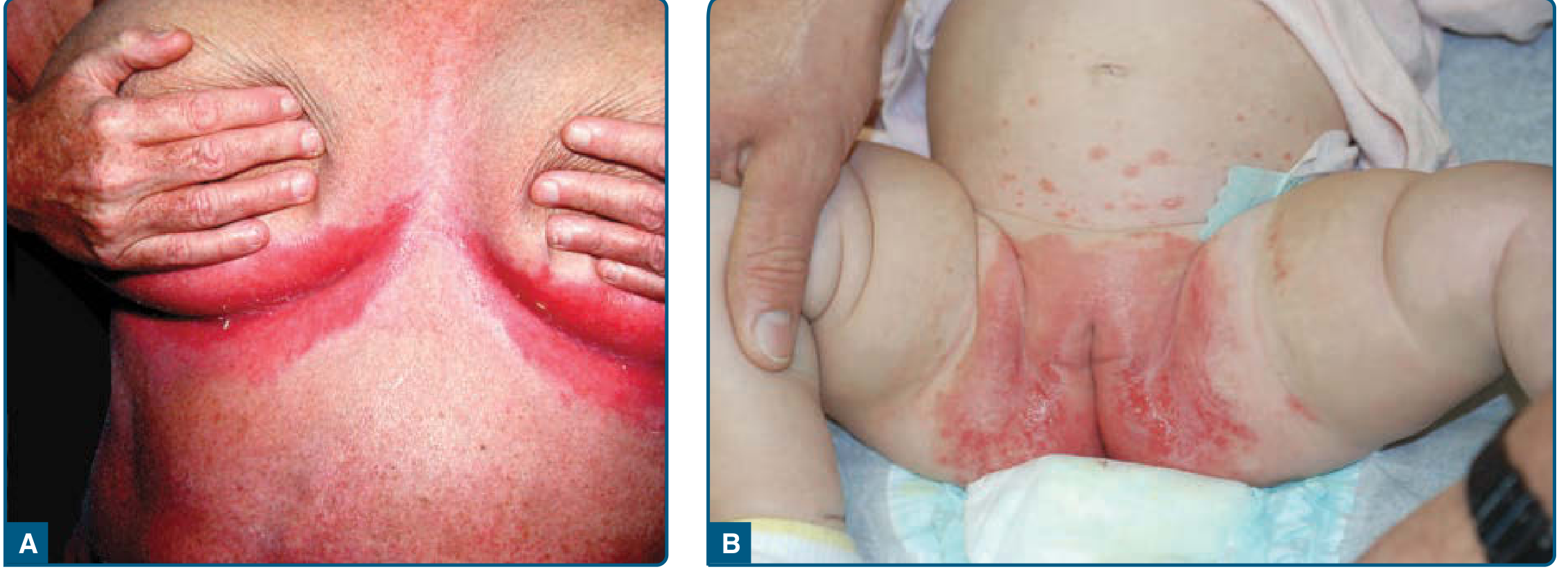
Psoriasis is the most common underlying cause of erythroderma in adults (Dermatology 2-Volume Set 5e). Psoriatic erythroderma is invariably preceded by typical psoriatic lesions, with the erythema ultimately overshadowing the classic thick white scale.
Common triggers:
- Abrupt withdrawal of potent topical or systemic corticosteroids
- Withdrawal of cyclosporine or methotrexate
- Withdrawal of targeted immunomodulators (biologics)
- Systemic infection, phototoxicity, irritant contact dermatitis
- A generalized Koebner reaction from nontolerated treatments (UVB, anthralin)
Two main clinical forms are recognized:
- Chronic plaque psoriasis gradually extending to cover >75% BSA - these patients remain relatively responsive to therapy
- Sudden-onset generalized erythroderma from a provoking trigger - more difficult to manage acutely
Systemic complications (making EP potentially life-threatening):
- Pedal/pretibial edema (~50% of patients) from hypoalbuminemia
- Tachycardia in ~40%, risk of high-output cardiac failure (especially elderly)
- Thermoregulatory disturbance: hypothermia from heat loss via vasodilated skin; hyperthermia from occluded sweat ducts
- Peripheral lymphadenopathy (~50%)
- Hepatomegaly (~20%)
- Hypermetabolism, cachexia, anemia
2. Upadacitinib: Mechanism of Action
Upadacitinib (Rinvoq®) is a selective JAK1 inhibitor that works by blocking the intracellular Janus kinase (JAK)-STAT signaling cascade. There are four JAK enzymes (JAK1, JAK2, JAK3, TYK2); JAK-dependent cytokines relevant to psoriasis include:
- IL-12/23 - via JAK2/TYK2
- IFN-γ - via JAK1/2
- IL-2, IL-4 - via JAK1/3
By selectively inhibiting JAK1, upadacitinib suppresses multiple upstream inflammatory cytokines implicated in psoriasis and related erythrodermic states, reducing downstream transcription of inflammatory proteins. Its selectivity for JAK1 over JAK2/3 is designed to minimize hematopoietic and immune suppression side effects compared to non-selective JAK inhibitors.
- Dermatology 2-Volume Set 5e, Janus Kinase (JAK) Inhibitors section
3. Upadacitinib: Current Approved Indications (Dermatology-Relevant)
| Indication | Status | Dose |
|---|---|---|
| Moderate-to-severe atopic dermatitis (≥12 years, refractory) | FDA-approved | 15 mg/day (escalate to 30 mg/day if needed) |
| Psoriatic arthritis | FDA-approved (Dec 2021) | 15 mg/day |
| Rheumatoid arthritis | Approved | 15 mg/day |
| Ankylosing spondylitis / axial SpA | Approved | 15 mg/day |
| Ulcerative colitis, Crohn's disease | Approved | Varies |
| Plaque psoriasis (moderate-to-severe) | Not currently FDA-approved (as of available data) - under investigation | - |
Key point: Upadacitinib is not independently FDA-approved for plaque psoriasis as a primary indication; tofacitinib (a JAK1/3 inhibitor) also failed approval for plaque psoriasis due to efficacy and safety concerns. However, deucravacitinib (a selective TYK2 inhibitor) IS approved for moderate-to-severe plaque psoriasis with ~50-60% PASI 75 response rates.
- Dermatology 2-Volume Set 5e; Firestein & Kelley's Textbook of Rheumatology
4. Upadacitinib in Psoriatic Erythroderma: Current Evidence
A. No dedicated RCT in erythrodermic psoriasis
A 2025 systematic review (Mastorino et al., Am J Clin Dermatol, 2025 - PMID 40856907) - the most up-to-date evidence synthesis covering 145 studies - does not include upadacitinib among agents with RCT evidence in EP. The review found:
- Non-biologics: Cyclosporine (fastest onset, best acute management) and methotrexate (maintenance) achieve clinical response in >60% of EP cases
- TNF-α inhibitors: Infliximab most studied (103 patients), certolizumab pegol (PASI 75 >80% at 52 weeks)
- IL-17 inhibitors: Secukinumab (93 patients, PASI 75 >80% by week 8); comparable to ixekizumab - preferred for rapid efficacy
- IL-23 inhibitors: Risankizumab (PASI 90 >75% at week 16)
- Deucravacitinib (TYK2 inhibitor): Included in RCT data for EP
The review's treatment hierarchy: cyclosporine (acute) → methotrexate (maintenance) → IL-17 or IL-23 inhibitors (biologic failure/contraindication).
B. Upadacitinib in Erythrodermic Conditions (Related Evidence)
While there are no dedicated studies of upadacitinib in erythrodermic psoriasis, case-level evidence shows promise in erythrodermic inflammatory skin disease more broadly:
-
Erythrodermic atopic dermatitis: A 2024 case report (Saad et al., SAGE Open Med Case Rep - PMID 38881978) documented rapid remission of erythrodermic atopic dermatitis with upadacitinib after failure of prednisone and dupilumab, demonstrating its capacity to resolve widespread inflammatory erythroderma.
-
Erythrodermic pityriasis rubra pilaris: A 2024 case letter (Li et al., JEADV - PMID 38102958) reported successful treatment with upadacitinib - an erythrodermic condition that is frequently resistant to biologics and shares some pathomechanisms with psoriatic erythroderma.
-
Psoriatic arthritis with skin disease: In PsA trials, upadacitinib showed skin efficacy in psoriatic patients alongside joint benefits, though not in the erythrodermic subgroup specifically.
C. Rationale for Use in Psoriatic Erythroderma
Although no RCT data specifically targets EP with upadacitinib, the mechanistic rationale is sound:
- Psoriasis involves JAK1-mediated cytokine signaling (IFN-γ, IL-12/23 pathway components)
- JAK inhibitors modulate multiple inflammatory axes simultaneously, which may be advantageous in the broad cytokine storm picture of erythroderma
- Its oral route is valuable in patients with severe erythroderma where subcutaneous injections may be difficult or poorly absorbed due to impaired skin barrier
5. Safety Profile of Upadacitinib (Relevant to EP Patients)
A large safety analysis covering >15,000 patient-years across RA, PsA, AS, and AD (Burmester et al., RMD Open, 2023 - PMID 36754548) reported:
| Adverse Event | Rate (E/100 PY) |
|---|---|
| Herpes zoster | 1.6-3.6 (higher than comparators) |
| Non-melanoma skin cancer | 0-0.8 |
| Serious infections | 0-3.9 |
| Major adverse cardiovascular events | 0-0.4 |
| Venous thromboembolism | <0.1-0.4 |
| Malignancies | 0.3-1.4 |
| Acne | Elevated in AD patients only |
Contraindications/cautions (especially relevant in EP given systemic compromise):
- Active serious infection (EP patients are prone to secondary infections)
- Lymphopenia (<500 cells/mm³), neutropenia (<1000 cells/mm³)
- Anemia (Hgb <8-9 g/dL) - EP causes chronic anemia
- Severe hepatic impairment
- Thrombotic disorders
- Drug interaction: Strong CYP3A4 inhibitors (itraconazole) increase upadacitinib levels - dose adjustment required
6. Practical Treatment Framework for Erythrodermic Psoriasis
Erythrodermic Psoriasis
├── Acute/unstable phase
│   ├── Hospitalize if systemic compromise
│   ├── Supportive care (fluid/electrolyte balance, thermoregulation, emollients)
│   ├── First-line: Cyclosporine 3-5 mg/kg/day (fastest onset)
│   └── Alternative: IV infliximab (if cyclosporine CI)
│
└── Maintenance/biologic phase (CI to conventional or treatment failure)
    ├── IL-17i: Secukinumab or ixekizumab (PASI 75 >80% at week 8)
    ├── IL-23i: Risankizumab (PASI 90 >75% at week 16)
    ├── TNF-αi: Infliximab, certolizumab pegol
    └── JAK inhibitors (deucravacitinib approved; upadacitinib - off-label/investigational)
Where upadacitinib fits today: Its use in EP specifically is investigational/off-label, supported mainly by mechanism-based reasoning and limited case reports in erythrodermic conditions. It may be considered in patients with:
- Concomitant psoriatic arthritis (where it is approved and addresses both skin and joint disease)
- Failure or contraindication to IL-17/IL-23 biologics
- Need for an oral agent (e.g., injection-site issues in erythrodermatic skin)
- Concomitant atopic dermatitis-psoriasis overlap
Summary
| Aspect | Key Point |
|---|---|
| Drug class | Selective JAK1 inhibitor |
| Approved dermatologic indications | Atopic dermatitis (≥12y), psoriatic arthritis |
| Plaque psoriasis approval | Not approved (deucravacitinib/TYK2i is preferred oral agent) |
| Erythrodermic psoriasis RCT evidence | None currently |
| Erythrodermic condition case evidence | Rapid response in erythrodermic AD and PRP |
| Best-evidence EP treatment (2025 SR) | Cyclosporine (acute), IL-17i/risankizumab (biologic) |
| Key safety concern in EP | Infection risk (herpes zoster), cytopenia monitoring |
- Dermatology 2-Volume Set 5e (Dermatology, 5th ed.)
- Fitzpatrick's Dermatology, 9th ed.
- Mastorino et al. 2025 Systematic Review - Management of Erythrodermic Psoriasis
- Potestio et al. 2023 Review - Biologics for EP
- Saad et al. 2024 Case - Upadacitinib in erythrodermic AD
- Burmester et al. 2023 Safety Analysis - Upadacitinib safety >15,000 PY
This is a shared conversation. Sign in to Orris to start your own chat.