
Top 10 xray findings with images and hallmarks and quicker elite legendary superhuman ability approach accuracy
Reading File
Now let me run parallel searches across the library for the top X-ray findings:
Finding Sources
Finding Sources
Finding Sources
Finding Sources
Finding Sources
Finding Sources
Finding Sources
Searching the Web
top 10 classic chest xray findings hallmarks radiology signs images 2024
Now let me read the Grainger & Allison radiology textbook and extract the key content, plus get the PMC article on classical thoracic signs:
Reading File
Reading Web Page
https://pmc.ncbi.nlm.nih.gov/articles/PMC4541161
Now let me fetch key images from the Grainger & Allison textbook and read more content:
Loading Image
Reading File
Finding Sources
Now let me fetch more key images from the radiology textbook and get a broader content block:
Reading File
Loading Image
Now let me get more images from the textbook - specifically pneumothorax, consolidation, and cardiomegaly sections:
Finding Sources
Loading Image
Now let me fetch some more images from the textbook to illustrate key findings - pneumothorax, consolidation, cardiomegaly, pulmonary edema:
Reading File
Loading Image
I now have sufficient textbook content, images, and reference material. Let me compile the definitive elite-level guide:
Top 10 Classic Chest X-Ray Findings: Elite Rapid Recognition Guide
Source: Grainger & Allison's Diagnostic Radiology + Roberts & Hedges' Emergency Medicine + Rosen's Emergency Medicine
RAPID APPROACH FRAMEWORK (Superhuman Speed Reading Method)
ABCDE Systematic Sweep - never miss a finding:
- A - Airways (tracheal deviation, carina angle >70° = LAE)
- B - Bones & soft tissue (rib fractures, subcutaneous emphysema)
- C - Cardiac (CTR >0.5 = cardiomegaly, silhouette sign)
- D - Diaphragm (flattened = COPD; blunted CP angle = effusion; free air = perforation)
- E - Everything else - Edges (pleural line), lung fields (consolidation, nodules, vascular markings)
1. PLEURAL EFFUSION
Hallmarks on CXR:
- Blunting of the costophrenic (CP) angle - earliest sign (needs ~200-500 mL)
- Homogeneous basal opacity with a meniscus sign - concave upper border, higher laterally than medially
- Mediastinal shift away from the effusion (if large, >1000 mL = reaches 4th anterior rib)
- No shift + massive effusion = suspect ipsilateral lung collapse OR mesothelioma/malignancy (frozen mediastinum)
- Subpulmonary effusion mimics high hemidiaphragm - peak more lateral than usual, straight medial segment
Elite Speed Trick: "If the CP angle is blunted and the diaphragm looks oddly peaked laterally - think subpulmonary effusion. Always check the lateral for posterior CP recess blunting first."
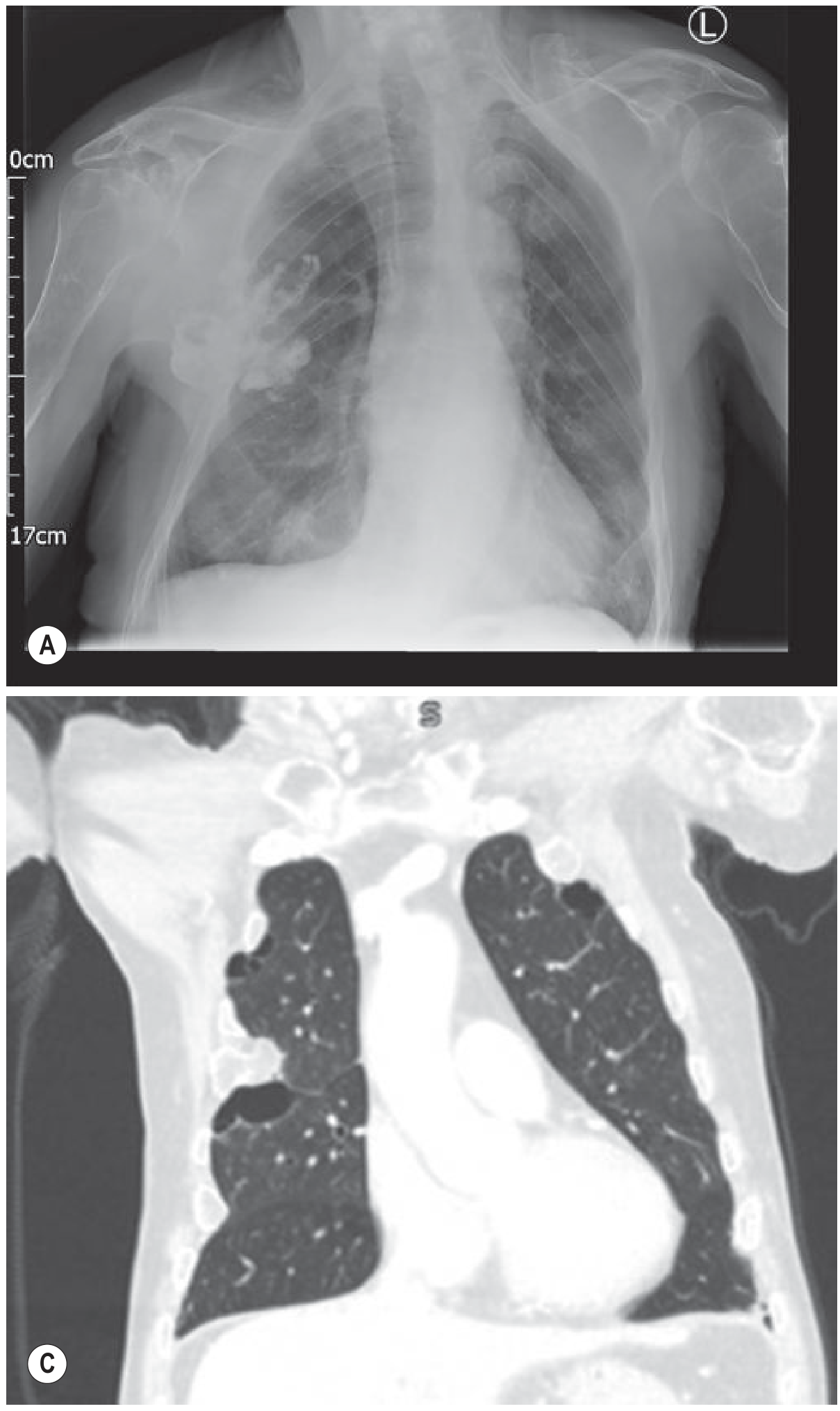
Bilateral pleural effusions with left greater than right - classic heart failure pattern - Grainger & Allison's Diagnostic Radiology
2. PNEUMOTHORAX
Hallmarks on CXR:
- Visceral pleural white line - fine white line parallel to the chest wall with absent lung markings peripheral to it
- Hyperlucency on the affected side
- Tension pneumothorax = tracheal deviation AWAY from the affected side + diaphragm inversion + contralateral mediastinal shift
- Skin fold can mimic - but tracks outside the lung field when traced, unlike the visceral pleural line
Named signs:
- Deep sulcus sign - on supine CXR, air collects anteriorly causing an abnormally deep lucent costophrenic sulcus (classic ICU/trauma finding)
- Visceral pleural white line sign
Elite Speed Trick: "In a supine ICU patient, you won't see a classic apical pneumothorax - look for the deep sulcus sign at the base. On erect films, scan the APEX and lateral chest wall for the pleural line."
3. CONSOLIDATION (Pneumonia)
Hallmarks on CXR:
- Homogeneous or patchy airspace opacity
- Air bronchogram sign - air-filled bronchi visible within consolidation (pathognomonic of airspace filling - pus, blood, fluid, or cells)
- Lobar distribution with preserved volume (contrast with collapse which has volume loss)
- Borders: silhouette sign - loss of normal border when opacity is in anatomical contact with a structure of the same density
Silhouette sign localization (elite key):
| Obliterated border | Location |
|---|---|
| Right heart border | Right middle lobe (RML) |
| Left heart border | Lingula |
| Hemidiaphragm | Lower lobe (same side) |
| Aortic knuckle | Left upper lobe (LUL) |
Elite Speed Trick: "Air bronchograms in a dense opacity = consolidation, not collapse. Consolidation preserves volume; collapse loses it. Both can show silhouette sign."
4. LOBAR COLLAPSE / ATELECTASIS
Hallmarks on CXR:
- Volume loss - the key differentiator from consolidation
- Fissure displacement toward the collapsed lobe
- Compensatory hyperinflation of adjacent lobes
- Elevation of ipsilateral hemidiaphragm (lower lobes)
- Tracheal/mediastinal shift toward the collapse (upper/total lung)
Named signs:
- Golden S sign (RUL collapse with central mass) - the minor fissure forms an "S" shape: lateral concave portion = fissure displacement, medial convex = obstructing hilar mass
- Luft Sichel sign (LUL collapse) - crescent-shaped lucency at the apex from overinflated superior segment of the left lower lobe creeping upward
- Juxtaphrenic peak sign - tenting of the diaphragm in upper lobe atelectasis
Elite Speed Trick: "RUL collapse = Golden S sign = think endobronchial tumor until proven otherwise. LUL collapse has a veil-like opacity across the left hemithorax, not a classic wedge."
5. CARDIOMEGALY & PULMONARY EDEMA
Hallmarks on CXR:
Cardiomegaly:
- Cardiothoracic ratio (CTR) > 0.5 on PA erect film (>0.55 on AP/supine)
- Globular "water-bottle" heart = pericardial effusion
- Double density sign - left atrial enlargement projects behind the right cardiac border as a second density
Pulmonary edema (ABCD of failure on CXR):
- A = Alveolar edema (bat-wing/butterfly perihilar haziness - late sign)
- B = Kerley B lines (horizontal lines at lung periphery bases - interstitial edema, seen at 18-20 mmHg PCWP)
- C = Cardiomegaly (CTR >0.5)
- D = Diversion of blood flow (upper lobe vascular prominence/cephalization - earliest sign, >18 mmHg PCWP)
- E = Effusions (bilateral pleural effusions)
- Peribronchovascular cuffing (blurring of hilar vessels)
- Pleural effusions more on the right
Elite Speed Trick: "Reading pulmonary edema severity: Vascular redistribution (mild) → Kerley B lines + interstitial haziness (moderate) → Bat-wing alveolar edema (severe). PCWP: 18 = Kerley B, >25 = alveolar edema."
6. PNEUMOMEDIASTINUM
Hallmarks on CXR:
- Air outlining mediastinal structures - lucent streaks alongside trachea, aorta, heart
- Continuous diaphragm sign - air posterior to the heart makes both leaves of the diaphragm visible as a continuous line across the midline (normally the heart interrupts this)
- Naclerio V sign - V-shaped air collection with one limb along the lateral mediastinal border and one along the medial hemidiaphragm - pathognomonic of esophageal rupture (Boerhaave syndrome)
- Subcutaneous emphysema in the neck and chest wall
Elite Speed Trick: "Continuous diaphragm sign = pneumomediastinum, NOT pneumothorax. Naclerio V sign = call surgery - Boerhaave's rupture has 30-40% mortality if treated late."
7. PULMONARY EMBOLISM SIGNS
Hallmarks on CXR (most CXRs are normal or near-normal in PE!):
- Hampton's Hump sign - wedge-shaped, pleura-based consolidation with rounded apex pointing toward hilum = pulmonary infarct (2 days after infarction)
- Westermark sign - focal oligemia/hyperlucency distal to occluded vessel (decreased vascularity)
- Palla sign - enlarged right descending pulmonary artery (>16 mm)
- Elevated hemidiaphragm, small pleural effusion (most common but non-specific)
- Fleischner sign - prominent central pulmonary artery (saddle embolus)
Elite Speed Trick: "A normal CXR in a hypoxic patient is PE until proven otherwise. Hampton's Hump and Westermark are present in <10% of cases - use CT-PA, not CXR, to diagnose PE. CXR is used to exclude other diagnoses."
8. LUNG MASS / MALIGNANCY SIGNS
Hallmarks on CXR:
- Solitary pulmonary nodule (SPN) - smooth borders = benign; spiculated/"corona radiata" = malignant until proven otherwise
- Spiculated mass with pleural tail - highly suspicious for adenocarcinoma
- Cavitation within mass - thick irregular wall = malignancy; thin smooth wall = benign/abscess
- Hilar enlargement (unilateral) - suspect primary lung cancer or lymphoma
- Rib erosion / bone destruction - malignant invasion
- Mediastinal widening = lymphadenopathy, superior vena cava (SVC) obstruction
Benign vs. Malignant nodule (elite cheat sheet):
| Feature | Benign | Malignant |
|---|---|---|
| Size | <6 mm | >8 mm |
| Shape | Smooth, round | Spiculated, lobulated |
| Calcification | Central/laminar/popcorn | Eccentric/absent |
| Growth rate | Stable >2 years | Doubling time 20-400 days |
| Border | Well-defined | Irregular, corona radiata |
Elite Speed Trick: "No growth in 2 years = benign. Spiculated mass + no calcification + smoker = CT guided biopsy immediately."
9. AORTIC DISSECTION / MEDIASTINAL WIDENING
Hallmarks on CXR:
- Widened mediastinum (>8 cm at aortic knuckle on PA film, or >50% of thoracic width) - most sensitive sign
- Loss of aortic knuckle (knob) definition
- Tracheal deviation to the right
- Depression of left main bronchus >40° below horizontal
- Left apical pleural cap (blood tracking over apex)
- Loss of aortopulmonary window
- Left pleural effusion
Elite Speed Trick: "CXR is screening only - sensitivity 60-90% for dissection. Normal CXR does NOT rule out dissection. If clinical suspicion is high, go straight to CT angiography. The triad: widened mediastinum + tearing chest pain radiating to back + BP differential between arms."
10. INTERSTITIAL LUNG DISEASE (ILD) / DIFFUSE PARENCHYMAL PATTERNS
Hallmarks on CXR:
| Pattern | Appearance | Key Diagnoses |
|---|---|---|
| Reticular | Network of fine lines | IPF, UIP, lymphangitis, early edema |
| Nodular | Discrete opacities | Miliary TB, sarcoidosis, metastases |
| Reticulonodular | Combined | Sarcoidosis, hypersensitivity pneumonitis |
| Ground-glass | Hazy opacity, vessels visible through | PCP, AIP, edema, hemorrhage |
| Honeycombing | Coarse cystic spaces at bases | End-stage fibrosis (UIP/IPF) |
Named signs:
- Kerley B lines - interlobular septal thickening (lymphangitis, edema)
- Kerley A lines - long oblique lines from hilum to periphery
- Eggshell calcification of hilar nodes - silicosis, sarcoidosis, post-radiation lymphoma
- Bat-wing / butterfly pattern - perihilar alveolar edema
Zone distribution (elite localization key):
- Upper zone predominance: Silicosis, sarcoidosis, TB, hypersensitivity pneumonitis (SSTAPH)
- Lower zone predominance: IPF/UIP, asbestosis, aspiration
Elite Speed Trick: "Bilateral basal peripheral reticular + honeycombing + traction bronchiectasis with preserved volume = UIP/IPF. Bilateral upper zone nodules + hilar lymphadenopathy + eggshell calcification = sarcoidosis."
MASTER CHEAT SHEET - Instant Pattern Recognition
| Finding | Pathognomonic Sign | Location | Key DDx |
|---|---|---|---|
| Pleural effusion | Meniscus sign | CP angle blunting | Heart failure, malignancy, infection |
| Pneumothorax | Visceral pleural white line | Apex / lateral | Spontaneous, trauma, iatrogenic |
| Consolidation | Air bronchogram | Any lobe | Pneumonia, PE infarct, tumor |
| Collapse | Golden S sign (RUL) | Volume loss | Endobronchial tumor, mucous plug |
| Pulmonary edema | Bat-wing + Kerley B | Perihilar/bases | Heart failure, ARDS |
| Pneumomediastinum | Continuous diaphragm | Mediastinum | Esophageal rupture, Valsalva |
| PE | Hampton's Hump | Peripheral, base | DVT, malignancy, immobility |
| Aortic dissection | Widened mediastinum | Aortic arch | HTN, Marfan, trauma |
| Malignancy | Spiculated mass | Any | SCC, adeno, mets |
| ILD | Honeycombing / Kerley B | Bases/upper | IPF, sarcoid, silicosis |
ELITE ACCURACY BOOSTERS
- Always compare to prior films - the single most powerful tool in radiology
- Two views - PA + lateral resolves 20% of ambiguous findings (posterior lesions, fissures, middle lobe collapse)
- Silhouette sign localizes before deciding: which border is lost?
- Air bronchogram = consolidation (not simple collapse - collapse absorbs air)
- Volume loss is the separator - consolidation vs. collapse
- Normal CXR does not exclude PE, early pneumothorax (expiratory film helps), or aortic dissection
- Tracheal position first - midline? deviation = tension PTX or collapse
- Costophrenic angles last - always check both lateral and posterior on lateral film
Sources: Grainger & Allison's Diagnostic Radiology; Rosen's Emergency Medicine; Roberts & Hedges' Clinical Procedures in Emergency Medicine; Signs in Chest Imaging (Diagn Interv Radiol); Must-Know Classical Signs in Thoracic Radiology (PMC4541161)
Missing visual images and highlight area elite speed tricks multiple versions inneach cases
You've run out of free credits. Sign up for a free account to continue using Orris.
This is a shared conversation. Sign in to Orris to start your own chat.