
Suggestions,care and treatment for a 50 yr old female with varicose veins
Reading File
Now I'll run parallel searches across the medical library and recent literature simultaneously.
Finding Sources
Searching PubMed
"varicose veins"[MeSH Terms] AND treatment
Searching the Web
varicose veins treatment guidelines 2024 2025 management 50 year old woman
Excellent results. Now let me read the most comprehensive textbook sections in parallel.
Reading File
Reading File
Reading File
Reading File
Searching Images
varicose veins treatment compression stockings lower leg
Reading File
I now have comprehensive information. Let me compile a thorough, well-organized response.
Varicose Veins in a 50-Year-Old Female: Care & Treatment
Understanding the Problem
Varicose veins are dilated, tortuous subcutaneous veins caused by venous valve incompetence — the valves fail to prevent retrograde blood flow, raising venous pressure and further dilating the vein walls. At age 50, a woman is in a high-prevalence group: the Edinburgh Vein Study found trunk varicosities present in ~42% of women aged 45–54. Female sex, age, pregnancy history, family history, obesity, and prolonged standing are all contributing risk factors. — Bailey and Love's Short Practice of Surgery, 28th Ed.
Symptoms to Assess
Common complaints include:
- Aching, heaviness, throbbing, burning over the affected leg — worsening toward end of day or with prolonged standing
- Itching over the varicosities
- Ankle swelling (mild edema)
- Cosmetic concern about visible, tortuous veins
More severe signs warrant urgent attention:
- Lipodermatosclerosis (skin hardening/browning above the ankle)
- Hyperpigmentation
- Superficial thrombophlebitis (tender, inflamed cord)
- Venous ulceration (typically above the medial malleolus)
- Bleeding from attenuated vein clusters
— Schwartz's Principles of Surgery, 11th Ed.
Investigations
A duplex ultrasound is the gold-standard investigation. It maps:
- The location and extent of superficial vein reflux (GSV = great saphenous; SSV = small saphenous)
- Deep venous obstruction or insufficiency
- Perforator incompetence
- Suitability for intervention
Reflux is defined as retrograde flow lasting ≥0.5 seconds in superficial veins. The examination is done with the patient standing.
CEAP Classification (Severity Staging)
| Class | Description |
|---|---|
| C0 | No visible signs |
| C1 | Telangiectasia / reticular veins only |
| C2 | Varicose veins |
| C3 | Edema |
| C4 | Skin changes (pigmentation, eczema, lipodermatosclerosis) |
| C5 | Healed ulcer |
| C6 | Active ulcer |
A 50-year-old presenting with classic varicose veins is typically C2–C3.
Conservative (Non-Interventional) Management
These are first-line measures for mild-to-moderate symptoms and are important adjuncts even after treatment:
1. Compression Stockings
- Graduated compression (higher at ankle, lower at thigh) is the cornerstone of conservative care
- Prescribed as 20–30 mmHg (moderate) or 30–40 mmHg (firm) depending on severity
- Length: knee-high stockings are generally preferred for compliance; thigh-high or waist-high if more proximal veins are involved
- Should be put on before getting out of bed in the morning
- Provides symptom relief in many patients; a therapeutic trial helps confirm venous origin of symptoms
- The 2023 SVS/AVF/AVLS guidelines note insufficient high-certainty evidence that compression alone is superior to no treatment for C2 disease, but it remains recommended for symptom control
2. Lifestyle Modifications
| Measure | Rationale |
|---|---|
| Leg elevation above heart level for 15–30 min, 3–4×/day | Reduces venous hypertension |
| Regular walking/exercise | Activates the calf muscle pump |
| Weight reduction if BMI elevated | Reduces intra-abdominal pressure |
| Avoid prolonged standing or sitting | Minimizes pooling |
| Avoid tight clothing around groin/waist | Reduces venous outflow obstruction |
| Low-heeled footwear | Promotes calf muscle pump activation |
3. Skincare
- Moisturise dry, itchy skin over varicosities (avoid over-the-counter topical products that can sensitize)
- Protect the skin from minor trauma — even small injuries can cause significant bleeding from varicose veins
- At 50 with perimenopause/menopause, skin fragility increases — extra care warranted
Interventional Treatment
Intervention is indicated when:
- Symptoms persist despite compression therapy
- Complications develop (thrombophlebitis, lipodermatosclerosis, ulceration, bleeding)
- Patient desires treatment for cosmetic reasons (some are not covered by insurance)
1. Endovenous Thermal Ablation (preferred first-line intervention)
Two main modalities — both close the refluxing axial vein using heat delivered via a catheter under ultrasound guidance. Performed under local tumescent anaesthesia as an outpatient.
Endovenous Laser Ablation (EVLA)
- A laser fibre is introduced into the GSV or SSV and withdrawn while firing energy (~60–80 J/cm)
-
95% closure rate at 1 year
- Mild bruising and tenderness post-procedure
Radiofrequency Ablation (RFA)
- The ClosureFast™ device heats the vein wall to 120°C in 20-second treatment cycles
- Comparable efficacy to EVLA; generally associated with less post-procedure pain
- Both are equally effective — choice depends on operator preference and vein anatomy
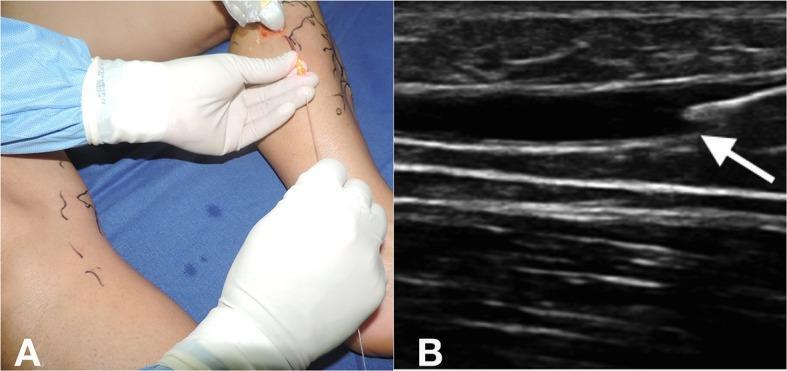
A 2024 meta-analysis (PMID: 38316290) comparing RFA vs EVLA found no significant difference in clinical efficacy — both provide excellent outcomes with rapid return to normal activity.
2. Foam Sclerotherapy
- A chemical sclerosant (polidocanol, sodium tetradecyl sulfate, or hypertonic saline) is injected as microfoam directly into the varicosity under ultrasound guidance
- The foam displaces blood and destroys the venous endothelium → vein fibroses and disappears
- Particularly useful for: residual/recurrent varicosities, small-to-medium branches, telangiectases
- Compression bandaging applied immediately and worn for 3–5 days, then compression stockings for ≥2 weeks
- Complications: hyperpigmentation, superficial thrombophlebitis, DVT (rare), skin necrosis (rare), visual disturbance
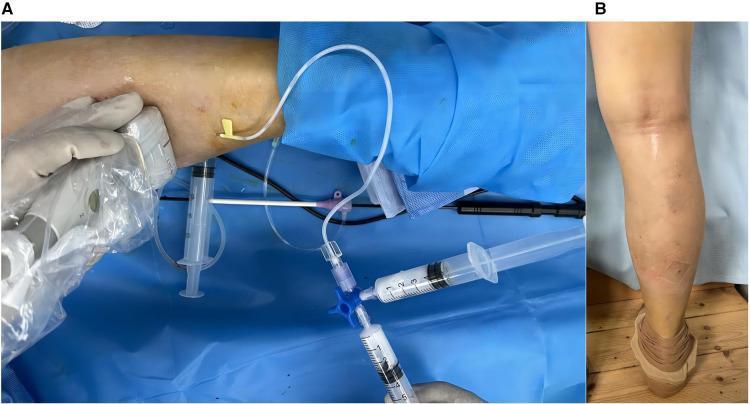
Common sclerosants:
| Agent | Use |
|---|---|
| Sodium tetradecyl sulfate (STS) 0.5–3% | Varicose veins >2 mm |
| Hypertonic saline 11.7–23.4% | Telangiectases; no anaphylaxis risk |
| Polidocanol 0.25–1% | Telangiectases; painless |
3. Cyanoacrylate Glue (VenaSeal™)
- Proprietary adhesive injected to permanently seal the vein
- Non-thermal, non-sclerosant — no tumescent anaesthesia or compression required post-procedure
- Increasing evidence base; good 3-year occlusion rates
- Foreign body reactions have been reported (PMID: 37054883)
4. Mechanochemical Ablation (MOCA / ClariVein®)
- Combines rotating wire (mechanical) with simultaneous sclerosant injection
- Non-thermal — no anaesthesia required; suitable for tortuous veins
- Avoids thermal nerve/skin injury risk
5. Surgical Options (less commonly used now)
- High ligation and stripping: ligating the saphenofemoral junction and stripping the GSV — effective but more invasive, requires general/spinal anaesthesia, longer recovery
- Phlebectomies (ambulatory): small hook-avulsions of clusters through tiny skin incisions; often combined with endovenous ablation
- Reserved for cases not suitable for endovenous techniques
Special Considerations at Age 50
| Issue | Recommendation |
|---|---|
| Perimenopause/HRT | Oestrogen-containing HRT may worsen venous insufficiency; discuss risk/benefit with GP |
| DVT risk | Assess Caprini score before any procedure; anticoagulation if indicated |
| Osteoarthritis/mobility | Exercise-based calf pump activation is important |
| Bone density/BMI | Weight management reduces venous pressure |
| Skin fragility | Diligent skincare to prevent ulceration |
Patient Education & Ongoing Care
- Compression stockings must be replaced every 4–6 months as elasticity degrades
- Varicose veins can recur (neovascularisation, new reflux) — annual clinical review recommended after treatment
- Any sudden painful swelling, redness, or hardness along a vein → urgent assessment for superficial vein thrombosis or DVT
- Bleeding from a vein: lie down, elevate the leg, apply firm pressure, seek emergency care if uncontrolled
Summary: Stepwise Management
Symptoms present?
    ↓ Yes
Duplex ultrasound
    ↓
Conservative: compression stockings + lifestyle changes (4–6 weeks trial)
    ↓ If persistent/severe symptoms
Endovenous thermal ablation (EVLA or RFA) for axial reflux
    ± Foam sclerotherapy or ambulatory phlebectomy for residual branches
    ↓
Ongoing: compression, surveillance, skincare
2023 SVS/AVF/AVLS Guidelines (PMID: 37652254) — the most current major guideline — recommend endovenous thermal ablation over surgery as the preferred intervention for GSV/SSV incompetence, and favour treatment over conservative management alone for symptomatic C2+ disease.
Sources: Bailey and Love's Short Practice of Surgery 28th Ed. | Schwartz's Principles of Surgery 11th Ed. | Pfenninger & Fowler's Procedures for Primary Care 3rd Ed. | 2023 SVS/AVF/AVLS Clinical Practice Guidelines (PMID: 37652254)
This is a shared conversation. Sign in to Orris to start your own chat.