
Why piriformis is called as key muscle of gluteal region?
The piriformis is called the "key muscle" of the gluteal region because virtually all other structures in the region are described relative to it - structures passing above it (suprapiriform foramen) or below it (infrapiriform foramen) through the greater sciatic foramen.
Searching sources...
Reading File
Now let me search the library for piriformis content in parallel:
Finding Sources
Finding Sources
Reading File
Finding Sources
Reading File
Reading File
Let me also fetch the diagram and look at structures passing relative to piriformis more specifically:
Loading Image
Finding Sources
Excellent - I now have comprehensive textbook data. Let me compile the full answer.
Why the Piriformis is Called the "Key Muscle" of the Gluteal Region
The piriformis earns this title for several inter-related anatomical reasons. It is not the largest or most powerful muscle in the region - that honor goes to gluteus maximus - but it is the single most important landmark and organiser of the gluteal region.
1. It Divides the Greater Sciatic Foramen into Two Critical Compartments
The greatest reason piriformis is called the "key" muscle is its unique relationship with the greater sciatic foramen. The piriformis passes through the greater sciatic foramen, and in doing so physically divides it into two functionally distinct parts:
- Suprapiriform foramen (above piriformis)
- Infrapiriform foramen (below piriformis)
"The piriformis muscle passes out of the pelvis into the gluteal region through the greater sciatic foramen and separates the foramen into two parts, a part above the muscle and a part below."
- Gray's Anatomy for Students, p. 665
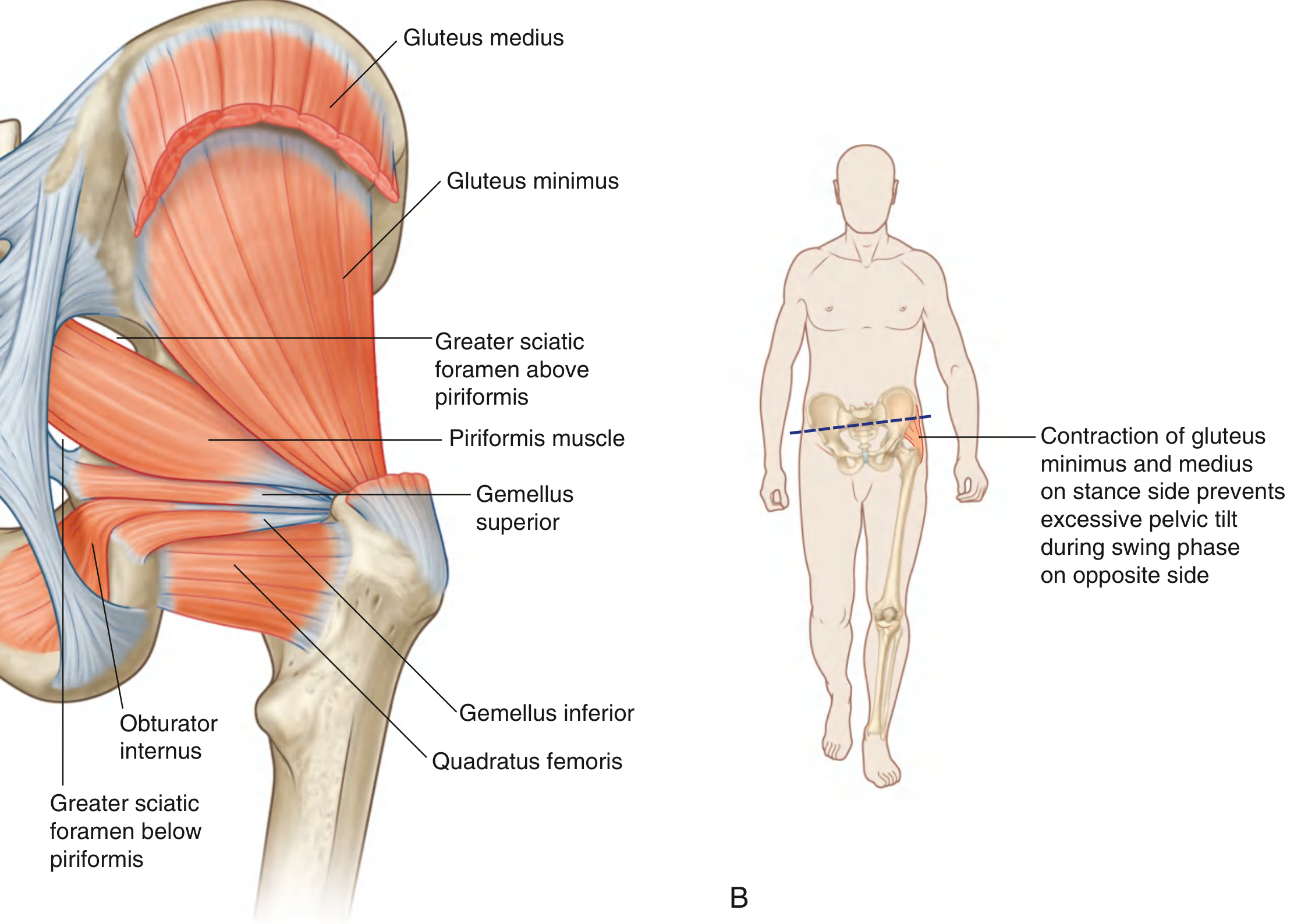
2. All Major Neurovascular Structures Are Described in Relation to It
Every significant vessel and nerve entering or leaving the gluteal region is located either above or below the piriformis. This makes it the central reference point for the entire region:
| Compartment | Structures Passing Through |
|---|---|
| Above piriformis (suprapiriform) | Superior gluteal nerve, superior gluteal artery and vein |
| Below piriformis (infrapiriform) | Sciatic nerve, inferior gluteal nerve & vessels, pudendal nerve, internal pudendal vessels, posterior cutaneous nerve of the thigh, nerve to obturator internus & gemellus superior, nerve to quadratus femoris & gemellus inferior |
"The piriformis is an important landmark because it divides the greater sciatic foramen into two regions, one above and one below. Vessels and nerves pass between the pelvis and gluteal region by passing through the greater sciatic foramen either above or below the piriformis."
- Gray's Anatomy for Students, p. 679
Crucially, the sciatic nerve - the largest nerve in the body - typically exits below the piriformis. This anatomical relationship is the basis of piriformis syndrome, where compression of the sciatic nerve by the piriformis causes buttock pain and sciatica.
3. It Spans Both the Pelvic Wall and the Gluteal Region
Piriformis is unusual in that it is simultaneously a muscle of the pelvic wall and a muscle of the gluteal region. It originates from the anterior surface of S2-S4 (between the anterior sacral foramina), exits through the greater sciatic foramen, and inserts on the greater trochanter of the femur.
This dual-territory location makes it the "bridge" between the pelvic cavity and the gluteal region - no other gluteal muscle spans these two compartments in the same way.
4. It Is the Most Superior of the Deep Gluteal Muscles
Among the deep group of lateral rotators (piriformis, obturator internus, gemellus superior, gemellus inferior, quadratus femoris), piriformis sits at the top. All other deep muscles of this group are described and located relative to it. This again cements its role as a landmark.
"The piriformis muscle is the most superior of the deep group of muscles."
- Gray's Anatomy for Students, p. 678
5. Clinical Significance Reinforces Its "Key" Status
The piriformis's position next to the sciatic nerve makes it clinically important:
- Piriformis syndrome: spasm or hypertrophy compresses the sciatic nerve inferiorly, mimicking lumbar disc herniation
- Surgical and injection landmarks: the piriformis is used to identify safe zones during gluteal injections, hip surgery, and nerve blocks
- Sciatic hernia variants are classified as suprapiriform, infrapiriform, or subspinous - again using piriformis as the reference
Summary
The piriformis is called the key muscle of the gluteal region because:
- It physically divides the greater sciatic foramen into suprapiriform and infrapiriform compartments
- Every major nerve and vessel in the region is described as passing either above or below it
- It spans both the pelvic wall and gluteal region, acting as a bridge between the two
- It is the most superior and most central landmark of the deep gluteal muscle group
- Its proximity to major neurovascular structures gives it outsized clinical importance
- Gray's Anatomy for Students, pp. 526, 665, 678-679
- Mulholland and Greenfield's Surgery, Pelvic Floor and Obturator Muscles section
This is a shared conversation. Sign in to Orris to start your own chat.