

1000171100.jpg
Unit-1 one
Reading File
The image shows a Community Health Nursing course syllabus (Unit-1). Let me now search the medical library for comprehensive content on all the topics listed.
Finding Sources
Finding Sources
Finding Sources
Park's Textbook of Preventive and Social Medicine is the key reference. Let me search it now.
Finding Sources
Finding Sources
Reading File
Reading File
Reading File
Finding Sources
Finding Sources
Finding Sources
Reading File
Reading File
Reading File
Reading File
Reading File
Reading File
Now I have enough content from Park's Textbook. Let me also quickly get the definitions of public health and health dimensions from the beginning of the textbook.
Reading File
I now have comprehensive content from Park's Textbook. Let me compile the full Unit-1 notes.
🏥 Community Health Nursing - Unit 1
Based on Park's Textbook of Preventive and Social Medicine
1. DEFINITIONS
Public Health
Public health is defined as "the science and art of preventing disease, prolonging life, and promoting health and efficiency through organized community effort" (Winslow, 1920). It focuses on health of populations rather than individuals.
Community Health
The term "community health" has replaced, in some countries, the terms public health, preventive medicine and social medicine. A EURO symposium in 1966 defined it as "all the personal health and environmental services in any human community, irrespective of whether such services were public or private ones."
- It is sometimes used as a synonym for "environmental health" or "community health care."
- A WHO Expert Committee (1973) noted that without further qualification, the term is ambiguous and advised caution in its use.
Community Health Nursing
Community health nursing is a synthesis of nursing practice and public health practice applied to promote and preserve the health of populations. The practice is continuous and comprehensive, and is directed to individuals, families, and groups as well as the community as a whole.
2. PUBLIC HEALTH IN INDIA AND ITS EVOLUTION
Ancient Period
- Health care in ancient India was guided by Ayurveda (Charaka, Sushruta). Concepts of sanitation, personal hygiene, and epidemic control existed.
British India Period
- 1864: First Sanitary Commissioner appointed for British India.
- Public Health Acts were enacted for sanitation and epidemic control.
- The Royal Commission on Public Health in India (1863) investigated conditions post-Crimean War.
Post-Independence
- 1946: Bhore Committee Report - recommended development of a comprehensive national health service.
- 1951: First Five-Year Plan included health as a key area.
- 1977: Minimum Needs Programme launched.
- 1978: Alma Ata Declaration - Health for All by 2000 AD, Primary Health Care as core strategy.
- 1983: First National Health Policy (NHP) adopted.
- 2002: Revised National Health Policy.
- 2017: National Health Policy 2017.
- 2005: National Rural Health Mission (NRHM) - later renamed National Health Mission (NHM) in 2013.
Scope of Community Health Nursing
The scope includes:
- Maternal and child health (MCH) services
- School health services
- Occupational health
- Mental health
- Communicable disease control
- Environmental health and sanitation
- Health education and promotion
- Rehabilitation services
- Nutrition programmes
- Family welfare services
3. CONCEPTS OF HEALTH AND ILLNESS
Definition of Health
The WHO (1948) defines health as: "A state of complete physical, mental and social well-being and not merely the absence of disease or infirmity."
Dimensions of Health
| Dimension | Description |
|---|---|
| Physical | Functioning of the body - structure, function, absence of disease |
| Mental | Ability to think clearly, feel emotions, and respond rationally |
| Social | Ability to interact with others and fulfill social roles |
| Spiritual | Moral/ethical values, purpose in life |
| Emotional | Ability to express feelings appropriately |
| Vocational | Ability to work productively |
Determinants of Health
Health is determined by a complex interaction of:
- Biological/Genetic factors - heredity, genetic makeup
- Behavioral/Lifestyle factors - diet, exercise, smoking, alcohol
- Environmental factors - physical, biological, psychosocial environment
- Socioeconomic factors - income, education, occupation
- Healthcare services - access to and quality of health services
Disease: Definition
Disease is defined as "a physiological or psychological dysfunction". It represents a failure of the adaptive mechanisms of an organism to adequately counteract the stimuli and stresses to which it is subject, resulting in a disturbance in function or structure of any part, organ, or system.
4. NATURAL HISTORY OF DISEASE
The natural history of disease refers to the progression of a disease process in an individual over time, from the earliest stage of its prepathogenesis phase to its termination as recovery, disability, or death, in the absence of treatment or prevention. Each disease has its own unique natural history.
Two Phases (Leavell & Clark Model)
Phase 1: PRE-PATHOGENESIS Phase
- Period before the onset of disease in man.
- The disease agent has not yet entered the human host.
- Factors favouring interaction between agent and host already exist in the environment.
- Called: "man in the midst of disease" or "man exposed to the risk of disease."
- Involves the Epidemiological Triad: Agent + Host + Environment
- Mere presence of all three is NOT sufficient - an interaction between them is needed to initiate disease.
Agent factors include:
- Biological agents (bacteria, viruses, fungi, parasites)
- Chemical agents (drugs, poisons, allergens)
- Physical agents (heat, radiation, trauma)
- Nutritional agents (excess or deficiency)
Host factors include:
- Age, sex, race, genetic constitution
- Immunological status, nutritional status
- Habits and customs, marital status
- Pre-existing disease
Environmental factors:
- Physical: air, water, soil, climate, housing, radiation, noise
- Biological: viruses, bacteria, insects, rodents, plants
- Psychosocial: cultural values, customs, beliefs, attitudes, social stresses
Phase 2: PATHOGENESIS Phase
- Begins with the entry of the disease agent into the susceptible human host.
- Agent multiplies and induces tissue and physiological changes.
- Progresses through: incubation period → early pathogenesis → late pathogenesis.
- Final outcome: recovery, disability, or death.
In chronic diseases, the early pathogenesis phase is called the presymptomatic phase - pathological changes occur below the clinical horizon before signs/symptoms appear.
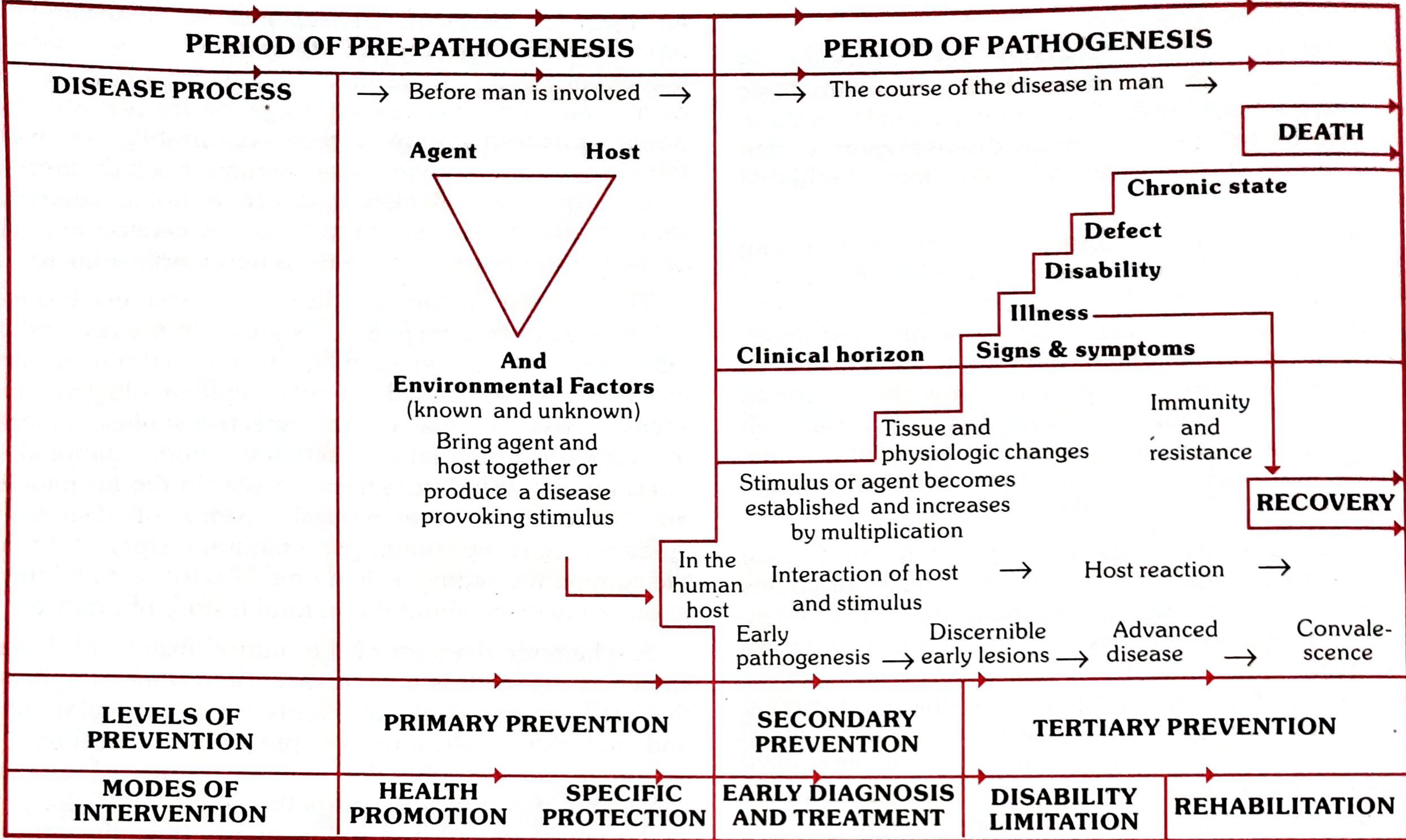
Fig. 8 - Natural History of Disease (Leavell & Clark)
5. LEVELS OF PREVENTION
Prevention has 4 levels in modern concept, related to the natural history of disease:
0. Primordial Prevention (newest concept)
- Prevention of the emergence or development of risk factors in populations where they have not yet appeared.
- Example: Discouraging children from adopting harmful lifestyles (smoking, unhealthy eating).
- Main intervention: Individual and mass education.
1. Primary Prevention
- Defined as "action taken prior to the onset of disease, which removes the possibility that a disease will ever occur."
- Intervention in the pre-pathogenesis phase.
- Two approaches (WHO):
- Population (mass) strategy: Directed at the whole population regardless of individual risk level (e.g., reducing average blood pressure across a population).
- High-risk strategy: Targets individuals at special risk identified by clinical methods.
- Examples: Immunization, sanitation, health education, nutritional supplementation, condom use.
2. Secondary Prevention
- Defined as "action which halts the progress of a disease at its incipient stage and prevents complications."
- Intervention in the early pathogenesis phase.
- Specific interventions:
- Early diagnosis (screening tests, case-finding programmes)
- Adequate treatment
- Goal: Arrest disease, restore health, reverse communicability of infectious diseases.
- Examples: Cancer screening (Pap smear, mammography), TB case finding, treating hypertension.
3. Tertiary Prevention
- Intervention in the late pathogenesis phase.
- Defined as "all measures available to reduce or limit impairments and disabilities, minimize suffering caused by existing departures from good health and to promote the patient's adjustment to irremediable conditions."
- Components:
- Disability limitation - preventing further deterioration
- Rehabilitation - restoring function
Rehabilitation (core of tertiary prevention):
Defined as "the combined and coordinated use of medical, social, educational and vocational measures for training and retraining the individual to the highest possible level of functional ability."
| Type | Goal |
|---|---|
| Medical rehabilitation | Restoration of function |
| Vocational rehabilitation | Restoration of capacity to earn a livelihood |
| Social rehabilitation | Restoration of family and social relationships |
| Psychological rehabilitation | Restoration of personal dignity and confidence |
6. RISK FACTORS AND DETERMINANTS OF DISEASE
Risk factor: "An attribute or exposure that is associated with an increased probability of a specified outcome such as the occurrence of a disease."
Key points:
- Risk factors are observable or identifiable prior to the event they predict.
- Combination of risk factors may be additive or synergistic (multiplicative).
- Modifiable: smoking, hypertension, obesity, high cholesterol, physical inactivity.
- Non-modifiable: age, sex, race, family history, genetic factors.
- Risk factors act as proxies for need - indicating need for promotive and preventive health services.
7. HEALTH PROBLEMS OF INDIA (Profile)
Major health problems in India include:
- Communicable diseases: TB, malaria, dengue, HIV/AIDS, diarrhoeal diseases
- Non-communicable diseases (NCDs): Cardiovascular diseases, diabetes, cancer, COPD
- Maternal and child health issues: High IMR, MMR in rural areas
- Malnutrition: Protein-energy malnutrition, micronutrient deficiencies
- Mental health: Increasing burden of mental disorders
- Environmental health: Water and air pollution, poor sanitation
- Double burden of disease: India faces both communicable and non-communicable disease simultaneously
SUMMARY TABLE: Levels of Prevention
| Level | Phase | Action | Examples |
|---|---|---|---|
| Primordial | Before risk factors develop | Risk factor prevention | Lifestyle education in children |
| Primary | Pre-pathogenesis | Remove cause / promote health | Immunization, sanitation, health education |
| Secondary | Early pathogenesis | Early diagnosis + treatment | Screening, case finding, treating TB |
| Tertiary | Late pathogenesis | Limit disability + rehabilitate | Physiotherapy, vocational training, reconstructive surgery |
Source: Park's Textbook of Preventive and Social Medicine, 25th Edition
Is that all enough for exam?
Looking at your syllabus image again, the notes I gave you cover most of Unit 1, but there are a few gaps that could appear in your exam. Let me check what's missing:
What was covered well:
- ✅ Definitions of public health, community health, community health nursing
- ✅ Public health in India and its evolution
- ✅ Scope of community health nursing
- ✅ Concepts of health & illness - definitions, dimensions, determinants
- ✅ Natural history of disease (both phases, diagrams)
- ✅ Levels of prevention (Primordial, Primary, Secondary, Tertiary)
- ✅ Health problems (Profile) of India
What may need more depth for exam:
-
Scope of Community Health Nursing - the syllabus specifically lists this. I gave a bullet list, but exam questions often ask for detailed explanations of each scope area.
-
"Review" topics - your syllabus marks Concepts of Health & Illness/Disease: Definition, Dimensions and Determinants as a review - meaning they expect you to already know it. This suggests the exam can ask deep questions on it.
-
Web of Causation - not explicitly in your syllabus snapshot, but it connects to natural history and is a common exam topic.
-
The cut-off part - your syllabus image cuts off at "Health problems (Profile) of India" with content below it not visible. There may be more topics in Unit 1 (health indicators, national health programmes, etc.).
My honest assessment:
- For short answer / objective type questions: Yes, what I gave you is sufficient.
- For long answer / essay questions: You may need more detail on scope of CHN and dimensions of health.
- The Tertiary Prevention - Review section at the bottom of your syllabus (cut off) may have additional content.
Would you like me to:
- Expand on any specific topic (scope of CHN, dimensions of health, web of causation)?
- Show the rest of the syllabus topics if you share the next page of your notes?
- Create practice questions from Unit 1 to test yourself?
I could like if you explain me to after all I'm studying it and this is tye unit one full syllabus in this the level of prevention and dimension and determinants is important I guess
Great choice! Levels of Prevention and Dimensions/Determinants of Health are high-yield exam topics. Let me explain them in a simple, easy-to-understand way.
Searching deeper...
Reading File
Finding Sources
Reading File
Finding Sources
Reading File
Reading File
Reading File
Reading File
I now have everything from Park's directly. Let me write this out in a clear, exam-friendly way.
📚 Deep Explanation: Unit 1 High-Yield Topics
PART A: DIMENSIONS OF HEALTH
Health is multidimensional - the WHO definition gives 3 dimensions (physical, mental, social), but we now recognize more. Here's each one explained clearly:
1. 🏃 Physical Dimension
- The easiest to understand.
- Means "perfect functioning" of the body - every cell and organ working at optimum capacity in harmony with each other.
Signs of good physical health:
- Good complexion, clear skin, bright eyes
- Good appetite, sound sleep
- Regular bowel and bladder activity
- Normal pulse rate, blood pressure, and exercise tolerance
- Healthy weight for age and sex
Key point for exam: Physical health is measured using clinical examination, lab investigations, vital signs, and at community level using indicators like Infant Mortality Rate (IMR) and life expectancy.
2. 🧠 Mental Dimension
- Mental health is NOT merely the absence of mental illness.
- Defined as: "A state of balance between the individual and the surrounding world - a state of harmony between oneself and others."
Characteristics of a mentally healthy person (commonly asked!):
| # | Characteristic |
|---|---|
| a | Free from internal conflicts - not at war with himself |
| b | Well-adjusted - gets along with others, accepts criticism |
| c | Searches for identity |
| d | Strong sense of self-esteem |
| e | Self-awareness - knows his needs, problems, goals (self-actualization) |
| f | Good self-control - balances rationality and emotion |
| g | Problem-solving ability - copes with stress and anxiety |
Key point: Psychological factors can cause physical illness too - like hypertension, peptic ulcer, bronchial asthma (called psychosomatic diseases).
3. 👥 Social Dimension
- Defined as: "The quantity and quality of an individual's interpersonal ties and the extent of involvement with the community."
- It means harmony and integration within the individual, with other people, and with the world.
- A socially healthy person can interact with others, fulfill their role in family and community, and maintain relationships.
Example: A person who is physically healthy but isolated and unable to maintain relationships is NOT fully healthy.
4. 🕊️ Spiritual Dimension
- Relates to personal beliefs, values, morals, and purpose in life.
- A person with spiritual health has clarity of values, ethical behaviour, and a sense of meaning.
- Example: Inner peace, religious faith, moral integrity.
5. 💼 Vocational Dimension
- The ability to work productively and contribute to society.
- Meaningful work contributes to self-worth, dignity, and mental wellbeing.
6. 😊 Emotional Dimension
- The ability to express feelings appropriately and manage emotions.
- Related to but separate from mental health - includes ability to love, grieve, feel joy, manage anger.
7. 🏛️ Political Dimension (sometimes added)
- Access to power, freedom, and basic human rights affects health.
- Includes access to healthcare as a right, freedom from oppression, and government policies.
PART B: DETERMINANTS OF HEALTH
"Health is multifactorial" - no single factor determines health. It is the result of many interactions.
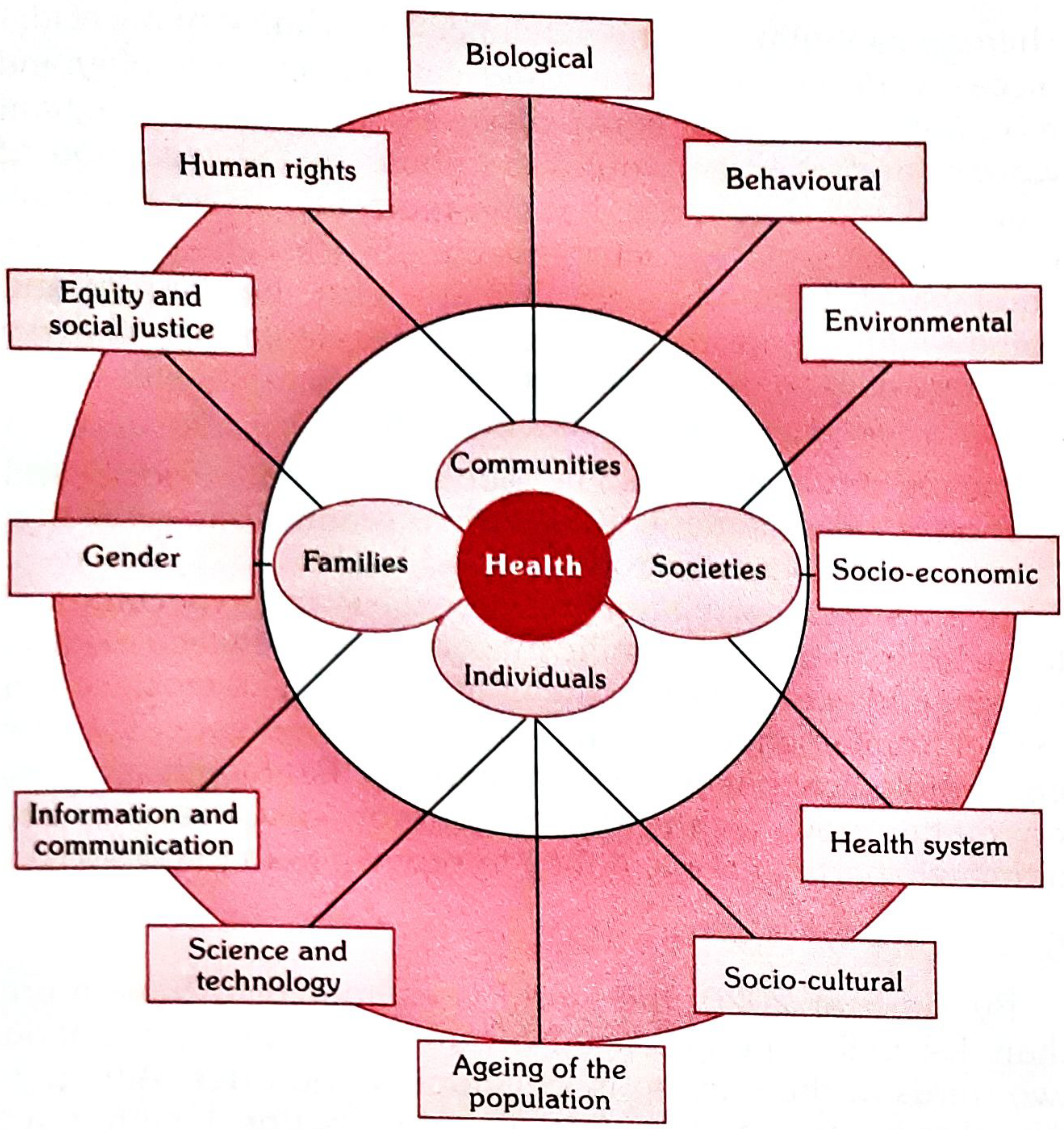
1. 🧬 Biological Determinants
- Genetic makeup - determined at conception, cannot be altered.
- Genetic diseases: chromosomal anomalies, inborn errors of metabolism, mental retardation, certain types of diabetes.
- Age and sex also determine disease susceptibility.
- Example: Sickle cell disease, Down syndrome, Haemophilia.
2. 🍔 Behavioural and Socio-cultural Determinants (Lifestyle)
- Lifestyle = the way people live, reflecting social values, attitudes, and activities.
- Lifestyles are learned through family, peers, school, and media.
- Harmful lifestyle factors: Smoking, alcoholism, sedentary habits, unhealthy diet, drug abuse.
- Healthy lifestyle factors: Adequate nutrition, sufficient sleep, physical activity.
- Diseases linked to lifestyle: Coronary heart disease, obesity, lung cancer, diabetes.
Key point: In India, health risks are still largely due to poor sanitation, malnutrition, and poor personal hygiene rather than lifestyle diseases seen in developed countries.
3. 🌍 Environmental Determinants
Hippocrates was the first to link disease to environment (air, water, climate). Environment is classified as:
| Type | Examples |
|---|---|
| Physical | Air, water, soil, climate, housing, radiation, noise |
| Biological | Bacteria, viruses, insects, rodents, plants |
| Psychosocial | Cultural values, customs, beliefs, stress, social support |
Poor environment directly impacts physical, mental, and social well-being.
4. 💰 Socioeconomic Determinants
- Poverty, unemployment, low education, and poor housing all reduce health.
- Higher income = better diet, housing, and healthcare access = better health.
- Occupation affects health through exposure to hazards (dust, chemicals, stress).
- Education is one of the strongest determinants - educated people make better health choices.
5. 🏥 Health Services
- Access to quality health care is a major determinant.
- Includes availability, accessibility, acceptability, and affordability of services.
- A strong primary health care system (like PHCs/CHCs in India) greatly improves community health.
PART C: LEVELS OF PREVENTION (Deep Explanation)
This is the most exam-important topic. Know each level perfectly.
The Concept (Why Prevention Matters)
The goal of medicine is to promote, preserve, and restore health and minimize suffering. Prevention is about intercepting the disease process at the right point. Leavell & Clark (1958) gave us the classical framework linking prevention to the natural history of disease.
Level 0: PRIMORDIAL PREVENTION 🌱
(Newest concept - special attention in exams)
- Definition: Prevention of the emergence or development of risk factors in countries or population groups where they have not yet appeared.
- Acts before risk factors even develop in a person.
- Targets: Children and young people, to stop harmful lifestyle habits from forming.
Example:
- Discouraging children from starting smoking
- Promoting healthy eating in schools before obesity develops
- Teaching children to exercise regularly
Main tool: Individual and mass health education.
Memory tip: Primordial = Before the beginning. No risk factors yet - keep it that way!
Level 1: PRIMARY PREVENTION 🛡️
(Most commonly asked)
- Definition: "Action taken prior to the onset of disease, which removes the possibility that a disease will ever occur."
- Acts in the pre-pathogenesis phase (before disease starts in the body).
- The disease agent has NOT yet entered the host.
Two strategies (WHO):
| Strategy | Target | Example |
|---|---|---|
| Population (Mass) Strategy | Entire population regardless of risk | Iodized salt, fluoridated water, national immunization programme |
| High-Risk Strategy | Individuals identified as at high risk | Giving INH prophylaxis to close contacts of TB patients |
Examples of primary prevention:
- Immunization (vaccines)
- Sanitation and safe water supply
- Health education and nutrition
- Condom use (HIV prevention)
- Seat belts (accident prevention)
- Mosquito control (malaria prevention)
- Antenatal care to prevent low birth weight
Memory tip: Primary = PREVENT the disease from ever happening. No disease yet.
Level 2: SECONDARY PREVENTION 🔍
(Early diagnosis + treatment)
- Definition: "Action which halts the progress of a disease at its incipient (early) stage and prevents complications."
- Acts in the early pathogenesis phase (disease just started, but symptoms may not yet show).
- The disease has entered the host but is in early stages.
Two key interventions:
- Early diagnosis - find the disease before it causes damage
- Adequate treatment - treat it properly to stop progression
Methods of early diagnosis:
- Screening programmes (Pap smear for cervical cancer, mammography for breast cancer)
- Case-finding programmes (TB sputum testing in contacts)
- Mass surveys
Examples:
- Treating hypertension before it causes a stroke
- TB case finding and DOTS treatment
- Cervical cancer screening
- Blood sugar testing for early diabetes
- Treating STIs before complications develop
Drawback: The patient has already suffered mental and physical distress. Also more expensive and less effective than primary prevention.
Memory tip: Secondary = SCREEN and TREAT early. Disease has started, catch it fast!
Level 3: TERTIARY PREVENTION ♿
(Limitation of disability + Rehabilitation)
- Definition: "All measures available to reduce or limit impairments and disabilities, minimize suffering caused by existing departures from good health and to promote the patient's adjustment to irremediable conditions."
- Acts in the late pathogenesis phase (disease is advanced, damage has occurred).
- Goal: Make the person as functional as possible despite permanent damage.
Two components:
A) Disability Limitation
- Preventing further deterioration even when disease is advanced.
- Example: Proper management of diabetic foot to prevent amputation.
B) Rehabilitation
Defined as: "The combined and coordinated use of medical, social, educational and vocational measures for training and retraining the individual to the highest possible level of functional ability."
| Type of Rehabilitation | Goal |
|---|---|
| Medical | Restoration of physical function |
| Vocational | Restoring ability to earn a livelihood |
| Social | Restoring family and social relationships |
| Psychological | Restoring personal dignity and confidence |
Examples of tertiary prevention:
- Physiotherapy after stroke
- Reconstructive surgery in leprosy
- Schools for the blind
- Prosthetic limbs for amputees
- Vocational training for disabled persons
- Cardiac rehabilitation programme
Memory tip: Tertiary = REHABILITATE. Disease already damaged, maximize remaining function.
MASTER SUMMARY TABLE
| Level | When | Where in Natural History | Goal | Key Action | Example |
|---|---|---|---|---|---|
| Primordial | Before risk factors | Before pre-pathogenesis | No risk factors | Education | Anti-smoking in schools |
| Primary | Before disease | Pre-pathogenesis | No disease | Vaccination, sanitation | Immunization |
| Secondary | Early disease | Early pathogenesis | No complications | Screening + treatment | Pap smear, TB DOTS |
| Tertiary | Late disease | Late pathogenesis | No disability/maximize function | Rehabilitation | Physiotherapy, prosthetics |
🔑 EXAM TIPS
- "Leavell and Clark" - always credit them for the levels of prevention model.
- Primordial prevention is the newest concept - was added later to the original 3 levels.
- Primary prevention is the BEST - acts before disease starts and is cheapest.
- WHO definition of health (1948) - must memorize word for word.
- Dimensions of health - the WHO gives 3 (physical, mental, social) but the full list has 6-7. Know all of them with examples.
- Determinants - know all 5 groups with examples for each.
Source: Park's Textbook of Preventive and Social Medicine, 25th Edition
This is a shared conversation. Sign in to Orris to start your own chat.