


1233.jpg
1234.jpg
Skin serum
I can see you've shared two close-up photos of your face, particularly focusing on the eye area. Let me analyze them to better understand your skin concerns before recommending a serum.
analyse_media
analyse_media
Based on the analysis of your photos, here's a clear picture of your skin concerns and the best serum recommendations:
Skin Analysis Summary
Main concerns identified:
- Dark circles / periorbital hyperpigmentation (both upper lids and under-eye area) - most prominent concern
- Mild puffiness / tear trough
- Uneven skin tone with scattered small dark spots on cheeks
- Visible pores and slightly oily/combination skin type
- No active acne - skin is generally in decent condition
Recommended Serums (by concern)
1. Dark Circles + Hyperpigmentation - Top Priority
Niacinamide 10% + Zinc serum (e.g., The Ordinary, Minimalist, or Dot & Key)
- Niacinamide reduces pigmentation, minimizes pores, and controls oil simultaneously - perfect for your skin
- Apply morning and night across the full face
Vitamin C serum (10-15% L-Ascorbic Acid or Ascorbyl Glucoside)
- Brightens dark spots and uneven tone
- Use in the morning before SPF
- Good options: Minimalist 10% Vitamin C, Mamaearth Vitamin C Serum, or The Ordinary Ascorbyl Glucoside Solution 12%
2. Puffiness + Under-Eye Area
Caffeine + Hyaluronic Acid Eye Serum
- Caffeine constricts blood vessels to reduce puffiness and dark circles
- Hyaluronic acid plumps the thin under-eye skin
- Options: The Ordinary Caffeine Solution 5% + EGCG, Plum Bright Years Under-Eye Serum
3. Pores + Oil Control
Salicylic Acid (BHA) 2% Serum - use 2-3x/week only
- Unclogs pores, reduces oiliness
- Options: Minimalist 2% Salicylic Acid, Paulas Choice BHA (if budget allows)
Suggested Daily Routine
| Step | Morning | Night |
|---|---|---|
| 1 | Gentle face wash | Gentle face wash |
| 2 | Niacinamide serum | Niacinamide serum |
| 3 | Vitamin C serum | (Retinol 0.1-0.2% if no irritation - optional) |
| 4 | Eye caffeine serum | Eye caffeine serum |
| 5 | Moisturizer | Moisturizer |
| 6 | SPF 50 sunscreen | - |
Key Tips for Your Skin Type
- Sunscreen is non-negotiable - skipping it will make all your hyperpigmentation worse, no matter what serums you use
- Don't layer too many actives at once - start with just niacinamide + Vitamin C, then add BHA after 2-3 weeks
- The dark circles on your upper eyelids suggest eyelid hyperpigmentation (common in South Asian skin) - niacinamide and Vitamin C help, but results take 8-12 weeks of consistent use
- Sleeping position - lying flat (as seen in your photos) can worsen morning puffiness; try a slightly elevated pillow
Budget-friendly starting combo (India): Minimalist Niacinamide 10% + Minimalist Vitamin C 10% + The Ordinary Caffeine Solution + any SPF 50 sunscreen. Total cost around ₹800-1200.
Show mock up of sleeping position
Generating Image
A side-by-side comparison diagram showing two sleeping positions for reducing under-eye puffiness and dark circles. Left side labeled "AVOID - Flat Sleeping" shows a person lying completely flat on a pillow with fluid pooling arrows pointing to the under-eye area, with a red X mark. Right side labeled "BETTER - Elevated Head" shows a person sleeping with head elevated on two stacked pillows at about 15-20 degree angle, with a green checkmark. Arrows show improved fluid drainage away from the face. Clean medical illustration style with simple colors, labels, and explanatory text at the bottom saying "Elevating head 15-20° reduces morning puffiness by improving lymphatic drainage"
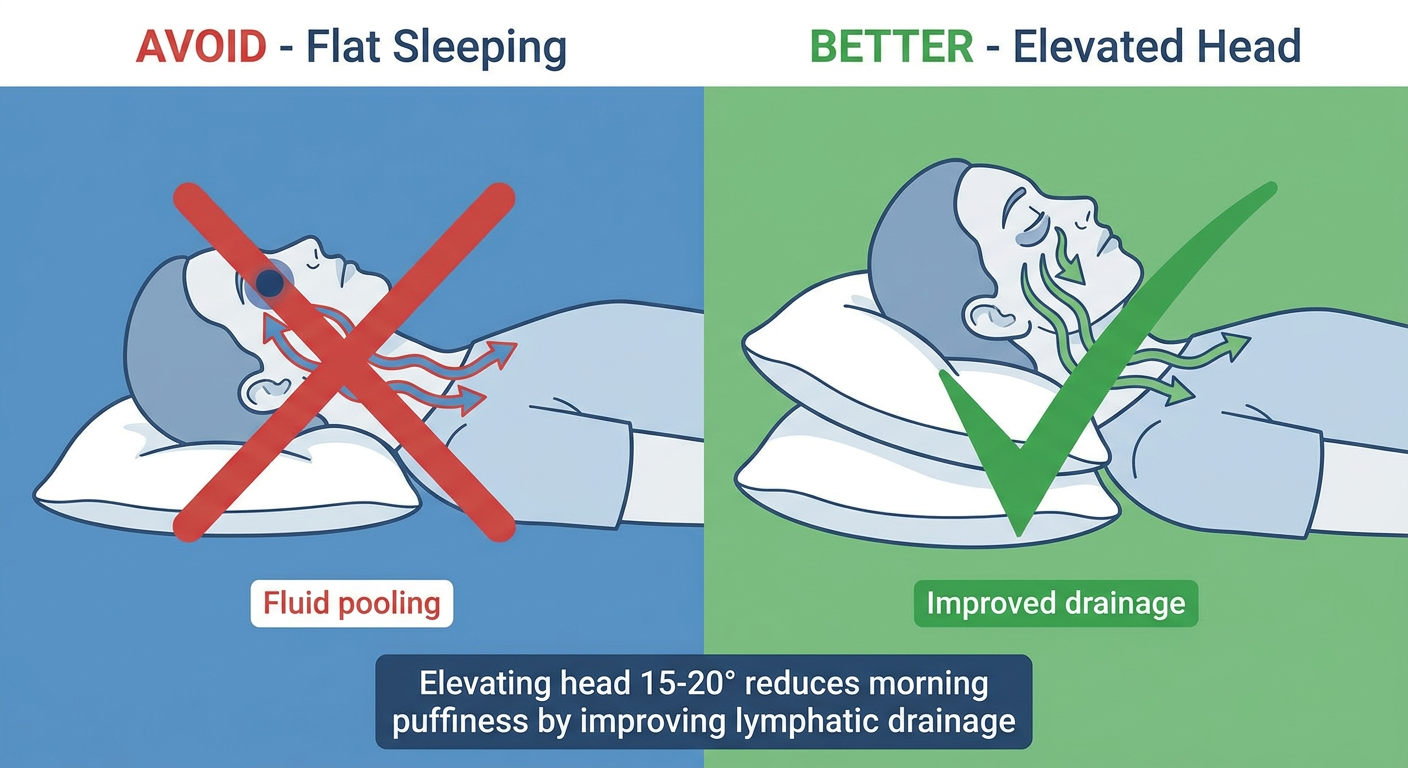
Why this matters for your skin:
- When you sleep completely flat, fluid accumulates around the eyes overnight due to gravity pulling blood and lymph fluid toward your face
- Elevating your head 15-20° (just 1-2 extra pillows) allows gravity to drain that fluid downward, away from the periorbital area
- This is especially helpful in your case since your photos were taken while lying flat - the puffiness you see in the morning is partly positional
- Results are noticeable within 1-2 weeks of switching positions - you'll see less morning puffiness and your dark circles will look less pronounced when you wake up
Bonus tip: Also try sleeping on your back rather than your side - side sleeping presses one cheek into the pillow, which can worsen puffiness and even contribute to fine lines on that side over time.
This is a shared conversation. Sign in to Orris to start your own chat.