
Explain the ano in fissure in detail according to surgery
Fissure-in-Ano: A Comprehensive Surgical Account
1. Definition
"An anal fissure is an elliptical or oval-shaped tear in the anal canal starting at the anal verge and extending proximally for a varying length toward the dentate line." - Sabiston Textbook of Surgery
2. Aetiology and Pathophysiology
- Initiating trauma - passage of hard stool (constipation), prolonged diarrhea, anal receptive intercourse, or childbirth tears the anoderm.
- IAS hypertonia - the pain from the tear causes reflex spasm of the internal anal sphincter, which is involuntary smooth muscle.
- Ischaemia - the hypertonic IAS decreases blood supply to the posterior midline anoderm, creating relative tissue ischaemia.
- Non-healing - ischaemia prevents wound healing; further defecation re-tears the fissure, perpetuating the cycle.
- 75% of fissures occur here. The posterior midline has a relatively less robust blood supply compared to other quadrants.
- Shearing forces during defecation are maximal at the posterior midline.
- The anoderm here is less elastic and has an increased density of longitudinal muscle extensions.
- Anterior fissures (10-15%) are more common in women, often following vaginal delivery.
- Less than 1% occur off the midline - these must raise suspicion of a secondary cause.
3. Classification
| Feature | Acute Fissure | Chronic Fissure |
|---|---|---|
| Duration | < 6-8 weeks | > 6-8 weeks |
| Appearance | Shallow tear, fresh | Deep ulcer, indurated edges, IAS fibers visible at base |
| Sentinel tag | Absent | Present externally |
| Hypertrophied papilla | Absent | Present internally (at dentate line) |
| Associated fistula | Absent | May have intersphincteric fistula |
| Response to medical Rx | Almost always heals | ~50% healing with medical therapy |
4. Clinical Features
- Severe anal pain during defecation - classically described as "passing pieces of glass" or "razor blades" or "a knife cutting." The pain typically resolves then recurs with the next bowel movement.
- Throbbing and anal spasm - can persist for minutes to hours after defecation.
- Bright-red bleeding - usually a trace on toilet paper; rarely more than that.
- Pruritus ani - from irritation by the sentinel tag or discharge.
- Mucus discharge - from the ulcer or an associated intersphincteric fistula.
- In severe chronic cases, patients may avoid oral intake (and lose weight) due to dread of defecation.
- The fissure is often visible by gently separating the buttocks - examine in this gentle manner first.
- Chronic fissure triad:
- Sentinel skin tag/pile externally (at the anal verge)
- Indurated ulcer with visible IAS fibers at the base
- Hypertrophied anal papilla proximally (at dentate line)
- Digital rectal examination, anoscopy, and proctoscopy are often deferred because even gentle palpation reproduces intolerable pain.
- If the fissure is not clearly visible, focal pressure with a fingertip or cotton-tip applicator at the posterior or anterior anal canal reproduces pain.
5. Atypical / Secondary Fissures
- Crohn's disease
- Tuberculosis
- HIV-related ulcers
- Syphilis, Chlamydia, chancroid, lymphogranuloma venereum (LGV)
- Herpes simplex virus (HSV), Cytomegalovirus (CMV)
- Kaposi's sarcoma, B-cell lymphoma
- Squamous cell carcinoma (SCC)
- Leukaemia
6. Treatment
6.1 Conservative (First-Line for All Fissures)
- Increased fibre and fluid intake - bulk-forming agents to produce soft, formed stools.
- Stool softeners - to minimise anal trauma.
- Warm sitz baths - demonstrated to provide significant pain relief in >90% of patients with acute fissures.
- Topical local anaesthetics (e.g., 2% lidocaine jelly) - additional symptomatic relief.
- Anorectal biofeedback - for patients with normal bowel habits but excessive straining.
These conservative measures heal almost all acute fissures and the majority of chronic fissures.
6.2 Chemical Sphincterotomy (Pharmacological Relaxation of IAS)
- A nitric oxide donor that causes smooth muscle relaxation and vasodilation.
- 0.2% ointment, applied 2-3 times per day to the anal margin.
- Healing rate: approximately 50% of chronic fissures.
- Major side effect: severe headaches - limits acceptability; patients stop therapy in up to 20%.
- Diltiazem 2% (applied twice daily) or nifedipine - relax the IAS and promote vasodilation.
- Healing rates similar to GTN for chronic fissures.
- Significantly better side-effect profile - fewer headaches - making these the preferred first-line topical agents (Sabiston).
- Note: No readily available commercial formulation in some countries; must be obtained from compounding pharmacies.
- Causes temporary muscle paralysis by preventing acetylcholine release from presynaptic nerve terminals.
- Dose: 20-100 IU (10-100 units) injected into the IAS in a single or divided dose.
- Produces IAS relaxation lasting approximately 3 months.
- Can be done in-office or as an outpatient procedure with sedation.
- Healing rate: ~50% (similar to topical therapies as first-line; modest improvement as second-line after failed topical therapy).
- Side effects: temporary incontinence to flatus (up to 10%); rarely - increased urinary residual volume, heart block.
- Used as an alternative to surgical sphincterotomy at some centres.
6.3 Surgical Treatment (For Chronic Fissures Failing Medical Therapy)
A. Lateral Internal Sphincterotomy (LIS) - Procedure of Choice
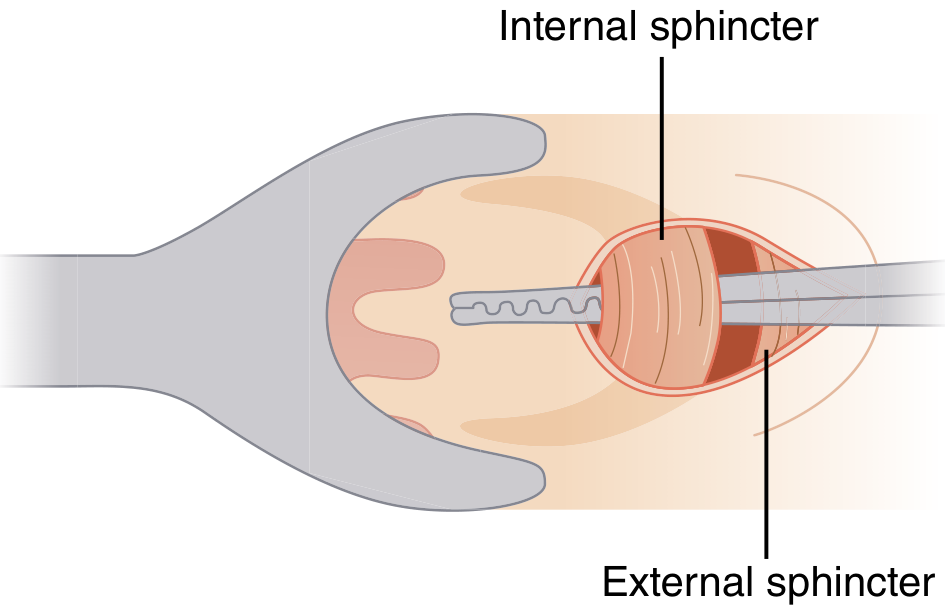
- A radial incision is made in the anoderm at the lateral position (3 or 9 o'clock), exposing the distal IAS muscle fibers.
- The distal segment of the IAS is divided sharply for a length corresponding to the length of the fissure.
- The wound can be left open or closed primarily with absorbable sutures.
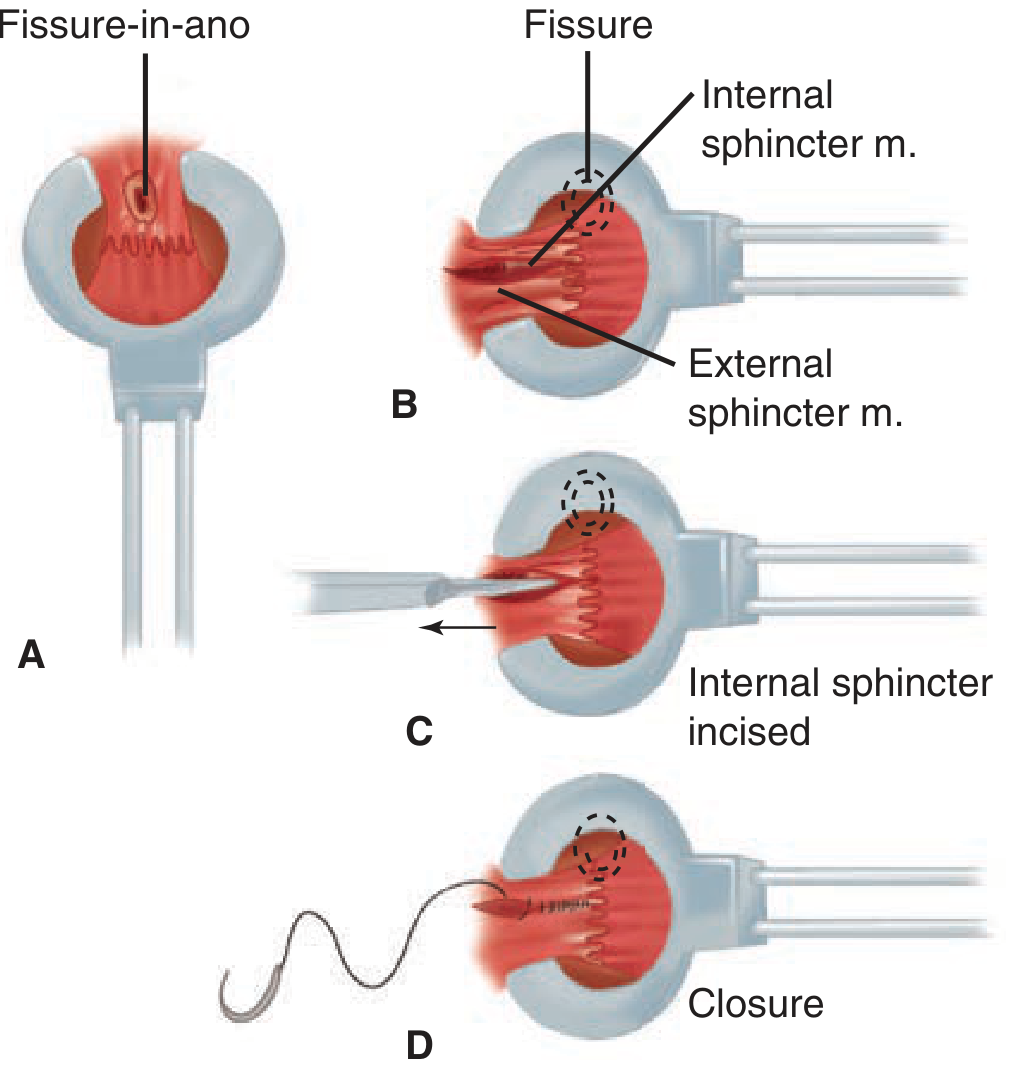
- The distal IAS is palpated with a bivalved speculum at the intersphincteric groove.
- A small no. 11 blade scalpel is inserted directly into the intersphincteric groove, advanced parallel to the sphincter.
- The blade is then rotated so its sharp edge faces the IAS, dividing the distal third laterally.
- Alternatively, dissecting scissors open the intersphincteric space and divide the IAS:
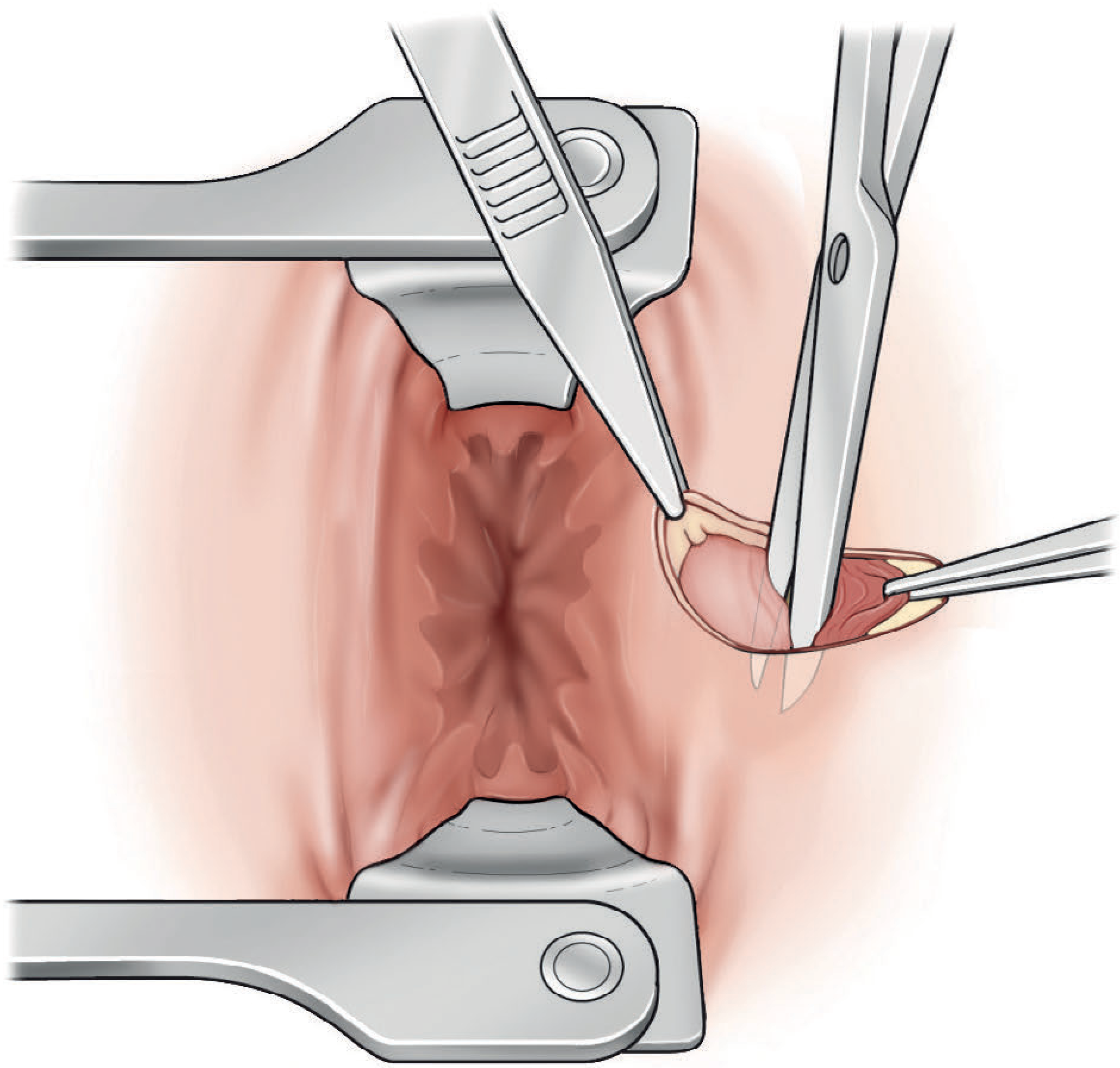
- Pressure is applied to the wound for a few minutes to prevent haematoma formation.
- Wound is closed with absorbable sutures.
| Outcome | Rate |
|---|---|
| Healing rate | 85-95% (Sabiston: 88-100%) |
| Recurrence | < 10% |
| Immediate pain relief | Most patients |
| Flatus incontinence | 5-15% (Bailey & Love: 9%) |
| Soiling | ~6% |
| Solid stool incontinence | <1% |
- Baseline incontinence
- Females with prior obstetric injuries
- Previous anorectal operations
- Documented anal sphincter injury
B. Anal Sphincter Dilatation (Lord's Procedure)
- Forcible dilatation of the anal canal (manually) to reduce sphincter tone.
- Largely abandoned - disrupts the anal sphincters at multiple unpredictable sites with an unacceptably high risk of incontinence.
- Rarely indicated in current practice.
C. Fissurectomy
- Surgical excision of the fibrotic edges of the fissure, curettage of the base, and excision of the sentinel tag and/or anal papilla.
- Used as an alternative to LIS when there are contraindications to sphincterotomy.
- Frequently combined with an anal advancement flap anoplasty.
D. Anal Advancement Flap Anoplasty
- Should be considered in patients with increased risk of altered continence after LIS - especially postpartum women and those with normal or low resting anal pressures.
- After fissurectomy, an inverted house-shaped flap of perianal skin is carefully mobilised on its blood supply and advanced to cover the fissure.
- VY advancement flaps with or without sphincterotomy have also been reported to successfully treat chronic fissures (Schwartz's).
7. Management Algorithm Summary
Anal Fissure Diagnosed
        |
   Acute (<6-8 wks)                    Chronic (>6-8 wks)
        |                                      |
Conservative Rx                      Conservative + Chemical
(Fibre, sitz baths,                  Sphincterotomy
stool softeners)                     (GTN/CCB topically →
        |                             Botox if fails)
   Healed ✓                                    |
                                     Fails (~50%)
                                               |
                                  Off-midline? → EUA + Biopsy
                                  Midline → Lateral Internal
                                            Sphincterotomy
                                  High incontinence risk →
                                  Advancement Flap
8. Key Points to Remember (Surgical Summary)
- Location: 75% posterior midline; 10-15% anterior (more common in women); <1% lateral (always secondary cause).
- Pathophysiology: Tear → IAS spasm → ischaemia → non-healing (vicious cycle).
- Triad of chronic fissure: Sentinel tag + ulcer with IAS fibers exposed + hypertrophied anal papilla.
- First-line medical: Topical CCBs (diltiazem) preferred over GTN due to fewer headaches.
- Botox: Office procedure, 3-month effect, 50% healing, 10% temporary incontinence.
- Surgery of choice: Lateral internal sphincterotomy - divides distal 1/3 of IAS laterally.
- Open vs Closed LIS: Equivalent results; both heal 85-95%.
- Risk of LIS: Flatus incontinence 5-15%; warn all patients preoperatively.
- Advancement flap: Alternative for patients at high incontinence risk.
Can you explain in points like
How would you like the explanation formatted?
Fissure-in-Ano
Definition
- A longitudinal ulcer (tear) in the anoderm of the distal anal canal
- Extends from the anal verge proximally toward (but not beyond) the dentate line
- Synonym: fissure-in-ano
- Acute: present < 6-8 weeks | Chronic: present > 6-8 weeks
Aetiology
- Passage of hard stool (most common)
- Prolonged diarrhea
- Anal trauma or anal receptive intercourse
- Vaginal delivery (anterior fissures in women)
- Underlying cause if off-midline: Crohn's, TB, HIV, syphilis, HSV, SCC, leukaemia
Sites
- Posterior midline - 75% (less blood supply + maximum shearing force)
- Anterior midline - 10-15% (more common in women post-delivery)
- Off-midline - <1% (always secondary; investigate)
Pathophysiology (Vicious Cycle)
- Tear in anoderm → pain
- Pain → IAS (internal anal sphincter) spasm / hypertonia
- Spasm → reduced blood supply (ischaemia) to anoderm
- Ischaemia → poor healing → repeated trauma → chronic fissure
- Local pain reinforces spasm → cycle continues
Clinical Features
Symptoms
- Severe anal pain during defecation - "passing broken glass" or "razor blades"
- Pain settles, then recurs with next bowel movement
- Throbbing / anal spasm lasting minutes to hours after defecation
- Bright-red bleeding - trace on toilet paper, streaking on stool
- Pruritus ani - from sentinel tag irritation
- Mucus discharge - from ulcer or associated intersphincteric fistula
- Severe cases: patients avoid eating (fear of defecation) → weight loss
Signs
- Acute: Shallow, fresh tear visible on gentle buttock separation
- Chronic triad:
- Sentinel skin tag - externally at anal verge
- Indurated ulcer - with exposed IAS fibres at base
- Hypertrophied anal papilla - internally at dentate line
- DRE, anoscopy, proctoscopy often deferred due to intolerable pain
- If diagnosis unclear → EUA (examination under anaesthesia) + biopsy
Treatment
Step 1 - Conservative (All fissures, first line)
- High-fibre diet + increased fluid intake
- Stool softeners / bulk-forming agents
- Warm sitz baths (pain relief in >90% of acute fissures)
- Topical local anaesthetic (e.g., 2% lidocaine jelly)
- Anorectal biofeedback - if excessive straining with normal bowel habit
- Heals almost all acute fissures and majority of chronic fissures
Step 2 - Chemical Sphincterotomy (If conservative fails)
a) Topical GTN (Glyceryl Trinitrate / Nitroglycerin)
- Nitric oxide donor → smooth muscle relaxation + vasodilation
- 0.2% ointment, 2-3 times/day to anal margin
- Healing: ~50% of chronic fissures
- Side effect: severe headaches (therapy stopped in up to 20%)
b) Topical Calcium Channel Blockers (Preferred first-line topical)
- Diltiazem 2% (twice daily) or nifedipine
- Relaxes IAS + promotes vasodilation
- Healing: similar to GTN (~50%)
- Fewer side effects (fewer headaches) - preferred over GTN
c) Botulinum Toxin (Botox) Injection
- Blocks acetylcholine release at neuromuscular junction → temporary IAS paralysis
- Dose: 20-100 IU into IAS; effect lasts ~3 months
- Healing: ~50% (similar to topical; modest improvement as 2nd-line)
- Can be done in-office or outpatient under sedation
- Side effects: temporary flatus incontinence (up to 10%), rarely urinary retention
Step 3 - Surgical Treatment (Chronic fissure failing medical therapy)
A. Lateral Internal Sphincterotomy (LIS) - GOLD STANDARD
- Procedure of choice for chronic anal fissure
- Divides distal 1/3 of IAS at the lateral position (3 or 9 o'clock) - away from the fissure
- Aim: reduce IAS spasm → improve blood flow → allow healing
| Open LIS | Closed LIS | |
|---|---|---|
| Incision | Radial incision in anoderm exposes IAS | Scalpel inserted into intersphincteric groove |
| IAS division | Divided sharply under direct vision | Blade rotated and IAS divided blindly |
| Wound | Left open or closed with absorbable sutures | Pressure applied; wound closed |
- Healing rate: 85-95%
- Recurrence: <10%
- Flatus incontinence: 5-15% (warn all patients)
- Soiling: ~6%
- Solid stool incontinence: <1%
- Baseline incontinence
- Women with prior obstetric sphincter injuries
- Previous anorectal surgery
- Documented sphincter defect on imaging
B. Lord's Dilatation (Anal Sphincter Dilatation)
- Forcible manual dilatation of anal canal to reduce sphincter tone
- Largely abandoned - uncontrolled sphincter disruption at multiple sites
- High risk of permanent incontinence - rarely used today
C. Fissurectomy
- Excision of fibrotic fissure edges + curettage of base
- Excision of sentinel tag and/or anal papilla
- Used when LIS is contraindicated
- Usually combined with advancement flap anoplasty
D. Advancement Flap Anoplasty
- For patients with high incontinence risk (low/normal resting anal pressures, postpartum women)
- After fissurectomy, a house-shaped perianal skin flap is mobilised on its blood supply and advanced to cover the defect
- VY advancement flap with or without sphincterotomy
Summary Box (Quick Revision)
| Point | Fact |
|---|---|
| Most common site | Posterior midline (75%) |
| Pathophysiology | Pain → spasm → ischaemia → non-healing |
| Chronic triad | Sentinel tag + ulcer with IAS fibres + hypertrophied papilla |
| First-line topical agent | Diltiazem (CCB) - fewer side effects than GTN |
| Botox dose | 20-100 IU; lasts 3 months |
| Surgery of choice | Lateral internal sphincterotomy (LIS) |
| LIS healing rate | 85-95% |
| Main risk of LIS | Flatus incontinence (5-15%) |
| Alternative to LIS | Fissurectomy + advancement flap |
Give me types and classification and pathogenesis in flow chart
Medical educational flowchart diagram titled "Fissure-in-Ano: Types, Classification & Pathogenesis" with three sections: SECTION 1 - TYPES (top left box, blue header): Based on Duration: → ACUTE FISSURE (< 6-8 weeks): Shallow tear, fresh edges, no sentinel tag, heals with conservative treatment → CHRONIC FISSURE (> 6-8 weeks): Deep ulcer, indurated edges, IAS fibres visible, sentinel tag + hypertrophied papilla, needs pharmacological or surgical treatment Based on Aetiology: → PRIMARY (Idiopathic): No underlying cause, posterior/anterior midline → SECONDARY (Specific cause): Off-midline, due to Crohn's disease / TB / HIV / Syphilis / HSV / SCC / Leukaemia Based on Position: → Posterior midline: 75% (most common) → Anterior midline: 10-15% (common in women post-delivery) → Off-midline / Lateral: <1% (always secondary cause) SECTION 2 - CLASSIFICATION TABLE (top right box, green header): Feature | Acute | Chronic Duration | <6-8 weeks | >6-8 weeks Depth | Superficial | Deep ulcer IAS fibres | Not visible | Visible at base Sentinel tag | Absent | Present Anal papilla | Normal | Hypertrophied Medical cure | ~90% | ~50% SECTION 3 - PATHOGENESIS FLOWCHART (bottom, red/orange header, vertical arrows): INITIATING FACTOR (Hard stool / Diarrhoea / Trauma / Childbirth) ↓ TEAR IN ANODERM (Disruption of distal anal canal epithelium) ↓ ACUTE PAIN ↓ REFLEX SPASM OF INTERNAL ANAL SPHINCTER (IAS) (Involuntary smooth muscle hypertonia) ↓ REDUCED BLOOD SUPPLY TO POSTERIOR MIDLINE ANODERM (Relative ischaemia) ↓ IMPAIRED WOUND HEALING ↓ RE-TEARING WITH NEXT DEFECATION ↓ [VICIOUS CYCLE arrow loops back to ACUTE PAIN] ↓ (if cycle not broken) CHRONIC FISSURE (Fibrosis, sentinel tag, hypertrophied papilla, exposed IAS fibres) Clean professional medical diagram style, white background, color-coded sections, clear arrows, readable font size
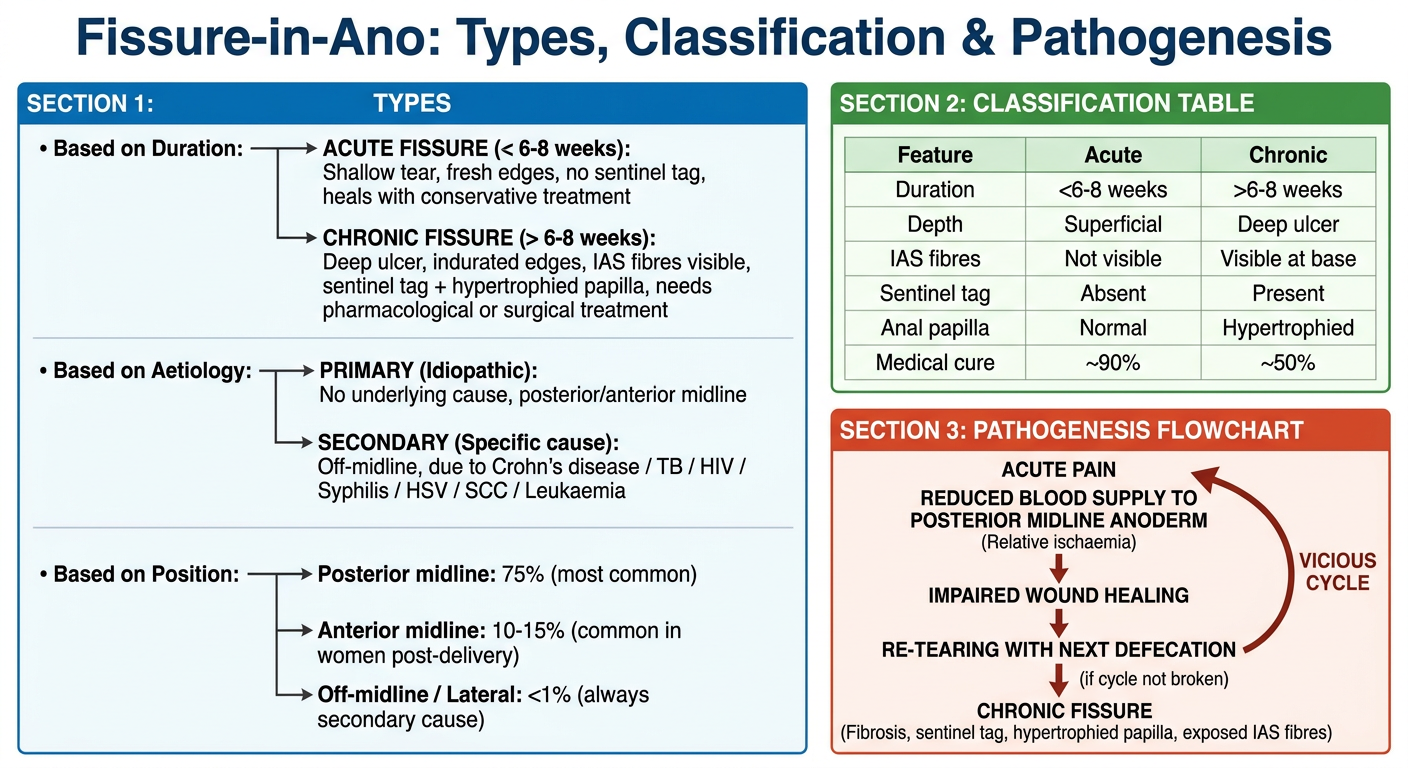
Types of Fissure-in-Ano
By Duration
| Acute | Chronic | |
|---|---|---|
| Duration | < 6-8 weeks | > 6-8 weeks |
| Depth | Shallow, fresh tear | Deep ulcer, indurated |
| IAS fibres at base | Not visible | Visible |
| Sentinel tag | Absent | Present |
| Hypertrophied papilla | Absent | Present |
| Heals with conservative Rx | ~90% | ~50% |
By Aetiology
- Primary (Idiopathic) - no underlying disease; occurs in midline (posterior or anterior)
- Secondary (Specific) - off-midline; caused by Crohn's, TB, HIV, syphilis, HSV, SCC, leukaemia
By Position
- Posterior midline - 75% (most common; less blood supply + maximum shearing force)
- Anterior midline - 10-15% (commoner in women, post-delivery)
- Off-midline / Lateral - <1% (always secondary - investigate with EUA + biopsy)
Pathogenesis - Vicious Cycle
INITIATING FACTOR
(Hard stool / Diarrhoea / Trauma / Childbirth)
              ↓
     TEAR IN ANODERM
(Disruption of distal anal canal epithelium)
              ↓
          ACUTE PAIN
              ↓
   REFLEX IAS SPASM / HYPERTONIA
  (Involuntary smooth muscle tightens)
              ↓
  REDUCED BLOOD SUPPLY TO ANODERM
        (Relative ischaemia)
              ↓
     IMPAIRED WOUND HEALING
              ↓
  RE-TEARING AT NEXT DEFECATION
              ↓
    ← VICIOUS CYCLE PERPETUATED ←
    (Pain → Spasm → Ischaemia → Non-healing)
              ↓
    (if cycle not broken)
              ↓
       CHRONIC FISSURE
  (Fibrosis + Sentinel tag +
Hypertrophied papilla + Exposed IAS fibres)