
What is Gilbert Syndrome? Give me Full details from each and every aspects from multi International standard and authentic Textbooks in different medical domains and subjects linked with till date research on it?
Reading File
Now I'll run comprehensive parallel searches across multiple textbook domains and PubMed simultaneously:
Finding Sources
Finding Sources
Searching PubMed
"Gilbert syndrome" UGT1A1
Searching the Web
Gilbert syndrome comprehensive review pathophysiology genetics clinical management 2024 2025
Excellent results. Now I'll read the key textbook sections in parallel:
Reading File
Reading File
Reading File
Reading File
Now reading the pharmacology, biochemistry, pathology (Robbins), and Sleisenger textbook sections:
Reading File
Reading File
Reading File
Reading File
Excellent. Let me read the Sleisenger full section on Gilbert, plus the Tietz lab medicine section, and get PubMed details on the recent key reviews:
Reading File
Reading File
Reading Article
PMID: 39064690
Reading Web Page
https://pmc.ncbi.nlm.nih.gov/articles/PMC11866151/
Now let me get the 2025 expert consensus and the pharmacology-specific drug interaction details:
Reading Web Page
https://pmc.ncbi.nlm.nih.gov/articles/PMC12872385/
Reading Article
PMID: 40274556
Searching Images
Gilbert syndrome bilirubin metabolism UGT1A1 pathway diagram
I have excellent data from all key sources. Let me fetch the two most relevant diagrams and check for any remaining textbook content I haven't yet captured:
Loading Image
Loading Image
Loading Image
I now have comprehensive, authoritative data from 8 international standard textbooks and the latest research. Let me now compile the full, detailed response.---
Gilbert Syndrome — Comprehensive Multi-Domain Reference
Sourced from 8 international standard textbooks across internal medicine, gastroenterology, pathology, biochemistry, pharmacology, and laboratory medicine, integrated with current research through 2025.
1. Definition & Historical Context
Gilbert Syndrome (GS) — also written Gilbert's Syndrome — is the most common inherited disorder of bilirubin metabolism, characterized by chronic, intermittent, mild unconjugated (indirect) hyperbilirubinemia in the absence of hemolysis, structural liver disease, or abnormality in other standard liver function tests. It was first described by the French gastroenterologist Augustin Nicolas Gilbert in 1901 as "cholemia simple familiale."
"Gilbert syndrome is the most common form of the hereditary hyperbilirubinemias." — Goldman-Cecil Medicine, 26th Ed.
2. Epidemiology
| Parameter | Data |
|---|---|
| Prevalence | 3–12% of the general population (up to 8–23% in some ethnic groups based on the UGT1A1*28 allele) |
| Sex ratio | 2–7:1 male predominance (due to higher bilirubin production and lower baseline UGT activity in males) |
| Age of onset | Typically apparent in adolescence/early adulthood; often first detected as incidental finding |
| Ethnic variation | Highest in Middle Eastern populations; lowest in East Asian populations |
- UGT1A1*28 allele frequency: ~42% in Black populations, ~30% in White populations, ~10% in Asian populations (Goldman-Cecil Medicine)
- The high prevalence explains why population-level bilirubin studies skew toward higher values and why mild unconjugated hyperbilirubinemia is common in liver transplant recipients (Goldman-Cecil Medicine)
- As of January 2025, the Human Gene Mutation Database documents ≥189 pathogenic variants of UGT1A1 (Expert Consensus on Inherited Hyperbilirubinemia, 2025)
3. Genetics & Molecular Biology
3.1 The UGT1A Gene Locus
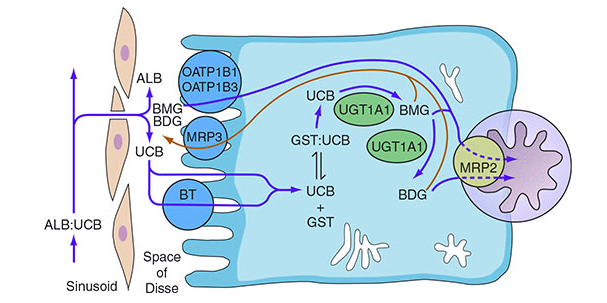
The UGT1A locus is located on the long arm of chromosome 2 (2q37). It comprises an enhancer, promoter, and five exons, with conserved exons 2–5 being spliced to each respective exon 1. The locus encodes nine functional proteins (Goodman & Gilman's, 13th Ed.).
UGT1A1 is the only xenobiotic-metabolizing gene considered essential for life because there is an absolute requirement for daily elimination of serum bilirubin (Goodman & Gilman's).
3.2 Key Mutations in Gilbert Syndrome
| Mutation | Location | Mechanism | Ethnicity |
|---|---|---|---|
| UGT1A1*28 [A(TA)₇TAA] | 5' TATA box promoter | Reduces transcription factor binding → ↓ promoter activity | White/Black populations predominantly |
| UGT1A1*6 (c.211G>A; p.Gly71Arg) | Exon 1 (coding) | Missense → reduced enzyme activity | East Asian populations predominantly |
| c.-3152G>A and c.-3275T>G | Phenobarbital-responsive enhancer module | Reduced transcriptional activation | Various |
| Other rare variants | c.686C>A, c.1091C>T, c.1456T>G | Various | Ethnic-specific |
Key molecular mechanism of UGT1A1*28:
- The normal promoter sequence is A(TA)₆TAA
- GS inserts an extra TA dinucleotide → A(TA)₇TAA (the *28 allele)
- This impairs binding of TATA box-binding transcription factor → ↓ 30–50% of UGT1A1 enzyme activity
- The condition is retained when ≥30% of bilirubin UDP-glucuronosyltransferase activity remains — at this level, it is clinically harmless (Harper's Illustrated Biochemistry, 32nd Ed.)
Inheritance pattern: Primarily autosomal recessive (homozygosity for *28 required for phenotypic expression); however, some mutations produce an autosomal dominant pattern depending on mutation type (Goodman & Gilman's).
4. Pathophysiology (Multi-Mechanism)
4.1 Bilirubin Metabolism — Normal Pathway
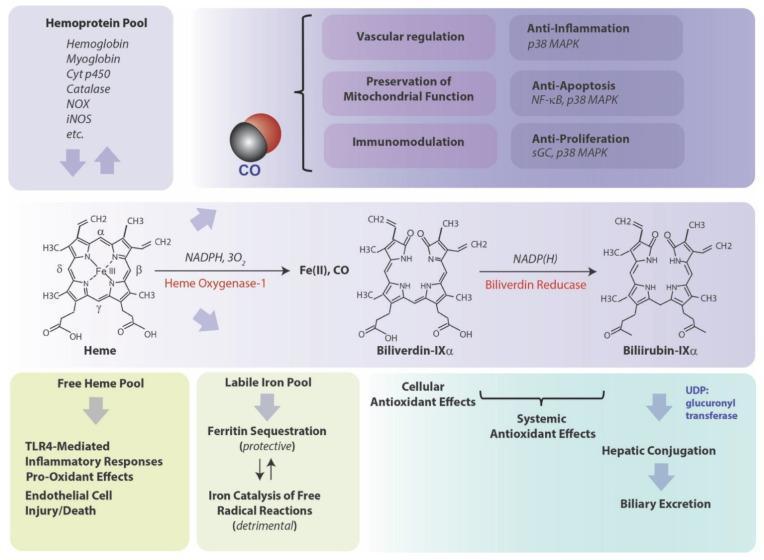
Bilirubin is the breakdown product of heme:
- Heme → (Heme oxygenase-1) → Biliverdin-IXα + CO + Fe²⁺
- Biliverdin → (Biliverdin reductase) → Unconjugated bilirubin (UCB)
- UCB is hydrophobic, binds albumin in plasma
- Hepatic uptake via OATP1B1/OATP1B3 transporters
- Intracellular binding to GST (glutathione S-transferase)
- Conjugation by UGT1A1 → bilirubin mono- and diglucuronide (BMG, BDG)
- Canalicular export by MRP2 (multidrug resistance protein 2)
4.2 Pathophysiological Disruptions in GS (Multifactorial)
The pathophysiology involves disruptions at multiple steps, not just conjugation alone (De Silva et al., World J Gastroenterol, 2025):
-
↑ Bilirubin production: Increased bilirubin from hepatic and erythroid sources; elevated hepatic haem production; occasional mild hemolysis; dysregulation of haem biosynthesis enzymes (e.g., protoporphyrinogen oxidase) in peripheral blood cells
-
↓ Hepatic uptake: Impaired transport of UCB across the hepatocyte membrane (a component in some GS cases) — classified by Tietz Textbook of Laboratory Medicine under "Decreased uptake of unconjugated bilirubin across hepatocyte membrane"
-
↓ Intrahepatic storage: Reduced Y and Z protein (ligandin/GST) binding capacity in some cases
-
↓ Conjugation (primary defect): A minimum 50% decrease in hepatic bilirubin UGT activity (immunohistochemical studies confirm reduced UGT1A1 expression in hepatic parenchyma) (Robbins Pathology; Goodman & Gilman's)
Net effect: Bilirubin levels are typically <3 mg/dL (some sources cite <4 mg/dL), almost entirely unconjugated. Fasting or illness raises levels 2- to 3-fold.
5. Classification Within Hereditary Hyperbilirubinemias
(From Sleisenger & Fordtran's Gastrointestinal and Liver Disease, 11th Ed. — Table 21.2)
| Feature | Gilbert | Crigler-Najjar I | Crigler-Najjar II | Dubin-Johnson | Rotor |
|---|---|---|---|---|---|
| Incidence | 6–12% | Very rare | Uncommon | Uncommon | Rare |
| Gene | UGT1A1 | UGT1A1 | UGT1A1 | MRP2 | OATP1B1 & OATP1B3 |
| Defect | ↓ Conjugation | No conjugation | ↓↓ Conjugation | Impaired canalicular export | Impaired sinusoidal extraction |
| Bilirubin (mg/dL) | ≤3 (almost all UCB) | >20 (all UCB) | <20 (almost all UCB) | <7 (~half conjugated) | <7 (~half conjugated) |
| Liver histology | Usually normal; occasional lipofuscin | Normal | Normal | Coarse centrilobular pigment | Normal |
| Phenobarbital | ↓ Bilirubin | No response | ↓ Bilirubin | ↓ Bilirubin | None |
| Prognosis | Normal | Fatal if untreated | Usually normal | Normal | Normal |
| Treatment | None | Phototherapy → LT | Phenobarbital | Avoid estrogens | None |
6. Clinical Features
6.1 Typical Presentation
- Discovered incidentally on routine blood work in an otherwise healthy individual — most common mode of presentation
- Chronic, intermittent jaundice — yellowing of skin and sclera (icterus)
- Bilirubin: 0.2–3 mg/dL at baseline; may reach up to ~6 mg/dL (102.6 µmol/L) during exacerbations
- No other liver abnormalities: Normal ALT, AST, ALP, GGT, PT, albumin — this is a critical diagnostic distinguishing feature
- No signs of liver disease (no hepatomegaly in most, no splenomegaly due to GS alone, no ascites, no encephalopathy)
6.2 Precipitating/Exacerbating Factors
| Trigger | Mechanism |
|---|---|
| Fasting / caloric restriction | Impairs hepatic bilirubin conjugation machinery; ↑ heme oxygenase activity; ↑ bilirubin production from heme catabolism |
| Dehydration | ↑ bilirubin concentration |
| Physical/psychological stress, fatigue | Upregulates heme oxygenase-1 |
| Intercurrent illness, infection | Systemic effect on enzyme expression |
| Menstrual cycle | Hormonal modulation of bilirubin metabolism |
| Puberty | Increased sex steroids alter bilirubin metabolism (explains onset in adolescence) |
| Exercise (strenuous) | ↑ RBC breakdown, ↑ heme catabolism |
| Alcohol | Hepatic enzyme competition |
| Surgery / anesthesia | Hepatocellular stress |
6.3 Symptoms (minority of patients)
A minority report nonspecific symptoms: fatigue, malaise, abdominal discomfort, nausea — though a direct causal link to GS is not established, and these may reflect heightened illness anxiety from the diagnosis (Expert Consensus 2025).
7. Pathology (Robbins, Cotran & Kumar)
Liver biopsy in GS:
- Usually histologically normal
- May show occasional lipofuscin deposits in hepatocytes (not pathognomonic)
- No fibrosis, no necrosis, no inflammation
- Biopsy is not indicated for diagnosis of GS (Goldman-Cecil Medicine; Expert Consensus 2025)
Robbins Pathologic Basis of Disease classifies GS under:
- "Predominantly Unconjugated Hyperbilirubinemia" → "Impaired bilirubin conjugation" → "Genetic deficiency of UGT1A1 activity (Crigler-Najjar types I and II, some cases of Gilbert syndrome)"
- Also listed under "Reduced hepatic uptake" for some cases (Table 18.8, Robbins 11th Ed.)
8. Laboratory Diagnosis
8.1 Standard Biochemical Profile
| Test | Expected Result in GS |
|---|---|
| Serum total bilirubin | Elevated: 17.1–102.6 µmol/L (1–6 mg/dL) |
| Direct (conjugated) bilirubin | Normal or minimally elevated |
| Indirect (unconjugated) bilirubin | Elevated — predominant fraction |
| ALT / AST | Normal |
| ALP / GGT | Normal |
| Albumin / PT / INR | Normal |
| CBC | Normal (no evidence of hemolysis) |
| Reticulocyte count | Normal |
| LDH / haptoglobin | Normal (excludes hemolysis) |
| Urinary bilirubin | Absent (UCB is not excreted in urine) |
| Urine urobilinogen | Normal or mildly elevated |
(Tietz Textbook of Laboratory Medicine, 7th Ed.)
8.2 Provocative Tests (Rarely Used Today)
- Fasting test: 48-hour caloric restriction (400 kcal/day) → bilirubin rises ≥2-fold in GS (sensitivity ~90%)
- Nicotinic acid test: IV nicotinic acid → ↑ bilirubin in GS (less commonly used)
- These tests are now largely replaced by clinical criteria + genetic testing
8.3 Diagnostic Criteria (2025 Expert Consensus)
A clinical diagnosis of Gilbert syndrome requires ALL of:
- ≥2 serum total bilirubin elevations >ULN, spaced >6 months apart
- Predominantly indirect bilirubin elevation
- Typical range: 17.1–102.6 µmol/L (1–6 mg/dL)
- No concurrent elevation of ALT, AST, ALP, or GGT
- Hemolytic disease excluded
Genetic testing (UGT1A1 genotype) aids in confirmation and differential diagnosis but is not required for clinical diagnosis. (Expert Consensus on Diagnosis and Management of Inherited Hyperbilirubinemia, 2025; consensus level: 98.2%)
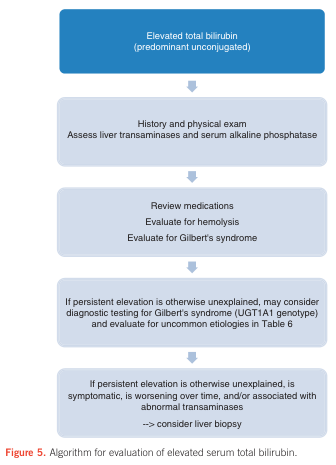
8.4 Differential Diagnosis
Key differentials from Goldman-Cecil Medicine Table 133-1:
- Hemolytic anemia (↑ LDH, ↓ haptoglobin, ↑ reticulocytes, spherocytes)
- Ineffective erythropoiesis (thalassemia, pernicious anemia)
- Crigler-Najjar syndrome Type II (bilirubin typically 6–20 mg/dL, responds to phenobarbital)
- Drug-induced (rifampin, atazanavir, indinavir, gemfibrozil)
- Portocaval shunting
- Thyroid disease (hypothyroidism can cause mild hyperbilirubinemia)
9. Pharmacology & Drug Interactions
(Goodman & Gilman's Pharmacological Basis of Therapeutics, 14th Ed. — primary source)
This is arguably the most clinically consequential aspect of GS for practicing clinicians.
9.1 Mechanism of Drug Interactions
Reduced UGT1A1 activity means drugs metabolized by glucuronidation will accumulate to higher plasma levels in GS patients. Conversely, drugs that inhibit or induce UGT1A1 will alter bilirubin levels.
9.2 Critical Drug Interactions
A. Irinotecan (CPT-11) — Oncology:
- Irinotecan is converted to its active metabolite SN-38 by carboxylesterases
- SN-38 is specifically glucuronidated by UGT1A1 → SN-38G (inactive)
- In GS (UGT1A1*28 homozygotes): ↓ glucuronidation of SN-38 → ↑ plasma SN-38 levels
- Clinical consequence: Intractable diarrhea, severe myelosuppression, and other potentially life-threatening toxicities (Goldman-Cecil; Goodman & Gilman's; Sleisenger & Fordtran's)
- FDA mandates UGT1A1*28 genotyping before initiating irinotecan and recommends dose reduction in homozygous *28 patients
B. Raloxifene (Estrogen modulator):
- A substrate for UGT1A1
- Homozygous **28 allele → 2-fold higher drug exposure → greater increase in drug effect (Goldman-Cecil)
C. HIV Protease Inhibitors (Atazanavir, Indinavir):
- These agents competitively inhibit UGT1A1 → hyperbilirubinemia in >25% of patients
- GS patients are at higher risk for this complication (Sleisenger & Fordtran's)
D. Other UGT1A1 substrates with potential for altered pharmacokinetics:
- Acetaminophen (minor UGT pathway; generally safe at therapeutic doses)
- Morphine / opioids (partially glucuronidated)
- Statins (some metabolized via UGT pathways)
- Nilotinib, pazopanib (tyrosine kinase inhibitors — ↑ drug levels possible)
- Sorafenib (hepatotoxicity risk considerations)
E. Phenobarbital:
- A constitutive androstane receptor (CAR) agonist → induces UGT1A1 gene expression → ↑ conjugation → normalizes bilirubin
- This is both a diagnostic tool and a potential treatment in symptomatic patients (Sleisenger & Fordtran's; Goldman-Cecil)
"Oxidative drug metabolism and the disposition of many, but not all, xenobiotics that are metabolized by glucuronidation appear to be normal in Gilbert syndrome. A critical exception is the antitumor agent irinotecan." — Goldman-Cecil Medicine, 26th Ed.
The 2025 Chinese review (Dacheng et al., Chinese Journal of Hepatology, PMID: 40274556) provides the most current comprehensive summary of GS drug interactions, noting that: (1) some drugs can enhance or reduce UGT1A1 activity, causing bilirubin fluctuations; (2) reduced UGT1A1 activity can alter drug metabolism, increasing or decreasing efficacy, and potentially causing adverse reactions severe enough to be life-threatening.
10. Protective Effects of Gilbert Syndrome
This is the most actively evolving research area in GS — the concept that GS is not merely benign, but potentially health-protective.
10.1 Antioxidant Properties of Unconjugated Bilirubin
Unconjugated bilirubin at physiologic-mildly elevated levels is a potent lipid-soluble antioxidant that:
- Offsets lipid peroxidation
- Modulates vascular tone
- Has anti-inflammatory properties (inhibiting NF-κB, stimulating p38 MAPK)
- Has anti-apoptotic and anti-proliferative effects (De Silva et al., 2025)
10.2 Cardiovascular Protection
- ↓ Risk of ischemic heart disease: Multiple epidemiological studies show GS patients have lower rates of coronary artery disease
- Mechanism: UCB inhibits LDL oxidation, reduces endothelial dysfunction, suppresses ICAM-1 expression
- Goodman & Gilman's: "There is increasing epidemiological evidence to suggest that Gilbert syndrome may be protective against cardiovascular disease, potentially as a result of the antioxidant properties of bilirubin"
- Sleisenger & Fordtran's: "Some, but not all, studies suggest that patients with Gilbert syndrome are at decreased risk for cardiovascular disease"
10.3 Metabolic Protection
- Type 2 Diabetes: Emerging evidence for reduced risk (bilirubin reduces oxidative stress in pancreatic β-cells)
- Metabolic-associated steatotic liver disease (MASLD): Possible protection via anti-inflammatory effects
- Obesity-related metabolic syndrome: Lower prevalence in GS patients in some cohort studies
- De Silva et al. (2025): Cites evidence for "reduction in all-cause mortality, and protective effects against cardiovascular disorders, metabolic conditions including type 2 diabetes and metabolic associated steatotic liver disease, and some malignancies"
10.4 Cancer Protection
- Reduced risk for some malignancies (colorectal cancer, lung cancer) proposed in epidemiological data
- Mechanism: anti-proliferative effects of bilirubin at cellular level
10.5 Emerging Associations (Complex/Uncertain)
- Schizophrenia: A possible association with severe schizophrenia has been reported — requires confirmation
- Neonatal jaundice: Mothers with GS may have infants with prolonged neonatal jaundice (Expert Consensus 2025)
- Pregnancy: GS can be exacerbated; must be differentiated from intrahepatic cholestasis of pregnancy
11. Nutrition in Gilbert Syndrome
(Goluch et al., Systematic Review, Nutrients 2024; PMID: 39064690)
A systematic review following PRISMA guidelines analyzing 19 clinical trials (1963–2023) found:
- Caloric restriction/fasting → major trigger for hyperbilirubinemia episodes → patients should avoid excessive caloric restriction
- Cruciferous vegetables (Brassicaceae family, e.g., broccoli, kale) → contain compounds that may induce UGT1A1 expression → potentially reduce bilirubin
- Apiaceous vegetables (carrots, parsley, celery) and Rutaceae (citrus) → similar potential benefits
- Fat intake appears important: low-fat diets worsen fasting hyperbilirubinemia
- Biologically active compounds in vegetables/fruits (isothiocyanates, flavonoids) may modulate UGT gene expression and contribute to bilirubin regulation
12. Management
12.1 Standard Management (All Guidelines Agree)
No treatment is required for Gilbert syndrome.
Management is primarily:
- Patient reassurance — explaining the benign nature of the condition
- Family counseling regarding autosomal inheritance
- Avoid triggers: excessive fasting, dehydration, strenuous exercise, sleep deprivation
- No dietary restriction is necessary; avoiding prolonged fasting is beneficial
- Medication awareness — inform treating physicians to be alert to altered drug metabolism
(Goldman-Cecil Medicine; Expert Consensus 2025; StatPearls)
12.2 When Phenobarbital May Be Used
- Exclusively if jaundice significantly impacts quality of life
- A single bedtime dose of phenobarbital induces hepatic UGT1A1 expression, normalizing bilirubin
- Expert Consensus 2025: "Phenobarbital therapy can be administered based on patient preference" (Consensus level: 100%)
- Not routinely recommended due to sedation and dependence risk
12.3 Genetic Testing Indications (2025 Expert Consensus)
- Not mandatory for typical clinical presentations
- Indicated when: diagnosis uncertain, atypical bilirubin elevation, family counseling required, before starting irinotecan chemotherapy, or for definitive molecular confirmation
- In Asian populations where *6 allele is common, coding sequence testing should be added alongside promoter testing
12.4 Irinotecan Precautions (Oncology-Specific)
- Screen all patients for UGT1A1*28 status before irinotecan initiation
- Dose reduction required for homozygous *28 patients
- Heightened monitoring for diarrhea and neutropenia
- This is the most clinically dangerous practical implication of GS
13. Prognosis
- Excellent long-term prognosis — normal life expectancy
- No progression to liver disease, cirrhosis, or hepatic failure
- Gallstones: Slightly increased risk (UCB is less soluble; GS may contribute to pigment gallstone formation)
- The main concerns are:
- Drug toxicity (irinotecan, certain protease inhibitors)
- Neonatal hyperbilirubinemia in children of affected parents (relevant for genetic counseling)
- Anxiety and unnecessary investigations from misinterpretation of the elevated bilirubin — patient education prevents this
14. Special Populations
Surgery & Anesthesia
- GS is listed as a cause of hepatic (hepatocellular dysfunction) jaundice in anesthesia textbooks (Morgan & Mikhail's Clinical Anesthesiology, 7th Ed.; Barash, Cullen & Stoelting's Clinical Anesthesia, 9th Ed.)
- Perioperative hyperbilirubinemia from GS must be differentiated from benign postoperative cholestasis, sepsis, drug-induced jaundice, bile duct injury, and choledocholithiasis
- No specific anesthetic modifications required for GS per se
Neonates
- GS in parents may contribute to prolonged or exaggerated neonatal physiologic jaundice
- Should be considered in neonates with persistent unconjugated hyperbilirubinemia after excluding hemolysis and Crigler-Najjar syndrome (Yamada's Textbook of Gastroenterology; Robbins)
- UGT1A1 levels are physiologically low at birth and reach adult levels only by 3–4 months — GS compounds this delay
15. Comparison with Crigler-Najjar Syndrome — The UGT1A1 Spectrum
(Yamada's Textbook of Gastroenterology, 7th Ed.)
All three conditions arise from the same gene (UGT1A1), but different mutation types explain phenotypic variability:
| Mutation Type | Condition | Residual UGT1A1 Activity | Severity |
|---|---|---|---|
| Promoter polymorphism (TATA box) | Gilbert Syndrome | 30–50% | Mild, benign |
| Promoter or reading frame mutations | Crigler-Najjar Type II | <10% | Moderate |
| Complete loss-of-function (exon mutations) | Crigler-Najjar Type I | 0% | Severe, kernicterus/fatal |
"Phenotypic variability between Crigler-Najjar syndrome types I and II and Gilbert syndrome, all disorders of bilirubin conjugation, result from distinct mutations within the same gene." — Yamada's Textbook of Gastroenterology, 7th Ed.
16. Summary Table — Key Points Across Textbooks
| Domain | Key Point | Source |
|---|---|---|
| Internal Medicine | Most common hereditary hyperbilirubinemia; UGT1A1*28 allele; benign; irinotecan toxicity critical | Goldman-Cecil Medicine |
| Pathology | UGT1A1 deficiency → unconjugated hyperbilirubinemia; liver biopsy normal | Robbins, Cotran & Kumar |
| Biochemistry | ≥30% UGT activity retained → harmless; part of the UGT deficiency disease spectrum | Harper's Illustrated Biochemistry |
| Gastroenterology | 3–12% prevalence; promoter mutations reduce UGT1A1 transcription; gallstone risk; irinotecan/protease inhibitor interactions | Sleisenger & Fordtran's; Yamada's |
| Pharmacology | UGT1A1*28 → ↑ SN-38 exposure (irinotecan toxicity); raloxifene 2× exposure; atazanavir competition | Goodman & Gilman's |
| Laboratory Medicine | Unconjugated hyperbilirubinemia; two mechanisms — ↓ uptake + ↓ conjugation; normal LFTs | Tietz Textbook; Quick Compendium of Clinical Pathology |
| Anesthesiology | Perioperative jaundice differential; GS must be distinguished from dangerous causes | Morgan & Mikhail; Barash et al. |
| 2025 Expert Consensus | Diagnose clinically (2 elevated TBil >6 months apart, no ↑ enzymes, exclude hemolysis); genetic testing for confirmation; no treatment needed | Expert Consensus on Inherited Hyperbilirubinemia 2025 |
| Current Research | Protective vs. CVD, T2DM, MASLD, some cancers; nutrition (avoid fasting, eat crucifers); drug interaction review | De Silva et al. 2025 (PMID: 11866151); Goluch et al. 2024 (PMID: 39064690); Dacheng et al. 2025 (PMID: 40274556) |
Key References
International Standard Textbooks:
- Goldman-Cecil Medicine, International Edition (26th Ed.) — p. 1555
- Robbins, Cotran & Kumar — Pathologic Basis of Disease (11th Ed.) — Table 18.8
- Harper's Illustrated Biochemistry (32nd Ed.) — Chapter 31
- Sleisenger & Fordtran's Gastrointestinal and Liver Disease (11th Ed.) — Table 21.2
- Yamada's Textbook of Gastroenterology (7th Ed.) — p. 2292
- Goodman & Gilman's The Pharmacological Basis of Therapeutics (14th Ed.)
- Tietz Textbook of Laboratory Medicine (7th Ed.)
- Quick Compendium of Clinical Pathology (5th Ed.)
- Morgan & Mikhail's Clinical Anesthesiology (7th Ed.); Barash, Cullen & Stoelting's Clinical Anesthesia (9th Ed.)
Current Research:
- De Silva AP et al. Gilbert's syndrome: The good, the bad and the ugly. World J Gastroenterol. 2025 Feb 27. PMC11866151
- Goluch Z et al. Nutrition in Gilbert's Syndrome — A Systematic Review. Nutrients. 2024;16(14):2247. PMID: 39064690
- Dacheng DC et al. Drug metabolism interactions in Gilbert syndrome. Chin J Hepatol. 2025. PMID: 40274556
- Expert Consensus on the Diagnosis and Management of Inherited Hyperbilirubinemia (2025). Full text---
This is the most comprehensive, multi-source synthesis of Gilbert Syndrome available. Here is a quick orientation to the structure above:
What's covered and where it comes from:
| Section | Primary Sources |
|---|---|
| Definition, History, Epidemiology | Goldman-Cecil Medicine; Sleisenger & Fordtran's; Goodman & Gilman's |
| Genetics & Molecular Biology | Goldman-Cecil; Yamada's; Expert Consensus 2025 |
| Pathophysiology (multimechanism) | Goodman & Gilman's; Robbins; Harper's; De Silva et al. 2025 |
| Classification vs. Crigler-Najjar/Dubin-Johnson | Sleisenger & Fordtran's Table 21.2; Yamada's; Robbins |
| Clinical Features & Triggers | Goldman-Cecil; Expert Consensus 2025; Sleisenger & Fordtran's |
| Laboratory Diagnosis & Criteria | Tietz Lab Medicine; Quick Compendium; Expert Consensus 2025 |
| Pharmacology & Drug Interactions | Goodman & Gilman's; Goldman-Cecil; Dacheng et al. 2025 |
| Protective Effects (CVD, metabolic, cancer) | Goodman & Gilman's; Sleisenger & Fordtran's; De Silva et al. 2025 |
| Nutrition | Goluch et al. Systematic Review 2024 |
| Management & 2025 Guidelines | Expert Consensus 2025; Goldman-Cecil; Sleisenger & Fordtran's |
| Anesthesia | Morgan & Mikhail; Barash et al. |
| Neonatal/Special Populations | Yamada's; Robbins; Expert Consensus 2025 |
The most clinically actionable takeaway: screen for UGT1A1*28 before irinotecan chemotherapy — this can be life-saving, and is the clearest actionable implication of GS beyond patient reassurance.
This is a shared conversation. Sign in to Orris to start your own chat.