
Asphyxia hyoid bone fracture
Reading File
Finding Sources
Finding Sources
Searching PubMed
"hyoid bone"[MeSH Terms] AND "asphyxia"
Searching Images
hyoid bone fracture strangulation neck dissection
Reading File
Reading File
Reading File
Finding Sources
Reading File
Hyoid bone fracture in asphyxial deaths
Anatomy and why it matters
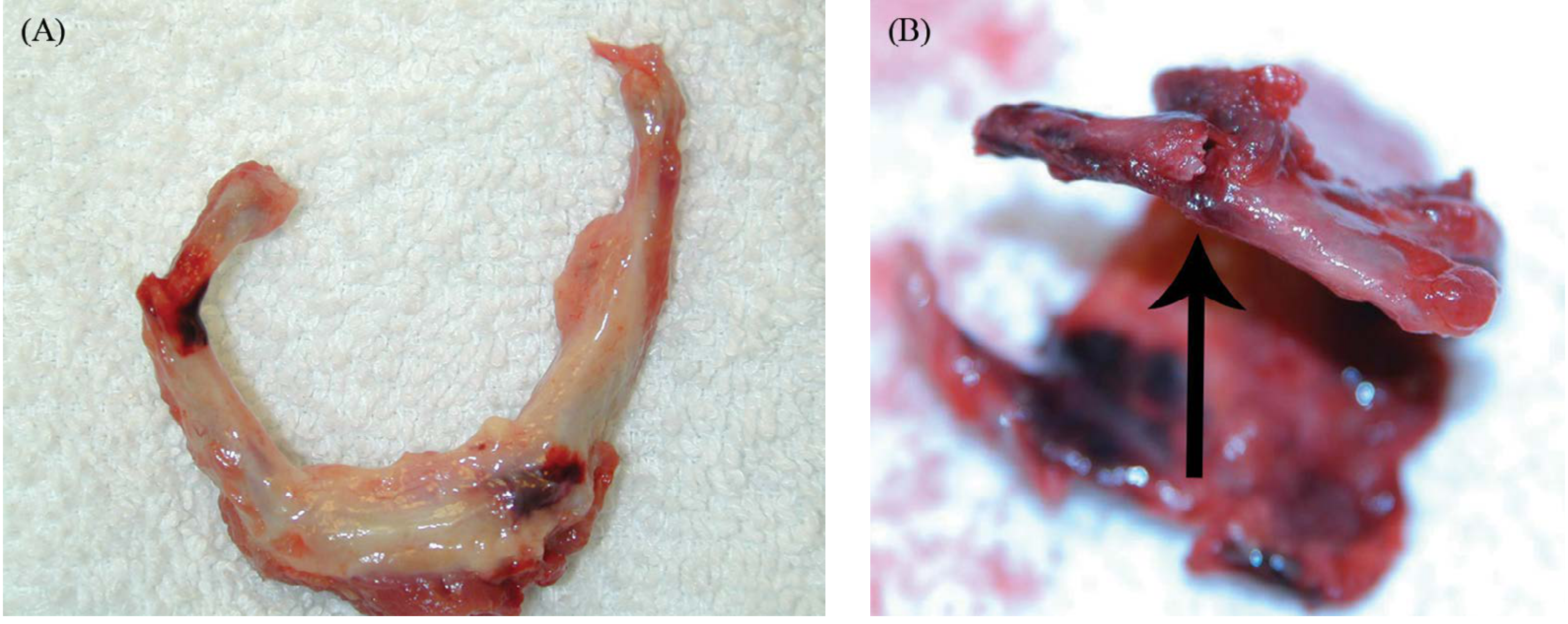
The hyoid is a U-shaped bone. It has a body and a greater and lesser cornu on each side. In forensic work its injuries are mainly fractures. Cuts occur only in cut-throat injuries. Fractures occur in hanging, ligature strangulation, manual strangulation (throttling) and direct neck trauma such as run-over injuries. - Parikh's Textbook of Medical Jurisprudence, Forensic Medicine and Toxicology, Q. 20.19
Types of fracture
| Type | Mechanism | Typical setting | Periosteal tear and displacement |
|---|---|---|---|
| Inward (lateral) compression | Greater horns pushed inward | Manual strangulation, often both sides | Periosteum torn on the outer side. Fragment displaced inward. |
| Outward (antero-posterior) compression | Hyoid driven backward and the horns diverge | Hanging and ligature strangulation. The fracture is at the junction of the inner two-thirds and outer one-third of the greater horn, or at the junction with the body. | Periosteum torn on the inner side. Fragment displaced outward. |
| Avulsion ("tug") fracture | Traction on the thyrohyoid ligament from muscle overactivity, or from the thyroid cartilage moving downward or laterally | Compression of the neck, or fingers pressing between hyoid and thyroid | No direct injury to the bone |
Source: P C Dikshit Textbook of Forensic Medicine and Toxicology, "Fractures of hyoid bone", and Parikh, Q. 20.19.
How often it occurs
- Manual strangulation: Fracture is common if the neck is dissected carefully. In DiMaio's 41 cases the incidence was 68.1%. It was 100% in males (14 of 14) and 52% in females (14 of 27). Harm and Rajs reported 70% and Simpson and Knight 92%. Unilateral fractures outnumbered bilateral ones 3 to 1, and the left side was affected more often (11 to 7). - DiMaio's Forensic Pathology, "Manual Strangulation"
- Hanging and ligature strangulation: Fracture is not common.
- Direct blows: The hyoid is high in the neck and relatively protected. Fracture from a blow is usually seen only with a mandibular fracture, unless the neck is arched.
Age
Over about 40 years the bone is ossified and brittle, so it fractures easily. In young people it is elastic and usually does not fracture. No age is exempt if the pressure is enough. - Parikh, Q. 20.19
Autopsy pitfalls
- Antemortem versus postmortem: Fractures of the hyoid, thyroid or cricoid can be called antemortem only if there is hemorrhage at the fracture site. - DiMaio
- False positives: The cartilaginous separations between the greater horns and the body of the hyoid are not fractures. The same applies to the junctions between the superior thyroid horns and the thyroid plates. These unfused joints are more common under about 30 years of age. - DiMaio
- Confirmation: Look for ecchymosis at the site. Haemosiderin on microscopy confirms hemorrhage in doubtful cases. - Parikh
- Missed fractures: These result from a hasty examination. Feel the bone soon after reflecting the neck skin and look for ecchymosis. - Parikh
- Living patients: A careful clinical examination plus X-ray is needed. - Parikh
- Neck dissection: Do a layer-by-layer, bloodless-field dissection. Check the strap muscles for hemorrhage and look for associated thyroid or cricoid fractures. DiMaio notes that thyroid horn fractures typically follow lateral compression of the larynx.
Medicolegal points
- Hyoid fracture supports compression of the neck, but it is neither necessary nor sufficient for the diagnosis. A fracture can be absent, especially in younger people.
- Pointing toward manual strangulation: inward-displaced fractures, bilateral fractures, associated thyroid horn fractures, and deep neck muscle hemorrhage.
- Pointing toward hanging: absent or rare fracture, or an outward-type fracture, together with an oblique, high ligature mark.
- Exam answer: the most common fracture associated with throttling is of the greater horn. A multiple-choice question in Dikshit asks for the "most important sign of death due to strangulation", and fracture of the hyoid bone is one of its options.
Recent literature
A PubMed search of systematic reviews and meta-analyses from the last 2 years found nothing relevant to forensic hyoid fracture. The hits were on hyoid position in sleep apnea. I found no recent evidence that updates the textbook account above.
This is a shared conversation. Sign in to Orris to start your own chat.