
Holter monitoring - Loop recorders, Ambulatory blood pressure recording, Newer technologies for monitoring the patients with heart diseases. Make explanation for paramedical students
Cardiac Monitoring for Paramedical Students
Holter Monitoring | Loop Recorders | Ambulatory BP Recording | Newer Technologies
Why Continuous Monitoring?
1. HOLTER MONITORING
What Is It?
How It Works
- Electrodes (sticky patches) are placed on specific chest locations.
- Wires connect the electrodes to the small recording unit.
- The device digitally records every heartbeat for the entire monitoring period.
- The patient keeps a written diary noting symptoms, activities, sleep times, and medications.
- After the monitoring period, the recording is analyzed by a computer with human oversight, and a report is generated.
What It Detects
| Finding | Clinical Relevance |
|---|---|
| Palpitations | Correlate with patient diary to identify the causative rhythm |
| Sinus bradycardia (35-40 bpm) | May be normal in athletes; abnormal if symptomatic |
| Sinus pauses >3 seconds | May need pacemaker evaluation |
| PACs and PVCs | Count, frequency, and complexity assessed |
| Atrial fibrillation / flutter | Detect paroxysmal AF |
| AV block (Type I or II) | Intermittent heart block identified |
| ST segment changes | Silent myocardial ischemia detected |
| Heart rate variability | Marker of autonomic function |
Best Used When:
- Symptoms occur daily or multiple times per day
- Assessing rate control in atrial fibrillation
- Evaluating antiarrhythmic drug effectiveness
- Diagnosing sick sinus syndrome or intermittent AV block
Important Limitation
"From 25% to 50% of patients experience a symptom during a 24-hour recording; in 2% to 15% the complaint is caused by an arrhythmia." - Braunwald's Heart Disease, 15th Ed.
Modern Patch Holters (New Form Factor)
2. LOOP RECORDERS (Event Recorders)
A. External Loop Recorders
How They Work
Types of Activation
- Patient-activated - patient presses a button when feeling symptoms
- Auto-detection - device automatically detects heart rate above or below preset thresholds and stores the recording
- AF detection algorithms - some devices automatically detect atrial fibrillation regardless of heart rate
Transmission
Best Used When:
- Symptoms occur days to weeks apart (too infrequent for Holter)
- Unexplained palpitations with negative Holter
- Evaluating syncope (fainting) or near-syncope
"Event monitors, also known as loop recorders, are designed to record intermittent episodes during long periods (weeks to months) and are thus useful for patients with less frequent symptoms." - Goldman-Cecil Medicine
B. Implantable Loop Recorder (ILR)
What Is It?
How It Works
- Records a single-lead ECG continuously from the electric field generated by the heartbeat
- Can store data automatically when the heart rate is too fast, too slow, or irregular
- Patient can also use a handheld activator to trigger a recording when they feel symptoms
- Data is reviewed by physicians at clinic visits or transmitted wirelessly via remote monitoring
Duration
Best Used When:
- Recurrent unexplained syncope after a thorough evaluation has been negative
- Suspected cryptogenic stroke (stroke with no identified cause) - to detect paroxysmal AF that may have caused a clot
- Very infrequent arrhythmias that external recorders cannot capture
"In patients with recurrent unexplained syncope, the implantable loop recorder has been associated with high diagnostic yield for an arrhythmic cause." - Braunwald's Heart Disease
Advantage Over External Recorders:
Summary: Monitoring Duration Comparison
| Device | Duration | Activation | Invasive? |
|---|---|---|---|
| Standard ECG | Seconds | Manual | No |
| Holter Monitor | 24-48 hours (up to 3 weeks with patch) | Continuous | No |
| External Loop Recorder | Weeks to months | Patient + auto | No |
| Mobile Cardiac Telemetry | Up to 1 month | Auto + real-time | No |
| Implantable Loop Recorder | Up to 3 years | Patient + auto | Minor procedure |
3. AMBULATORY BLOOD PRESSURE MONITORING (ABPM)
What Is It?
Why ABPM Is Better Than Office BP
- White coat hypertension - BP is elevated only in the clinic due to anxiety (prevalence 15-30%)
- Masked hypertension - BP is normal in the clinic but elevated in daily life (prevalence 15-30%)
- Significant BP variability between visits
The "Dipping" Phenomenon
| Pattern | Definition | Clinical Significance |
|---|---|---|
| Normal dipper | >10% nocturnal BP fall | Normal |
| Non-dipper | <10% nocturnal BP fall | Associated with sleep apnea, diabetes, autonomic dysfunction, higher cardiovascular risk |
| Hyper-dipper | >20% nocturnal BP fall | Associated with autonomic dysfunction |
Diagnostic Thresholds (ABPM)
- Hypertension diagnosed when average ambulatory BP ≥ 125/75 mmHg
- Normal office BP threshold: <130/80 mmHg
- Masked hypertension if home/ambulatory BP ≥ 125/75 but office <130/80
Indications for ABPM
- Suspected white coat hypertension (elevated office BP, no organ damage)
- Suspected masked hypertension (normal office BP but organ damage present)
- Blood pressure highly variable between visits
- Assessing efficacy of antihypertensive drugs across 24 hours
- Drug-resistant hypertension - to confirm true resistance
- Pregnancy - to detect preeclampsia
- Evaluation of episodic hypertension
- Hypotensive symptoms while on antihypertensive medication
- Autonomic dysfunction
- Evaluation of syncope or pacemaker syndromes
Limitations of ABPM
- Not all insurers cover it
- Poor accuracy with irregular rapid heart rate (e.g., atrial fibrillation)
- Difficult in patients with severe obesity
- Patient anxiety about the device
- Disrupts sleep due to cuff inflation
"Ambulatory blood pressure monitoring, which is the gold standard for noninvasive blood pressure measurement, provides multiple blood pressure readings through the day and night... ABPM predicts pressure-related cardiovascular events better than usual office blood pressure readings." - Goldman-Cecil Medicine
4. NEWER TECHNOLOGIES FOR CARDIAC MONITORING
A. Mobile Cardiac Outpatient Telemetry (MCOT)
- Similar to an external loop recorder but transmits data in real time via wireless network to a central monitoring center
- Can be worn for up to 1 month
- Monitoring center can dispatch emergency services if dangerous arrhythmia is detected
- Especially useful when suspected arrhythmia could be life-threatening
B. Wearable ECG Patch Monitors
| Device | Key Feature | Performance |
|---|---|---|
| Zio Patch | Waterproof, 14-day continuous recording | Diagnostic yield 63.2% - higher than Holter |
| NUVANT MCT | Real-time analysis + wireless transmission | Data not visible to patient in real time |
| RhythmStar | Holter + event + telemetry in one device | Three modes in one unit |
C. Smartwatch and Smartphone ECG
- Uses two electrodes (back of watch + finger on crown) to record a single-lead ECG in 30 seconds
- Photoplethysmography (PPG) - a light sensor on the wrist detects blood flow to identify irregular rhythms
- Sensitivity 87%, specificity 97% for detecting silent atrial fibrillation
- A credit-card-sized device that attaches to a smartphone
- Patient places fingers on two metal electrodes to record a 30-second ECG
- 100% diagnostic yield for AF detection vs. 72.7% with traditional event loop recorder
- Uses the smartphone camera and flashlight (PPG-based)
- Irregular pulse identification: sensitivity 97%, specificity 93.5%, accuracy 95.1%
- Can discriminate PACs from PVCs with >95% accuracy
- Detects ischemia within 2 minutes of coronary occlusion
- Can detect apnea events within about 8 seconds
D. Implantable Cardiac Monitors (ICM)
E. Remote Patient Monitoring (RPM) Systems
- Patients with heart failure use daily weight scales, BP cuffs, and symptom questionnaires transmitted via smartphone apps to care teams
- Implanted devices (pacemakers, defibrillators) transmit data remotely, allowing early detection of lead problems, battery depletion, and arrhythmias
Quick Revision: Which Monitor for Which Situation?
| Clinical Scenario | Recommended Monitor |
|---|---|
| Daily palpitations | 24-48 hour Holter |
| Palpitations every few days | External loop recorder (weeks) |
| Palpitations every few months | ILR (implantable, years) |
| Unexplained syncope (recurrent) | ILR |
| Suspected AF after stroke | ILR or extended patch monitor |
| Suspected white coat hypertension | ABPM |
| Checking 24-hr BP drug coverage | ABPM |
| Rapid AF screening (primary care) | Kardia Mobile / Apple Watch |
| High-risk patient needing continuous monitoring at home | MCOT |
Key Points to Remember
- Holter monitoring is a continuous 24-48 hour ECG recording - best for frequent (daily) symptoms. Patient diary correlation is essential.
- Loop recorders (external and implantable) extend monitoring from weeks to years - best for infrequent symptoms.
- ILR is the preferred tool for unexplained syncope and cryptogenic stroke workup because it auto-captures events even when the patient is unconscious.
- ABPM is the gold standard for hypertension diagnosis - it detects white coat and masked hypertension and assesses the nocturnal dipping pattern.
- Newer technologies (smartwatch ECG, wireless patches, real-time telemetry) are rapidly increasing the accessibility, comfort, and diagnostic power of cardiac monitoring, with many now available directly to consumers.
Add images
Holter monitor ambulatory blood pressure ABPM implantable loop recorder diagram labeled educational image
Holter monitor device patient wearing electrode placement educational diagram
Zio patch wearable ECG smartwatch atrial fibrillation Kardia mobile cardiac monitoring newer technology
Holter monitor patient wearing ECG electrodes chest 24 hour recording clinical image
Cardiac Monitoring for Paramedical Students
Holter Monitoring | Loop Recorders | Ambulatory BP Recording | Newer Technologies
Why Continuous Monitoring?
1. HOLTER MONITORING
What Is It?
How a Patient Looks Wearing a Traditional Holter

How It Works
- Electrodes (sticky patches) are placed on specific chest locations
- Colored wires connect each electrode to the recording unit
- The device digitally records every heartbeat for the entire monitoring period
- The patient keeps a written diary noting symptoms, activities, sleep times, and medications
- After the monitoring period, the recording is analyzed by a computer with physician oversight, and a full report is generated
What It Detects
| Finding | Clinical Relevance |
|---|---|
| Palpitations | Correlated with patient diary to identify causative rhythm |
| Sinus bradycardia (35-40 bpm) | May be normal in athletes; abnormal if symptomatic |
| Sinus pauses >3 seconds | May need pacemaker evaluation |
| PACs and PVCs | Count, frequency, and complexity assessed |
| Paroxysmal atrial fibrillation/flutter | Detects intermittent AF episodes |
| AV block (Type I or II) | Identifies intermittent heart block |
| ST segment changes | Detects silent myocardial ischemia |
| Heart rate variability | Marker of autonomic function |
Best Used When:
- Symptoms occur daily or multiple times per day
- Assessing rate control in atrial fibrillation
- Evaluating antiarrhythmic drug effectiveness
- Diagnosing sick sinus syndrome or intermittent AV block
Key Point: "From 25% to 50% of patients experience a symptom during a 24-hour recording; in 2% to 15% the complaint is caused by an arrhythmia." - Braunwald's Heart Disease
2. LOOP RECORDERS (Event Recorders)
A. External Loop Recorders
Types of Activation
- Patient-activated - patient presses a button when feeling symptoms
- Auto-detection - detects heart rate above or below preset thresholds
- AF detection algorithms - automatically detect atrial fibrillation regardless of rate
Best Used When:
- Symptoms occur days to weeks apart (too infrequent for a Holter)
- Unexplained palpitations with a negative Holter result
- Evaluating syncope (fainting) or near-syncope
B. Implantable Loop Recorder (ILR)
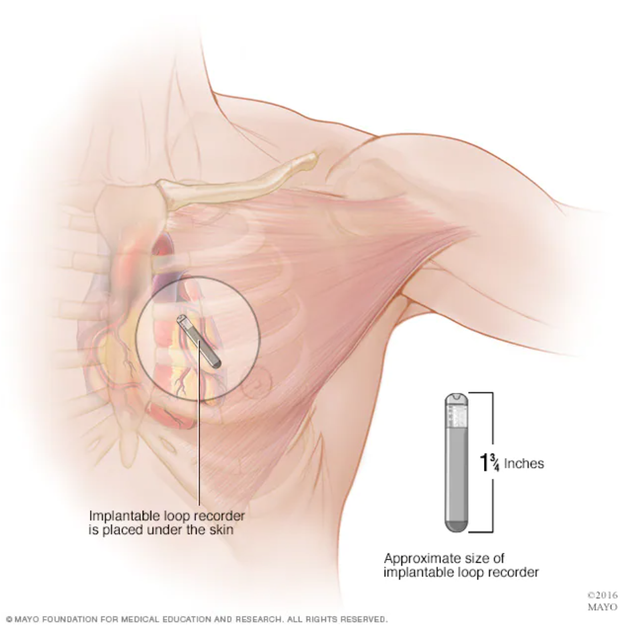
What Is It?
How It Works
- Records a single-lead ECG continuously from the electrical field of the heartbeat
- Auto-saves data when the heart rate is too fast, too slow, or irregular
- Patient uses a handheld activator to trigger a recording when symptoms occur
- Data transmitted wirelessly via remote monitoring system
Duration
Best Used When:
- Recurrent unexplained syncope after thorough evaluation has been negative
- Suspected cryptogenic stroke (to detect paroxysmal AF that may have caused a clot)
- Very infrequent arrhythmias that external recorders cannot capture
"In patients with recurrent unexplained syncope, the implantable loop recorder has been associated with high diagnostic yield for an arrhythmic cause." - Braunwald's Heart Disease
Summary: Monitoring Duration at a Glance
| Device | Duration | Activation | Invasive? |
|---|---|---|---|
| Standard ECG | Seconds | Manual | No |
| Holter Monitor | 24-48 hours (up to 3 weeks with patch) | Continuous | No |
| External Loop Recorder | Weeks to months | Patient + auto | No |
| Mobile Cardiac Telemetry | Up to 1 month | Auto + real-time | No |
| Implantable Loop Recorder | Up to 3 years | Patient + auto | Minor procedure |
3. AMBULATORY BLOOD PRESSURE MONITORING (ABPM)
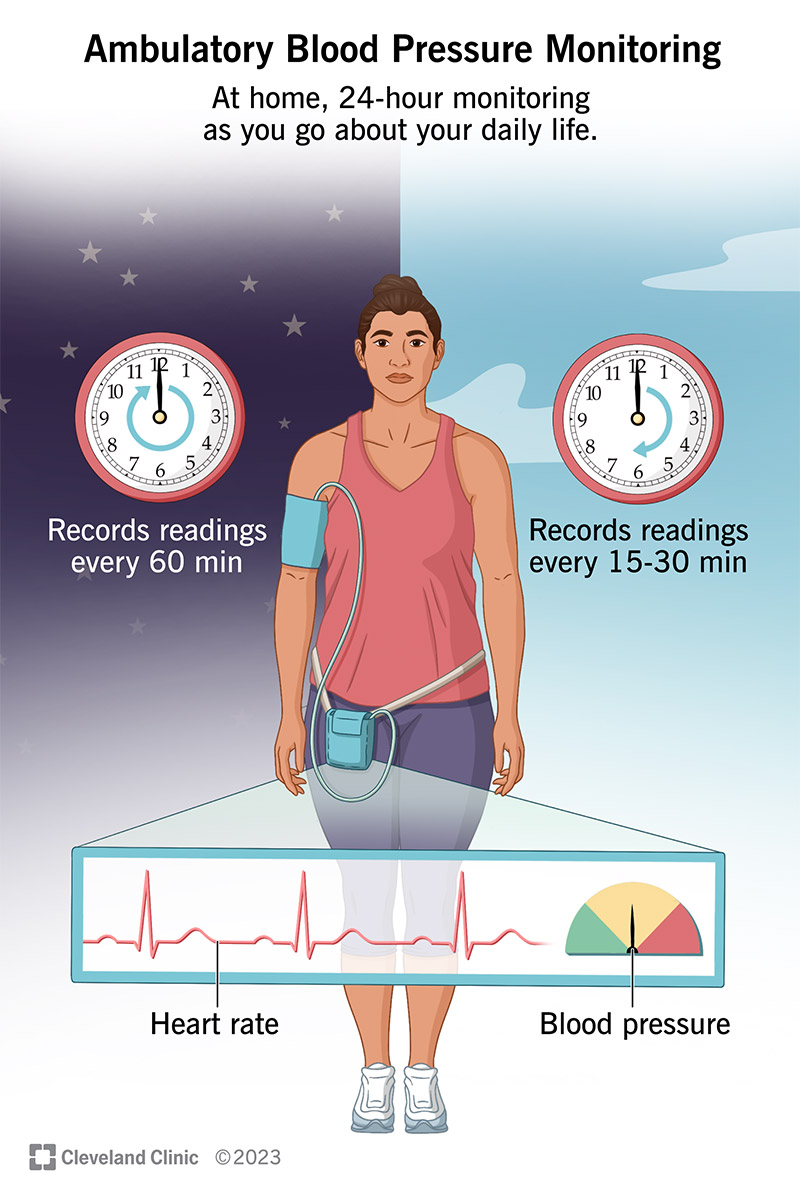
What Is It?
Why ABPM Is Better Than Office BP
- White coat hypertension - BP elevated only in the clinic due to anxiety (prevalence 15-30%)
- Masked hypertension - BP normal in the clinic but elevated in daily life (prevalence 15-30%)
- Significant BP variability between visits may go undetected
The "Dipping" Phenomenon
| Pattern | Definition | Clinical Significance |
|---|---|---|
| Normal dipper | >10% nocturnal BP fall | Normal |
| Non-dipper | <10% nocturnal BP fall | Associated with sleep apnea, diabetes, autonomic dysfunction, higher cardiovascular risk |
| Hyper-dipper | >20% nocturnal BP fall | Associated with autonomic dysfunction |
Diagnostic Thresholds (ABPM)
- Hypertension: average ambulatory BP ≥ 125/75 mmHg
- White coat hypertension: office BP ≥130/80, but ambulatory BP <125/75
- Masked hypertension: office BP <130/80, but ambulatory BP ≥125/75
Indications for ABPM
- Suspected white coat hypertension
- Suspected masked hypertension
- Highly variable BP between visits
- Assessing 24-hour efficacy of antihypertensive drugs
- Drug-resistant hypertension confirmation
- Pregnancy / preeclampsia suspected
- Episodic hypertension
- Hypotensive symptoms on antihypertensive medication
- Autonomic dysfunction evaluation
- Syncope or pacemaker syndrome evaluation
Limitations
- Not always covered by insurance
- Less accurate with irregular rapid heart rate (e.g., atrial fibrillation)
- Difficult in severe obesity
- Disrupts sleep due to cuff inflation
"Ambulatory blood pressure monitoring... predicts pressure-related cardiovascular events better than usual office blood pressure readings." - Goldman-Cecil Medicine
4. NEWER TECHNOLOGIES FOR CARDIAC MONITORING
A. Modern Wearable ECG Patch - The Zio Patch

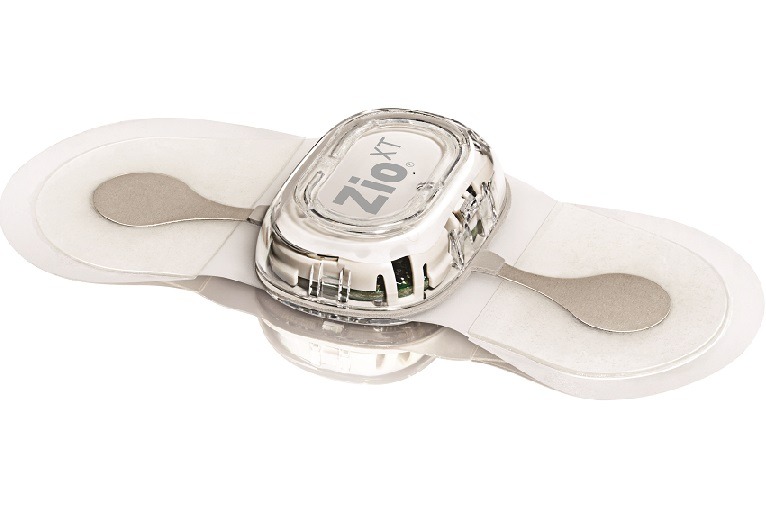
- Diagnostic yield: 63.2% - higher than traditional 24-hour Holter
- Two versions: one for offline analysis (Zio XT), one with real-time wireless transmission (Zio AT)
- Waterproof - patients can shower normally
B. Newer Technologies at a Glance
| Device | How It Works | Duration | Key Use |
|---|---|---|---|
| Zio Patch | Adhesive ECG patch, no leads | Up to 14 days | Arrhythmia screening, AF detection |
| Mobile Cardiac Outpatient Telemetry (MCOT) | Real-time wireless transmission to monitoring center | Up to 1 month | High-risk patients needing immediate clinical response |
| Apple Watch | Single-lead ECG via finger-to-crown electrodes; PPG for continuous rhythm detection | Continuous daily use | Sensitivity 87%, specificity 97% for silent AF |
| Kardia Mobile (AliveCor) | Credit-card device on smartphone; 30-second ECG | On-demand | AF detection: 100% diagnostic yield vs 72.7% for traditional event loop recorder. FDA cleared Jan 2026 with 35 determinations |
| Smartphone camera PPG | Camera + flashlight detects blood flow (Pulse-Smart) | On-demand | Irregular pulse sensitivity 97%, specificity 93.5% |
| ILR (next-gen, e.g. Reveal LINQ) | Tiny (1.2 cm³) wireless implant, nightly auto-transmission | Up to 3 years | Completely passive - patient does nothing; data transmitted automatically |
C. Remote Patient Monitoring (RPM)
- Daily weight scales, BP cuffs, pulse oximeters linked to smartphone apps
- Implanted pacemakers and defibrillators transmit data automatically every night
- Physicians receive early alerts for arrhythmias, lead problems, battery depletion, and worsening fluid status - before the patient even knows something is wrong
Quick Revision: Which Monitor for Which Situation?
| Clinical Scenario | Recommended Monitor |
|---|---|
| Daily palpitations | 24-48 hour Holter |
| Palpitations every few days | External loop recorder (weeks) |
| Palpitations every few months | ILR (years) |
| Unexplained recurrent syncope | ILR |
| Suspected AF after cryptogenic stroke | ILR or extended patch monitor |
| Suspected white coat hypertension | ABPM |
| Checking 24-hour drug coverage | ABPM |
| Rapid AF screening in primary care | Kardia Mobile / Apple Watch |
| High-risk patient, urgent arrhythmia suspected | MCOT (real-time telemetry) |
Key Points to Remember
- Holter monitoring = continuous 24-48 hour ECG - best for frequent (daily) symptoms. Patient diary is essential.
- External loop recorders extend monitoring to weeks/months - best for infrequent symptoms. The loop buffer captures the rhythm even before the patient presses the button.
- Implantable Loop Recorder (ILR) monitors up to 3 years - the tool of choice for unexplained syncope and cryptogenic stroke workup because it auto-captures events even when the patient is unconscious.
- ABPM is the gold standard for hypertension diagnosis - detects white coat and masked hypertension, evaluates nocturnal dipping, and confirms true drug resistance.
- Newer technologies (Zio Patch, Apple Watch, Kardia Mobile, MCOT, wireless ILR) have made cardiac monitoring more comfortable, longer-lasting, and more diagnostically powerful - with many now available directly to patients.
Holter monitoring - Loop recorders, Ambulatory blood pressure recording, Newer technologies for monitoring the patients with heart diseases. Make explanation and with images for paramedical students
Educational medical diagram for paramedical students showing Holter monitor setup: a patient with electrode patches placed on chest at labeled positions (RA, LA, RL, LL, V1-V5), colored wires connecting to a small portable recorder clipped to the belt, with a symptom diary notebook shown beside. Labels pointing to: electrode pads, lead wires, portable recorder, belt clip. Clean medical illustration style with blue and white color scheme, clear anatomical labels.
Educational medical diagram for paramedical students explaining External Loop Recorder vs Implantable Loop Recorder side by side. Left panel: patient wearing an external event loop recorder on chest with a hand pressing the activation button, with a circular arrow showing the "loop buffer" concept. Right panel: cross-section of chest showing a tiny implantable loop recorder (size of USB stick) inserted under the skin near the heart, with wireless signal waves going to a bedside transmitter. Labels: "External: worn for weeks-months", "ILR: implanted up to 3 years". Clean medical educational illustration.
Educational medical diagram for paramedical students about Ambulatory Blood Pressure Monitoring (ABPM). Show a patient wearing an upper arm BP cuff connected by a tube to a small digital recorder on the belt. Include a 24-hour graph below showing blood pressure curve - higher readings during daytime activity (around 120/80), dropping 10-15% at night (normal "dipping"). Label daytime readings every 15-30 min and night readings every 60 min. Include a split background showing day (sun) and night (moon/stars). Also show two small inset boxes: "White Coat HTN" (high in clinic, normal at home) and "Masked HTN" (normal in clinic, high at home). Clean educational medical style.
Educational medical infographic for paramedical students showing newer cardiac monitoring technologies arranged in a timeline from least to most advanced. Include: 1) Traditional Holter monitor (box with wires), 2) Zio ECG patch (small adhesive butterfly-shaped patch), 3) Smartwatch showing ECG on screen with finger touching crown, 4) Smartphone with Kardia Mobile device attached showing ECG trace, 5) Implantable cardiac monitor (tiny device in chest). Each device labeled with monitoring duration: 24-48 hours, 14 days, continuous, on-demand, 3 years. Modern clean infographic style with icons and connecting arrows.
429 Too Many Requests. {'message': '{\n "error": {\n "code": 429,\n "message": "Resource exhausted. Please try again later. Please refer to https://cloud.google.com/vertex-ai/generative-ai/docs/error-code-429 for more details.",\n "status": "RESOURCE_EXHAUSTED"\n }\n}\n', 'status': 'Too Many Requests'}
We encountered an error while processing your request. Please try again or reach out to us for help.
I now have all the key images. Here is the full illustrated guide: --- # Cardiac Monitoring for Paramedical Students ## Holter Monitoring | Loop Recorders | Ambulatory BP Recording | Newer Technologies --- ## Why Continuous Monitoring? A standard 12-lead ECG records the heart for only a few seconds. Many cardiac problems - arrhythmias, silent ischemia, blood pressure fluctuations - are **intermittent** and will be missed on a brief office recording. Ambulatory monitoring solves this by recording heart activity or blood pressure continuously while the patient goes about normal daily life. --- ## 1. HOLTER MONITORING ### What Is It? A Holter monitor is a **continuous ambulatory ECG recorder** that records 3, 5, or 12 leads of the ECG, typically for **24 to 48 hours** (sometimes up to 3 weeks with newer extended monitors). The device is small, battery-powered, and worn on the body. Electrode patches are attached to the chest, and the recorder is clipped to a belt or worn in a small pouch. Named after **Norman J. Holter**, who introduced the technique in the 1960s. ### How a Patient Looks Wearing a Traditional Holter  *Traditional Holter monitor: multiple colored electrode leads are attached to the chest at specific positions. All wires feed into the small recording device worn at the waist. The patient keeps a diary of activities and symptoms throughout.* ### How It Works - Electrodes (sticky patches) are placed on specific chest locations - Colored wires connect each electrode to the recording unit - The device digitally records every heartbeat for the entire monitoring period - The patient keeps a **written diary** noting symptoms, activities, sleep times, and medications - After the monitoring period, the recording is analyzed by a computer with physician oversight, and a full report is generated ### What It Detects | Finding | Clinical Relevance | |---|---| | Palpitations | Correlated with patient diary to identify causative rhythm | | Sinus bradycardia (35-40 bpm) | May be normal in athletes; abnormal if symptomatic | | Sinus pauses >3 seconds | May need pacemaker evaluation | | PACs and PVCs | Count, frequency, and complexity assessed | | Paroxysmal atrial fibrillation/flutter | Detects intermittent AF episodes | | AV block (Type I or II) | Identifies intermittent heart block | | ST segment changes | Detects silent myocardial ischemia | | Heart rate variability | Marker of autonomic function | ### Best Used When: - Symptoms occur **daily or multiple times per day** - Assessing **rate control** in atrial fibrillation - Evaluating **antiarrhythmic drug** effectiveness - Diagnosing **sick sinus syndrome** or intermittent AV block > **Key Point:** *"From 25% to 50% of patients experience a symptom during a 24-hour recording; in 2% to 15% the complaint is caused by an arrhythmia."* - Braunwald's Heart Disease **Important limitation:** If the patient has no symptoms during the recording window, a normal result is **non-diagnostic** - it does not rule out an arrhythmia. --- ## 2. LOOP RECORDERS (Event Recorders) Loop recorders fill the gap when symptoms are **too infrequent** for a standard Holter to capture. There are two types: **external** and **implantable**. ### A. External Loop Recorders These devices are worn on the body and **continuously record** the ECG into a circular (loop) memory buffer. Old data is overwritten by new data - like a security camera that loops continuously. When the patient **activates** the device (due to symptoms), it "locks" the preceding few minutes plus continues recording forward. **Key feature compared to Holter:** Can be worn for **weeks to months**. #### Types of Activation - **Patient-activated** - patient presses a button when feeling symptoms - **Auto-detection** - detects heart rate above or below preset thresholds - **AF detection algorithms** - automatically detect atrial fibrillation regardless of rate After recording, the patient **transmits data over the telephone** to a central receiving center. #### Best Used When: - Symptoms occur **days to weeks apart** (too infrequent for a Holter) - Unexplained palpitations with a negative Holter result - Evaluating **syncope** (fainting) or near-syncope --- ### B. Implantable Loop Recorder (ILR)  *Mayo Clinic illustration: The ILR is implanted just beneath the skin of the upper chest during a minor outpatient procedure under local anesthesia. The device is approximately 1¾ inches (4.4 cm) long - roughly the size of a USB flash drive.* #### What Is It? The ILR is a **subcutaneously (under-the-skin) implanted** cardiac monitoring device, about the size of a USB flash drive (~4 cm). It is inserted under the skin of the upper chest under local anesthesia. #### How It Works - Records a single-lead ECG continuously from the electrical field of the heartbeat - Auto-saves data when the heart rate is too fast, too slow, or irregular - Patient uses a **handheld activator** to trigger a recording when symptoms occur - Data transmitted wirelessly via remote monitoring system #### Duration Up to **3 years** on a single battery - far longer than any external device. #### Best Used When: - **Recurrent unexplained syncope** after thorough evaluation has been negative - Suspected **cryptogenic stroke** (to detect paroxysmal AF that may have caused a clot) - Very infrequent arrhythmias that external recorders cannot capture > *"In patients with recurrent unexplained syncope, the implantable loop recorder has been associated with high diagnostic yield for an arrhythmic cause."* - Braunwald's Heart Disease **Key advantage over external recorders:** Patients who **lose consciousness** cannot activate an external recorder. The ILR auto-detects and stores the rhythm automatically. --- ### Summary: Monitoring Duration at a Glance | Device | Duration | Activation | Invasive? | |---|---|---|---| | Standard ECG | Seconds | Manual | No | | Holter Monitor | 24-48 hours (up to 3 weeks with patch) | Continuous | No | | External Loop Recorder | Weeks to months | Patient + auto | No | | Mobile Cardiac Telemetry | Up to 1 month | Auto + real-time | No | | Implantable Loop Recorder | Up to 3 years | Patient + auto | Minor procedure | --- ## 3. AMBULATORY BLOOD PRESSURE MONITORING (ABPM)  *Cleveland Clinic ABPM infographic: The cuff inflates automatically throughout the 24-hour period - every 15-30 minutes during the day and every 60 minutes at night - recording both heart rate and blood pressure.* ### What Is It? ABPM is the **gold standard** for noninvasive blood pressure measurement. A standard cuff-style device is worn on the upper arm and connected to a small recorder on the belt. It automatically inflates and records blood pressure at programmed intervals over **24 to 48 hours**. ### Why ABPM Is Better Than Office BP Office measurements can be misleading: - **White coat hypertension** - BP elevated only in the clinic due to anxiety (prevalence 15-30%) - **Masked hypertension** - BP normal in the clinic but elevated in daily life (prevalence 15-30%) - Significant BP variability between visits may go undetected ABPM captures blood pressure across the entire day-night cycle - during activities, at rest, and during sleep. ### The "Dipping" Phenomenon Normally, blood pressure drops **10-20% at night** during sleep: | Pattern | Definition | Clinical Significance | |---|---|---| | **Normal dipper** | >10% nocturnal BP fall | Normal | | **Non-dipper** | <10% nocturnal BP fall | Associated with sleep apnea, diabetes, autonomic dysfunction, higher cardiovascular risk | | **Hyper-dipper** | >20% nocturnal BP fall | Associated with autonomic dysfunction | Non-dipping occurs in 10-30% of White Americans and at least twice as many Black Americans. ### Diagnostic Thresholds (ABPM) - Hypertension: average ambulatory BP ≥ **125/75 mmHg** - White coat hypertension: office BP ≥130/80, but ambulatory BP <125/75 - Masked hypertension: office BP <130/80, but ambulatory BP ≥125/75 ### Indications for ABPM 1. Suspected **white coat hypertension** 2. Suspected **masked hypertension** 3. Highly variable BP between visits 4. Assessing **24-hour efficacy** of antihypertensive drugs 5. **Drug-resistant hypertension** confirmation 6. **Pregnancy / preeclampsia** suspected 7. Episodic hypertension 8. Hypotensive symptoms on antihypertensive medication 9. Autonomic dysfunction evaluation 10. Syncope or pacemaker syndrome evaluation ### Limitations - Not always covered by insurance - Less accurate with **irregular rapid heart rate** (e.g., atrial fibrillation) - Difficult in **severe obesity** - Disrupts sleep due to cuff inflation > *"Ambulatory blood pressure monitoring... predicts pressure-related cardiovascular events better than usual office blood pressure readings."* - Goldman-Cecil Medicine --- ## 4. NEWER TECHNOLOGIES FOR CARDIAC MONITORING ### A. Modern Wearable ECG Patch - The Zio Patch   The **Zio Patch** (iRhythm Technologies) is a leadless, single-use adhesive ECG patch worn directly on the anterior chest wall. It requires no wires, no battery changes, and can record continuously for **up to 14 days**. It uses AI-assisted analysis and achieves **99% physician agreement** in its diagnostic reports. - **Diagnostic yield: 63.2%** - higher than traditional 24-hour Holter - Two versions: one for offline analysis (Zio XT), one with real-time wireless transmission (Zio AT) - Waterproof - patients can shower normally ### B. Newer Technologies at a Glance | Device | How It Works | Duration | Key Use | |---|---|---|---| | **Zio Patch** | Adhesive ECG patch, no leads | Up to 14 days | Arrhythmia screening, AF detection | | **Mobile Cardiac Outpatient Telemetry (MCOT)** | Real-time wireless transmission to monitoring center | Up to 1 month | High-risk patients needing immediate clinical response | | **Apple Watch** | Single-lead ECG via finger-to-crown electrodes; PPG for continuous rhythm detection | Continuous daily use | Sensitivity 87%, specificity 97% for silent AF | | **Kardia Mobile (AliveCor)** | Credit-card device on smartphone; 30-second ECG | On-demand | AF detection: 100% diagnostic yield vs 72.7% for traditional event loop recorder. **FDA cleared Jan 2026 with 35 determinations** | | **Smartphone camera PPG** | Camera + flashlight detects blood flow (Pulse-Smart) | On-demand | Irregular pulse sensitivity 97%, specificity 93.5% | | **ILR (next-gen, e.g. Reveal LINQ)** | Tiny (1.2 cm³) wireless implant, nightly auto-transmission | Up to 3 years | Completely passive - patient does nothing; data transmitted automatically | ### C. Remote Patient Monitoring (RPM) Patients with **heart failure** now use connected devices at home: - Daily weight scales, BP cuffs, pulse oximeters linked to smartphone apps - Implanted pacemakers and defibrillators transmit data automatically every night - Physicians receive early alerts for arrhythmias, lead problems, battery depletion, and worsening fluid status - before the patient even knows something is wrong --- ## Quick Revision: Which Monitor for Which Situation? | Clinical Scenario | Recommended Monitor | |---|---| | Daily palpitations | 24-48 hour Holter | | Palpitations every few days | External loop recorder (weeks) | | Palpitations every few months | ILR (years) | | Unexplained recurrent syncope | ILR | | Suspected AF after cryptogenic stroke | ILR or extended patch monitor | | Suspected white coat hypertension | ABPM | | Checking 24-hour drug coverage | ABPM | | Rapid AF screening in primary care | Kardia Mobile / Apple Watch | | High-risk patient, urgent arrhythmia suspected | MCOT (real-time telemetry) | --- ## Key Points to Remember 1. **Holter monitoring** = continuous 24-48 hour ECG - best for frequent (daily) symptoms. Patient diary is essential. 2. **External loop recorders** extend monitoring to weeks/months - best for infrequent symptoms. The loop buffer captures the rhythm even before the patient presses the button. 3. **Implantable Loop Recorder (ILR)** monitors up to 3 years - the tool of choice for unexplained syncope and cryptogenic stroke workup because it auto-captures events even when the patient is unconscious. 4. **ABPM** is the gold standard for hypertension diagnosis - detects white coat and masked hypertension, evaluates nocturnal dipping, and confirms true drug resistance. 5. **Newer technologies** (Zio Patch, Apple Watch, Kardia Mobile, MCOT, wireless ILR) have made cardiac monitoring more comfortable, longer-lasting, and more diagnostically powerful - with many now available directly to patients. --- Generate pdf
An error occurred (ValidationException) when calling the ConverseStream operation: Expected toolResult blocks at messages.30.content for the following Ids: tooluse_kmixJM1fOEnzAZKtAx1Ogu, tooluse_4MVb6alQJTu0PQCkPr2WrJ, tooluse_ZwCrtxqQ6wDOj7PLLVw740, tooluse_dsykCzjg2hW8H4IDavF4qT, tooluse_Xcg5HPAfTbIoiCqdbWqCKE, tooluse_VAlPTo5aTX0C58aWDUzH2B, tooluse_V9diVmbfajdVJ55nbzUmb5
We encountered an error while processing your request. Please try again or reach out to us for help.