
Rhinology diagrams for pg exam according to standard ENT textbook
Reading File
Now let me search the library for rhinology diagrams and content from ENT textbooks.
Finding Sources
Finding Sources
Excellent! Found key ENT textbooks. Let me now search for rhinology-specific diagram-rich sections across the major ENT books simultaneously.
Finding Sources
Finding Sources
Now let me read the key rhinology sections from KJ Lee's and Scott-Brown's to find images and diagram content.
Reading File
Reading File
Reading File
Finding Sources
Reading File
Reading File
Excellent! Found several diagrams. Let me read more rhinology content and collect all the image URLs.
Reading File
Reading File
Reading File
Reading File
Reading File
Finding Sources
I now have substantial content. Let me fetch the key diagrams and read a bit more for additional images.
Loading Image
Loading Image
Loading Image
Loading Image
Loading Image
Reading File
Loading Image
Loading Image
Reading File
Loading Image
Reading File
I now have an excellent collection of high-quality rhinology diagrams from Scott-Brown's and KJ Lee's. Let me compile the comprehensive answer with all diagrams.
Rhinology Diagrams for PG Exam - Standard ENT Textbooks
Sources: Scott-Brown's Otorhinolaryngology Head & Neck Surgery (Vol 1) and K.J. Lee's Essential Otolaryngology
1. Embryological Development of the Nose
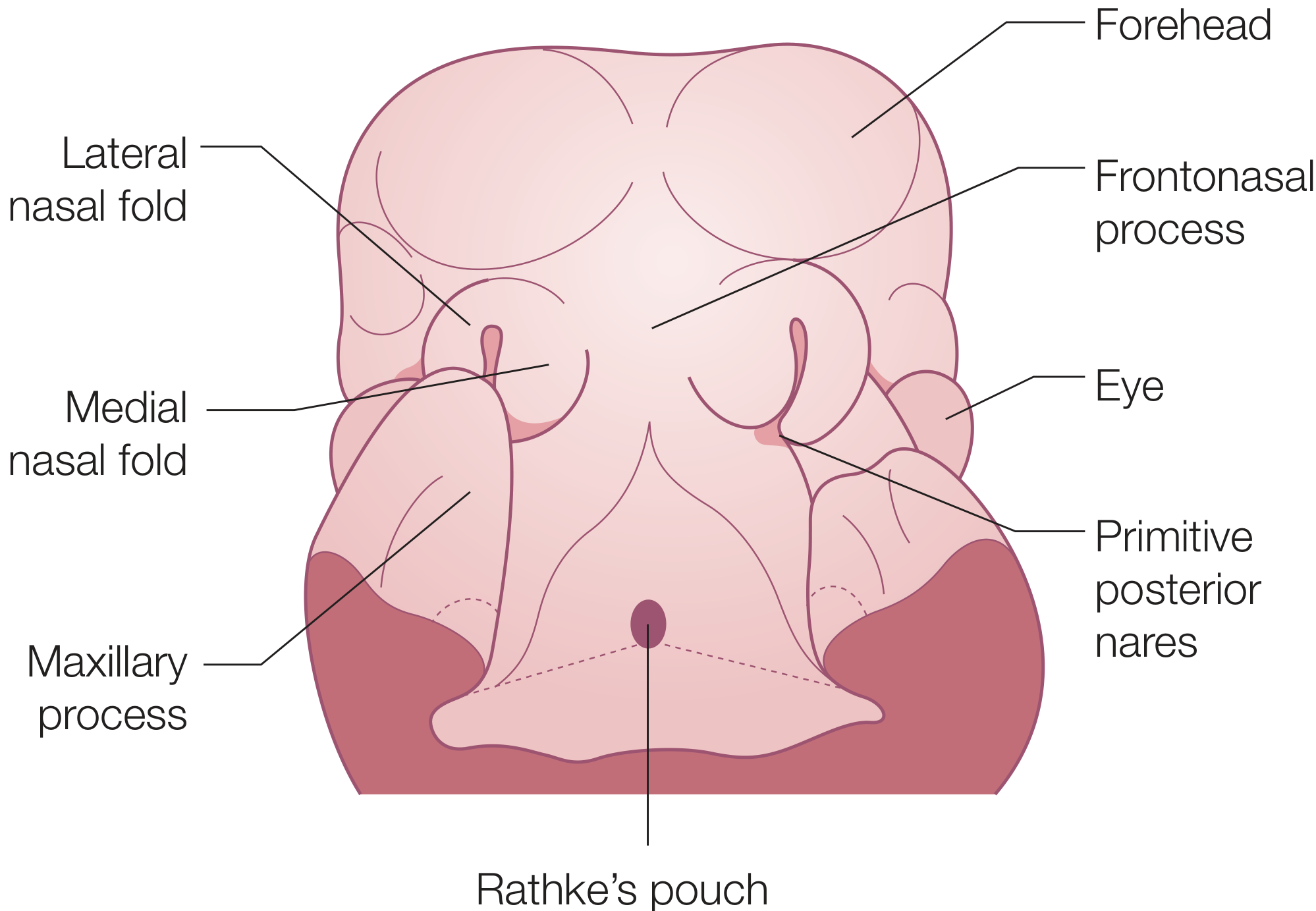
Figure 87.1 - Embryological development of the primitive nose and palate. Key structures: frontonasal process, medial and lateral nasal folds, maxillary process, and Rathke's pouch. The bucconasal membrane breakdown forms the choanae - failure causes choanal atresia (high-yield PG fact).
2. Coronal Sinus Anatomy / Ostiomeatal Complex
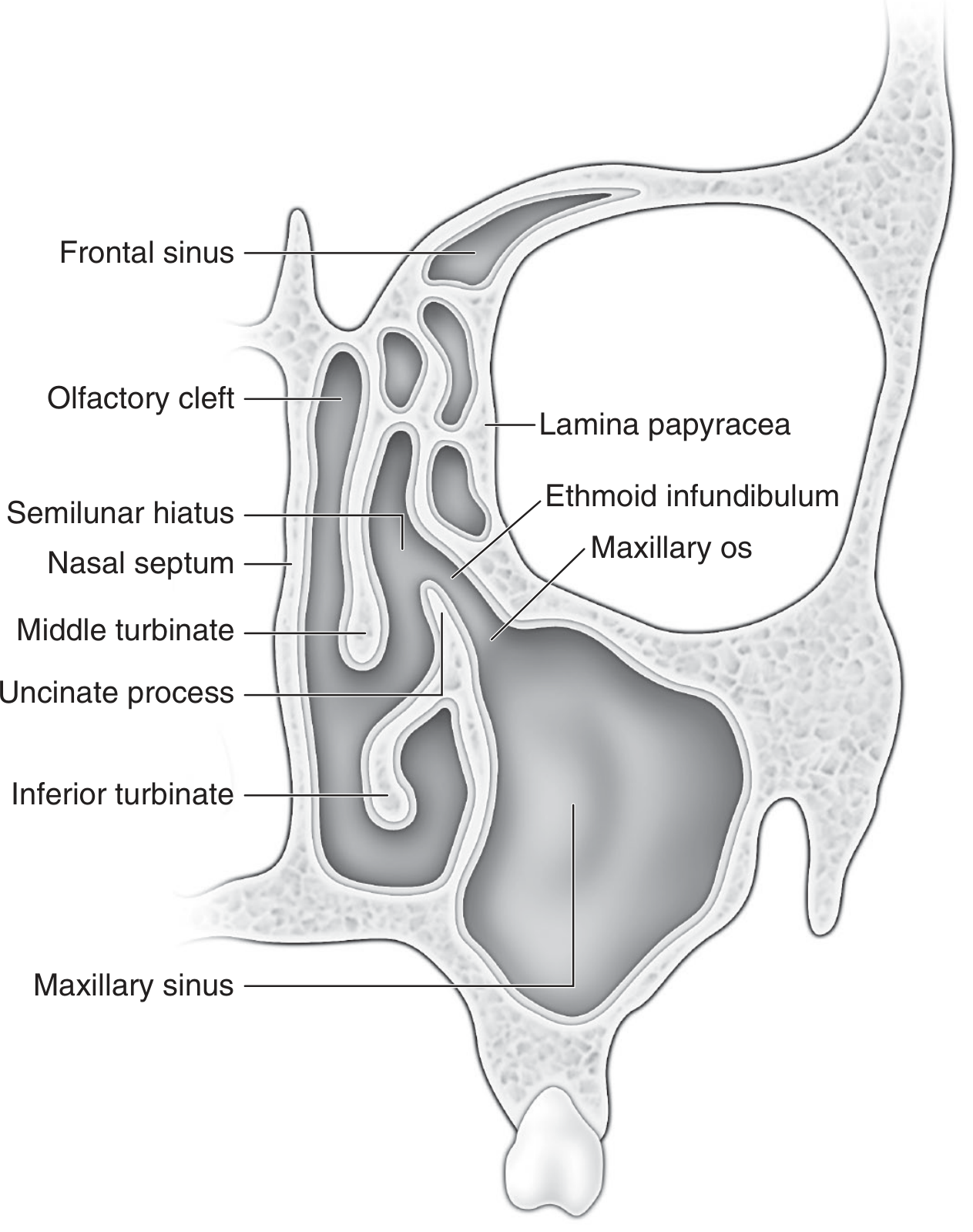
Figure 26-1 - Coronal section through the sinonasal cavity. This is one of the most tested diagrams in ENT PG exams. Key structures labeled:
- Uncinate process - crescent-shaped bone, shields natural maxillary ostium
- Ethmoid infundibulum - bounded by uncinate process (medial), lamina papyracea (lateral), ethmoid bulla (posterosuperior)
- Semilunar hiatus (Hiatus semilunaris) - crescentic 2D window into the ethmoid infundibulum
- Osteomeatal complex (OMC) - region in the middle meatus; confluence of maxillary, anterior ethmoid, and frontal sinus drainage
Source: K.J. Lee's Essential Otolaryngology
3. Blood Supply of the Nasal Septum (Kiesselbach's / Little's Area)
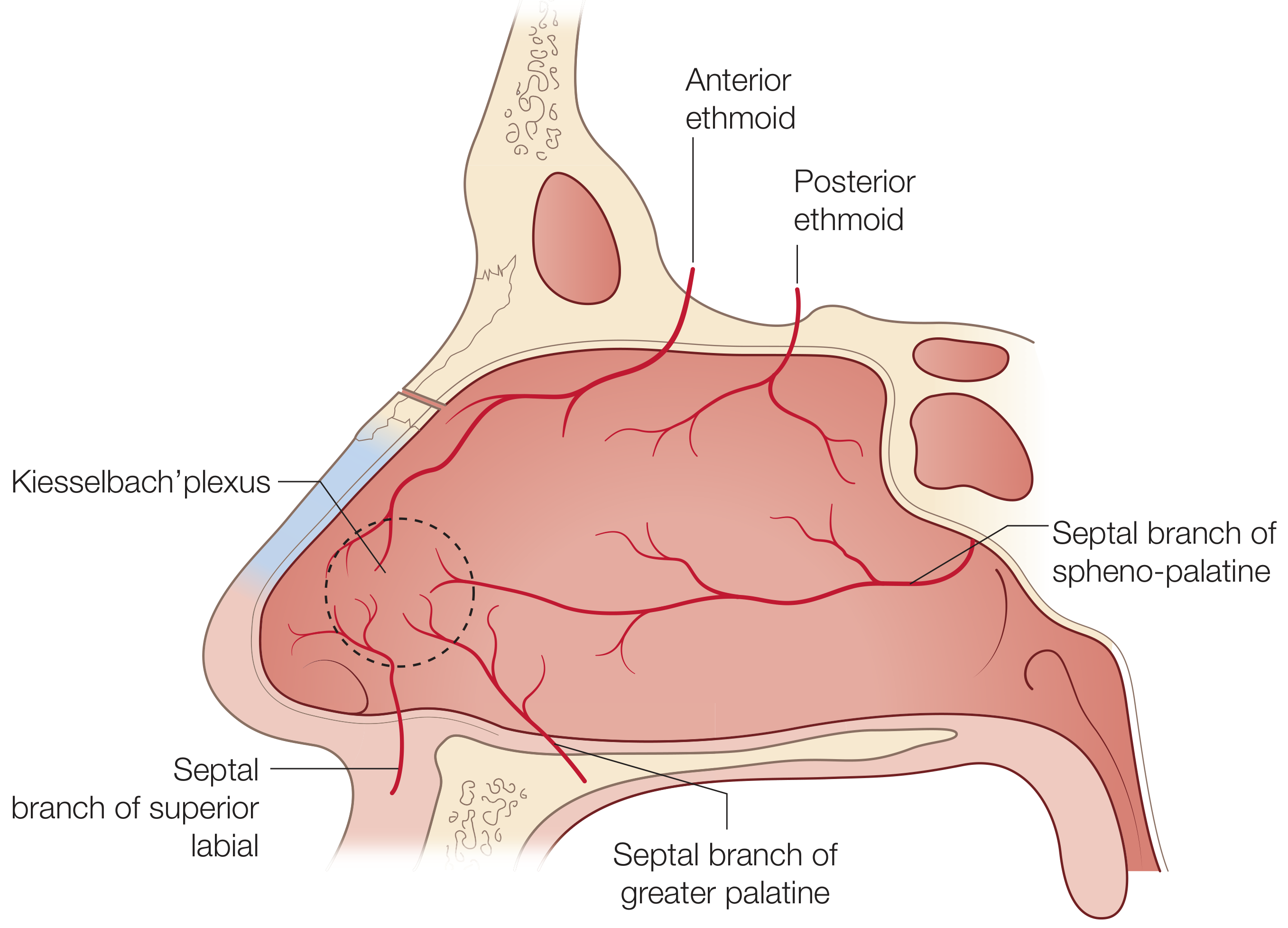
Figure 87.12 - Vascular supply of the nasal septum (from Scott-Brown's). High-yield diagram:
| Artery | Origin | Area Supplied |
|---|---|---|
| Anterior ethmoid artery | Internal carotid (ophthalmic a.) | Anterosuperior septum |
| Posterior ethmoid artery | Internal carotid (ophthalmic a.) | Posterosuperior septum |
| Posterior septal branch of sphenopalatine a. | External carotid (IMA) | Posteroinferior septum |
| Greater palatine artery (via incisive canal) | External carotid (IMA) | Anteroinferior septum |
| Septal branch of superior labial artery | External carotid (facial a.) | Caudal septum / columella |
Kiesselbach's plexus (Little's area): Anterior nasal septum - formed by the above arteries; most common site of anterior epistaxis.
Woodruff's plexus: Posterior inferior meatus - venous; site of posterior epistaxis.
Source: Scott-Brown's Otorhinolaryngology Head & Neck Surgery, Vol 1
4. Blood Supply of the Lateral Nasal Wall
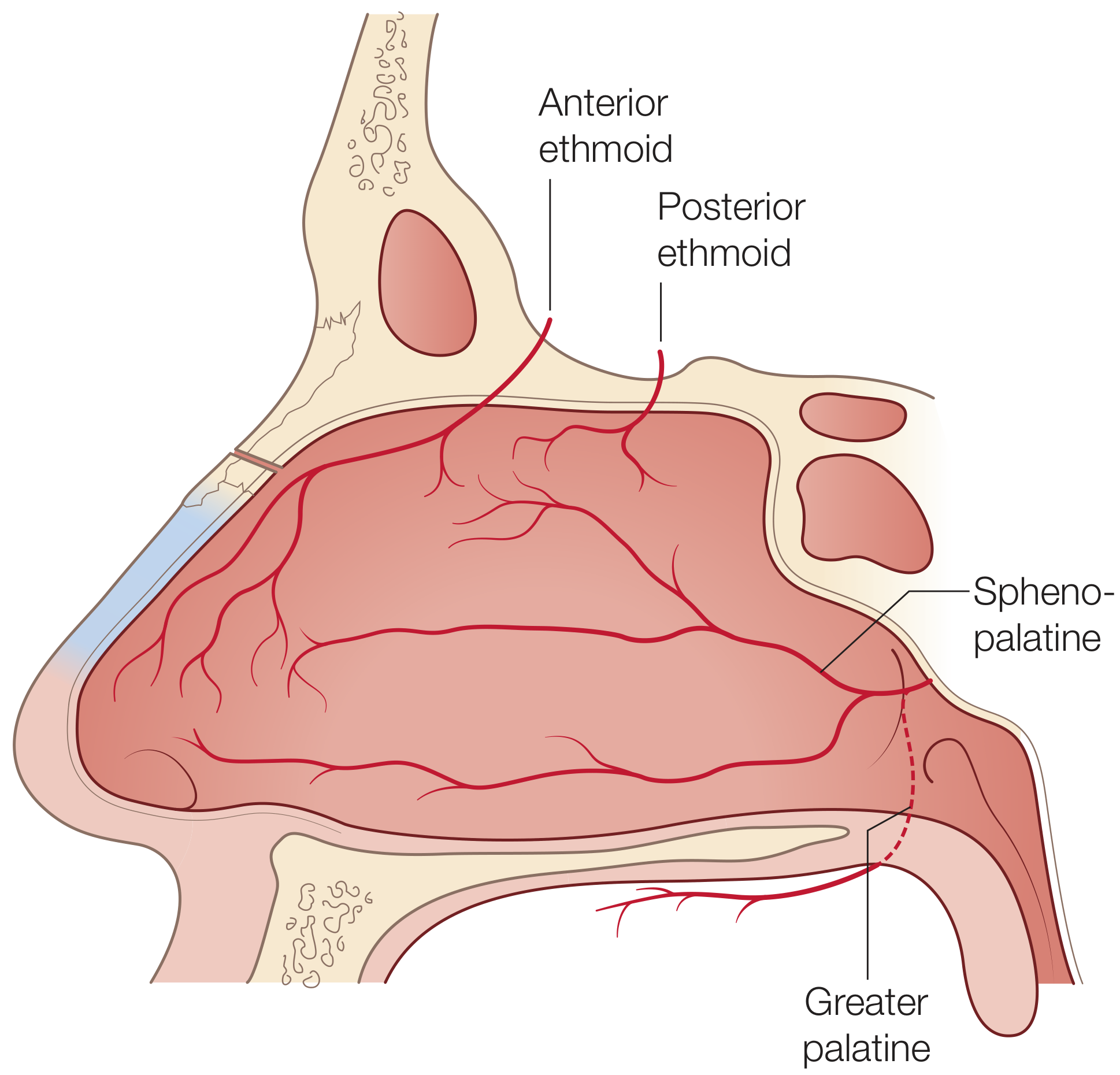
Figure 87.13 - Vascular supply of the lateral nasal wall. The sphenopalatine artery (branch of IMA from the external carotid) enters via the sphenopalatine foramen just inferior to the horizontal attachment of the middle turbinate. The crista ethmoidalis (perpendicular plate of palatine bone) is the surgical landmark to identify the sphenopalatine artery during endoscopic dissection.
Source: Scott-Brown's Otorhinolaryngology Head & Neck Surgery, Vol 1
5. Nasolacrimal System
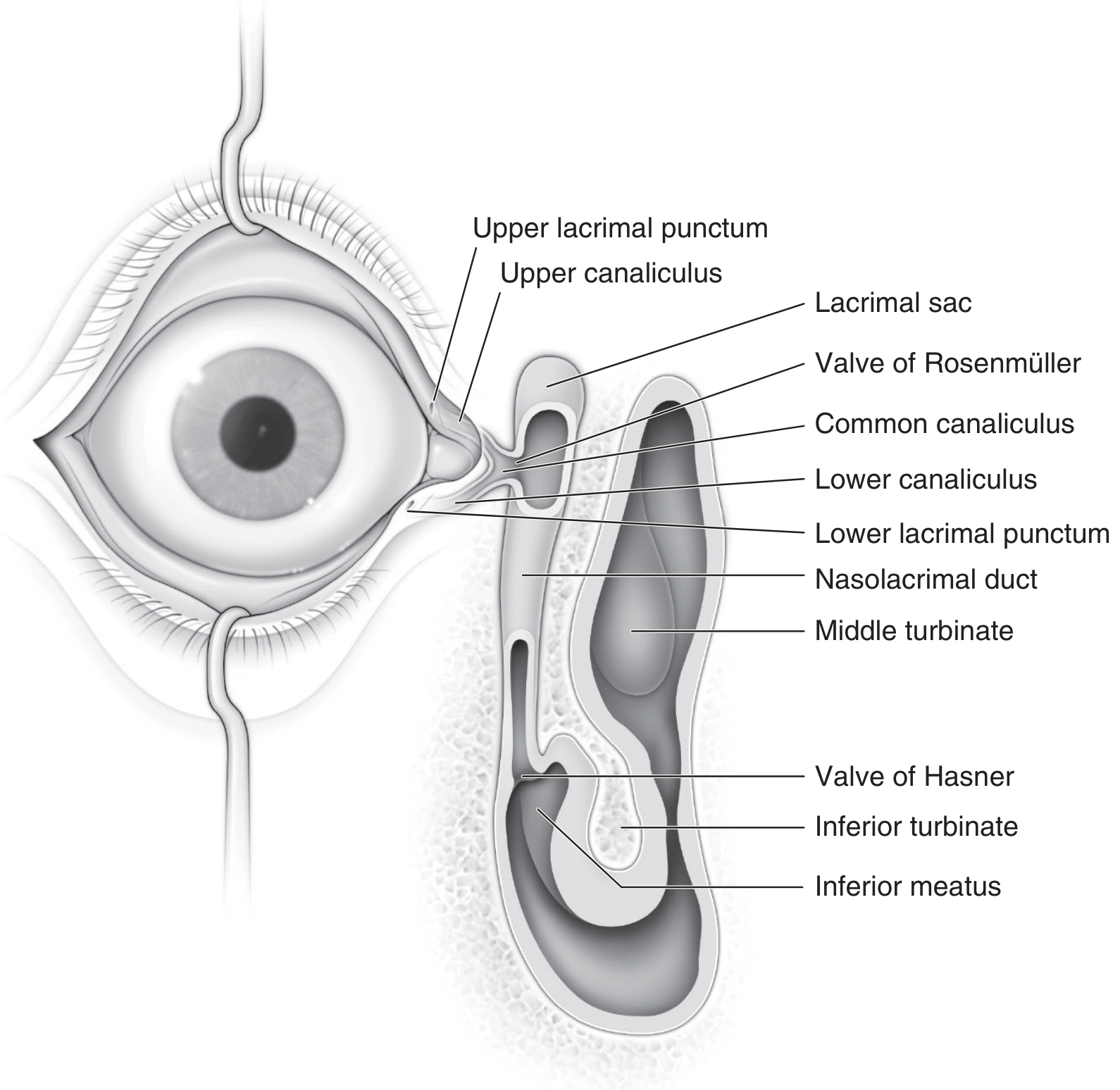
Figure 26-3 - Nasolacrimal system (from KJ Lee's). Drainage pathway:
Upper/lower lacrimal punctum → Canaliculi → Valve of Rosenmüller (prevents reflux) → Lacrimal sac → Nasolacrimal duct → Valve of Hasner → Inferior meatus (opens ~1 cm posterior to head of inferior turbinate)
Source: K.J. Lee's Essential Otolaryngology
6. Lacrimal Bone and Lacrimal Fossa
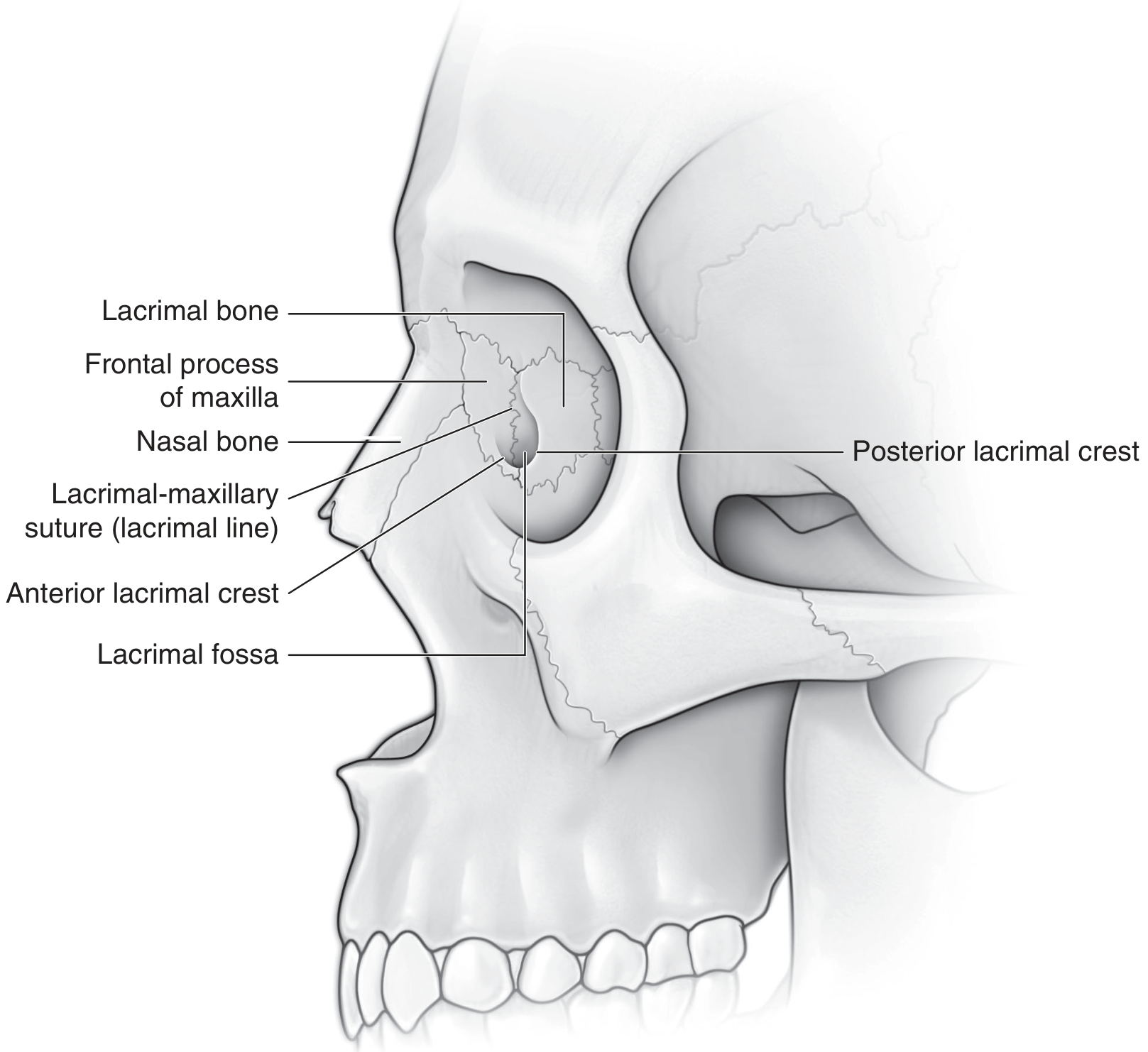
Figure 26-2 - Lacrimal bone anatomy. The lacrimal (maxillary) line = suture between frontal process of maxilla and lacrimal bone - key endoscopic landmark for dacrocystorhinostomy (DCR). The lacrimal sac lies mostly above the middle turbinate axilla.
Source: K.J. Lee's Essential Otolaryngology
7. Sphenoid Sinus Pneumatization Patterns
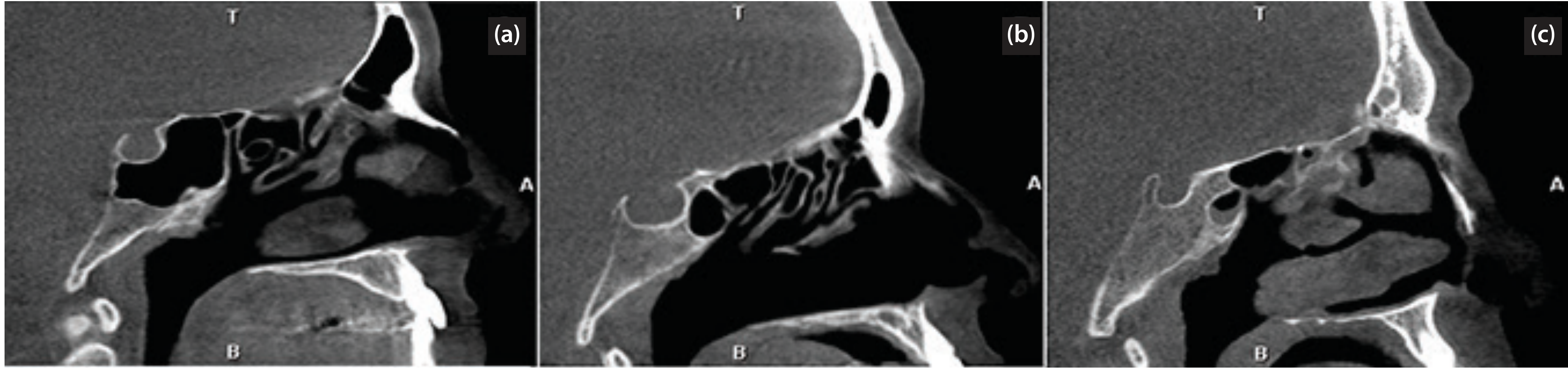
Figure 87.6 - Sphenoid sinus pneumatization patterns on sagittal CT:
- (a) Sellar type - 90% - most common; pneumatization extends to sella
- (b) Pre-sellar type - 9% - pneumatization does not reach sella
- (c) Conchal type - 1% - minimal pneumatization
Critical for surgical planning of transphenoidal approaches to pituitary tumours. Source: Scott-Brown's Otorhinolaryngology Head & Neck Surgery, Vol 1
8. Paranasal Surgical Box (FESS Anatomy)
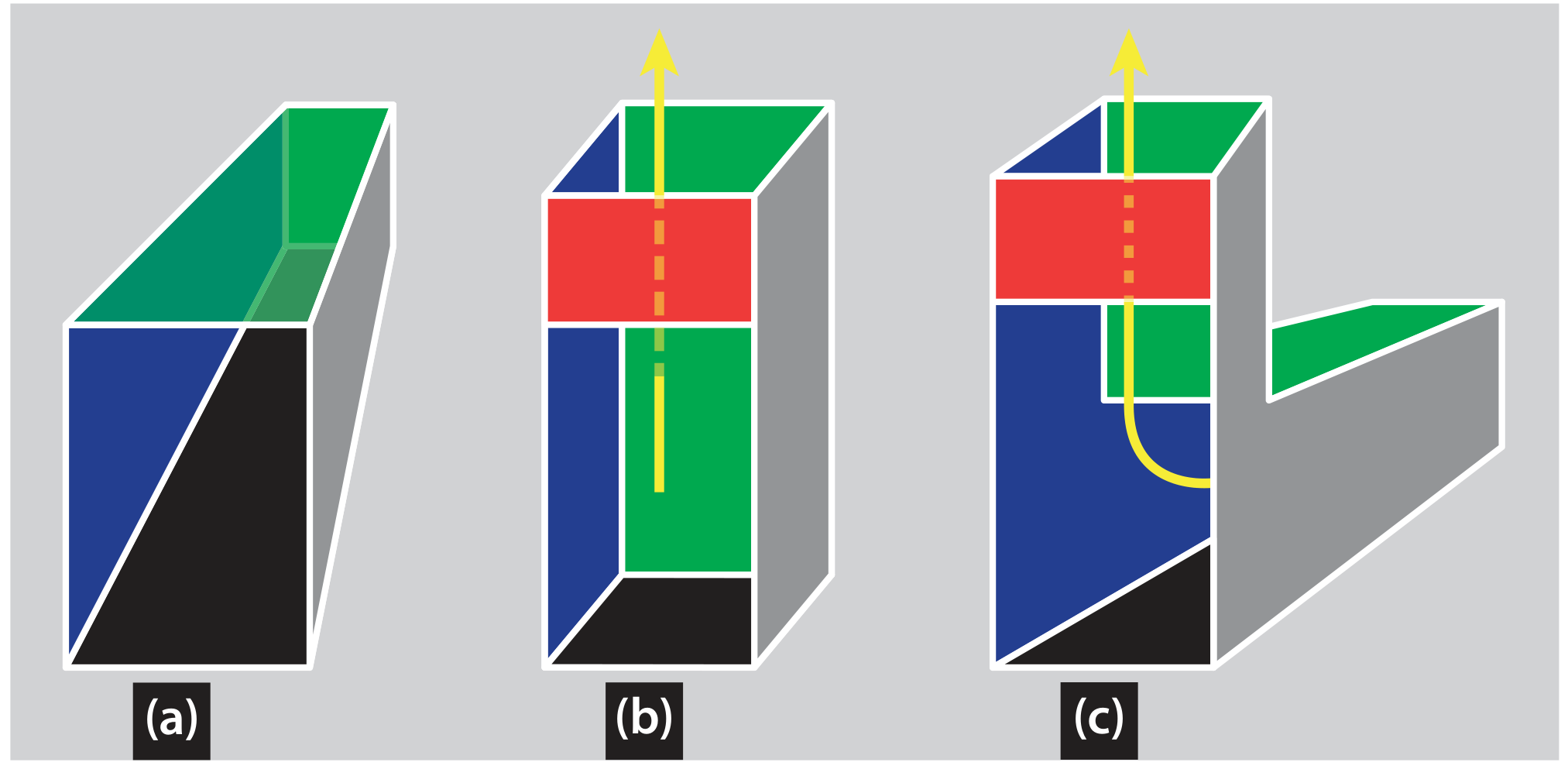
Figure 87.14 - Schematic of the right paranasal surgical box (Scott-Brown's). Defines safe boundaries in FESS:
| Boundary | Horizontal box | Vertical box |
|---|---|---|
| Medial | Middle turbinate (grey) | Middle turbinate + intersinus septum (grey) |
| Lateral | Lamina papyracea / medial orbital wall (blue) | Lamina papyracea (blue) |
| Superior | Skull base (green) | Skull base (green) |
| Inferior | Floor of nose | - |
| Anterior | - | Nasofrontal beak (red) |
| Posterior | - | Sphenoid sinus (yellow) |
Source: Scott-Brown's Otorhinolaryngology Head & Neck Surgery, Vol 1
Key Facts Summary for PG Exam
Lateral nasal wall lamellae (anterior to posterior):
- Uncinate process
- Ethmoid bulla
- Basal lamella of middle turbinate (divides anterior from posterior ethmoid)
- Basal lamella of superior turbinate
- Basal lamella of supreme turbinate (when present)
Meatal drainage patterns:
- Inferior meatus: Nasolacrimal duct (Valve of Hasner)
- Middle meatus (OMC): Frontal sinus, anterior ethmoid, maxillary sinus
- Superior meatus + sphenoethmoidal recess: Posterior ethmoid + sphenoid sinus
Osteology of lateral nasal wall (anterior to posterior):
Frontal process of maxilla → Lacrimal bone → Lamina papyracea (superior) / Medial maxillary wall (inferior) → Perpendicular plate of palatine bone → Medial pterygoid plate of sphenoid
Middle turbinate attachments (3 planes):
- Anterior: Sagittal plane - cribriform plate/lateral lamella
- Middle (basal lamella): Coronal plane - lamina papyracea
- Posterior: Axial plane - crista ethmoidalis of perpendicular palatine bone (near sphenopalatine foramen)
Concha bullosa: Pneumatized middle turbinate (1/3 of population) - most common anatomical variant.
All diagrams sourced from Scott-Brown's Otorhinolaryngology Head & Neck Surgery (Vol 1) and K.J. Lee's Essential Otolaryngology - standard references for ENT postgraduate examinations.
This is a shared conversation. Sign in to Orris to start your own chat.