
teach me myasthenia gravis conultant level and at the end of dicusion also design mcqs for better understanding evaluation
Reading File
Now let me search the medical library comprehensively for myasthenia gravis content, running parallel queries across multiple topics.
Finding Sources
Searching PubMed
"myasthenia gravis"[MeSH Terms] AND treatment
Searching the Web
myasthenia gravis consultant level review 2024 2025 pathophysiology diagnosis treatment
Excellent - Bradley and Daroff's Neurology and Henry's Laboratory textbooks have the most detailed MG content. Let me read all the key sections in parallel.
Reading File
Reading File
Reading File
Finding Sources
Excellent content. Now let me read the main Bradley & Daroff MG chapter (block 29) which has the full dedicated section, plus Goldman-Cecil for comprehensive management.
Reading File
Reading File
Reading File
Excellent content. Let me continue reading the Bradley & Daroff block 29 for diagnosis, management, and crisis sections:
Reading File
Reading File
I have extensive rich content. Let me also quickly fetch the key clinical images and read the treatment/crisis section from Bradley & Daroff block 29 (which was partially truncated):
Loading Image
Loading Image
Finding Sources
I now have comprehensive, high-quality content from multiple authoritative textbooks. Let me compile the complete consultant-level teaching document now.---
Myasthenia Gravis - Consultant-Level Teaching
1. Definition and Overview
Myasthenia gravis (MG) is the most common primary disorder of neuromuscular transmission (NMT). It is an acquired autoimmune disease where autoantibodies bind to postsynaptic proteins - most commonly the nicotinic acetylcholine receptor (AChR) - at the neuromuscular junction (NMJ), disrupting normal transmission and causing fatigable skeletal muscle weakness. The hallmark: weakness that worsens with activity and improves with rest.
"MG has been named 'the great imitator' because its symptoms can mimic many other chronic neurologic disorders." - Tintinalli's Emergency Medicine
2. Epidemiology
| Feature | Detail |
|---|---|
| Prevalence (US) | ~20/100,000 (~60,000 patients total) |
| Sex distribution | Females 3x more often before age 40; males predominate after age 50 |
| Age at onset | Bimodal: young women (20s-30s) and older men (60s-70s) |
| Trend | Increasing prevalence over 50 years - more elderly patients now affected |
| Thymoma association | ~10% of MG patients have thymoma; 1/3 of thymoma patients develop MG |
| Genetic predisposition | ~5% of patients have a family member with MG; heritability index ~0.65 |
HLA associations:
- Early-onset females: HLA-A1, B8, DRw3
- Late-onset males: HLA-A3, B7, DRw2.1
3. Pathophysiology
3.1 Normal Neuromuscular Junction
The NMJ converts the nerve's small electrical signal into a chemical one (via ACh), then back to an electrical signal large enough to trigger muscle contraction. In health, there is a large safety factor - ACh release generates end-plate potentials far exceeding the threshold for action potential generation.
3.2 The Three Mechanisms of Antibody-Mediated Damage
This is the key diagram from Goldman-Cecil Medicine:
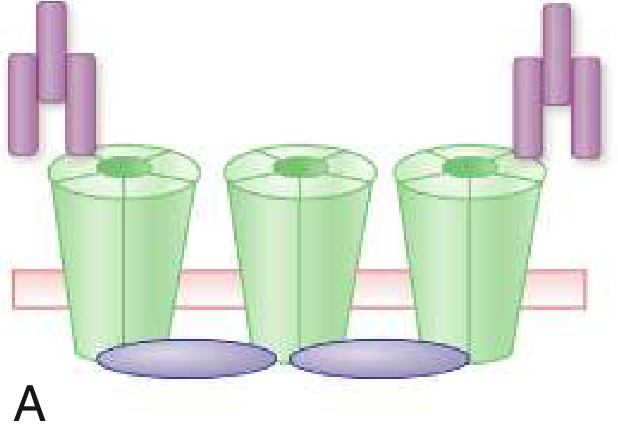
1. Direct blocking: AChR-Abs occupy the ACh binding site, competitively blocking ACh attachment and ion channel opening.
2. Cross-linking and modulation: Divalent antibodies cross-link adjacent AChRs, accelerating their internalization and degradation - reducing total receptor number.
3. Complement-mediated lysis: AChR-Abs activate complement, causing structural damage to the postsynaptic membrane ("simplification" of the junctional folds) and physical loss of AChRs. This is the most important overall mechanism in AChR-antibody MG.
The net result: reduced functional AChRs → decreased end-plate potential amplitude → failure to reach action potential threshold → muscle fiber dropout → fatigable weakness. With repeated stimulation, ACh stores are depleted and the already-small end-plate potential declines further (decremental response on EMG).
3.3 Role of the Thymus
The thymus is abnormal in ~80% of MG patients:
- Thymic hyperplasia (65%): Active germinal centers with autoreactive B cells producing AChR-Abs. The thymus likely initiates the breakdown in immune tolerance.
- Thymoma (10-15%): Deficiency of AIRE protein → defective negative selection → failure to eliminate autoreactive T cells. These escape to the periphery and stimulate B cells to produce AChR-Abs.
- Thymic atrophy: Seen in late-onset MG.
4. Antibody Subtypes and Clinical Correlation
| Antibody | Frequency | Key Features |
|---|---|---|
| Anti-AChR | 80-90% generalized MG; 50% ocular MG | Binding, blocking, modulating subtypes; IgG1/IgG3; complement-fixing |
| Anti-MuSK | 30-50% of AChR-negative GMG | IgG4; no complement activation; prominent bulbar/facial/respiratory; worsened by ChEI |
| Anti-LRP4 | 1-3% all MG | Mild-moderate disease |
| Anti-titin / Anti-RyR | Associated with thymoma-MG and LOMG | Marker of severity; frequent myasthenic crises |
| Seronegative | ~5-10% | Double-seronegative; SFEMG most useful |
Clinical pearls for MuSK-MG:
- Predominantly female, equatorial geographic distribution
- Facial, bulbar, neck, and respiratory muscles disproportionately affected with prominent atrophy
- Many patients worsen with pyridostigmine (profuse fasciculations)
- Responds well to plasma exchange and rituximab
- Not associated with thymoma - thymectomy NOT indicated
5. Clinical Subtypes (MGFA Classification Framework)
5.1 Ocular MG (OMG)
- Confined to ptosis and diplopia only
- ~15% of Caucasian MG patients; up to 58% in Asian populations
- If weakness stays ocular for 2 years → 90% chance it will remain ocular (never generalizes)
- AChR-Abs often negative; RNS studies often negative → SFEMG required
- More common in Asian populations
5.2 Generalized MG (GMG)
Early-Onset (EOMG, <50 years):
- Predominantly female
- Thymic hyperplasia
- Anti-AChR positive
- HLA-A1, B8, DRw3
Late-Onset (LOMG, >50 years):
- Predominantly male
- Atrophic thymus
- May have additional anti-titin / anti-RyR antibodies
- More severe, frequent crises
Thymomatous MG:
- Equal sex distribution
- Peak age 50
- Anti-titin and anti-RyR commonly positive
- May occur at any age
- Thymectomy mandatory but does NOT cure MG
6. Clinical Presentation
Ocular features are the presenting symptom in ~2/3 of patients:
- Ptosis - characteristically fatigable; worsens with sustained upgaze
- Diplopia - variable, non-conforming to single CN pattern (MG mimics any pattern of ophthalmoplegia)
- Cogan's lid twitch - on re-fixation from downgaze, the lid briefly overshoots then droops
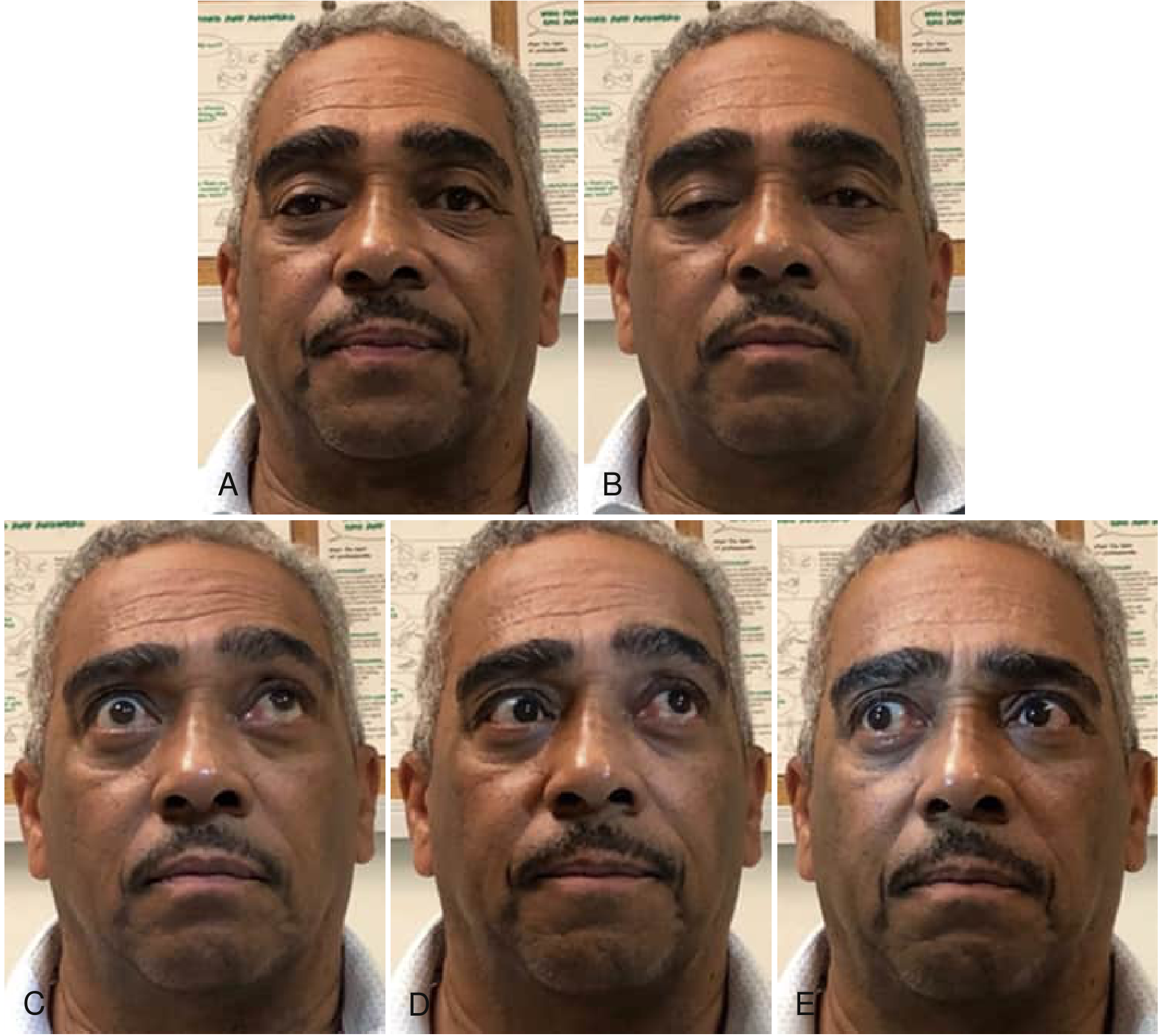
Note: Asymmetric ptosis, asymmetric ophthalmoplegia not conforming to a single cranial nerve. The forehead furrows asymmetrically as the patient tries to compensate.
Bulbar weakness:
- Dysphagia (particularly with tough foods; jaw fatigue during a meal)
- Nasal voice (dysphonia) - worsens with prolonged speech
- Dysarthria
- Neck extensor weakness ("head drop")
Key examination features:
- Fatigable weakness (unlike fixed weakness of UMN or myopathy)
- Normal tendon reflexes (key differentiating feature from LEMS and MND)
- Normal sensation
- No autonomic involvement (unlike LEMS)
- Weakness typically worst at end of day
Diurnal fluctuation: Weakness least in the morning, worst in the evening - the classic pattern that suggests MG.
7. Diagnosis
7.1 Clinical Assessment Tools
Ice pack test: Ice applied to closed eyelid for 2 minutes → cooling slows AChE, improves ptosis. Sensitivity ~80%, specificity ~97% for ocular MG. Simple, safe bedside test.
Sleep test: Rest for 30 minutes with eyes closed → improvement in ptosis. Less well-validated.
Fatigability testing: Sustained upgaze for 60 seconds → progressive ptosis; arm abduction for 2 minutes.
7.2 Pharmacological Testing
Edrophonium (Tensilon) test:
- Short-acting AChEI; onset 30 sec, duration 5 min
- Test dose 2 mg IV, then 8 mg IV if no response
- Positive: objective improvement in ptosis, diplopia, or weakness
- Risks: bradycardia, bronchospasm; resuscitation equipment mandatory; atropine at bedside
- Sensitivity ~80-90% for generalized MG; lower for ocular or MuSK MG
7.3 Serological Testing
| Test | Sensitivity | Notes |
|---|---|---|
| AChR binding Ab | ~85-90% GMG | Most sensitive single test |
| AChR blocking Ab | ~50-60% | Used with binding |
| AChR modulating Ab | ~90% | Cross-links and internalizes AChR |
| Anti-MuSK Ab | 30-50% of AChR-neg | RIA; IgG4 |
| Anti-LRP4 Ab | 1-3% | |
| Anti-titin / Anti-RyR | Variable | Suggests thymoma; marker of severity |
From Henry's Clinical Diagnosis: "AChR-Ab tests for binding, blocking, and modulating are available. Binding AChR-Ab fixes complement. Blocking AChR-Ab interferes with ACh attachment. Modulating AChR-Ab causes internalization of the AChR."
Important: Antibody titers do not reliably correlate with disease severity between patients, but changes in a single patient's titer can reflect treatment response.
7.4 Electrodiagnostic Studies
Repetitive Nerve Stimulation (RNS):
- Low frequency stimulation (2-3 Hz) of proximal muscles (deltoid, trapezius, facial)
- Positive: >10% decrement in CMAP amplitude between 1st and 4th/5th response
- Sensitivity: ~75-90% for GMG; only ~50% for OMG
- Key: Must examine proximal muscles - distal muscles often normal
Single-Fiber EMG (SFEMG):
- Gold standard electrophysiological test
- Measures "jitter" (variability in neuromuscular transmission timing between paired fibers)
- Sensitivity: >95% for GMG; 85-95% for OMG
- May show "blocking" (complete failure of transmission) in severe cases
- Not specific for MG (abnormal in any NMJ disease)
- Most useful when seronegative
7.5 Imaging
CT chest (mandatory in all newly diagnosed MG):
- Rule out thymoma - present in 10-15%
- If CT inconclusive, MRI chest
- Thymoma requires surgical resection regardless of MG severity
8. Differential Diagnosis
| Condition | Key Distinguishing Features |
|---|---|
| Lambert-Eaton Myasthenic Syndrome | Presynaptic; proximal lower limb > upper; reduced reflexes restored with repeated stimulation (post-tetanic potentiation); associated with SCLC; autonomic dysfunction; incremental RNS response |
| Botulism | Fixed dilated pupils; descending paralysis; presynaptic; no antibodies to AChR |
| Oculopharyngeal muscular dystrophy | Slowly progressive; family history; genetic mutation (PABPN1); no fatigability |
| Mitochondrial myopathy (CPEO) | Ptosis + ophthalmoplegia but no diplopia; retinal pigment changes; lactic acidosis |
| Graves' ophthalmopathy | Proptosis; lid lag; thyroid function abnormalities |
| Miller-Fisher syndrome | Post-infectious; areflexia; GQ1b antibodies; ataxia |
| Intracranial mass | Cranial nerve palsies - conform to single nerve territory; imaging abnormality |
9. Treatment
9.1 Symptomatic Treatment - Acetylcholinesterase Inhibitors (ChEI)
Pyridostigmine (Mestinon): First-line symptomatic treatment for all subtypes except MuSK-MG.
- Standard dose: 30-60 mg every 4-6 hours (max ~480 mg/day)
- Onset 30-45 min, duration ~4 hours
- Mechanism: Inhibits AChE → increases ACh in synaptic cleft → more receptor occupancy
- Side effects: Muscarinic (GI cramps, diarrhoea, hypersalivation, bradycardia); nicotinic (fasciculations, muscle cramps)
- Does NOT address the underlying autoimmune process
- In MuSK-MG: use with caution - many patients worsen (fasciculations, cholinergic crisis)
9.2 Rapid Immunomodulation (for acute exacerbations and crisis)
Plasma Exchange (PLEX / Plasmapheresis):
- Removes circulating AChR-Abs directly
- Protocol: 5-6 exchanges over 10-14 days (3 liters per exchange)
- Onset of benefit: days
- Duration of benefit: 4-8 weeks
- Evidence supports PLEX over IVIG for myasthenic crisis (greater short-term efficacy, faster onset)
- Preferred pre-thymectomy to optimize neuromuscular function
Intravenous Immunoglobulin (IVIG):
- Mechanism: Fc receptor saturation; anti-idiotype antibodies; complement inhibition
- Dose: 2 g/kg over 5 days (or 1 g/kg x 2 days)
- Onset: 5-10 days
- Duration: 4-8 weeks
- Equal overall efficacy to PLEX for non-crisis MG exacerbation
- Preferred in patients with poor venous access, cardiovascular instability, or coagulopathy
- Less preferred than PLEX in true myasthenic crisis (slower onset)
9.3 Long-Term Immunosuppression
Corticosteroids (Prednisone):
- Most rapidly effective long-term immunosuppressant
- Dose: Start low (20 mg/day) and increase gradually - abrupt high-dose start can precipitate transient worsening
- Titrate to effect; typical maintenance 10-20 mg/day or alternate-day dosing
- Benefit seen in 70-80% of patients
- Limitations: Cushing syndrome, osteoporosis, DM, cataracts with long-term use
- Co-prescribe: calcium, vitamin D, PPI, bone protection agent
Azathioprine:
- Purine analogue; T and B cell suppression
- Dose: 2-3 mg/kg/day
- Check TPMT enzyme activity before starting (poor metabolizers → toxicity)
- Onset of benefit: 6-18 months (major limitation - "steroid-sparing" agent)
- Side effects: GI intolerance, hepatotoxicity, myelosuppression, increased malignancy risk
- Flu-like reaction in first weeks (idiosyncratic)
Mycophenolate Mofetil (MMF):
- Inhibits IMPDH; selective lymphocyte antiproliferation
- Dose: 1000-1500 mg BD
- Onset: 4-12 months
- Better GI tolerability than azathioprine
- Teratogenic - avoid in pregnancy
Cyclosporine / Tacrolimus:
- Calcineurin inhibitors; block IL-2 dependent T cell activation
- More rapidly effective than azathioprine (~3 months)
- Tacrolimus: 3 mg/day; monitored by trough levels
- Side effects: nephrotoxicity, hypertension, neurotoxicity
Methotrexate:
- Alternative steroid-sparing agent; weekly dosing
- Folic acid supplementation mandatory
Rituximab:
- Anti-CD20 monoclonal antibody (B cell depleting)
- Particularly effective in MuSK-MG (often disease-modifying)
- Used in refractory AChR-positive MG
- 2025 Cochrane systematic review confirms benefit (PMID 40607605)
- Dosing: 375 mg/m² weekly x4, or 1g x2 two weeks apart
- Monitor for PML, infections
9.4 Complement Inhibition - Eculizumab
- Terminal complement inhibitor (C5 inhibitor); blocks membrane attack complex formation
- Approved for AChR-antibody positive refractory generalized MG
- ADAPT trial: significant improvement in MG-ADL scores vs. placebo
- Dosing: IV infusion every 2 weeks after initial loading
- Mandatory meningococcal vaccination ≥2 weeks before first dose
- Ravulizumab (longer-acting C5 inhibitor, every 8-week dosing): also approved
9.5 FcRn Inhibitors - Novel Targeted Therapies
Efgartigimod:
- Blocks neonatal Fc receptor (FcRn) → accelerates IgG catabolism → reduces all IgG antibodies including AChR-Ab
- ADAPT trial positive for both AChR-positive and AChR-negative MG
- IV formulation: 10 mg/kg weekly x4 cycles; repeat cycles PRN
Rozanolixizumab, nipocalimab: Additional FcRn inhibitors in development / recent approval pipeline.
A 2025 network meta-analysis (PMID 40346603) comparing biologics confirms superior efficacy of complement inhibitors and FcRn blockers over conventional therapy in refractory generalized MG.
9.6 Thymectomy
Indications:
- All thymoma patients - mandatory regardless of MG severity
- Non-thymomatous AChR-positive GMG aged 18-65: strongly recommended following the landmark MGTX trial (2016) showing improved outcomes vs. medical therapy alone over 3 years
- Generally not indicated in: MuSK-MG, seronegative MG, OMG, age <18 or >65, late-onset with atrophic thymus (debated)
Surgical approach: Video-assisted thoracoscopic surgery (VATS) or robotic; extended transsternal thymectomy for thymoma.
Pre-operative optimization: PLEX or IVIG to maximize pre-operative neuromuscular function.
Outcome: 30-40% of non-thymomatous patients achieve complete stable remission (CSR); ~50% achieve minimal manifestations. Benefit may take 1-3 years to become apparent.
10. Myasthenic Crisis
Definition
Life-threatening weakness sufficient to require mechanical ventilation or intubation, or prevent adequate swallowing. This is a medical emergency.
Precipitants (the "PIRATES" triggers to remember)
- P - Pregnancy / peripartum
- I - Infection (most common trigger - respiratory infections)
- R - Reduction / rapid tapering of immunosuppression
- A - Aspiration / surgery / stress
- T - Thyroid dysfunction
- E - Emotional/psychological stress
- S - Specific drugs (see below)
Drugs That Precipitate Myasthenic Crisis
| Category | Drugs |
|---|---|
| Antibiotics | Aminoglycosides, fluoroquinolones, macrolides, tetracyclines |
| Cardiovascular | Beta-blockers, calcium channel blockers, procainamide, quinidine |
| Neuromuscular blockers | Succinylcholine, vecuronium (prolonged effect) |
| Antiepileptics | Phenytoin, carbamazepine |
| Psychotropics | Chlorpromazine, lithium |
| Other | D-penicillamine (can actually cause MG), iodinated contrast, magnesium |
Myasthenic Crisis vs. Cholinergic Crisis
| Feature | Myasthenic Crisis | Cholinergic Crisis |
|---|---|---|
| Cause | Under-treated MG / precipitant | AChEI overdose |
| Pupils | Normal | Miotic (pinpoint) |
| Secretions | Normal/decreased | Increased (SLUDGE) |
| Fasciculations | Absent | Present |
| Edrophonium test | Improves weakness | Worsens or no change |
| Treatment | PLEX/IVIG + vent support | Stop AChEI + atropine |
Management of Myasthenic Crisis
-
Airway first: NIV may be appropriate for mild-moderate respiratory compromise (FVC > 20 mL/kg); intubate if FVC <15 mL/kg, PaO₂ <70, or rapidly deteriorating. The "20-30 rule": intubate when FVC falls below 20 mL/kg, NIF (negative inspiratory force) less negative than -30 cmH₂O.
-
Hold pyridostigmine during crisis (secretions worsen, difficult to differentiate from cholinergic worsening in intubated patients)
-
PLEX (preferred): 5-6 exchanges over 2 weeks; 95% efficacy; preferred by most experts over IVIG for acute crisis
-
IVIG (alternative): 2 g/kg over 5 days; equal efficacy in non-crisis exacerbations; preferred if PLEX contraindicated
-
High-dose corticosteroids: IV methylprednisolone, then transition to oral prednisone. Note: Initial steroid therapy can paradoxically worsen weakness in first 1-2 weeks.
-
ICU monitoring: Respiratory function (FVC, NIF every 4 hours), aspiration precautions, DVT prophylaxis
-
Treat underlying precipitant (infection, medication)
11. Special Populations
11.1 MG in Pregnancy
- Pregnancy can worsen (1st trimester, post-partum) or improve (2nd trimester) MG
- AChR-Abs cross the placenta → neonatal MG in 10-20% of babies (transient, clears in weeks as maternal antibodies decay)
- Safe medications: pyridostigmine, IVIG, prednisone, azathioprine (avoid in 1st trimester)
- Avoid: MMF (teratogenic), methotrexate (teratogenic)
- Mode of delivery: Normal vaginal delivery preferred; uterine smooth muscle not affected. 2nd stage can be prolonged - augment if needed.
- Neonatal MG: feeding difficulty, hypotonia, respiratory distress - treat with neostigmine NG
11.2 MG in the Elderly
- Most common new-onset MG subgroup now
- Late-onset MG - consider thymoma imaging
- Beware drug interactions and polypharmacy exacerbations
- Higher risk of aspiration, infections, steroid side effects
- Newer FcRn inhibitors and eculizumab offer targeted options
12. Monitoring and Outcome Measures
MGFA Classification (Class I-V):
- Class I: Ocular only
- Class II: Mild generalized (IIa limb/axial, IIb bulbar/respiratory)
- Class III: Moderate generalized
- Class IV: Severe generalized
- Class V: Intubation required
MG-ADL Scale: Patient-reported; 8 items; most validated for clinical trials (eculizumab, efgartigimod trials)
QMG Score: Quantitative Myasthenia Gravis Score - physician-administered; 13 items; gold standard for clinical assessment
Treatment goals:
- Complete Stable Remission (CSR): no symptoms or signs of MG for ≥12 months on no medications
- Pharmacological Remission (PR): no symptoms or signs on medication
- Minimal Manifestations (MM): no functional limitation despite some exam findings
13. Comparison: MG vs. Lambert-Eaton Myasthenic Syndrome (LEMS)
| Feature | MG | LEMS |
|---|---|---|
| Site of defect | Postsynaptic | Presynaptic |
| Antibody | Anti-AChR (80-90%) | Anti-VGCC (P/Q type) (85%) |
| Weakness pattern | Ocular/bulbar first; proximal limbs | Proximal legs first; spares ocular/bulbar early |
| Reflexes | Normal | Reduced/absent (restored post-exercise) |
| Autonomic | Absent | Present (dry mouth, constipation, erectile dysfunction) |
| Malignancy | Thymoma (10-15%) | SCLC (40-60%) - paraneoplastic |
| RNS | Decrement at low frequency | Increment at high frequency (>100% increase) |
| Response to ChEI | Improves | Minimal benefit |
14. Recent Advances (2024-2025)
- FcRn inhibitors (efgartigimod, rozanolixizumab, nipocalimab): Rapidly reduce all IgG subclasses, achieving faster effects. Efgartigimod now FDA-approved for both IV and subcutaneous formulations.
- Ravulizumab: Long-acting C5 inhibitor (every 8 weeks vs. eculizumab every 2 weeks).
- CAR-T cell therapy (Descartes-08, targeting BCMA on plasma cells): Early phase data showing deep and potentially durable remission. Being watched as a potential disease-modifying/curative approach.
- Rituximab Cochrane review (2025, PMID 40607605): Confirms benefit for refractory MG, especially MuSK-positive.
- Network meta-analysis (2025, PMID 40346603): Demonstrates superior efficacy of FcRn inhibitors and complement inhibitors over conventional agents in refractory generalized MG.
MCQ Evaluation - Consultant Level
Q1. A 28-year-old woman presents with 3 months of intermittent ptosis and diplopia, worse in the evening. Examination shows fatigable ptosis on sustained upgaze. Which antibody, if positive, is most sensitive for detecting her likely diagnosis?
- A) Anti-MuSK antibody
- B) Anti-AChR blocking antibody
- C) Anti-AChR modulating antibody
- D) Anti-LRP4 antibody
- E) Anti-titin antibody
Answer: C - Anti-AChR modulating antibody has the highest sensitivity (~90%) among AChR antibody subtypes, as it detects antibodies that cause receptor internalization and degradation. Anti-AChR binding is most commonly ordered (85-90% sensitivity overall), but modulating provides the highest individual sensitivity. Anti-MuSK is relevant only in AChR-negative patients. Anti-titin suggests thymoma-associated MG.
Q2. A 65-year-old male with AChR-Ab positive myasthenia gravis develops respiratory failure. On examination, pupils are miotic, he has profuse oral secretions, fasciculations, and diarrhoea. What is the most appropriate immediate management?
- A) Increase pyridostigmine dose and administer IVIG
- B) Perform plasma exchange immediately
- C) Stop pyridostigmine, administer IV atropine, provide ventilatory support
- D) Administer edrophonium chloride as a diagnostic test
- E) Intubate and start high-dose corticosteroids
Answer: C - The clinical picture describes cholinergic crisis (miosis, SLUDGE: Salivation, Lacrimation, Urination, Defecation/Diarrhoea, GI upset, Emesis; fasciculations) caused by acetylcholinesterase inhibitor overdose. Management is to STOP the AChEI and administer IV atropine (antimuscarinic) along with ventilatory support. Performing edrophonium (also an AChEI) would worsen the crisis. PLEX/IVIG is for myasthenic crisis (insufficient cholinergic stimulation).
Q3. A 45-year-old woman with known MG is found to have a 4 cm anterior mediastinal mass on CT chest. Serologies show AChR-Ab, anti-titin, and anti-ryanodine receptor antibodies. What is the most appropriate next management step?
- A) Commence rituximab and reassess in 6 months
- B) Thymectomy regardless of MG disease severity
- C) Radiotherapy to the mediastinal mass
- D) Plasma exchange followed by observation
- E) Thymectomy only if MG is refractory to medical therapy
Answer: B - A thymoma is a surgical indication regardless of MG severity or control status. The combination of AChR-Ab, anti-titin, and anti-ryanodine receptor antibodies is characteristic of thymoma-associated MG. While thymectomy will not cure the autoimmune process (MG persists), it removes the tumour, which can invade locally and carry malignant potential. Pre-operative PLEX/IVIG should be considered to optimise respiratory function.
Q4. Which electrodiagnostic finding is most specific to myasthenia gravis versus Lambert-Eaton myasthenic syndrome?
- A) Decreased CMAP amplitude on baseline recording
- B) >10% decrement on 3 Hz repetitive nerve stimulation
- C) >100% increment on 50 Hz repetitive nerve stimulation
- D) Increased jitter on single-fiber EMG
- E) Spontaneous fibrillations on needle EMG
Answer: B - A >10% decrement on low-frequency (2-3 Hz) RNS is characteristic of postsynaptic NMJ disease (MG). In LEMS (presynaptic), the typical finding is a significant increment (>100%) on high-frequency stimulation (50 Hz) or post-exercise facilitation. Increased jitter on SFEMG (Answer D) is sensitive for NMJ disease but not specific - it is elevated in both MG and LEMS. Fibrillations are not characteristic of MG.
Q5. A 35-year-old woman with MuSK-antibody positive myasthenia gravis has worsening bulbar weakness despite pyridostigmine 60 mg 5 times daily. She has profuse fasciculations. What is the most appropriate treatment adjustment?
- A) Increase pyridostigmine to 90 mg 6 times daily
- B) Add neostigmine IV
- C) Reduce or stop pyridostigmine; initiate plasma exchange and rituximab
- D) Add azathioprine and continue current pyridostigmine dose
- E) Perform thymectomy
Answer: C - In MuSK-MG, cholinesterase inhibitors (pyridostigmine) often worsen symptoms and cause profuse fasciculations. This patient is showing signs of over-medication despite inadequate disease control. Pyridostigmine should be reduced or stopped. MuSK-MG responds well to plasma exchange (short-term) and rituximab (B cell depletion, given the IgG4 nature of the antibody). Thymectomy is NOT indicated in MuSK-MG.
Q6. The mechanism by which eculizumab treats refractory AChR-Ab positive myasthenia gravis is:
- A) Blocking AChR antibody production by plasma cells
- B) Inhibiting T-helper cell activation via calcineurin pathway
- C) Preventing C5 cleavage, blocking formation of the membrane attack complex
- D) Reducing total IgG by blocking neonatal Fc receptor recycling
- E) Binding to AChR to prevent autoantibody attachment
Answer: C - Eculizumab is a monoclonal antibody that binds complement protein C5, preventing its cleavage into C5a and C5b, thus blocking terminal complement activation and membrane attack complex (MAC) formation. This directly addresses the most important pathogenic mechanism in AChR-Ab positive MG - complement-mediated lysis of the postsynaptic membrane. Option D describes the mechanism of FcRn inhibitors (efgartigimod). Option B describes calcineurin inhibitors (cyclosporine/tacrolimus).
Q7. A 22-year-old Asian man presents with isolated ptosis and diplopia for 18 months. Workup shows negative AChR-Ab, normal RNS, but increased jitter on SFEMG of the orbicularis oculi. CT chest is normal. He has been symptom-free for 2 years with pyridostigmine alone. What is the most accurate prognosis statement?
- A) He will definitely develop generalized weakness within 5 years
- B) He has a 90% probability of remaining ocular-only since symptoms have been confined to ocular muscles beyond 2 years
- C) Negative AChR-Ab makes the diagnosis unlikely; another cause should be sought
- D) His Asian ethnicity means he has a lower risk of ocular MG
- E) Thymectomy should be performed to prevent generalization
Answer: B - If myasthenic weakness remains limited to the ocular muscles for 2 years, there is a 90% likelihood that the disease will not generalize (Bradley & Daroff). This patient has passed the 2-year mark. Asian populations actually have a HIGHER prevalence of ocular MG (up to 58% vs. 10-15% in Caucasians). Negative AChR-Ab is common in ocular MG (~50%); SFEMG positive confirms the diagnosis. Thymectomy is generally not recommended for pure ocular MG.
Q8. Which of the following is the most appropriate first-line treatment for myasthenic crisis when plasma exchange is not available?
- A) IV methylprednisolone 1g daily
- B) Oral prednisone 80 mg daily
- C) IVIG 2 g/kg over 5 days
- D) IV pyridostigmine infusion
- E) SC injection of neostigmine
Answer: C - IVIG (2 g/kg over 5 days) is the recommended alternative to plasma exchange for myasthenic crisis when PLEX is unavailable or contraindicated (poor venous access, hemodynamic instability, coagulopathy). High-dose steroids (A and B) can paradoxically worsen weakness in the first 1-2 weeks when started acutely in crisis and are a secondary measure - not first-line for acute crisis management. IV pyridostigmine and neostigmine only provide symptomatic relief and do not address the underlying immune attack.
Q9. During the assessment of a patient with suspected myasthenic crisis, which ventilatory parameter most reliably guides the decision to intubate?
- A) PaO₂ < 80 mmHg on room air
- B) SpO₂ < 95%
- C) Forced vital capacity (FVC) < 15-20 mL/kg
- D) Respiratory rate > 25/min
- E) PaCO₂ > 40 mmHg
Answer: C - The "20-30 rule" in neuromuscular respiratory failure: intubation should be strongly considered when FVC falls below 20 mL/kg and negative inspiratory force (NIF) becomes less negative than -30 cmH₂O. PaO₂ and SpO₂ are insensitive early markers - hypoxia is a late sign because these patients hypoventilate (CO₂ rises before O₂ falls). Waiting for hypoxia means waiting too long. Tachypnea alone is non-specific.
Q10. A 48-year-old woman with severe refractory AChR-Ab positive generalized MG fails to respond adequately to prednisone, azathioprine, MMF, and 3 cycles of plasma exchange. Which targeted biologic therapy is most specifically indicated for her condition?
- A) Rituximab (anti-CD20)
- B) Eculizumab (anti-C5)
- C) Efgartigimod (FcRn inhibitor)
- D) Tocilizumab (anti-IL-6)
- E) Belimumab (anti-BAFF)
Answer: B - Eculizumab is FDA-approved specifically for AChR-Ab positive refractory generalized MG in adults who have failed conventional therapy. Its mechanism directly targets complement-mediated lysis of AChRs, the dominant pathogenic mechanism in AChR-Ab MG. Efgartigimod (C) is also an option (reduces total IgG including AChR-Ab) and is approved for AChR-positive gMG. Rituximab (A) is particularly effective in MuSK-MG, not primarily AChR-positive refractory disease. The question specifies AChR-Ab positive, making eculizumab the most targeted and specifically approved agent.
Summary Table: MG at a Glance
| Domain | Key Points |
|---|---|
| Pathophysiology | Autoantibodies vs. AChR (most common); complement lysis is dominant mechanism; thymus plays central role |
| Antibody serology | AChR-Ab: 85-90% GMG; MuSK: 30-50% AChR-neg; LRP4: 1-3%; Titin/RyR: thymoma marker |
| Electrophysiology | RNS decrement >10% (low freq); SFEMG increased jitter - most sensitive (>95%) |
| Subtypes | Ocular; EOMG; LOMG; Thymomatous; MuSK; Seronegative |
| Symptomatic Rx | Pyridostigmine (NOT in MuSK) |
| Acute Rx | PLEX > IVIG for crisis; IVIG if PLEX unavailable |
| Long-term IS | Steroids + azathioprine/MMF; tacrolimus; rituximab (MuSK) |
| Targeted biologics | Eculizumab (AChR+ refractory); Efgartigimod (FcRn); Ravulizumab |
| Surgery | Thymectomy: mandatory (thymoma); recommended (AChR+ GMG, 18-65) |
| Crisis | FVC <20 mL/kg → intubate; PLEX preferred; hold pyridostigmine; treat precipitant |
| MG vs LEMS | MG: postsynaptic, decrement, no autonomic; LEMS: presynaptic, increment, SCLC, autonomic |
*Sources: Bradley and Daroff's Neurology in Clinical Practice; Goldman-Cecil Medicine; Henry's Clinical Diagnosis and Management by Laboratory Methods; Tintinalli's Emergency Medicine; Washington Manual of Medical Therapeutics; Murray & Nadel's Respiratory Medicine. Recent evidence: Cochrane systematic review of rituximab for MG (PMID 40607605, 2025); network meta-analysis of novel biologics in MG (PMID 40346603, 2025).*That completes the full consultant-level teaching on Myasthenia Gravis. Here's what was covered:
The teaching includes 14 sections:
- Definition and overview
- Epidemiology (with HLA associations)
- Pathophysiology (3 mechanisms of AChR destruction, thymic role)
- Antibody subtypes (AChR, MuSK, LRP4, titin/RyR - with clinical correlations)
- Clinical subtypes (Ocular, EOMG, LOMG, Thymomatous, MuSK, Seronegative)
- Clinical presentation (ocular, bulbar, diurnal variation)
- Diagnosis (clinical tests, serology, RNS, SFEMG, imaging)
- Differential diagnosis (including the critical MG vs. LEMS comparison)
- Treatment pyramid (pyridostigmine → PLEX/IVIG → immunosuppression → biologics → thymectomy)
- Myasthenic crisis (triggers, crisis vs. cholinergic crisis, ventilation rules, management)
- Special populations (pregnancy, elderly)
- Monitoring and outcome measures (MGFA, MG-ADL, QMG)
- MG vs. LEMS comparison table
- Recent advances (eculizumab, efgartigimod, FcRn inhibitors, CAR-T, 2025 evidence)
10 consultant-level MCQs test: antibody sensitivity, cholinergic vs. myasthenic crisis, thymoma management, electrodiagnostics, MuSK-MG treatment, eculizumab mechanism, ocular MG prognosis, crisis treatment, ventilation triggers, and refractory MG biologics.
This is a shared conversation. Sign in to Orris to start your own chat.