
Gingivitis treatment
Reading File
Now let me search the library and PubMed in parallel.
Finding Sources
Searching PubMed
gingivitis treatment management
Searching the Web
gingivitis treatment guidelines 2025
Let me search the medical library more broadly for gingivitis content.
Finding Sources
Searching PubMed
gingivitis plaque oral hygiene chlorhexidine
Good. Now let me read the most relevant textbook sections for gingivitis treatment.
Reading File
Reading File
Let me also read the ANUG section and get some more detail from ENT textbooks.
Reading File
Finding Sources
Let me also fetch the ANUG clinical image and look at the ENT textbook content.
Loading Image
Reading File
I now have sufficient information from the medical library and recent literature to provide a thorough answer.
Gingivitis: Treatment
Gingivitis is inflammation of the gingiva (gum tissue) without destruction of the underlying periodontal attachment apparatus (no bone or ligament loss). It is caused by bacterial plaque biofilm accumulation at the gumline. Since it is reversible at this stage, the goal of treatment is complete plaque removal and control of contributing factors.
Types of Gingivitis
| Type | Key Features |
|---|---|
| Plaque-induced (chronic) | Most common; caused by bacterial biofilm |
| Hormone-modified | Pregnancy, puberty, menopause |
| Drug-induced | Phenytoin, cyclosporin, calcium channel blockers |
| ANUG (acute necrotizing ulcerative gingivitis) | Painful, "punched-out" papillae, necrosis, fetid breath |
| Systemic disease-associated | HIV, leukemia, diabetes, smoking |
1. Chronic Plaque-Induced Gingivitis
This is fully reversible with proper treatment.
A. Mechanical Plaque Control (First Line)
- Toothbrushing - twice daily, at the gumline; an oscillating/rotating power brush is more effective than a manual brush
- Interdental cleaning - flossing or interdental brushes daily to clean between teeth where a toothbrush cannot reach
- Professional mechanical plaque removal (PMPR) - supragingival scaling and debridement by a dentist or hygienist to remove calculus (tartar) and biofilm; this is the definitive professional treatment
B. Chemical Adjuncts (Support Mechanical Cleaning)
- Chlorhexidine 0.12-0.2% mouthwash - the gold standard antiseptic rinse; twice daily for short-term use; reduces plaque and gingival inflammation significantly. Note: prolonged use causes tooth staining and taste disturbance.
- Cetylpyridinium chloride (CPC) mouthwash - a reasonable alternative to chlorhexidine; a 2025 meta-analysis (PMID 40530503) found CPC is generally comparable to chlorhexidine for plaque/gingivitis reduction with a better side-effect profile
- Essential oil mouthwashes (Listerine) - effective adjunct to mechanical cleaning
- Fluoride toothpaste - helps with caries prevention concurrently
C. Risk Factor Management
- Smoking cessation - smoking is a major independent risk factor; cessation significantly improves gingival health
- Blood sugar control in diabetics
- Review medications that cause gingival overgrowth (phenytoin, nifedipine, cyclosporin) - consider substitution if possible
- Nutrition - adequate vitamin C; deficiency worsens gingival inflammation
2. Acute Necrotizing Ulcerative Gingivitis (ANUG)
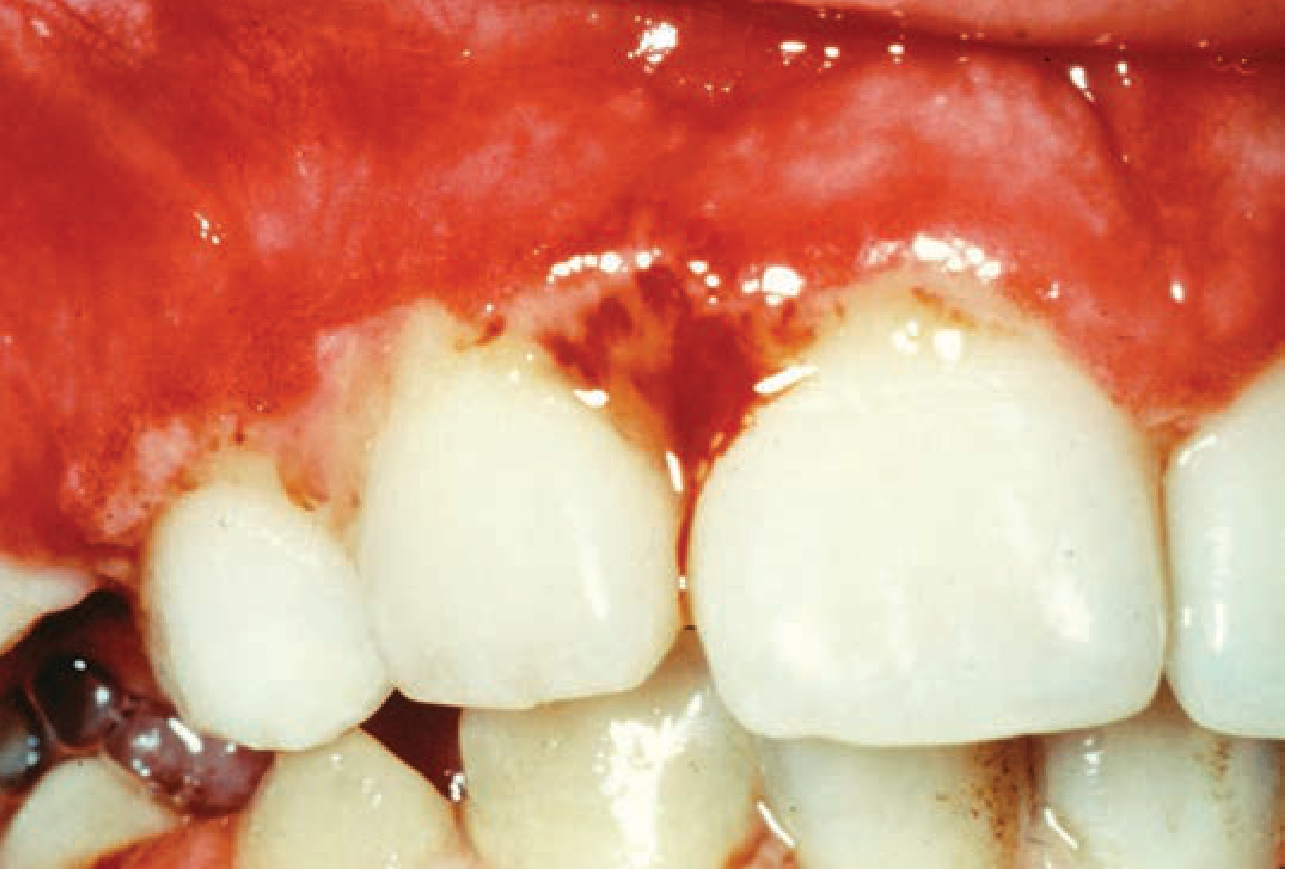
ANUG (also called Vincent's disease or trench mouth) is a more serious, painful acute infection by anaerobic organisms (Treponema, Fusobacterium, Prevotella, Selenomonas).
Clinical triad: Pain + ulcerated/punched-out interdental papillae + gingival bleeding
Secondary signs: Fetid breath, pseudomembrane, foul metallic taste, fever, malaise, lymphadenopathy
Treatment of ANUG
- Chlorhexidine 0.12% oral rinses twice daily - mainstay of antimicrobial treatment
- Professional debridement and scaling - to remove necrotic tissue and calculus
- Analgesia (NSAIDs preferred) - to enable oral hygiene and eating
- Antibiotics - reserved for immunocompromised patients or systemic signs:
- Metronidazole (first choice for anaerobic coverage)
- Penicillin as an alternative
- Supportive care - soft diet rich in protein and vitamins, adequate fluids, rest
- Address predisposing factors - smoking, stress, HIV, poor nutrition, sleep deprivation
- Dental/periodontist referral within 24-48 hours for definitive care
Pain relief typically occurs within 24 hours of starting chlorhexidine rinses and scaling.
3. Special Situations
| Situation | Approach |
|---|---|
| Pregnancy gingivitis | Meticulous oral hygiene; safe to scale; avoid elective dental work in 1st trimester |
| Drug-induced gingival overgrowth | Drug substitution if possible; local debridement; may need gingivectomy |
| HIV-associated (linear gingival erythema) | Aggressive debridement, chlorhexidine rinses |
| Leukemia-associated | Treat underlying systemic disease; supportive oral hygiene |
Treatment Summary
| Step | Intervention |
|---|---|
| 1st line (all cases) | Thorough brushing + interdental cleaning twice daily |
| Professional | Scaling/PMPR to remove calculus |
| Adjunct | Chlorhexidine 0.12% mouthwash (short-term) |
| ANUG | Chlorhexidine + debridement + metronidazole (if systemic features) |
| Follow-up | Regular recall; address risk factors |
Sources:
- Tintinalli's Emergency Medicine (9781260019933), Periodontal Pathology & ANUG sections
- K.J. Lee's Essential Otolaryngology (9781260122237)
- PMID 40530503 - CPC vs chlorhexidine mouthwash meta-analysis, 2025
- PMID 41265469 - Adjunctive mouthwashes umbrella review, 2026
- StatPearls Gingivitis - NCBI
This is a shared conversation. Sign in to Orris to start your own chat.