
Compound A 5 mark answer for anaesthesia exam going student
Reading File
Compound A is a vinyl ether (haloalkene) byproduct formed when sevoflurane reacts with carbon dioxide absorbents (soda lime/baralyme) in the anesthetic breathing circuit. It is a known nephrotoxin in animal studies and a topic commonly tested in anesthesia exams.
Searching sources...
Finding Sources
Finding Sources
Reading File
Reading File
Reading File
Reading File
Loading Image
Here is a complete, exam-ready 5-mark answer on Compound A for an anaesthesia student:
Compound A
Definition and Formation
Compound A is fluoromethyl-2,2-difluoro-1-(trifluoromethyl) vinyl ether - a haloalkene (vinyl ether) byproduct produced when sevoflurane undergoes base-catalyzed degradation in the presence of CO2 absorbents (soda lime, Baralyme) within the anaesthetic breathing circuit. Strong bases (KOH, NaOH) extract a proton from sevoflurane's isopropyl group, releasing hydrofluoric acid (HF) and forming Compound A. It is volatile and is absorbed via alveolar gas exchange.
Factors Affecting Compound A Production
| Factor | Effect |
|---|---|
| Low fresh gas flow (FGF) | Higher Compound A concentration (inversely related to FGF) |
| Type of absorbent | Baralyme > Soda lime; KOH-based > NaOH-based |
| High vaporizer output | More sevoflurane available for degradation |
| Prolonged anaesthesia | Greater cumulative ppm-hour exposure |
| High temperature | Accelerates degradation reaction |
- At FGF of 1 L/min: ~20 ppm with soda lime, ~30 ppm with Baralyme
- Modern Ca(OH)2 or LiOH absorbents (KOH/NaOH-free) generate zero or negligible Compound A
Nephrotoxicity: Animal vs. Human
In rats: Compound A causes proximal tubular necrosis at cumulative exposures >150 ppm-hours. Exposure >200 ppm-hours causes reversible damage with elevated BUN and creatinine. Exposure >1000 ppm-hours is lethal in 50% of rats.
In humans: No clinically significant nephrotoxicity has been demonstrated - even at exposures >200 ppm-hours. Standard renal function markers (BUN, creatinine, urinary glucose/protein) and sensitive markers (NAG, AAP, β2-microglobulin) remain normal.
Mechanism of Nephrotoxicity (Rodents)
The pathway is illustrated below:
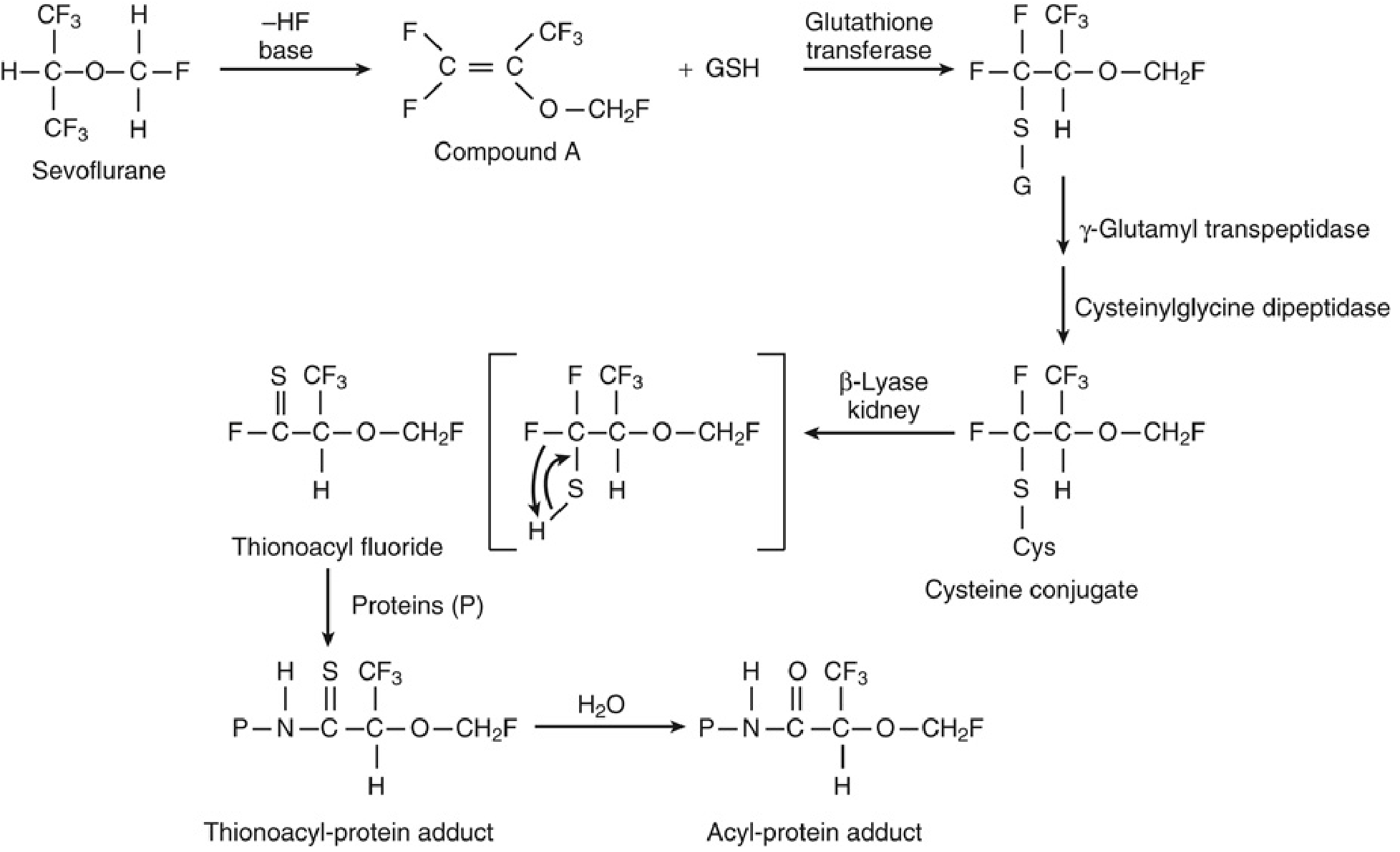
Fig. 18.19 - Miller's Anaesthesia 10e: Proposed pathway for Compound A nephrotoxicity in rodents
- Sevoflurane → (strong base / CO2 absorbent) → Compound A
- Compound A itself is not directly nephrotoxic
- Hepatic S-conjugation with glutathione (via glutathione-S-transferase)
- Processed by γ-glutamyl transpeptidase and cysteinylglycine dipeptidase → cysteine conjugate
- In the kidney, renal β-lyase cleaves the cysteine conjugate → reactive thionoacyl fluoride
- This intermediate acylates renal proteins → tubular damage
Why humans are spared: Human kidneys have far lower β-lyase activity than rat kidneys. Alternative proposed mechanisms include reactive sulfoxide formation via CYP3A isozymes (also less active in humans).
Clinical Significance and Safety
- No threshold exposure causing more than subclinical renal damage has been identified in humans
- Sevoflurane is safe even in patients with chronic renal insufficiency at low flow rates (Kharasch et al.)
- Some studies report transient, reversible abnormalities in sensitive markers (not BUN/creatinine) after prolonged low-flow sevoflurane (>330 ppm-hours), but these are not clinically important
- The US FDA label recommends fresh gas flows ≥2 L/min for sevoflurane, but many contemporary studies confirm safety at lower flows with modern absorbents
How to Minimise Compound A Exposure
- Use higher fresh gas flows (reduces circuit accumulation)
- Use modern absorbents free of KOH/NaOH (e.g., Amsorb, Drägersorb Free, LiOH-based)
- Limit duration and concentration of sevoflurane where possible
- Avoid Baralyme (now voluntarily withdrawn from market)
Key exam point: Compound A nephrotoxicity is a rat phenomenon - it is not clinically relevant in humans due to low renal β-lyase activity. Sevoflurane remains safe for clinical use including in renal disease patients.
(Source: Miller's Anaesthesia, 10e, Chapter 18 - "Sevoflurane, Compound A, and Renal Toxicity")
This is a shared conversation. Sign in to Orris to start your own chat.