
Hordeolum
Reading File
Finding Sources
Finding Sources
Searching PubMed
hordeolum stye eyelid treatment
Now let me read the most comprehensive sources in parallel:
Reading File
Reading File
Reading File
Reading File
Reading File
Reading File
Loading Image
Loading Image
Reading File
Here is a comprehensive overview of Hordeolum (Stye):
Hordeolum (Stye)
Definition & Classification
A hordeolum is an acute bacterial abscess of an eyelid gland, classified by anatomic location:
| Type | Gland Involved | Location |
|---|---|---|
| External hordeolum (stye) | Gland of Zeis (sebaceous) or Moll's gland; associated with lash follicle | Points anteriorly through the skin, usually with a lash at apex |
| Internal hordeolum | Meibomian gland | Points toward the palpebral conjunctiva (inner lid surface) |
The causative organism is almost always Staphylococcus aureus; it frequently co-exists with acute blepharitis.
Clinical Features
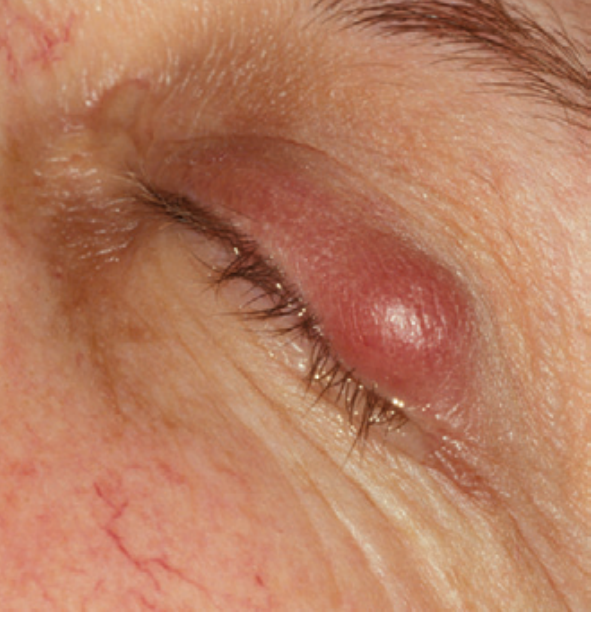
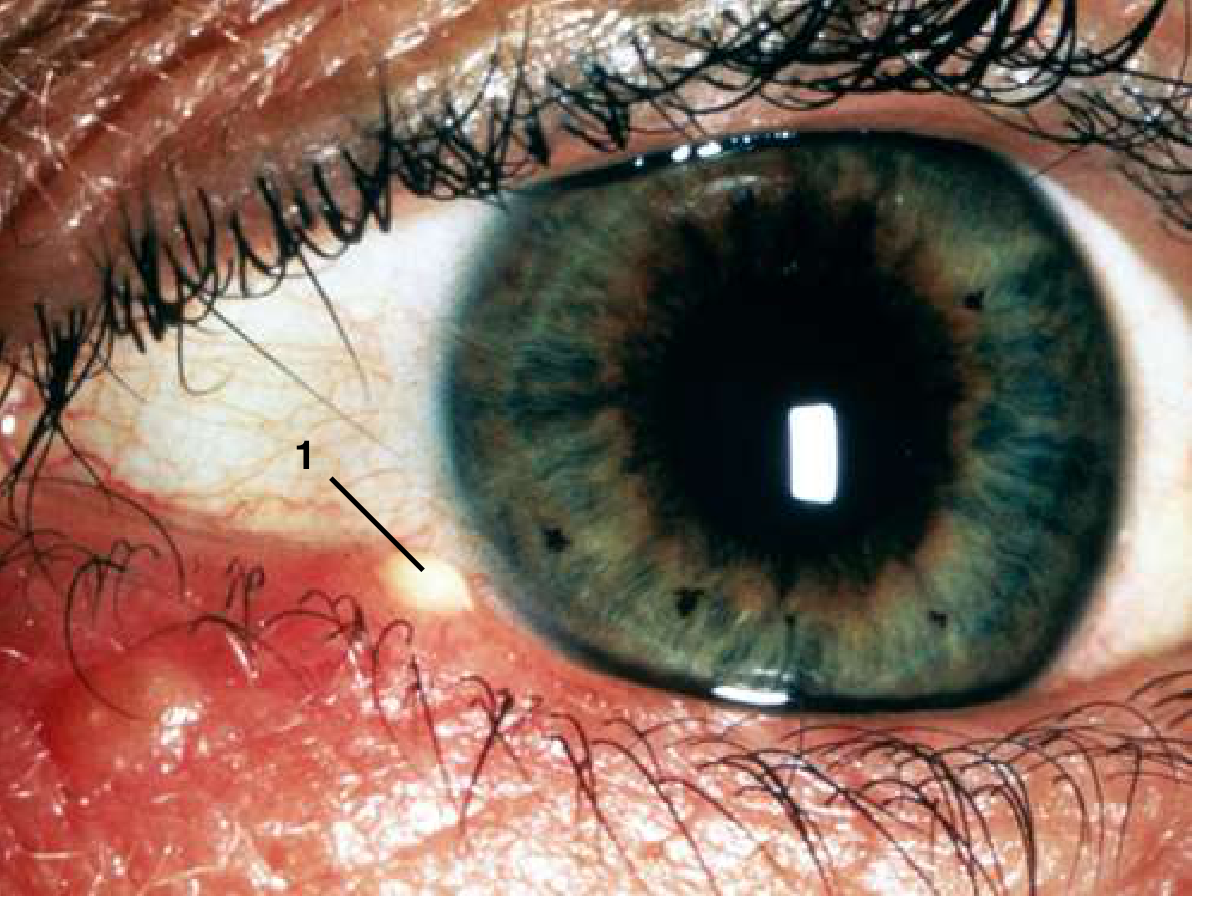
- Acute, tender, erythematous, fluctuant mass at or near the lid margin
- Associated eyelid cellulitis (localized erythema, edema, warmth of surrounding skin) is common
- Spontaneous drainage typically occurs at 5–7 days, often with symptom resolution
- Multiple lesions may be present; entire lid margin may be involved in severe cases
Hordeolum vs. Chalazion
| Feature | Hordeolum | Chalazion |
|---|---|---|
| Nature | Acute bacterial abscess | Chronic granulomatous inflammation (lipogranuloma) |
| Tenderness | Marked | Mild or none |
| Fluctuance | Present (pus) | May have soft center (not true pus) |
| Cellulitis | Common | Rare (mild erythema only) |
| Natural course | Acute, drains in 5–7 days | Chronic, waxes and wanes |
| Location | Lid margin (external) or deeper (internal) | Lid margin or a few mm away |
Key alert: A mass located nasal to the medial canthus suggests dacryocystitis, not hordeolum — refer urgently to ophthalmology (risk of dissection to cavernous sinus).
Differential Diagnosis
- Preseptal (periorbital) cellulitis — diffuse eyelid and periorbital erythema/edema
- Chalazion — chronic, non-infectious, lipogranuloma
- Dacryocystitis — medial canthal swelling, nasal to medial canthus
- Sebaceous carcinoma — suspect in older patients with recurrent/atypical lesions, madarosis, or chronic unilateral blepharitis
- Pyogenic granuloma — benign, deep-red pedunculated lesion often post-hordeolum or post-trauma
Workup
- History: previous eyelid lesions, surgery, trauma, acne rosacea
- External exam: palpate lid for nodule, assess for surrounding cellulitis
- Slit-lamp exam: evaluate meibomian gland orifices, check for madarosis/poliosis (would suggest malignancy)
Treatment
Conservative (first-line)
- Warm compresses ≥10 minutes, 4× daily with gentle massage — promotes spontaneous drainage
- Topical antibiotics: bacitracin, tobramycin, or erythromycin ointment b.i.d. for 1–2 weeks
- Oral antibiotics directed against Staphylococcus (e.g., dicloxacillin, doxycycline) if significant cellulitis is present or lesion fails to point
- Most hordeola resolve with this regimen within 5–7 days
Incision & Drainage (I&D)
Indications:
- Fails conservative management
- Significant pain
- Significant localized pus accumulation
- Associated or previous eyelid cellulitis
Contraindication: Near the lacrimal punctum (nasal to medial canthus) → refer to ophthalmology (risk of lacrimal drainage system damage)
Technique:
- Topical ophthalmic anesthetic drops (e.g., tetracaine) + local infiltration with 2% lidocaine with epinephrine (30-gauge, 3-mL syringe)
- Incise from whichever surface (anterior skin or posterior conjunctiva) provides best access to the pus collection using a no. 11 scalpel blade
- A tongue blade or metal elevator is placed behind the lid to protect the globe; a chalazion clamp may stabilize the lesion
- Express pus, apply direct pressure with gauze for hemostasis (5–10 minutes)
- If significant cellulitis: send pus for culture and sensitivity
- Do not suture skin in acute bacterial infection; consider systemic antibiotics for significant cellulitis
Post-procedure:
- Oral anti-staphylococcal antibiotic
- Daily follow-up until cellulitis resolves and pus is not reaccumulating
- Reassess at 2–3 weeks (swelling may persist for several weeks)
Complications
- Preseptal cellulitis — most common complication; treat as per cellulitis protocol
- Spread of infection — rare
- Lacrimal drainage system damage — if I&D performed near medial canthus
- Recurrence — associated with chronic blepharitis or acne rosacea; consider chronic low-dose doxycycline (20–50 mg/day) for recurrent cases
Key Points
- Hordeolum = acute staphylococcal abscess of an eyelid gland; chalazion = chronic lipogranuloma
- Most respond to warm compresses + topical antibiotics within a week
- I&D is reserved for failure, significant pain, or cellulitis
- Always exclude sebaceous carcinoma in recurrent or atypical cases (send specimens to pathology)
- Medial canthal lesions → refer, do not drain (dacryocystitis risk; cavernous sinus spread)
Sources: Wills Eye Manual 6th ed.; Goldman-Cecil Medicine; Pfenninger & Fowler's Procedures for Primary Care 3rd ed.; Kanski's Clinical Ophthalmology 10th ed.
This is a shared conversation. Sign in to Orris to start your own chat.