
Clini Feature investigation and management of surgical jaundice
Reading File
Finding Sources
Finding Sources
Searching PubMed
"obstructive jaundice" AND management
Reading File
Reading File
Reading File
Reading File
Finding Sources
Reading File
Reading File
Loading Image
Finding Sources
Finding Sources
Reading File
Reading File
I now have all the information needed for a comprehensive answer. Let me compile it.
Surgical Jaundice: Clinical Features, Investigation, and Management
Surgical (obstructive/posthepatic) jaundice results from mechanical obstruction of bile flow through the extra- or intrahepatic biliary tree - producing conjugated hyperbilirubinaemia. It is distinguished from prehepatic (haemolytic) and hepatic (hepatocellular) jaundice and is amenable to surgical or endoscopic intervention.
1. Classification of Jaundice
| Type | Cause | Bilirubin fraction |
|---|---|---|
| Prehepatic | Haemolysis | Unconjugated (indirect) |
| Hepatic | Hepatocellular damage (hepatitis, cirrhosis) | Mixed |
| Posthepatic (Surgical) | Mechanical biliary obstruction | Conjugated (direct) |
2. Causes of Surgical (Extrahepatic) Jaundice
Malignant
- Pancreatic carcinoma (most common malignant cause - painless, progressive)
- Cholangiocarcinoma (hilar = Klatskin tumour; distal)
- Gallbladder carcinoma
- Ampullary carcinoma
Benign
- Choledocholithiasis (most common overall cause - typically painful, fluctuating)
- Primary or secondary sclerosing cholangitis
- Benign biliary strictures (post-operative, traumatic)
- Choledochal cyst / Caroli's disease
- Pancreatic pseudocyst / chronic pancreatitis
- Parasites (Ascaris, Clonorchis)
- Haemobilia
- Ampullary scarring / duodenal diverticulum
(Current Surgical Therapy 14e, Box 1)
3. Clinical Features
History
Symptoms common to all surgical jaundice:
- Icterus (yellow skin/sclerae)
- Dark urine (bilirubinuria - conjugated bilirubin)
- Pale/clay-coloured stools (absent urobilinogen - bile not reaching gut)
- Pruritus (bile salt deposition in skin)
- Fatigue
- Malabsorption of fat-soluble vitamins (A, D, E, K) with prolonged obstruction
Character of jaundice helps distinguish cause:
- Fluctuating jaundice - characteristic of CBD stone
- Progressively deepening, painless jaundice - typical of malignancy (especially pancreatic carcinoma)
Pain:
- Painful obstructive jaundice - most commonly CBD stones (biliary colic - RUQ, colicky, may radiate to back/shoulder)
- Painless obstructive jaundice - most often malignancy
Fever/Rigors - raises strong suspicion for cholangitis (Charcot's triad: RUQ pain + fever/rigors + jaundice). Reynolds' pentad adds mental status changes and septic shock.
Past history: previous biliary surgery, alcohol use, viral hepatitis exposure, haemolytic anaemia, icterogenic drug ingestion.
(Pye's Surgical Handicraft 22e, p.285; Current Surgical Therapy 14e)
Examination
| Sign | Significance |
|---|---|
| Jaundice, scratch marks | Obstructive jaundice with pruritus |
| Palpable, non-tender gallbladder | Courvoisier's sign - suggests malignant obstruction (distensible gallbladder not scarred by stones) |
| Tender hepatomegaly | Acute biliary obstruction / cholangitis |
| Cachexia / weight loss | Malignant obstruction |
| Fever, rigors, hypotension | Cholangitis / sepsis |
| Epigastric mass | Pancreatic head carcinoma |
Courvoisier's Law: A palpable, non-tender gallbladder in a jaundiced patient suggests malignant obstruction of the CBD (not gallstones, as a gallstone-laden gallbladder is typically fibrotic and non-distensible).
4. Investigation
A. Biochemical (Liver Function Tests)
| Test | Finding in Surgical Jaundice |
|---|---|
| Bilirubin | Elevated total; conjugated (direct) fraction >50% |
| Alkaline phosphatase (ALP) | Markedly elevated (3-4x) - in up to 75% of cholestatic patients |
| GGT | Elevated - confirms hepatobiliary origin of raised ALP |
| 5'-nucleotidase (5NT) | Elevated - hepatobiliary specific (not bone) |
| ALT/AST | Mildly elevated; very high transaminases favour hepatocellular disease |
| Prothrombin time (PT) | May be prolonged (Vit K deficiency due to fat malabsorption) - responds to IV vitamin K in surgical jaundice; does not respond if hepatocellular damage |
Key differentiating point: Response to IV Vitamin K administration - a good response (PT normalises) supports posthepatic jaundice; failure to respond favours hepatocellular disease.
(Pye's Surgical Handicraft 22e, p.286)
B. Additional Blood Tests
- FBC: Leucocytosis (cholangitis); spherocytosis/reticulocytosis (haemolytic); anaemia in malignancy/cirrhosis
- U&E/Creatinine: Baseline renal function (risk of hepatorenal syndrome)
- Coagulation screen: PT, APTT - guide for vitamin K therapy
- Tumour markers: CA 19-9 (cholangiocarcinoma, pancreatic cancer), CEA, AFP (hepatocellular carcinoma)
- Serology: Hepatitis A/B antigens/antibodies, anti-mitochondrial antibodies (primary biliary cholangitis), smooth muscle antibodies, ANA
C. Imaging
Step 1 - Transabdominal Ultrasound (first-line)
- Initial modality of choice
- Reliably demonstrates biliary dilation and level of obstruction
- Sensitivity for CBD stones: only 21-63%
- Can identify: gallstones, dilated CBD (>6 mm with gallbladder in situ = strong predictor of choledocholithiasis), liver mass, pancreatic head lesions
Step 2 - Cross-sectional Imaging
| Modality | Role |
|---|---|
| CT scan | Highly sensitive for pancreatic tumours (>2 cm); assesses level, cause, nodal/metastatic disease, vascular invasion; staging |
| MRCP | Best non-invasive test for biliary tree; sensitivity 95% for biliary obstruction; test of choice for CBD stones (non-invasive); differentiates stricture levels |
| EUS (Endoscopic Ultrasound) | Detects hilum, biliary duct, ampullary and pancreatic head tumours; guides fine-needle aspiration (FNA) - sensitivity 84-91%, specificity 71-100%; staging by vascular invasion/lymph nodes |
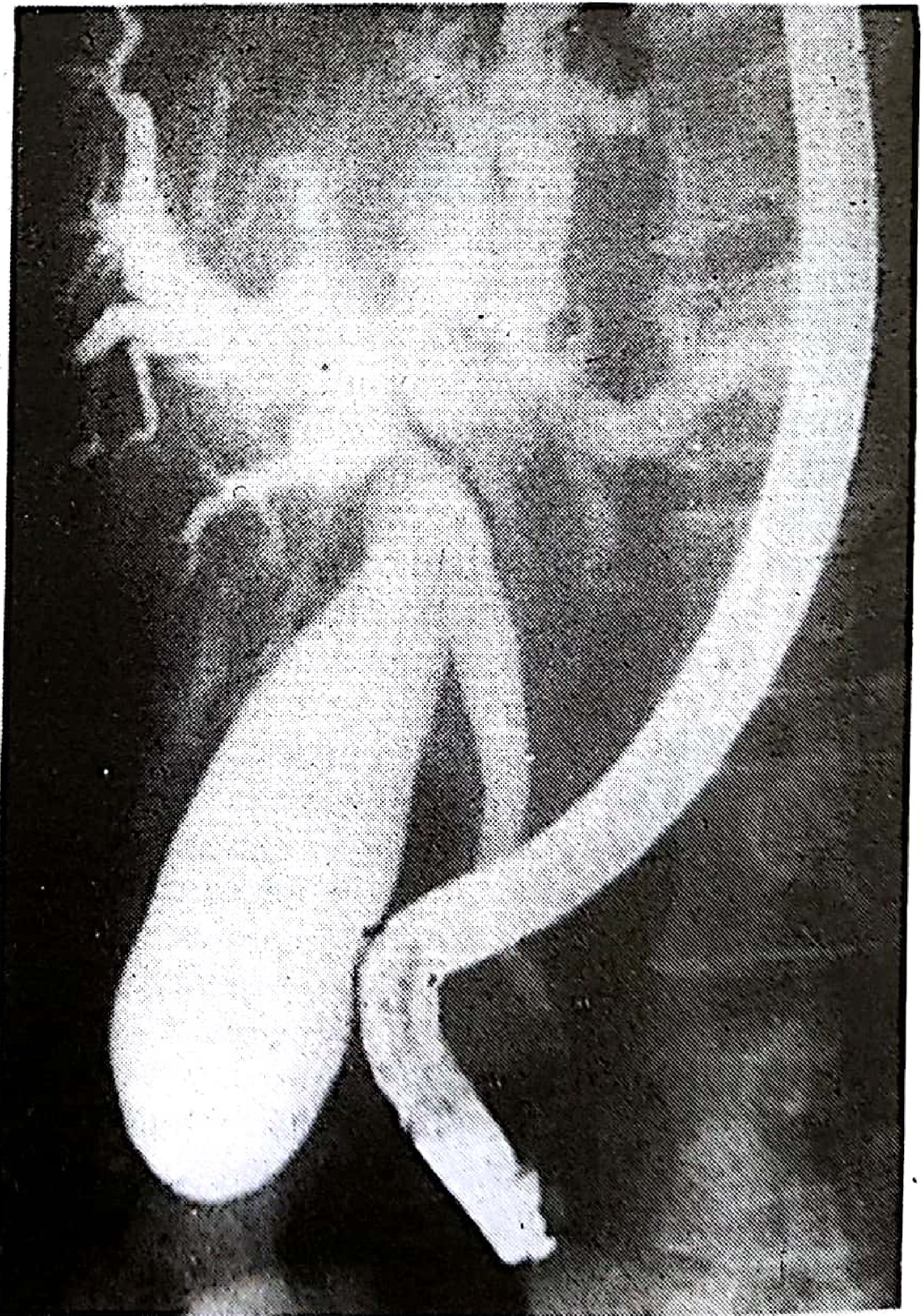
Step 3 - Direct Cholangiography (when non-invasive imaging is insufficient or therapeutic intervention planned)
- ERCP: Visualises the biliary and pancreatic ducts; diagnostic and therapeutic in same session; preferred for distal lesions; can obtain brush cytology, bile/pancreatic juice for cytology; successful in >90% of attempts; complications include pancreatitis, cholangitis, duodenal perforation
- PTC (Percutaneous Transhepatic Cholangiography): Visualises proximal biliary tree (above obstruction); preferred for hilar/proximal tumours; >90% success with dilated ducts; complications include bleeding and bile leakage; contraindicated in coagulopathy and significant ascites
(Current Surgical Therapy 14e, p.575; Pye's Surgical Handicraft 22e, p.287)
5. Management
A. Resuscitation and Preoperative Preparation
1. Correct coagulopathy (Vitamin K)
- Bile salt absence impairs fat-soluble vitamin absorption (including Vit K)
- Vit K1 (phytomenadione) 10-20 mg IV/IM daily until operation
- PT should normalise within 12-24 h if liver synthetic function intact
- If PT does not respond to IV Vit K - implies hepatocellular damage; fresh frozen plasma (FFP) may be required
2. Renal protection
- Surgery in jaundiced patients carries ~20% mortality risk; risk factors include old age, malnutrition, ongoing biliary infection, malignancy, high serum urea
- Adequate IV fluid hydration to prevent hepatorenal syndrome
- Avoid nephrotoxic drugs (NSAIDs, aminoglycosides if possible)
- Monitor urine output
3. Nutritional support
- Malabsorption is common; enteral or parenteral nutrition if indicated
4. Antibiotics
- If cholangitis present: IV broad-spectrum antibiotics (cephalosporins or aminoglycosides) - given before ERCP/intervention
- Prophylactic antibiotics for biliary surgery
B. Management of Cholangitis
Charcot's triad (RUQ pain + fever + jaundice) mandates urgent intervention. Reynolds' pentad (adding altered consciousness + hypotension) indicates severe/suppurative cholangitis.
- IV fluids + IV antibiotics immediately
- ERCP with biliary decompression within 48 hours - a systematic review (Iqbal et al.) showed ERCP < 48 h was associated with a nearly twofold reduction in mortality; delay >72 h significantly worsens outcome
- Tokyo 2018 Guidelines used for diagnosis and severity stratification of acute cholangitis
(Current Surgical Therapy 14e, p.577)
C. Non-Operative (Endoscopic/Percutaneous) Treatment
ERCP + Sphincterotomy + Stone Extraction
- Treatment of choice for CBD stones (choledocholithiasis)
- Selective cannulation achieved in >90%
- Stent insertion for strictures (plastic or self-expanding metal stents - SEMS)
- For malignant obstruction: SEMS (10 mm or 12 mm) for palliation - a recent meta-analysis (Prata et al., Dig Dis Sci 2025, PMID: 39614024) compared stent calibres for malignant biliary obstruction
PTC + External/Internal-External Biliary Drainage
- For proximal/hilar lesions or failed ERCP
- Endoprosthesis 2-3.5 mm diameter can be inserted percutaneously
- Mainly used for inoperable malignant obstruction with limited life expectancy
Preoperative biliary drainage:
- Indicated when bilirubin >6 mg/dL anticipated for major liver resection (hyperbilirubinaemia impairs hepatic regeneration)
- Allows biliary infection to subside, nutritional correction before surgery
- Note: evidence does not consistently show reduction in operative mortality/morbidity from routine preoperative drainage
D. ASGE Risk Stratification for Choledocholithiasis
Before proceeding to ERCP, the ASGE system stratifies patients as high, intermediate, or low probability:
| Risk Level | Criteria |
|---|---|
| High (>50%) | CBD stone on USS; clinical ascending cholangitis; bilirubin >4 mg/dL; dilated CBD on USS + bilirubin 1.8-4 mg/dL |
| Intermediate (10-50%) | Abnormal LFTs (other than bilirubin); age >55; dilated CBD on imaging |
| Low (<10%) | None of the above |
High probability: proceed directly to ERCP. Intermediate: further imaging (EUS or MRCP). Low: no further biliary evaluation needed unless clinical picture changes.
E. Operative (Surgical) Management
Definitive surgery depends on the underlying cause:
| Cause | Operation |
|---|---|
| CBD stones (ERCP failed) | Open/laparoscopic CBD exploration + T-tube drainage |
| Pancreatic head carcinoma | Whipple's procedure (pancreaticoduodenectomy) if resectable |
| Cholangiocarcinoma (distal) | Pancreaticoduodenectomy |
| Cholangiocarcinoma (hilar - Klatskin) | Extended hepatic resection + bile duct resection |
| Gallbladder carcinoma | Cholecystectomy ± extended resection |
| Benign biliary stricture | Biliary-enteric anastomosis (hepaticojejunostomy / choledochojejunostomy) |
| Ampullary tumour | Whipple's or local ampullectomy |
| Unresectable malignancy | Biliary bypass (choledocho- or hepaticojejunostomy) or palliative stenting |
6. Summary Algorithm
Jaundice
   |
   ├── History & Exam → Painful? Fluctuating? (stone) vs. Painless? Progressive? (malignancy)
   |                  → Courvoisier's sign? Charcot's triad?
   |
   ├── LFTs: Conjugated bili↑, ALP↑↑, GGT↑ → consistent with obstructive
   |    └── PT prolonged → IV Vit K → Corrects: surgical; Does not: hepatocellular
   |
   ├── Ultrasound → Biliary dilatation? Level? Stones?
   |
   ├── CT / MRCP / EUS → Level, cause, staging, FNA
   |
   ├── Cholangitis? → IV fluids + antibiotics + ERCP within 48 h
   |
   ├── Benign obstruction → ERCP + stone extraction / sphincterotomy
   |                      → Surgical CBD exploration if ERCP fails
   |
   └── Malignant obstruction
        ├── Resectable → Surgery (Whipple / extended hepatectomy)
        └── Inoperable → ERCP stenting / PTC / surgical bypass (palliative)
Key sources:
- Current Surgical Therapy, 14th ed. - Obstructive Jaundice: The Role of Endoscopic Intervention (pp. 574-578)
- Pye's Surgical Handicraft, 22nd ed. - Management of patients with obstructive jaundice (pp. 285-290)
- Bailey and Love's Short Practice of Surgery, 28th ed. - Cholangiocarcinoma clinical features
- Sleisenger & Fordtran's GI and Liver Disease - Obstructive Jaundice overview
- Harrison's Principles of Internal Medicine, 22nd ed. - Choledocholithiasis
This is a shared conversation. Sign in to Orris to start your own chat.