
Sphygmomanometer notes with simple language in short note type with short diagram
sphygmomanometer parts diagram blood pressure measurement
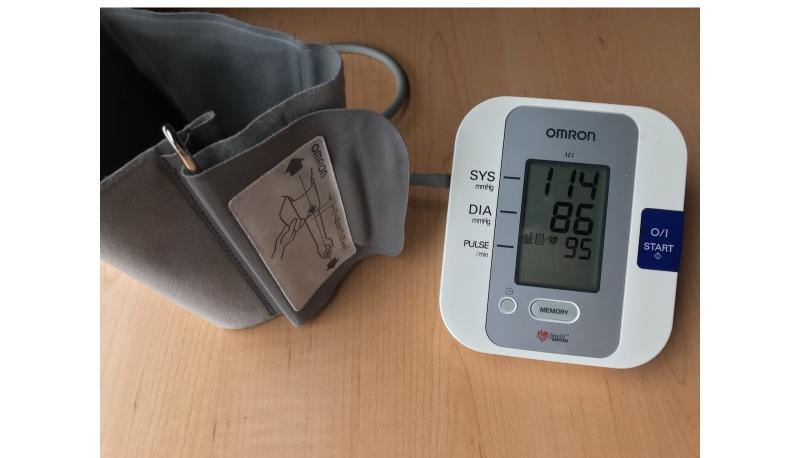
A clinical photograph of a portable electronic sphygmomanometer, specifically an Omron M3 digital blood pressure monitor, used for cardiovascular health assessment. The image displays the digital base unit and the associated upper-arm cuff. The LCD screen on the base unit shows live readings: Systolic (SYS) blood pressure at 114 mmHg, Diastolic (DIA) blood pressure at 86 mmHg, and a pulse rate of 95 beats per minute (bpm). To the left, the gray fabric blood pressure cuff is visible, featuring a metal D-ring for secure tightening and a printed instructional label. This label provides a visual diagram demonstrating correct cuff placement relative to the elbow joint and brachial artery to ensure measurement accuracy. The device is a standard tool for monitoring hypertension and heart rate in clinical and home settings. Key educational components include the interface of digital diagnostic equipment and the importance of standardized placement for reliable vital sign data collection.
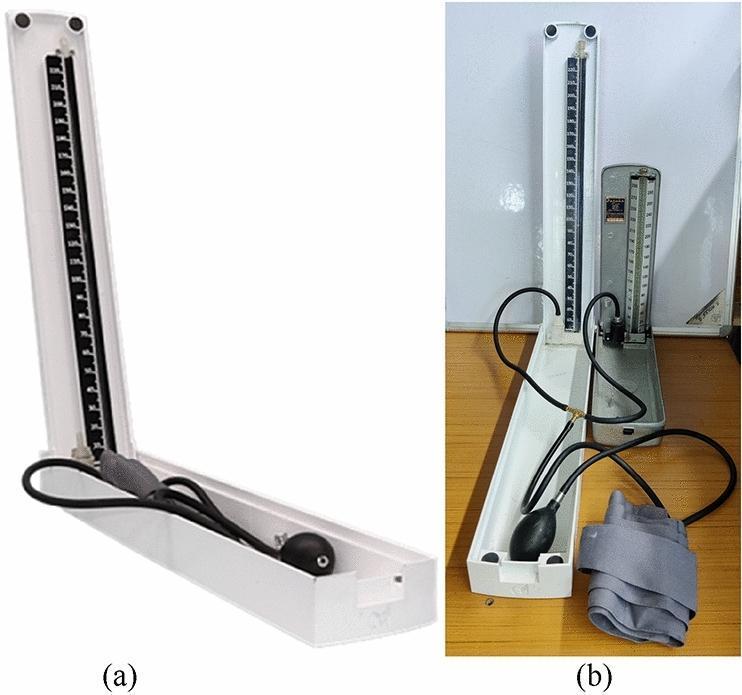
This clinical photograph displays a comparative analysis of sphygmomanometer devices used for blood pressure measurement. Panel (a) shows the 'Merkfree' alpha-prototype, a mercury-free sphygmomanometer featuring a white 3D-printed thermoplastic (PLA) enclosure. The design includes a horizontal base compartment containing a black rubber inflation bulb and tubing, and a vertical measuring scale with high-contrast markings calibrated for mmHg. The device utilizes Galinstan, a non-toxic liquid metal alloy, as the measuring fluid within a glass tube, maintaining the traditional vertical column interface. Panel (b) provides a technical comparison between the Merkfree prototype and a standard Mercurial Sphygmomanometer (MS). Both devices are connected via a T-connector joint to a single inflation bulb and blood pressure cuff (visible in the foreground) to ensure simultaneous pressure application during validation trials. The comparison highlights differences in enclosure materials—white polymer for the prototype versus metallic for the conventional unit—while demonstrating the similar structural logic intended to maintain clinician familiarity and reduce rounding-off errors through improved scale calibration.
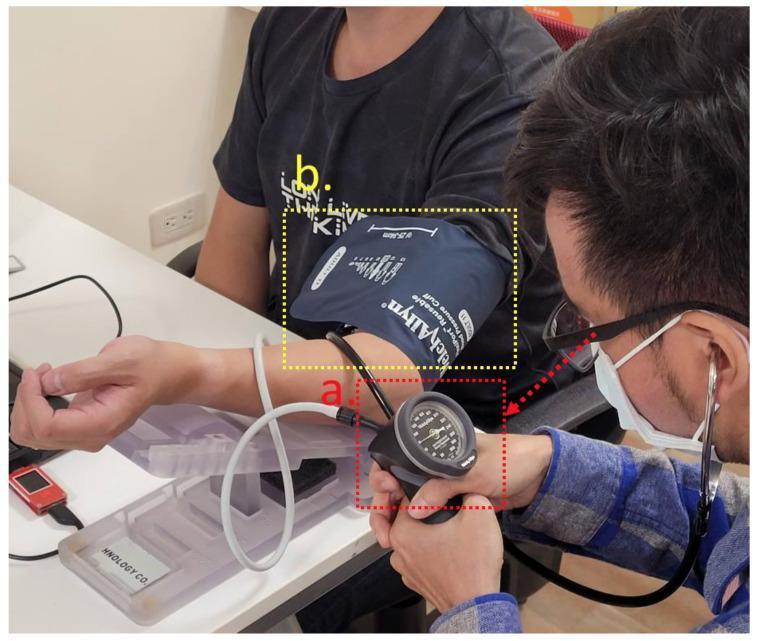
Clinical photograph demonstrating the auscultatory method of blood pressure measurement in a research or clinical setting. The image is divided into two highlighted sections: (a) shows a Welch Allyn DS66 aneroid sphygmomanometer, featuring a circular gauge with a black face and white numerical scale, connected to a black rubber inflation bulb held by a researcher. (b) displays a dark blue reusable adult blood pressure cuff (Welch Allyn) secured around the subject's left upper arm. A stethoscope chest piece is placed over the brachial artery beneath the distal edge of the cuff to detect Korotkoff sounds. The researcher is shown wearing the stethoscope and manually inflating the cuff. This visual illustrates the gold standard for non-invasive blood pressure monitoring used to validate novel pulse wave sensors and algorithms. Key educational concepts include proper cuff placement, manual sphygmomanometry technique, and clinical cardiovascular assessment.
Sphygmomanometer - Short Notes
What is it?
Parts
┌─────────────────────────────────────────┐
│           SPHYGMOMANOMETER              │
│                                         │
│  [Mercury/Aneroid]  ←  Manometer        │
│        |                (reads mmHg)    │
│        |                                │
│   [Rubber Tubing]                       │
│        |                                │
│  [Inflatable Cuff]  ← wraps upper arm   │
│        |                                │
│  [Squeeze Bulb]     ← inflates cuff     │
│        |                                │
│  [Release Valve]    ← slowly deflates   │
└─────────────────────────────────────────┘
| Part | Job |
|---|---|
| Cuff (bladder inside) | Wraps around the upper arm and compresses the artery |
| Squeeze bulb | Pumps air into the cuff to raise pressure |
| Release valve | Slowly lets air out to drop pressure |
| Manometer | Reads the pressure in mmHg (mercury or aneroid dial) |
| Stethoscope | Used with the device to hear Korotkoff sounds |
Types
| Type | How it works |
|---|---|
| Mercury | Uses a column of mercury - most accurate, now banned in many places due to toxicity |
| Aneroid | Uses a dial with a spring - portable, common in clinics |
| Digital (Oscillometric) | Electronic sensor detects artery vibrations - easy for home use |
How BP is Measured (Auscultatory Method)
CUFF INFLATED → Artery compressed → No blood flow

   Pressure slowly released ↓

 Cuff pressure = Systolic BP → First tapping sound heard (Phase I)
        ↓ (continue releasing)
 Cuff pressure = Diastolic BP → Sound becomes muffled (Phase IV)
                              → Sound disappears (Phase V)
- Wrap cuff 2-3 cm above the elbow (antecubital fossa)
- Inflate cuff ~30 mmHg above expected systolic pressure
- Place stethoscope over the brachial artery
- Slowly deflate (2-3 mmHg/sec)
- Listen for Korotkoff sounds
Korotkoff Sounds (5 Phases)
| Phase | Sound | Meaning |
|---|---|---|
| I | Sharp tapping | = Systolic BP (first sound) |
| II | Swishing/blowing murmur | Blood spurting through |
| III | Louder thumping | More blood getting through |
| IV | Muffled, softer | Approaching diastolic |
| V | Silence | = Diastolic BP (sounds disappear) |
Textbook Diagram (from Medical Physiology)
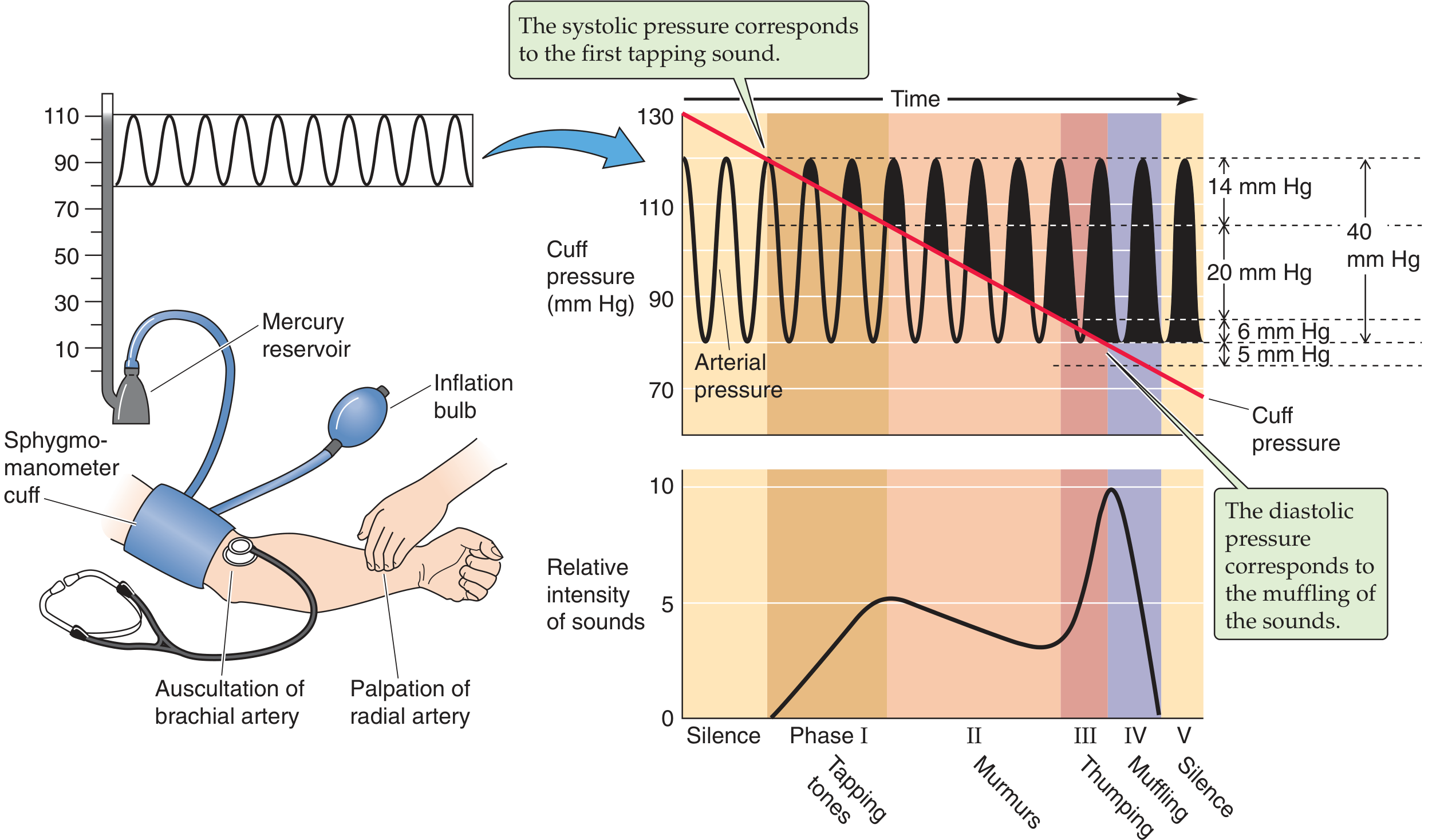
Two Methods to Detect Blood Flow
| Method | How | Gives |
|---|---|---|
| Palpatory | Feel the radial pulse at wrist | Systolic only (slightly underestimates) |
| Auscultatory | Listen with stethoscope over brachial artery | Both systolic AND diastolic |
Correct Cuff Size (Important!)
- Cuff bladder should be 20% wider than arm diameter
- Should encircle at least half the arm
- Centered over the brachial artery
Too small a cuff = falsely HIGH reading Too large a cuff = falsely LOW reading
Normal Values
| Adult Normal | |
|---|---|
| Systolic | ~120 mmHg |
| Diastolic | ~80 mmHg |
| Written as | 120/80 mmHg |
Quick Memory Trick
"Inflate, Wait, Deflate - Tap = Systolic, Silence = Diastolic"
- Sources: Medical Physiology (Boron & Boulpaep), Guyton & Hall Textbook of Medical Physiology
No very short in one page summarise
Sphygmomanometer
One-Page Notes
Definition
Parts (Simple Diagram)
  [MANOMETER] ← shows mmHg
       |
  [RUBBER TUBE]
       |
  [INFLATABLE CUFF] ← wraps upper arm
       |
  [SQUEEZE BULB] + [RELEASE VALVE]
Types
| Type | Feature |
|---|---|
| Mercury | Most accurate |
| Aneroid | Dial/portable |
| Digital | Auto/home use |
How to Measure BP
- Wrap cuff on upper arm
- Inflate cuff until artery is compressed
- Slowly deflate while listening with stethoscope over brachial artery
- Note pressures from Korotkoff sounds
Korotkoff Sounds
| Phase | Sound | Reading |
|---|---|---|
| I | Tapping | = Systolic BP |
| II-III | Swishing → Thumping | Blood flowing |
| IV | Muffled | Near diastolic |
| V | Silence | = Diastolic BP |
Textbook Diagram
Normal BP = 120 / 80 mmHg
Tip: First sound = Systolic | Last sound = Diastolic